Watermelon Rind Jellies are the stunning, sustainable answer to summer’s most common waste problem. Transforming a part of the fruit most people toss into the compost into translucent, ruby-red gems is a culinary magic trick that never fails to impress.
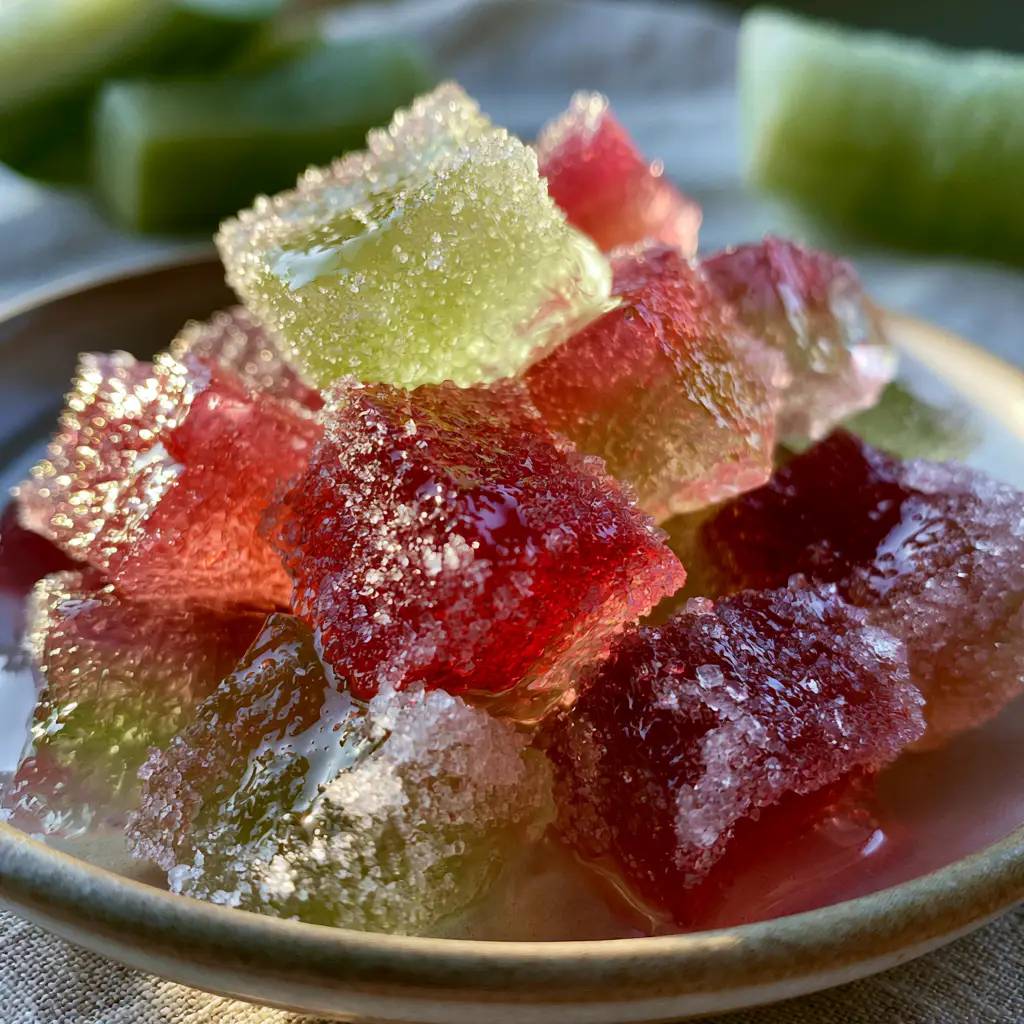
These candies capture the essence of high-end food aesthetics, offering a sophisticated chew that rivals gourmet pâte de fruit. Imagine a plate of glistening, jewel-like strips that transition from a soft lime green to a deep, vibrant ruby red, all shimmering under a delicate crust of granulated sugar.
Whether you are looking for a unique addition to your 4th of July food spread or a sustainable kitchen project, these jellies are a sensory delight. They are chewy, slightly syrupy on the inside, and offer a nostalgic sweetness that pairs perfectly with a glass of crisp white wine or one of our favorite summer cocktails.
The Visual and Culinary Appeal of Homemade Fruit Gems
- Translucent Artistry: The rinds are simmered until they achieve a glass-like transparency that catches the light beautifully.
- Vibrant Gradient: A strategic use of ruby red food coloring creates a stunning visual transition from the natural pale green of the rind to a deep crimson.
- Textural Contrast: You get a satisfyingly chewy center protected by a sparkling, crunchy granulated sugar coating.
- Sustainable Sophistication: This recipe elevates “trash” into a high-end delicacy that fits perfectly on a modern dessert board.
Essential Components for Crystal-Clear Watermelon Rind Jellies
To achieve the specific “jewel-like” look from our visual blueprint, you need more than just rinds; you need the right chemical balance of sugar and acid. Every ingredient here serves a functional purpose in creating that specific glistening syrup and firm, chewy structure.
Fresh Watermelon Rinds: Use about 4 cups (approx. 600g) of rinds with the tough green skin peeled off. These provide the structural base and absorb the flavored syrup to become translucent.
Granulated White Sugar: You will need 2 cups (400g) for the syrup and extra for the final coating. Sugar is the preservative and the primary texturizer that creates the “sparkling crystal” effect.
Filtered Water: 2 cups (480ml) are used to create the initial poaching liquid. This ensures no mineral impurities cloud the transparency of your jellies.
Fresh Lemon Juice: 2 tbsp (30ml) of acid is vital to prevent the sugar from recrystallizing during the long simmer. It also provides a necessary brightness to balance the heavy sweetness.
Ruby Red Food Coloring: 2-3 drops of high-quality gel coloring. This is the secret to achieving that “deep ruby red gradient” mentioned in our visual prompt.
Salt: A tiny pinch (approx. 1/4 tsp) of fine sea salt. Salt is an “invisible” ingredient that enhances the subtle melon flavor of the rind.
Fresh Mint Garnish: A few sprigs of mint provide a color contrast. The green of the mint makes the ruby red of the jellies pop visually in your serving bowl.
Tools for Precision Candy Making
Achieving the perfect texture requires consistent heat and the right vessels. You don’t need a professional laboratory, but a few specific tools will ensure your jellies don’t turn into a sticky mess.
A heavy-bottomed stainless steel saucepan is non-negotiable for even heat distribution. A vegetable peeler and a sharp chef’s knife are required to prep the rinds into uniform strips, which ensures they cook at the same rate. Finally, a wire cooling rack is essential for the drying phase; without airflow, the sugar coating will simply melt into the fruit.
The Step-by-Step Transformation Process
1. Preparing the Rind Strips
Start by slicing the watermelon into wedges. Eat the red flesh or use it for a refreshing watermelon salad. Take the remaining rinds and use a sharp vegetable peeler to remove every trace of the hard, dark green outer skin.
Slice the remaining white and pale green rind into uniform strips, roughly 2 inches (5cm) long and 1/2 inch (1.3cm) wide. This uniformity is what gives the final pile of candies that “minimalist ceramic bowl” aesthetic.
2. The Initial Softening Boil
Place your rind strips in a pot and cover them with water. Bring to a boil and cook for about 10-15 minutes. You are looking for a “visual cue” here: the rinds should transition from opaque white to a slightly softened, semi-translucent state.
Drain the water and set the rinds aside. This step removes any bitterness and prepares the cell structure of the fruit to drink up the sugar syrup.
3. The Infusion and Gradient Coloring
In the same pot, combine 2 cups (400g) of sugar, 2 cups (480ml) of water, the lemon juice, and the salt. Bring to a simmer over medium heat until the sugar is fully dissolved.
Add the par-boiled rinds back into the pot. To achieve the gradient, add your ruby red food coloring at this stage but do not over-mix. Let the rinds simmer gently for 45-60 minutes. Watch for the rinds to become “jewel-like”—they will look like stained glass when held up to the light.
4. The Syrupy Reduction
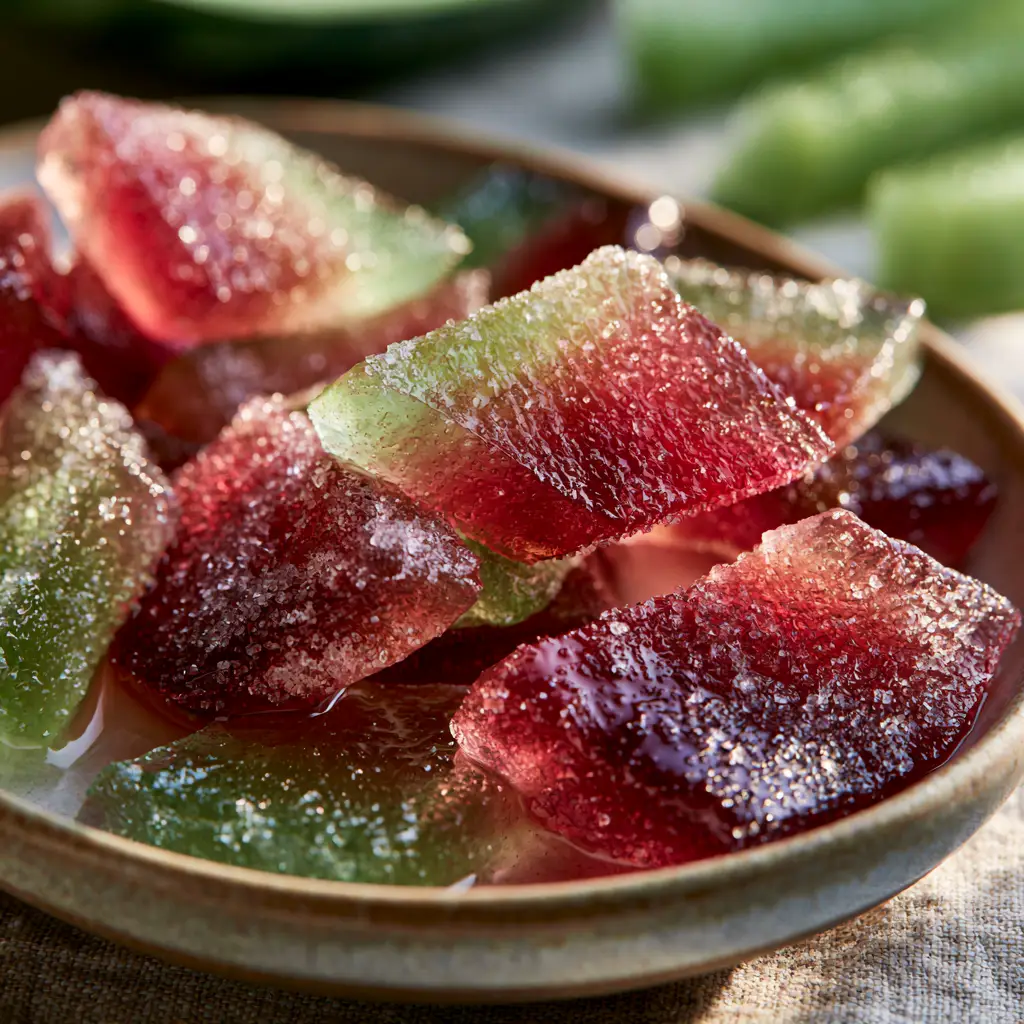
Continue simmering until the liquid has reduced to a thick, “sticky sugar syrup.” The rinds should be saturated with color. The edges might stay slightly lighter (the lime green tint), while the centers turn deep red, creating that natural-looking gradient.
Remove from heat and let the rinds sit in the syrup for another 10 minutes. This ensures the centers are completely “chewy and glistening” as described in our Midjourney prompt.
5. Drying and Sugaring
Using a slotted spoon, lift the rinds out of the syrup and place them on a wire rack over a baking sheet. Let them drip-dry for about 2-3 hours until they are tacky but not soaking wet.
Toss each strip in a bowl of extra granulated sugar. The sugar should stick to the “delicate layer of sparkling granulated sugar crystals” without dissolving. Let them air-dry for another 12-24 hours for a firm, candy-like set.
Expert Tips for Success
- Symmetry Matters: Cut your strips with a ruler if you have to. Uniformity is the difference between “scraps” and “gourmet jellies.”
- Temperature Control: Do not let the syrup reach a hard-boil. A gentle simmer keeps the rinds from breaking down into mush.
- Humidity Factor: If you live in a humid climate, use a dehydrator on the lowest setting (95°F / 35°C) to help the sugar crust set properly.
- Acid Balance: Don’t skip the lemon juice; it provides the “glimmer” and prevents the syrup from feeling heavy on the palate.
Shelf Life and Storage Solutions
Because these are essentially a form of preserved fruit, they have a surprisingly long shelf life. Store your Watermelon Rind Jellies in an airtight container at room temperature for up to two weeks.
For longer storage, you can keep them in the refrigerator for up to a month. However, the cold can sometimes cause the sugar coating to weep. If they become sticky, simply toss them in a bit more granulated sugar before serving to restore that “jewel-like” sparkle.
What to Serve With These Jewel-Like Treats
These jellies are quite sweet, so they pair beautifully with salty or savory elements. They are a fantastic “palate cleanser” after a heavy meal featuring summer chicken recipes or spicy grilled meats.
If you are hosting a summer garden party, serve them alongside a vibrant watermelon and feta salad for a thematic “whole-fruit” experience. They also make an incredible garnish for frozen desserts or wine slushies, adding a chewy texture to the icy drink.
Frequently Asked Questions
Yes, cantaloupe and honeydew rinds also work, though they are thinner and require a shorter simmering time to reach the desired translucency.
They have a very subtle, refreshing melon undertone, but they primarily take on the flavor of the syrup, which is brightened by the lemon juice.
Add the food coloring to the syrup without stirring aggressively. The coloring will naturally penetrate the softer white parts of the rind more deeply than the firmer green-tinted edges.
This usually happens if the outer dark green skin wasn’t fully removed or if the rinds weren’t boiled long enough in the initial water phase before adding the sugar syrup.
Humidity is the enemy of sugared candy. Ensure the rinds are completely dry and tacky before rolling in sugar, and store them in a cool, dry place.
The Master Watermelon Rind Jellies Recipe
Watermelon Rind Jellies: The Ultimate Jewel-Toned Upcycled Summer Candy
Ingredients
Equipment
Method
- Remove the green skin from the watermelon rind. Slice the white/pale green part into uniform 2-inch strips.
- Boil the rind strips in water for 15 minutes until they begin to soften and turn semi-translucent. Drain.
- Combine sugar, water, lemon juice, and salt in a pot. Add rinds and food coloring. Simmer for 60 minutes until the rinds are glass-like and the syrup is thick.
- Let rinds dry on a wire rack for 3 hours. Toss in granulated sugar until sparkling crystals coat every surface.
Notes
For the best gradient, do not stir the pot too vigorously once the food coloring is added.
Closing & Call to Action
Creating Watermelon Rind Jellies is a rewarding way to practice sustainable cooking while producing something truly beautiful. These candies are more than just a treat; they are a conversation piece that highlights the hidden potential in everyday ingredients.
If you enjoyed this transformation, please leave a comment below and let us know how your gradient turned out! Don’t forget to save this recipe to your “Summer Treats” board on Pinterest so you can find it every time you crack open a watermelon.