Watermelon canning recipes are the secret weapon of the sustainable, high-flavor kitchen. While most people toss the rinds and only eat the flesh, a culinary forensics approach reveals that the entire fruit is a goldmine for preservation. Whether you are craving the snap of a translucent pickled rind or the jewel-toned shimmer of a ruby red jelly, canning allows you to capture the fleeting essence of July and August for year-round enjoyment.
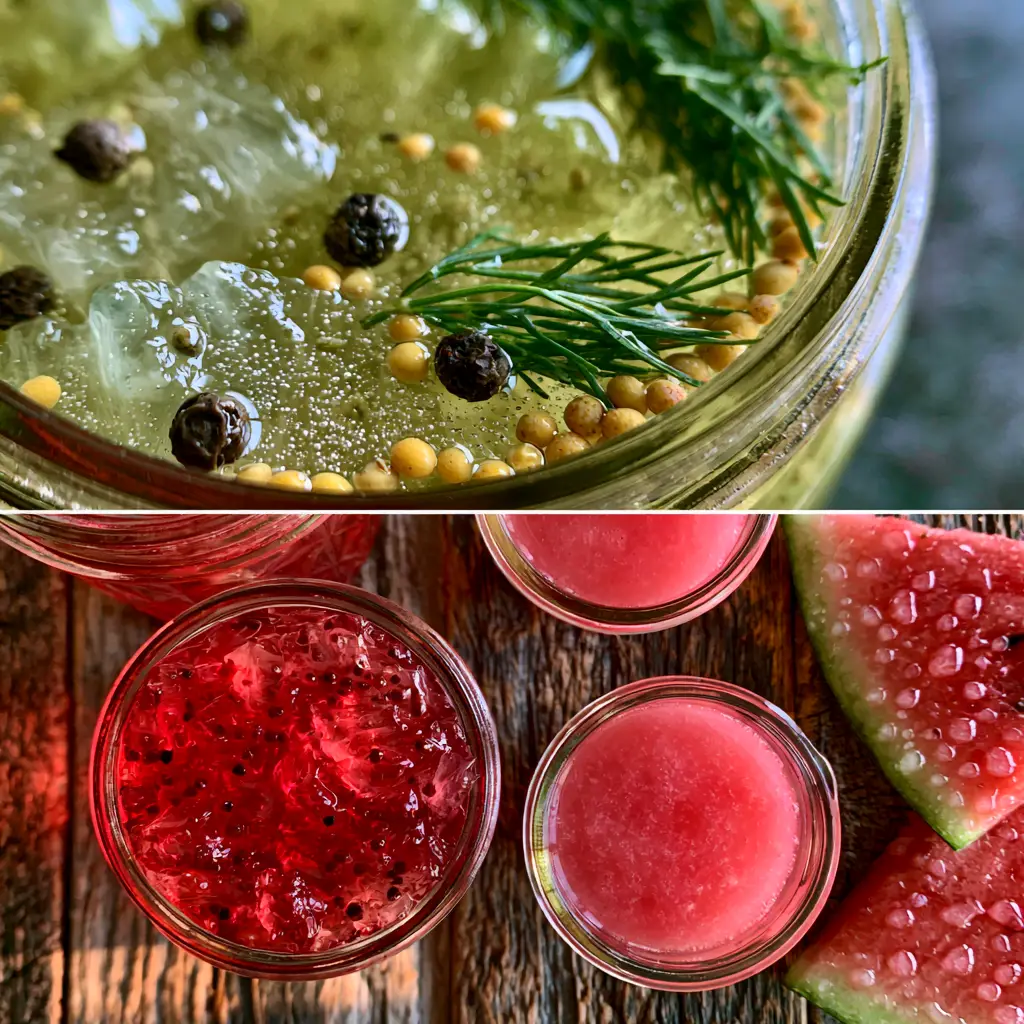
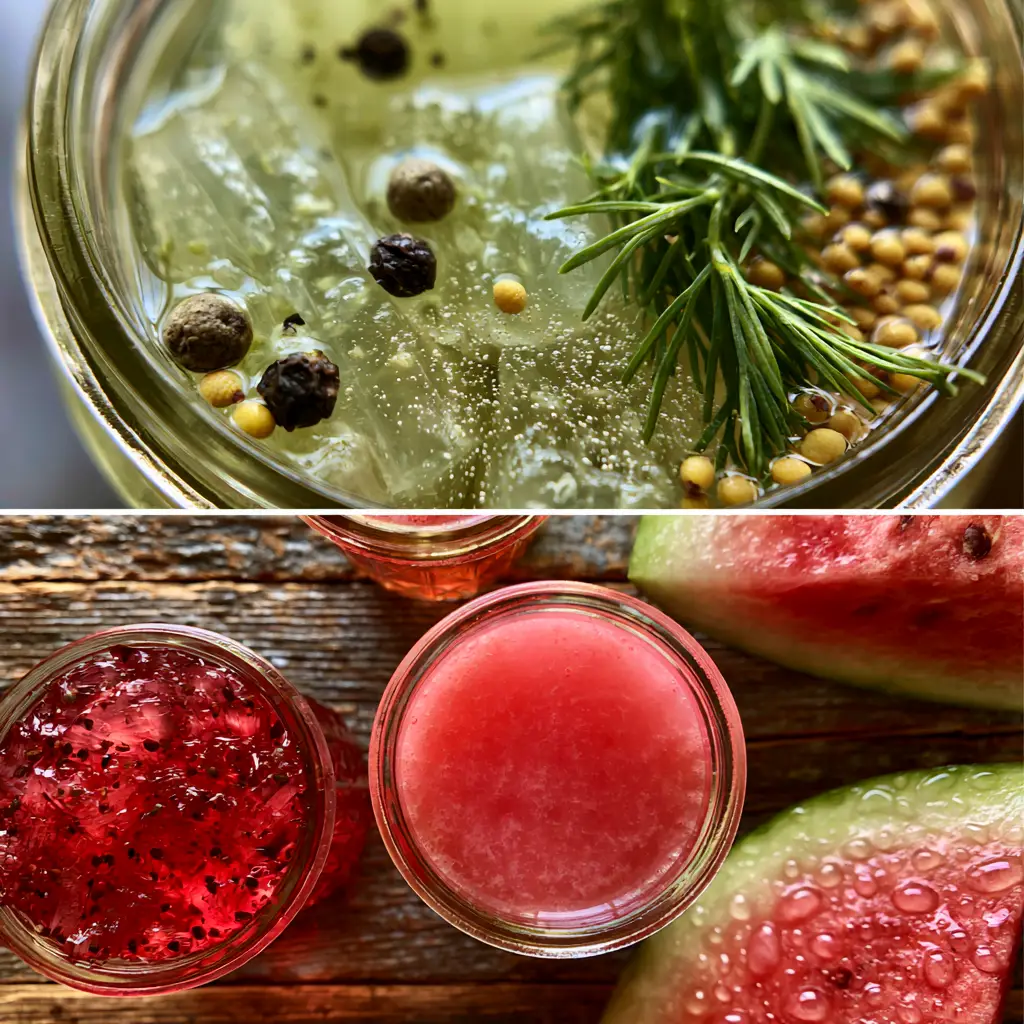
Capturing the visual perfection of these preserves requires more than just a recipe; it requires an understanding of how light interacts with sugar and acid. Imagine opening your pantry to see rows of glass jars where whole black peppercorns and yellow mustard seeds dance in a crystal-clear brine alongside pale green rinds. The contrast of the vibrant pink juice and the deep red jelly creates a professional aesthetic that looks as good as it tastes.
Why These Preserves Are a Must-Have for Your Pantry
- Translucent Visual Appeal: Our specialized brining technique ensures your watermelon rinds turn a stunning, glassy pale green that glows when held to the light.
- Zero-Waste Brilliance: Transform often-discarded rinds into a gourmet condiment that bridges the gap between sweet and savory.
- Multi-Texture Results: From the crunch of the pickled rind to the silken spreadability of seedless ruby jelly, this guide covers every sensory profile.
- Botanical Infusions: Fresh green dill sprigs and whole spices provide a sophisticated flavor layer that elevates these beyond standard supermarket preserves.
Essential Elements for Your Watermelon Preservation Suite
Firm Watermelon Rinds (1.5kg / 3.3lbs): You must remove the tough outer green skin. The remaining white and pale green flesh is what absorbs the clear pickling brine and becomes translucent during the processing stage.
Vibrant Red Watermelon Flesh (2kg / 4.4lbs): This is the source of your pink juice and ruby red jelly. Use a seedless variety if possible, though straining through cheesecloth will ensure a perfectly clear liquid regardless of the fruit’s origin.
Granulated White Sugar (800g / 4 cups): Sugar isn’t just for sweetness; it acts as a preservative and provides the structural “set” for the jelly. In the pickles, it balances the sharpness of the vinegar.
White Distilled Vinegar (500ml / 2.1 cups): Using a clear vinegar with 5% acidity is non-negotiable for safety. It ensures the brine remains sparkling and doesn’t cloud the appearance of the spices.
Whole Black Peppercorns & Yellow Mustard Seeds: These provide a sharp, earthy bite. Visually, they settle into the jar’s crevices, creating a beautiful “specimen jar” aesthetic that is highly sought after in artisanal canning.
Fresh Green Dill Sprigs: Added at the very end, these maintain their verdant color in the brine. They offer a cooling, herbaceous note that cuts through the sugar and spice.
Liquid Pectin (175ml / 6oz): For the ruby red jelly, liquid pectin is preferred to achieve a clear, seedless finish without the risk of undissolved powder clumps.
Kosher Salt (30g / 2 tbsp): Essential for drawing moisture out of the rinds, which allows the pickling liquid to penetrate deeply for that signature crunch.
Precision Equipment for Professional Canning Results
To achieve the high-detail shots seen in professional food photography, your equipment must be immaculate. A large water bath canner is necessary for processing the jars to ensure shelf stability. You will also need high-quality glass mason jars with new lids to guarantee a vacuum seal. A stainless steel heavy-bottomed pot is crucial for the jelly to prevent scorching the vibrant pink watermelon juice. Finally, have a fine-mesh sieve and cheesecloth ready to ensure your liquids are free of pulp and seeds.
The Art of the Translucent Pickled Rind
Preparing the Rind for Maximum Clarity
Start by slicing your watermelon into wedges. Enjoy the red flesh, but leave about a quarter-inch of the pink attached to the white rind for a hint of color. Use a vegetable peeler to aggressively remove every trace of the hard, dark green outer skin. If any green remains, the rinds will not achieve that sought-after translucent, pale green appearance.
The Brining and Spice Infusion Process
Combine your vinegar, water, sugar, and salt in your stainless steel pot. Bring it to a rolling boil until the liquid is perfectly clear. Into each sterilized jar, drop a teaspoon of yellow mustard seeds and a half-teaspoon of whole black peppercorns. Pack the sliced rinds tightly; they will shrink slightly during processing, so don’t be afraid to wedge them in.
Capturing the Visual Cues of a Perfect Set
Pour the hot brine over the rinds, leaving exactly half an inch (1.25cm) of headspace. Slide a fresh green dill sprig down the side of the glass so it is visible from the exterior. You will notice the rinds begin to lose their opaque whiteness almost immediately, starting to glow as they absorb the acid and sugar. This is the first sign of a successful cure.
Crafting the Ruby Red Seedless Jelly
Extracting the Vibrant Pink Juice
Cube the red watermelon flesh and pulse it in a blender. Do not over-process; you want to break the cells, not aerate the juice into a foam. Pass the liquid through a cheesecloth-lined sieve. The result should be a bright, vibrant pink watermelon juice that is completely free of solids. This liquid is the base for both your bottled juice and your concentrated jelly.
The Science of the Hard Boil
Mix the juice with sugar and bring it to a boil that cannot be stirred down. This “hard boil” is essential for activating the pectin. Once you add the liquid pectin, boil for exactly one minute. Look for the “sheet test” on a cold spoon; the liquid should hang in a heavy drop before falling, signaling a firm, ruby red set.
Expert Tips for Success with Watermelon Canning Recipes
- Temperature Control: Always pre-warm your jars before filling them with hot liquid to prevent thermal shock and breakage.
- Air Bubble Removal: Use a non-metallic spatula to run around the inside of the jar. Trapped bubbles can cause oxidation, turning your translucent rinds a dull gray over time.
- Water Quality: Use filtered water for your brine. High mineral content in tap water can react with the vinegar and cloud your sparkling results.
- Sourcing: Look for “thick-rind” watermelon varieties. Modern seedless melons often have very thin rinds; heirloom varieties provide a sturdier, crunchier pickle.
Creative Ways to Serve Your Preserves
Your pickled rinds are a phenomenal addition to a summer charcuterie board. Their tangy crunch pairs beautifully with salty cheeses, making them a natural companion to a watermelon feta salad. For a main course, serve the rinds alongside grilled meats or as a topping for summer chicken recipes.
The ruby red jelly is a breakfast game-changer. Swipe it over hot biscuits or use it as a glaze for roast pork. If you find yourself with extra juice, it’s the perfect base for summer cocktails or refreshing wine slushies. For those who love creative preservation, explore more watermelon rind jellies to expand your pantry’s repertoire.
Frequently Asked Questions Regarding Watermelon Preservation
They are a unique hybrid. The vinegar and mustard seeds provide a savory tang, while the sugar syrup and watermelon essence add a refreshing sweetness, similar to a sweet cucumber pickle.
Yes, seedless watermelons are actually preferred for jelly and juice as they require less straining, though you may find their rinds are thinner than seeded heirloom varieties.
To achieve a translucent, glassy look, you must remove all of the dark green outer skin and soak the white rinds in a salt brine before cooking them in a clear sugar and vinegar syrup.
When processed correctly in a water bath canner, these jars are shelf-stable for 12-18 months. Once opened, keep them refrigerated and consume within 3-4 weeks.
Watermelon has high water content and low natural pectin. Ensure you use a full-rolling boil and the exact amount of liquid pectin specified to achieve a firm ruby-red set.
The Master Watermelon Canning Recipe
Watermelon Canning Recipes: The Ultimate Guide to Preserving Summer’s Vibrant Flavors
Ingredients
Equipment
Method
- Remove the dark green skin from the watermelon rinds using a peeler. Slice the white rind into uniform 1-inch (2.5cm) strips.
- Boil vinegar, water, sugar, and salt. Pack rinds into jars with mustard seeds, peppercorns, and dill. Pour hot brine over, leaving 1/2 inch headspace.
- Blend red watermelon flesh and strain through cheesecloth to extract vibrant pink juice.
- Fill sterilized jars with juice, leaving 1/4 inch headspace, and process in a water bath for 10 minutes.
- Combine juice and sugar. Bring to a hard boil, add liquid pectin, and boil vigorously for 1 minute.
- Skim any foam and pour into jars. Process in water bath for 10 minutes until a ruby red set is achieved.
Notes
Use a vegetable peeler to remove all green skin from the rinds for a truly translucent finish.
Closing & Call to Action
Mastering watermelon canning recipes is a journey into the heart of seasonal preservation. By following these forensic culinary steps, you’ve turned a simple summer fruit into a collection of sophisticated, shelf-stable treasures. Whether it’s the snap of the spice-infused rind or the sweet clarity of the jelly, these jars represent the pinnacle of home canning excellence.
We would love to see your sparkling jars! Share your results in the comments below or tag us in your kitchen photos. For more seasonal inspiration and high-detail kitchen guides, follow our boards on Pinterest and sign up for our newsletter to never miss a harvest.