Nigerian soups are the heart and soul of West African cuisine, offering a complex tapestry of flavors, textures, and aromas that define the culinary identity of the region. Among the most iconic of these dishes is Egusi soup, a rich, nutty, and incredibly savory masterpiece made from ground melon seeds. If you have been searching for that perfect, thick consistency characterized by large toasted melon seed clumps and a glossy red finish, you have found the definitive guide.
When you think of comfort food in a Nigerian household, Nigerian soups paired with a smooth “swallow” like pounded yam are at the top of the list. This recipe focuses on the “caking method,” ensuring your Egusi isn’t just a watery sauce but a hearty, textured stew packed with succulent browned beef, honeycomb tripe, and traditional dried fish flakes. The vibrant orange hue from the palm oil and the deep green of wilted spinach make this dish a visual and nutritional powerhouse.
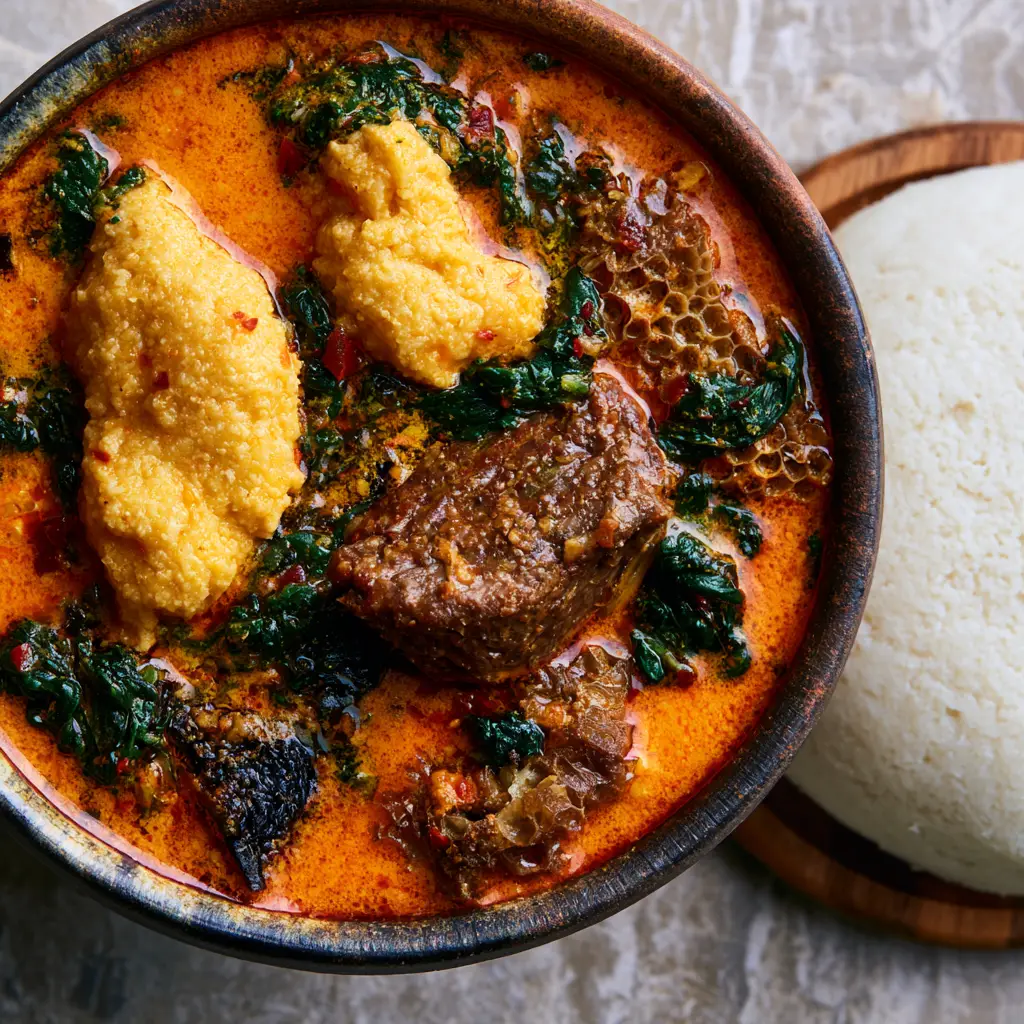
Why This Egusi Recipe Defines the Best of Nigerian Soups
- The Perfect Texture: We use a specific frying and steaming technique to create those coveted large toasted melon seed clumps that rise above the sauce.
- Deep Flavor Profile: By browning the beef and tripe first, we build a foundational umami that elevates the entire pot of soup.
- Visual Brilliance: A glossy, deep-orange palm oil sauce coats every leaf of spinach and chunk of meat for a restaurant-quality presentation.
- Traditional Authenticity: Incorporating dried fish flakes and minced scotch bonnet peppers provides the authentic heat and smoky depth found in traditional Nigerian soups.
Essential Ingredients for Rich Nigerian Egusi Soup
Creating world-class Nigerian soups requires high-quality ingredients. Each component in this list serves a specific culinary purpose to ensure the final dish matches the vibrant, thick texture seen in professional African kitchens.
1. Ground Egusi (Melon Seeds): 2 cups (approx. 280g). These seeds are rich in fats and protein. When processed correctly, they provide the “meatiness” of the soup. Look for seeds that are pale yellow and fresh.
2. Red Palm Oil: 1/2 cup (120ml). This is non-negotiable for authentic Nigerian soups. It provides the signature glossy orange sheen and a distinct earthy flavor that vegetable oils cannot replicate.
3. Beef and Honeycomb Tripe: 1 lb (450g) of beef chuck and 0.5 lb (225g) of tripe. Browning these meats adds a caramelized depth to the stock. The honeycomb tripe provides a unique, sponge-like texture that holds the sauce perfectly.
4. Dried Fish Flakes & Stockfish: 1/2 cup (approx. 50g). These provide a concentrated smoky, salty element that is a hallmark of West African flavor profiles.
5. Scotch Bonnet Peppers: 2-3 peppers, finely minced. These provide the characteristic heat. You can adjust the quantity, but Nigerian soups are traditionally enjoyed with a noticeable kick.
6. Fresh Spinach: 3-4 cups (approx. 200g) chopped. We use spinach for its ability to wilt into the sauce while maintaining a dark green contrast against the red oil.
7. Pounded Yam: For serving. A smooth, white, dough-like accompaniment that is the traditional vessel for enjoying thick stews.
The Secret to Preparing the Meat and Stock
The base of all great Nigerian soups starts with a flavorful stock. Do not simply boil the meat; we want to build layers of flavor.
Start by seasoning your beef chunks and honeycomb tripe with salt and bouillon. In a large pot, sear the beef in a small amount of oil until a deep brown crust forms. This “Maillard reaction” is vital for a rich soup. Once browned, add water or beef stock just to cover the meat, along with half of your minced onions.
Cook until the tripe is tender but still has a slight bite. Reserved this liquid! This fortified stock is the “liquid gold” that will hydrate your melon seeds later. If you enjoy diverse textures, consider exploring Nigerian chicken stew techniques for different poultry-based stocks.
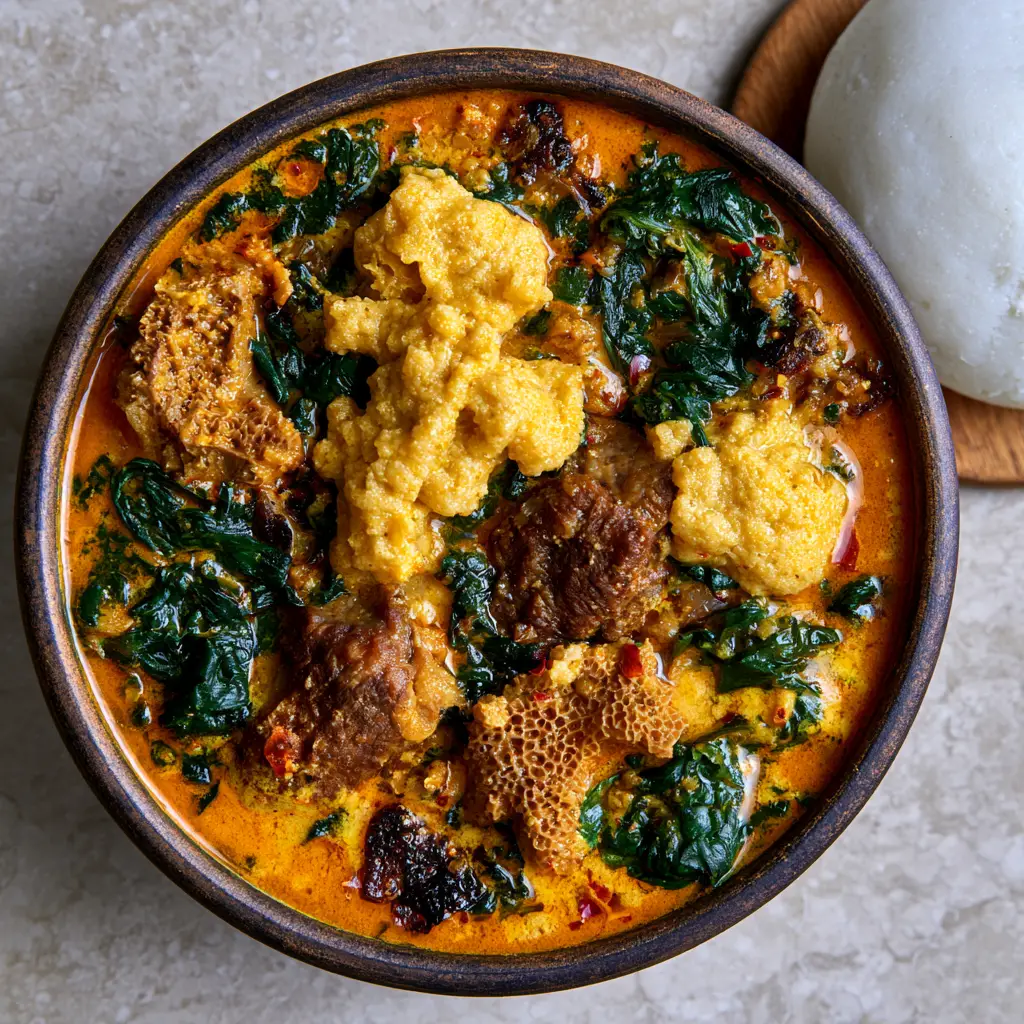
How to Achieve Large, Toasted Melon Seed Clumps
The most common mistake when making Nigerian soups like Egusi is ending up with a grainy, sandy texture. To get those beautiful, large clumps, follow this “caking” method carefully.
Step 1: The Egusi Paste
In a small bowl, mix your finely ground melon seeds with a little bit of warm water or stock. You want to create a thick, dough-like paste. Adding a pinch of salt to the paste helps the proteins bind together during the cooking process.
Step 2: Frying the Base
Heat the 1/2 cup (120ml) of palm oil in a clean pot over medium heat. Once the oil is hot (but not smoking), add the remaining chopped onions and the minced scotch bonnet peppers. The oil will turn a vibrant, translucent red. This is the stage where you add the dried fish flakes to toast them slightly in the oil, releasing their smoky aroma.
Step 3: Creating the Clumps
Using a spoon, scoop small balls of the Egusi paste into the hot oil. Do not stir immediately. Let the balls sit in the oil for 3-5 minutes. They will begin to fry and set. Gently flip them, then add a small amount of your meat stock. Cover the pot and let it steam. The steam will cook the melon seed “cakes” through, making them firm and distinct.
Final Assembly and Wilting the Greens
Once your melon seed clumps are set, you can gently break the larger ones with a wooden spoon—but keep them substantial! Add the cooked beef, honeycomb tripe, and any remaining stock. The soup should be thick and hearty, not watery.
Add the chopped spinach last. Stir it into the glossy red sauce just until it wilts. The heat of the soup is enough to cook the spinach while maintaining its vibrant dark green color. This contrast against the large toasted melon seed clumps and red oil is what makes Nigerian soups so visually enticing on Pinterest.
Expert Tips for Success
- Don’t Over-Stir: To maintain those beautiful clumps, avoid aggressive stirring once the Egusi paste is added to the pot.
- Quality of Oil: Ensure your palm oil is fresh. If it smells slightly rancid or “soapy,” it will ruin the delicate nutty flavor of the melon seeds.
- The “Swallow” Pairing: Always serve with a smooth, white mound of pounded yam. The neutral flavor of the yam balances the intense spice and richness of the soup. For more pairing ideas, check out our guide on West African fufu.
- Safety First: When handling scotch bonnet peppers, wear gloves or wash your hands thoroughly. The oils are incredibly potent!
Storage, Reheating, and Freezing
Nigerian soups are famous for tasting even better the next day as the flavors continue to marry. You can store Egusi soup in an airtight container in the refrigerator for up to 4 days.
For long-term storage, this soup freezes exceptionally well. Place it in freezer-safe bags or containers for up to 3 months. When reheating, do so over low heat on the stovetop. You may need to add a tablespoon of water to loosen the texture, as the melon seeds will continue to thicken the sauce as it sits.
What to Serve With Nigerian Egusi Soup
While pounded yam is the gold standard, Nigerian soups are versatile. You can pair this with Eba (processed cassava), Amala, or even rice if you prefer. If you’re planning a full spread, consider adding Nigerian fried rice to your menu for a festive touch. This soup also fits perfectly into a broader collection of Nigerian lunch recipes that are both filling and traditional.
Frequently Asked Questions
While you can, it is not recommended. Palm oil provides a specific earthy flavor and the iconic glossy orange color that is essential for authentic Nigerian soups.
The secret to smooth pounded yam is using the right type of yam (Puna yam) and pounding it (or using a food processor) while it is still very hot with a small amount of the boiling water.
Honeycomb tripe is the lining of a cow’s stomach. It is prized in Nigerian soups for its ability to soak up sauces. You can find it at most local butchers or international grocery stores.
A watery consistency usually happens if you stir the Egusi paste immediately after adding it to the oil. To get thick clumps, let the paste ‘cake’ in the hot oil and steam for several minutes before stirring gently.
Authentic Nigerian Egusi Soup Recipe Card
Nigerian Soups: The Ultimate Authentic Egusi Soup with Pounded Yam
Ingredients
Equipment
Method
- Season beef and tripe with salt. Sear in a pot until browned. Add water to cover and simmer until tender, reserving the stock.
- Mix ground egusi with a little warm water to form a thick, dough-like paste.
- Heat palm oil. Sauté onions, peppers, and dried fish flakes for 3 minutes until fragrant and oil is bright red.
- Drop spoonfuls of egusi paste into the oil. Do not stir. Cover and steam for 5 minutes until clumps set.
- Add the cooked meat and reserved stock. Simmer for 10 minutes. Fold in spinach until just wilted. Serve hot with pounded yam.
Notes
Always use authentic red palm oil for the correct flavor and color profile.
Join the Community!
Did you manage to get those perfect large toasted melon seed clumps? We want to see! Save this recipe to your Nigerian soups board on Pinterest so you never lose it. If you made this dish, please leave a 5-star rating in the recipe card above and drop a comment below with a photo of your creation. Following amber_bakes ensures you never miss a new exploration into authentic African flavors!