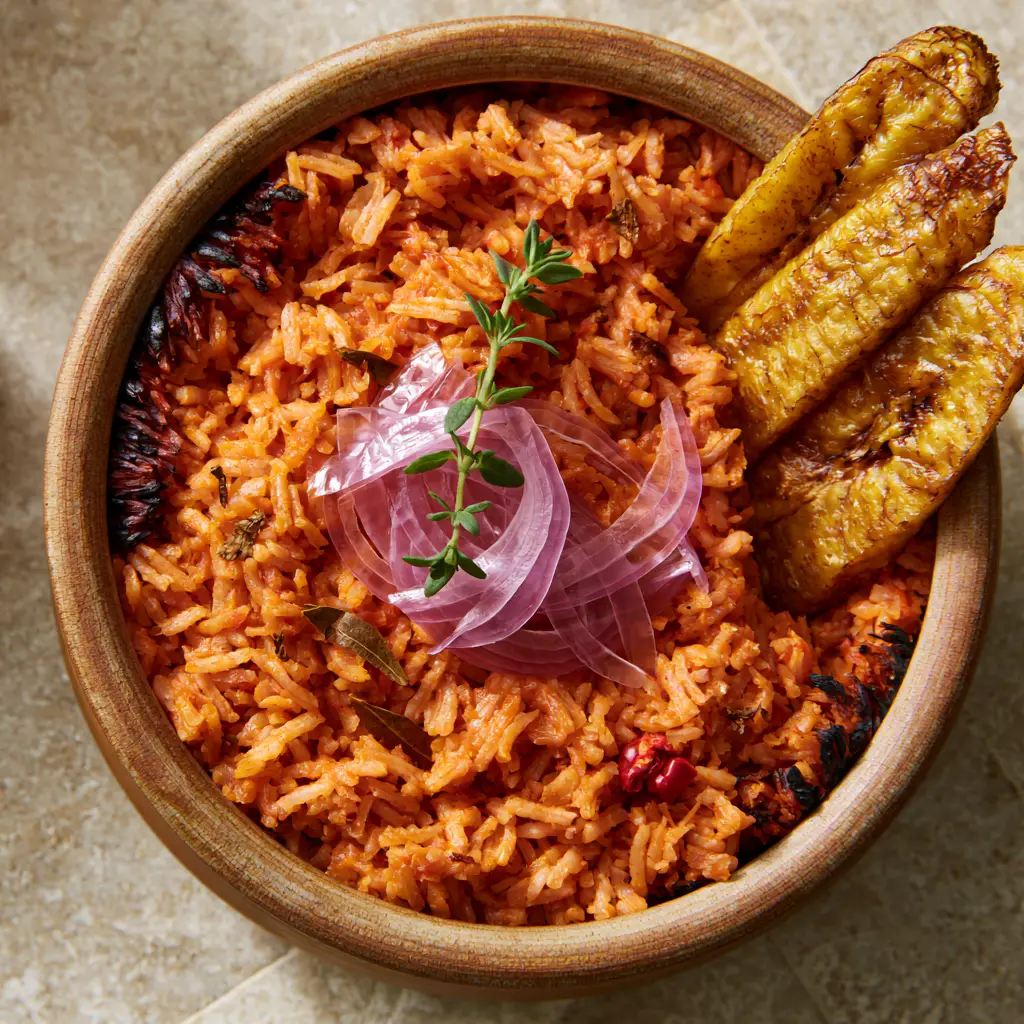
Nigerian lunch recipes are famous for their bold flavors, vibrant colors, and deep culinary traditions, but nothing holds a candle to the iconic Smoky Jollof Rice. If you have ever scrolled through Pinterest and seen that glistening, deep orange-red rice served with golden plantains, you know exactly why this dish is a viral sensation. This recipe brings the authentic “Party Jollof” flavor straight to your kitchen, complete with the signature charred bits and aromatic steam.
Creating the perfect bowl of Jollof is an art form. It requires patience, the right type of long-grain parboiled rice, and a concentrated base of blistered tomatoes and red bell peppers. Whether you are looking for a weekend feast or a show-stopping meal to prep for the week, this dish defines the soul of West African cuisine. Let’s dive into the science of the smoke and the secret to those perfectly separate grains.
Why This Is the Best Nigerian Lunch Recipe You Will Ever Make
- The Authentic “Party” Smokiness: We use a specific steaming technique to achieve those charred rice bits at the bottom of the pot, providing that elusive wood-fire flavor.
- Perfect Grain Texture: By using parboiled rice and a precise liquid-to-rice ratio, every grain stays separate, fluffy, and coated in a vibrant tomato base.
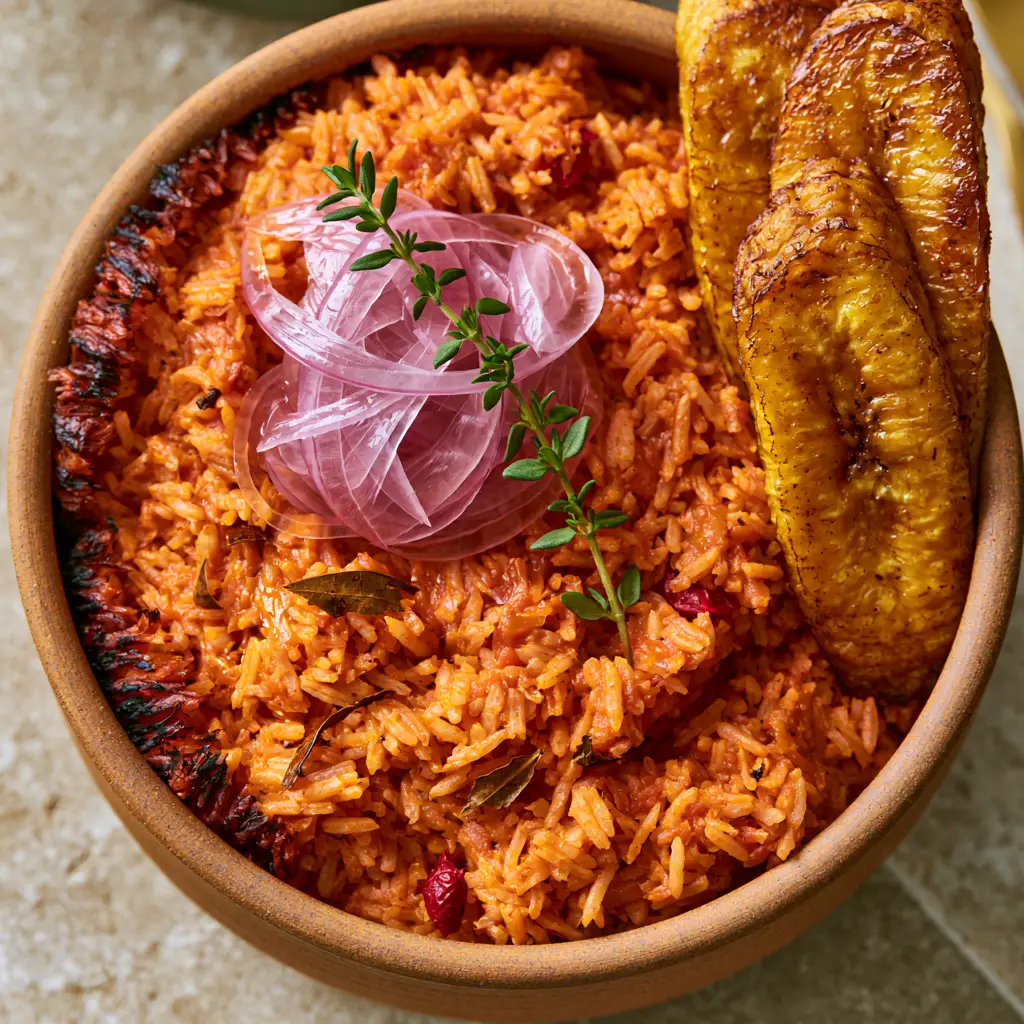
- Visual Perfection: From the translucent thin-sliced red onions to the fresh green thyme sprigs, this dish is designed to look as good as it tastes.
- Sweet and Savory Balance: The addition of diagonal slices of golden-brown caramelized fried plantains provides the perfect contrast to the spicy scotch bonnet flecks.
The Secret Ingredients for Authentic Nigerian Jollof
To achieve the depth of flavor found in the best Nigerian lunch recipes, you cannot cut corners with your ingredients. Each component serves a specific culinary purpose to build layers of umami and heat.
Long-Grain Parboiled Rice: 3 cups (600g). Unlike Basmati, parboiled rice is sturdy. It withstands the long steaming process without turning into mush, ensuring each grain remains distinct.
The Red Base: 3 large red bell peppers (tatashe) and 5 medium tomatoes. These must be roasted or blistered to remove excess water and concentrate the natural sugars for that deep orange-red hue.
Scotch Bonnet Peppers (Atarodo): 1-2 peppers. These provide the characteristic West African heat. We leave visible flecks of scotch bonnet in the final dish to signal the spice level to the diner.
Concentrated Tomato Paste: 1/2 cup (120ml). This is the secret to the rich color. Frying the paste in oil removes the metallic tinny taste and creates a savory foundation.
Aromatics and Herbs: Fresh thyme, crushed bay leaf bits, and red onions. These “invisible” ingredients provide the floral and earthy backbone of the rice.
Vegetable Oil: 1/2 cup (120ml). Essential for searing the tomato base and ensuring the rice grains glisten under the light.
Chicken or Beef Stock: 3 cups (720ml). Always use high-quality stock instead of water to infuse the rice with deep savory notes.
Sweet Plantains: 2 large yellow-to-black plantains. These are sliced diagonally and fried until caramelized and golden-brown.
Mastering the Concentrated Tomato and Pepper Base
The soul of all great Nigerian lunch recipes lies in the “stew” base. Start by blending your blistered tomatoes, red bell peppers, and scotch bonnets until smooth. In a large heavy-bottomed pot, heat your oil and sauté thin raw red onion rings until they are soft and translucent.
Add the tomato paste to the oil. This step is crucial. You must fry the paste for 5-8 minutes on medium heat, stirring constantly. You will know it is ready when the oil begins to separate and the paste turns a dark, brick-red color. This process removes the acidity and prepares the pot for the blended pepper mix.
Pour in the blended pepper mixture. Add your crushed bay leaf bits and a fresh thyme sprig. Cover and simmer for 15-20 minutes. The goal is to reduce the moisture until you have a thick, concentrated tomato and red bell pepper sauce. If you like this flavor profile, you might also enjoy exploring our Nigerian chicken stew for your next meal prep session.
Achieving the Signature Smoky Texture
Once your base is concentrated, stir in your washed parboiled rice. Ensure every grain is coated in the vibrant orange-red base. Pour in your stock, but be careful! The liquid should just barely cover the rice. In Nigerian cooking, we “steam” the rice rather than “boil” it.
Cover the pot tightly with foil before putting the lid on. This traps the visible steam inside, forcing the heat through the grains. Turn the heat to low and let it cook for 30 minutes. Do not peek! Opening the lid lets the steam escape and ruins the texture.
To get those charred rice bits (the “bottom pot”), turn the heat up to medium-high for the last 3-5 minutes of cooking. You should hear a slight crackling sound and smell a hint of toasted rice. This is the hallmark of professional Nigerian lunch recipes and provides an incredible depth of flavor. For more inspiration on West African staples, check out our guide to West African fufu.
Expert Tips for Success
- Wash Your Rice Thoroughly: Rinse the parboiled rice in warm water until the water runs completely clear. Removing the surface starch is what keeps the grains separate.
- The Foil Trick: Using aluminum foil under the pot lid is non-negotiable for Smoky Jollof. It creates a pressurized environment that cooks the rice evenly.
- Don’t Over-Stir: Once the rice is mixed with the sauce, leave it alone. Excessive stirring breaks the grains and releases starch, leading to a soggy texture.
- Caramelizing Plantains: Fry your plantains in oil that is hot but not smoking. This allows the natural sugars to caramelize into a deep golden brown without burning the outside.
Storage, Reheating, and Freezing
Jollof rice is one of those rare Nigerian lunch recipes that actually tastes better the next day. Store leftovers in an airtight container in the refrigerator for up to 5 days.
To reheat, add a splash of water or stock to the rice and microwave it covered, or steam it on the stovetop. This restores the visible steam and keeps the rice fluffy. You can also freeze Jollof for up to 3 months. Thaw it overnight in the fridge before reheating.
What to Serve With Smoky Jollof Rice
While this dish is a star on its own, it is traditionally served with various proteins and sides. If you want a full spread, consider pairing it with suya chicken or a side of Nigerian fried rice for a “half and half” plate. A cold beverage is also a must to balance the heat from the flecks of scotch bonnet.
For those looking to expand their West African palate, Jollof also pairs beautifully with hearty soups. You can find many options in our collection of African food recipes.
Frequently Asked Questions About Nigerian Jollof
While you can use Basmati, authentic Nigerian Jollof typically uses long-grain parboiled rice. Parboiled rice is sturdier and holds up better to the long steaming process required to get the signature ‘Party Jollof’ texture without getting mushy.
The vibrant color comes from frying a high-quality tomato paste and using plenty of blistered red bell peppers (tatashe) in your blended base. Frying the paste until it darkens is the most important step for color.
The secret is to use a heavy-bottomed pot and seal it tightly with aluminum foil. Allowing the bottom layer of rice to slightly burn or ‘char’ at the end of cooking creates a smoky aroma that infuses the entire pot.
It has a noticeable kick due to the Scotch bonnet peppers. However, you can control the heat by reducing the number of peppers or removing the seeds. The sweetness of the fried plantains also helps balance the spice.
Soggy rice is usually caused by using too much liquid or stirring the rice too often. The stock should only just cover the rice. Trust the steam trapped by the foil to do the work rather than boiling it in excess water.
Authentic Smoky Nigerian Jollof Rice Recipe
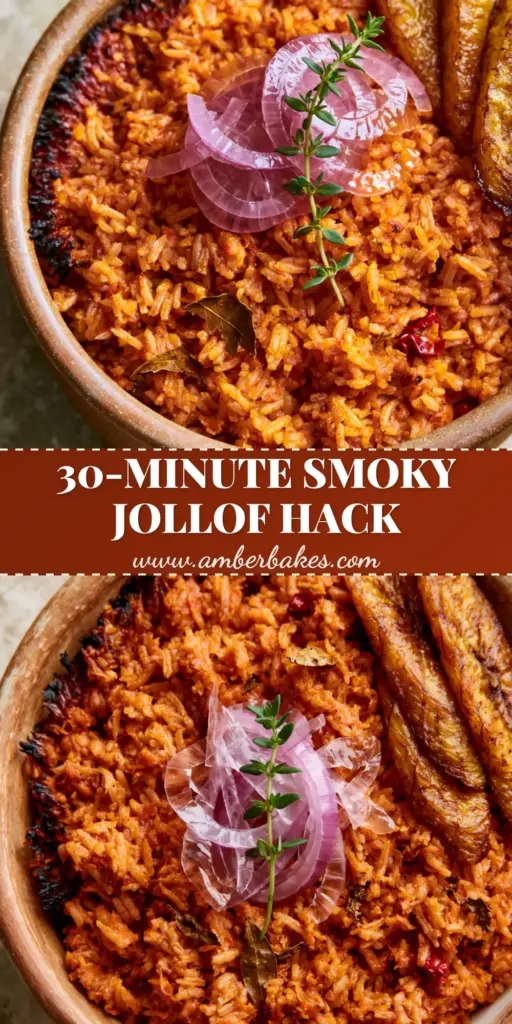
Nigerian lunch recipes: The Ultimate Smoky Party Jollof Rice with Fried Plantains
Ingredients
Equipment
Method
- Blend the blistered tomatoes, red bell peppers, half an onion, and scotch bonnets until smooth.
- Heat oil in the pot. Sauté the remaining sliced onions until translucent. Add tomato paste and fry for 5-8 minutes until it darkens.
- Add the blended pepper mix and crushed bay leaves. Cook for 15-20 minutes until the sauce is concentrated and oil floats on top.
- Stir in the washed parboiled rice until every grain is coated in the vibrant sauce. Pour in chicken stock and season with salt/thyme.
- Cover the pot with foil and a tight lid. Simmer on low heat for 30 minutes until grains are tender and steam is visible.
- Increase heat to medium-high for 3-5 minutes to create the signature charred rice bits at the bottom.
- While rice rests, fry the diagonal plantain slices in hot oil until golden-brown and caramelized on both sides.
Notes
The charred bits at the bottom are intentional—don't panic, that is where the flavor lives!
Share Your Jollof Journey!
We want to see your beautiful creations! Did you get those perfect charred rice bits? Are your golden-brown caramelized fried plantains looking picture-perfect? Save this recipe to your Nigerian lunch recipes board on Pinterest so you never lose it!
Follow amber_bakes for more authentic African dishes and tips. If you made this, please leave a 5-star rating in the recipe card above and drop a photo of your dish in the comments below. We love seeing how you bring these flavors to life!