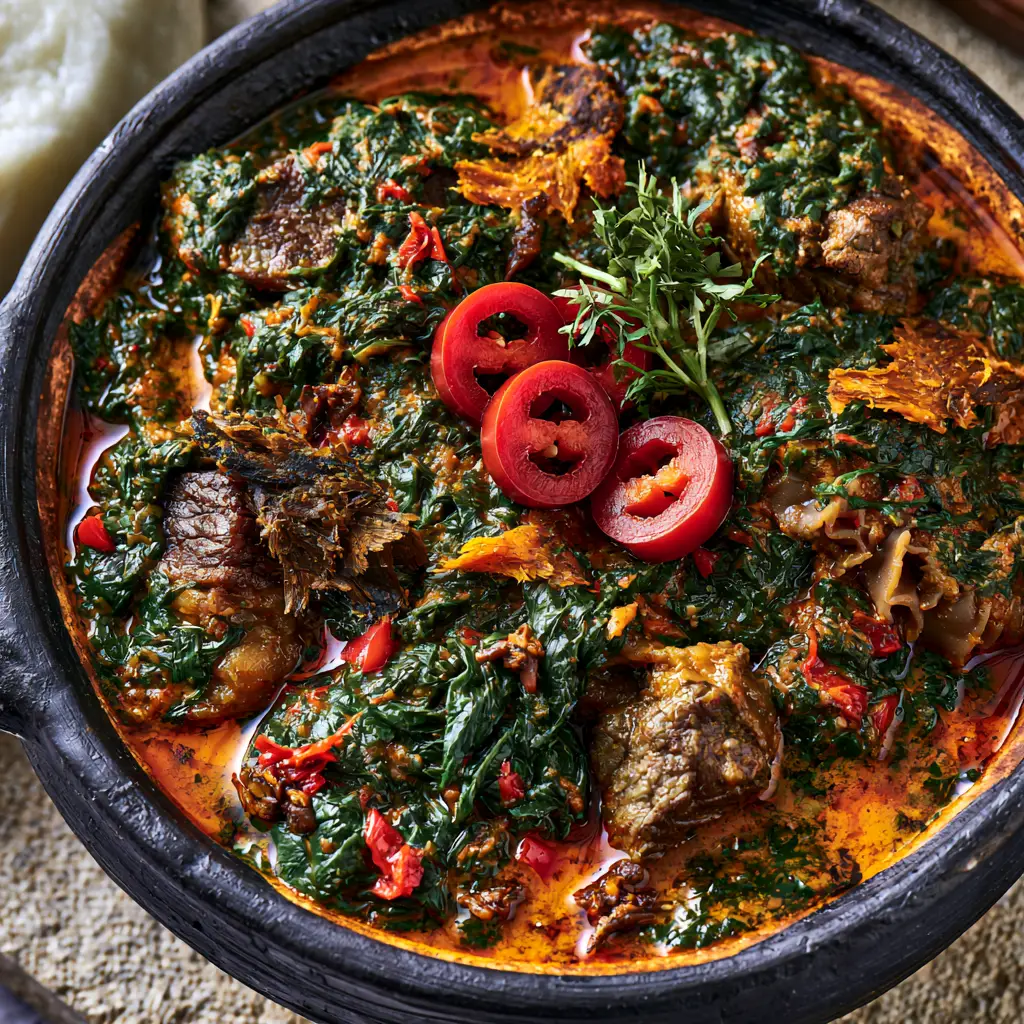
Nigerian Spinach Stew, popularly known as Efo Riro, is the crown jewel of Yoruba cuisine. This isn’t just a side dish; it is a rich, savory masterpiece characterized by its concentrated red bell pepper sauce, vibrant dark green wilted spinach, and a decadent red palm oil sheen. If you have been searching for a stew that is thick, packed with umami, and devoid of any watery residue, this authentic guide is for you.
The beauty of a traditional Nigerian Spinach Stew lies in the layers of texture. Imagine succulent chunks of seared beef, chewy cooked tripe pieces, and flakes of smoked fish all entwined in a spicy, fermented base. When served alongside smooth white pounded yam, it creates a culinary experience that is both soul-warming and visually stunning. This recipe is designed to help you recreate that specific, glossy finish seen in high-end West African kitchens.
Why This Is The Only Efo Riro Recipe You Need
- Zero Wateriness: We use professional techniques to ensure your spinach is perfectly wilted without thinning out the rich sauce.
- Deep Umami Profile: The inclusion of fermented locust beans (Iru) provides that unmistakable “home-cooked” depth.
- Visual Perfection: The recipe achieves that iconic deep glossy orange-red hue from high-quality palm oil.
- Protein Packed: A trio of beef, tripe, and smoked fish ensures every bite is substantial.
If you love exploring vibrant African flavors, you should also check out my recipe for Nigerian chicken stew or explore my collection of Nigerian soups for more dinner inspiration.
Essential Ingredients For The Perfect Spinach Base
To achieve the Visual Recipe Blueprint, every ingredient serves a specific culinary purpose. Do not skip the aromatics!
Fresh Spinach Leaves: Use 2 lbs (900g) of fresh spinach. It may seem like a lot, but it wilts down significantly to provide that dense, leafy texture. Visual Cue: The leaves should be vibrant dark green and tender.
Red Palm Oil: 1/2 cup (120ml) of authentic palm oil is crucial. It provides the signature red palm oil sheen and a distinct earthy flavor that vegetable oil cannot replicate.
The Pepper Blend: You will need 3 large red bell peppers and 2-3 scotch bonnets. This creates the concentrated red bell pepper sauce that acts as the stew’s foundation.
Assorted Proteins: 1 lb (450g) of seared beef chunks and 1/2 lb (225g) of cooked tripe pieces. The beef provides a hearty bite, while the tripe offers a unique, tender chew.
Smoked Fish: 1 cup (approx. 150g) of smoked fish flakes. This adds a smoky, salty dimension that balances the heat of the peppers.
Fermented Locust Beans (Iru): 2 tablespoons of fermented locust beans. These are the secret to an authentic Nigerian Spinach Stew, providing a pungent, savory kick.
How To Prepare The Rich Pepper Base
The secret to a non-watery Nigerian Spinach Stew is all in the pepper preparation. You want a sauce that clings to the spinach, not a soup.
Mastering The Pepper Reduction
Coarsely blend your red bell peppers, onions, and scotch bonnets. Do not blend them into a smooth liquid; you want tiny flecks of pepper visible for texture.
Pour the blend into a pot and boil it down until the water has completely evaporated. This leaves you with a concentrated red bell pepper sauce that is thick and potent.
In a separate large pot, heat the palm oil on medium heat. Do not let it smoke excessively, but wait until it is hot enough to shimmer. Add your sliced onions and fermented locust beans. The smell will be intense and traditional.
Developing The Layers of Flavor and Texture
Once your aromatics are fragrant, it is time to build the stew’s body. This is where the Nigerian Spinach Stew gets its “rich and concentrated” reputation.
Searing the Meats and Building Umami
Add your seared beef chunks and cooked tripe pieces to the oil. Sauté them for 3-5 minutes so they absorb the flavor of the locust beans. The beef should have a dark, caramelized exterior.
Stir in the concentrated pepper base. Season with salt and bouillon to taste. Let this fry in the palm oil for about 10 minutes. You will know it is ready when the oil begins to float to the top, creating that beautiful red palm oil sheen.
Gently fold in the smoked fish flakes. Be careful not to break them too much; you want visible flakes throughout the finished dish. If you enjoy this flavor profile, you might also like spinach salmon pasta recipe.
The Final Touch: Wilting The Spinach
To ensure your Nigerian Spinach Stew looks like the professional photography in our Midjourney Prompt, the spinach must be handled with care.
Blanch your spinach in hot water for 2 minutes, then immediately shock it in cold water. Most importantly, squeeze every drop of water out of the spinach before adding it to the pot.
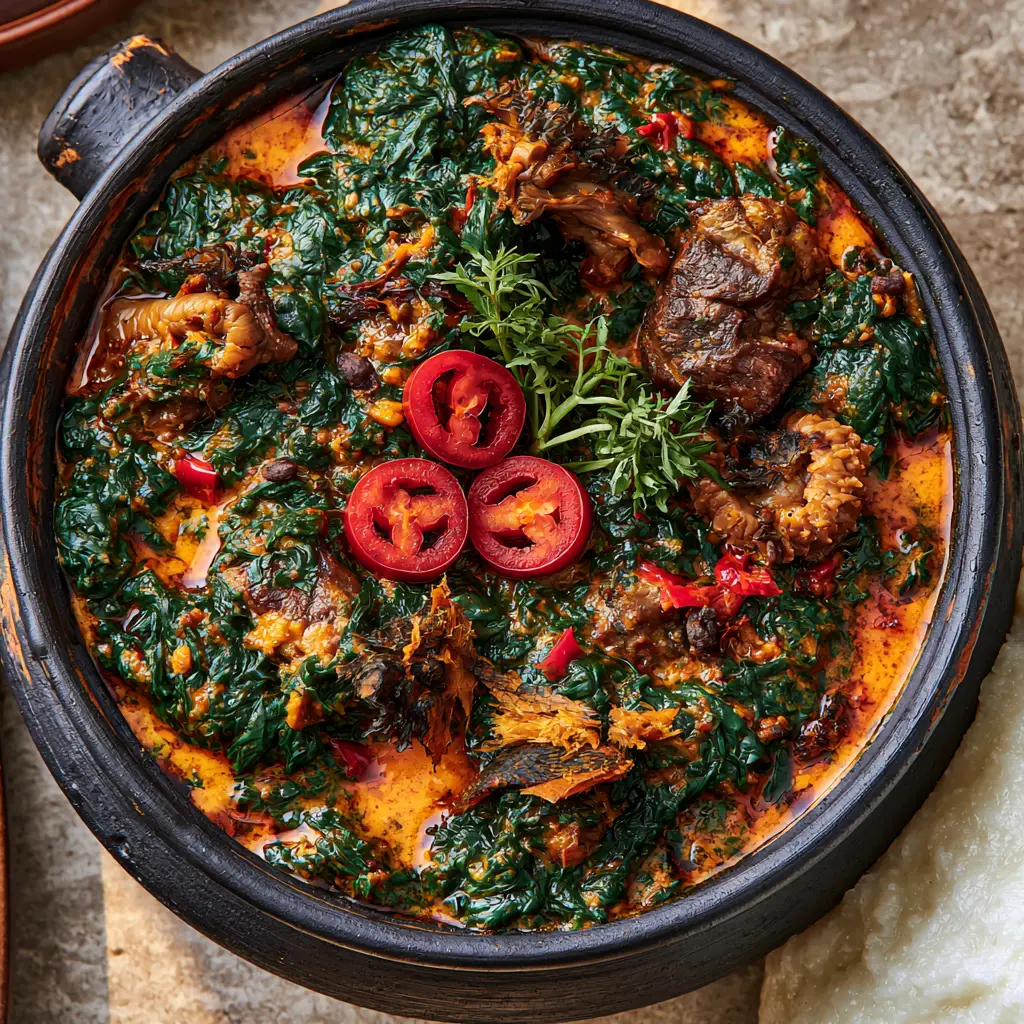
Add the squeezed spinach to the pepper base. Stir gently until the vibrant dark green wilted spinach leaves are thoroughly coated in the glossy orange-red sauce. There should be no visible water at the bottom of the bowl.
Garnish the top with three perfectly placed rounds of fresh red scotch bonnet peppers and a small sprig of fresh herbs for a pop of contrast. The final result should be thick, rich, and intensely colorful.
Expert Tips for Success
- Squeeze the Spinach: This is the #1 tip to prevent a “watery” stew. Use a muslin cloth or your hands to press out all moisture.
- Don’t Over-Process: Keep the pepper blend slightly chunky. This helps the sauce “grip” the meat and spinach.
- Palm Oil Quality: Use “unbleached” palm oil for the most authentic flavor and the brightest red sheen.
- Protein Variety: Feel free to add cow skin (ponmo) or shrimp for even more texture, similar to other authentic African dishes.
Storage, Reheating & Freezing
Nigerian Spinach Stew actually tastes better the next day as the flavors continue to meld. Store in an airtight container in the fridge for up to 4 days.
To reheat, use a saucepan over low heat. Avoid the microwave if possible, as it can make the spinach rubbery. If the stew is too thick, add a tiny splash of beef stock, but keep it concentrated.
This stew freezes exceptionally well. Store in freezer-safe bags for up to 3 months. Thaw overnight in the fridge before reheating.
What to Serve With This Dish
For the ultimate experience, serve your Nigerian Spinach Stew with smooth white pounded yam. The mildness of the yam balances the spicy, bold flavors of the Efo Riro perfectly.
Other great pairings include West African fufu, eba, or even a side of Nigerian fried rice recipe for a festive spread. The thick sauce is also incredible when scooped up with warm bread.
Frequently Asked Questions
Yes, you can use frozen spinach. However, you must thaw it completely and squeeze out every drop of excess water before adding it to the stew to maintain the thick, concentrated consistency.
The secret is two-fold: boil your pepper blend until the water evaporates into a thick paste, and ensure your spinach is blanched and squeezed very dry before it hits the pot.
It has a kick due to the scotch bonnet peppers, but you can control the heat by reducing the number of peppers in the blend while keeping the red bell peppers for color.
Iru is fermented locust beans. It provides a deep, pungent umami flavor traditional to Yoruba cooking. While you can omit it, the stew will lack the authentic ‘home-cooked’ depth that defines Efo Riro.
A combination of textures is best. Traditionally, seared beef, tripe (shaki), and cow skin (ponmo) are used to provide a variety of chewy and succulent bites.
The Authentic Efo Riro Recipe
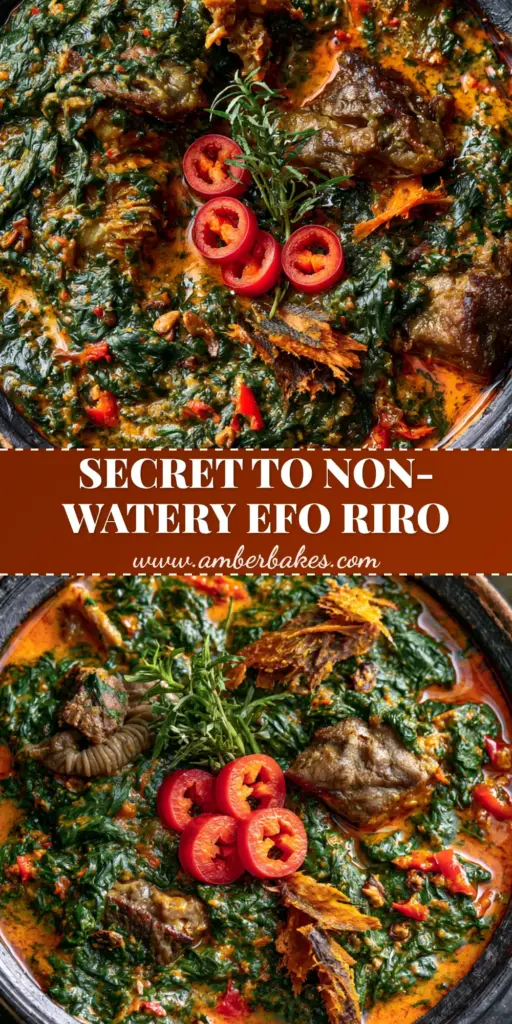
Nigerian Spinach Stew: The Ultimate Authentic Efo Riro Recipe
Ingredients
Equipment
Method
- Coarsely blend bell peppers and scotch bonnets. Boil down in a pot until water evaporates and you have a concentrated paste.
- Blanch spinach in hot water for 2 mins, shock in ice water, and squeeze out all moisture completely.
- Heat palm oil in a large pot. Add onions and locust beans, frying until fragrant.
- Add seared beef and tripe to the oil. Stir in the pepper paste and fry until oil separates and rises to the top.
- Fold in smoked fish flakes and the squeezed spinach. Stir until coated in the glossy sauce. Garnish with scotch bonnet rounds.
Notes
Iru (locust beans) is essential for the authentic funky umami flavor.
Share Your Culinary Masterpiece!
Did you recreate this Nigerian Spinach Stew? I would love to see your results! Please save this recipe to your Pinterest boards so you never lose it.
Follow amber_bakes for more authentic recipes and kitchen tips. If you enjoyed this dish, please leave a 5-star rating in the recipe card above and drop a photo of your stew in the comments below. Happy cooking!