Indian rice paper rolls are the ultimate fusion snack that combines the light, translucent crunch of Vietnamese summer rolls with the bold, aromatic punch of Indian street food. If you are looking for a vibrant, healthy, and show-stopping appetizer, these rolls are the answer. Featuring golden-seared paneer cubes tossed in warm tikka spices and wrapped with crisp, raw vegetables, they offer a sensory explosion in every bite. Whether you are a fan of crispy rice paper rolls or looking for a gluten-free lunch, this recipe delivers professional results with minimal effort.
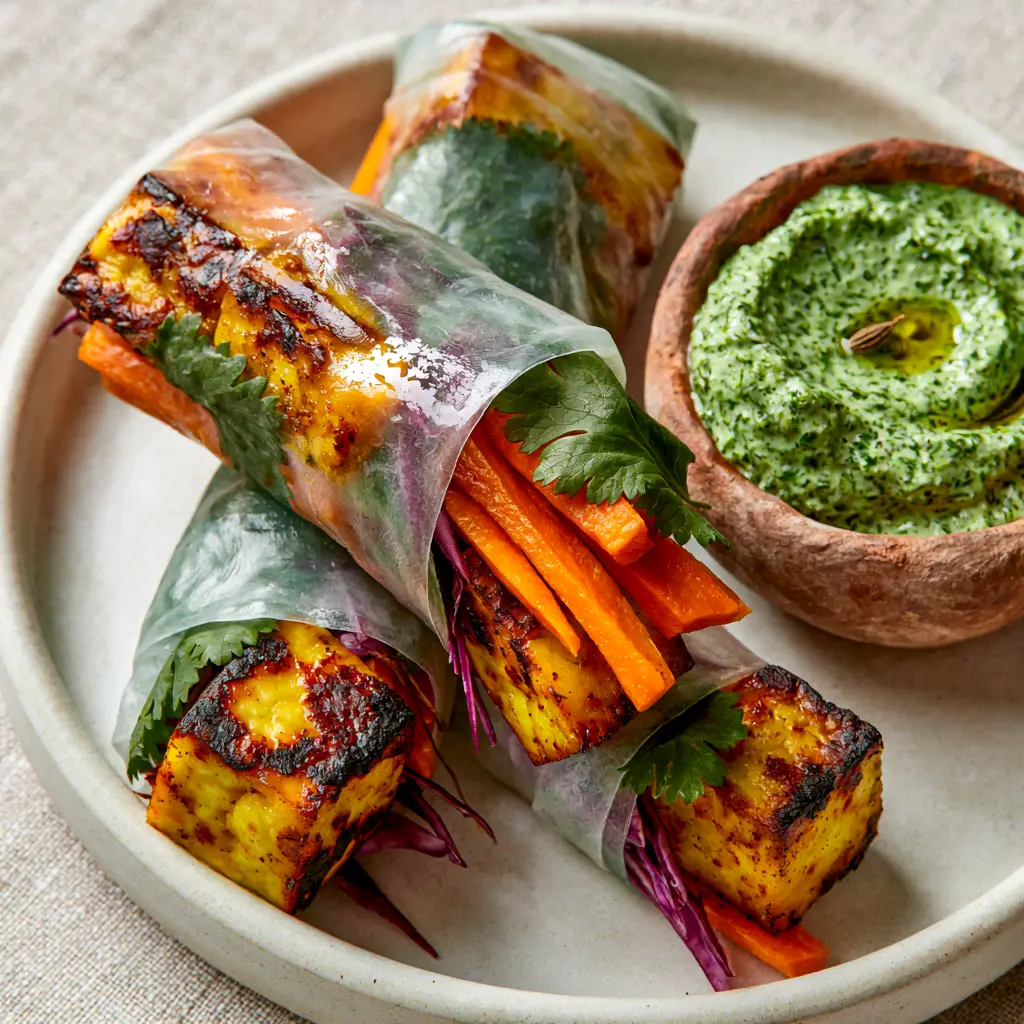
Why You Will Love These Fusion Indian Rice Paper Rolls
- Textural Perfection: The contrast between the chewy, translucent rice paper and the crunchy julienned carrots and cucumber is addictive.
- Bold Spice Profile: Unlike traditional spring rolls, these are packed with golden seared paneer seasoned with authentic tikka spices.
- Visually Stunning: The vibrant purple cabbage and emerald cilantro shine through the clear wrapper, making them a Pinterest-worthy masterpiece.
- Dietary Friendly: Naturally gluten-free and vegetarian, making them perfect for diverse crowds.
These rolls are remarkably similar in technique to our caramelized banana rice paper rolls, but they lean into the savory, spicy side of the spectrum. The addition of a thick, neon-green mint chutney provides a cooling yet zesty finish that ties the whole dish together.
Essential Ingredients for the Best Indian Rice Paper Rolls
To achieve the specific look and flavor profile of these rolls, you will need high-quality ingredients that provide both structure and taste.
The Protein: Tikka Spiced Paneer
- Paneer Cubes: 7 oz (200g) of firm paneer. This Indian cheese holds its shape perfectly when seared, providing the “meaty” center of the roll.
- Tikka Spice Blend: 1 tbsp (15ml) oil and 2 tsp (10g) tikka masala powder. This creates those iconic charred edges and deep golden color seen in the visual blueprint.
- Chaat Masala: A pinch for garnish. This adds the final “zing” or “tangy” note essential to Indian snacks.
The Fresh Crunch: Vegetables and Herbs
- Rice Paper Wrappers: 10-12 circular sheets (22cm diameter). These must be handled carefully to remain plump and translucent.
- Purple Cabbage: 1 cup (70g), finely shredded. This provides a stunning color contrast against the orange carrots.
- Carrots & Cucumber: 1 cup (120g) each, julienned into matchsticks. These provide the essential crisp texture.
- Fresh Cilantro: 1/2 cup (15g) of whole leaves. Do not chop them; the whole leaves look beautiful through the rice paper.
The Dipping Sauce: Neon-Green Mint Chutney
- Fresh Mint & Cilantro: The base for the thick green mint chutney.
- Green Chilies & Lemon: For heat and acidity.
- Cumin Seed & Oil: A tiny swirl of oil and a single cumin seed on top for a professional, handcrafted finish.
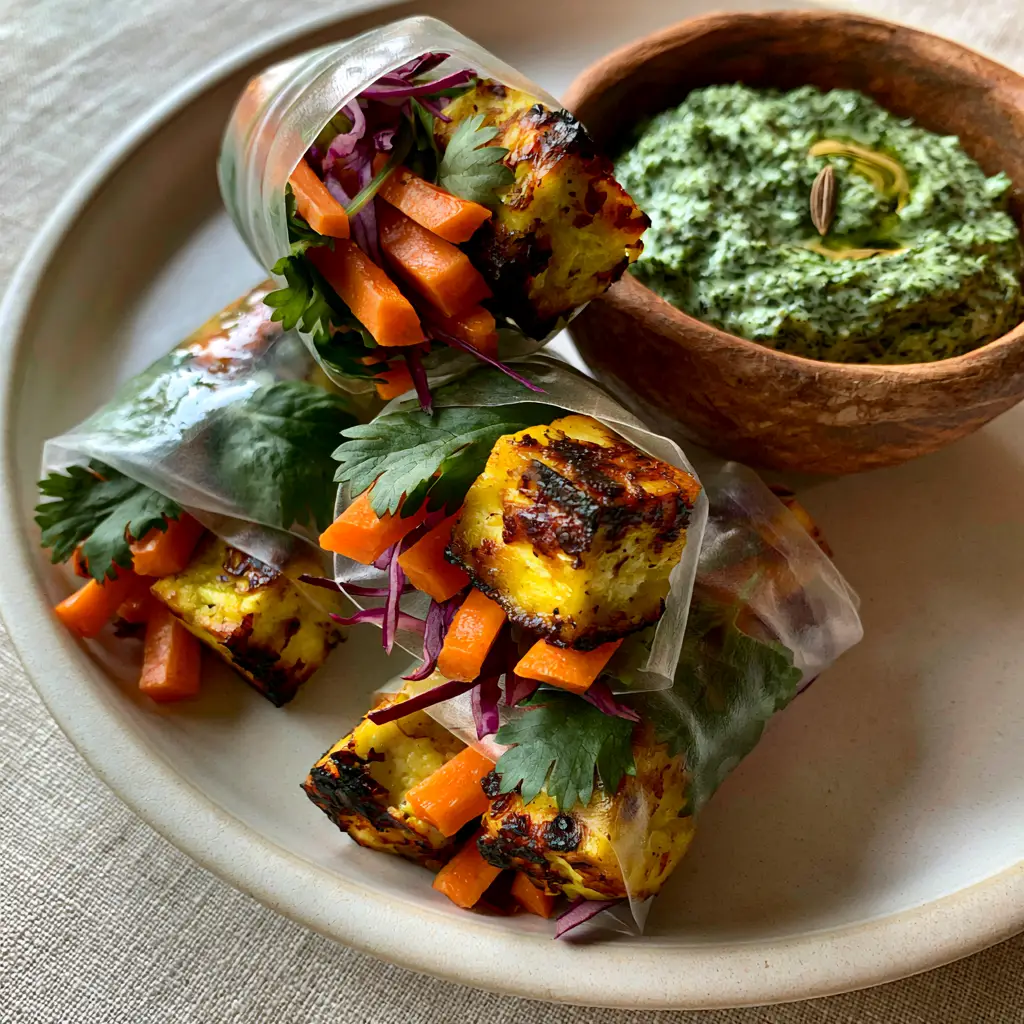
How to Make Indian Rice Paper Rolls Step-by-Step
1. Searing the Tikka Paneer to Golden Perfection
Start by cutting your paneer into small 1/2-inch (1.25cm) cubes. Heat 1 tbsp (15ml) of neutral oil in a non-stick skillet over medium-high heat. Toss the paneer with the tikka spices and a pinch of salt. Sear the cubes for 2-3 minutes per side until you see golden charred edges. The smell of toasted spices will be your first sensory cue. Remove from heat and let them cool slightly so they don’t tear the rice paper.
2. Prepping the Rainbow Filling
While the paneer cools, prepare your vegetables. Use a sharp knife to create uniform julienned raw carrots and crisp cucumber matchsticks. Finely shred the purple cabbage. Consistency is key here; uniform pieces make the Indian rice paper rolls much easier to wrap tightly without tearing.
3. The Softening Ritual: Hydrating Rice Paper
Fill a shallow dish with lukewarm water. Submerge one rice paper sheet for just 5-10 seconds. It should still feel slightly firm as you remove it; it will continue to soften on your work surface. If you over-soak it, the roll will become gummy and break. It should look thin and clear once laid flat.
4. Assembly: Layering for Visual Impact
In the center of the bottom third of the paper, place 2-3 whole cilantro leaves face down. Top with a small handful of shredded cabbage and carrot. Add 3-4 golden seared paneer cubes. Finally, add the cucumber matchsticks. This layering ensures the bright colors are the first thing seen through the translucent wraps.
5. The Rolling Technique
Fold the bottom of the rice paper over the filling, tucking it in snugly. Fold in the left and right sides, then roll upward tightly to create a plump, translucent roll. The friction of the damp rice paper will seal the roll naturally.
Expert Tips for Success
- Avoid Overfilling: It is tempting to pack these with paneer, but overfilling leads to tears. Keep them plump but manageable.
- The Damp Towel Trick: If not serving immediately, cover the rolls with a damp paper towel to prevent the rice paper from drying out and becoming brittle.
- Temperature Control: Ensure the paneer is not piping hot when wrapping, as the steam can make the rice paper overly soft and sticky.
- Dipping Logic: Always serve with a thick green mint chutney. A watery sauce will make the rice paper soggy.
If you enjoy the technique of working with rice paper, you might also like experimenting with air fryer rice paper noodle rolls for a completely different, crunchy texture.
Storage and Meal Prep Advice
Indian rice paper rolls are best enjoyed fresh, within 1-2 hours of making. The rice paper tends to harden in the refrigerator. However, you can meal prep the components! Store the seared paneer, julienned veggies, and chutney in separate airtight containers for up to 3 days. When ready to eat, simply dip, fill, and roll!
We do not recommend freezing these rolls, as the vegetables will lose their crunch and the rice paper will become mushy upon thawing.
What to Serve With This Dish
These rolls are a fantastic light meal on their own, but they also pair beautifully with other global flavors. Serve them alongside kuku paka recipe for a full fusion dinner, or add them as a side to authentic African dishes to provide a fresh, cooling contrast to spicy stews.
Frequently Asked Questions
Yes, as long as your tikka masala spice blend and chaat masala do not contain any wheat-based anti-caking agents. Rice paper is naturally gluten-free.
While you can prep the fillings 2-3 days in advance, the rolls are best assembled just before serving. Rice paper becomes tough and rubbery if refrigerated for too long.
The secret is not over-soaking. Dip the paper in lukewarm water for only 5-10 seconds. It should still be slightly stiff when you lay it down; it will soften as you add the fillings.
Absolutely! Paneer provides a firm, creamy texture that stands up well to searing. If you want a vegan version, you can swap the paneer for extra-firm tofu using the same tikka spices.
Arrange them on a matte ceramic plate with the mint chutney in the center. Cover them with a slightly damp, clean kitchen towel until the moment guests arrive to keep the rice paper translucent and soft.
The Ultimate Indian Rice Paper Rolls Recipe
Indian Rice Paper Rolls with Seared Paneer and Mint Chutney
Ingredients
Equipment
Method
- Toss paneer cubes in tikka spices. Heat oil in a skillet and sear until paneer has golden charred edges.
- Dip rice paper in lukewarm water for 5-10 seconds until pliable but not mushy.
- Place cilantro, cabbage, carrots, paneer, and cucumber matchsticks in the center.
- Fold sides in and roll tightly from the bottom to create a plump cylinder.
Notes
Use a very sharp knife for julienning veggies to keep them crisp.
Join the amber_bakes Community!
Did these Indian rice paper rolls turn out as vibrant and plump as you hoped? We want to see! Save this recipe to your Pinterest Appetizer Board so you never lose it. If you made these for a party or a quick lunch, please leave a 5-star rating in the recipe card above and upload a photo of your rolls in the comments below. Following @amber_bakes helps us keep creating these fusion delights for you!