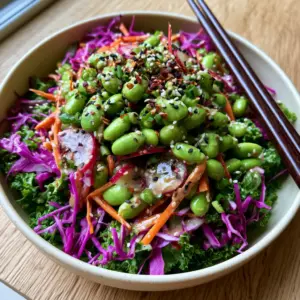
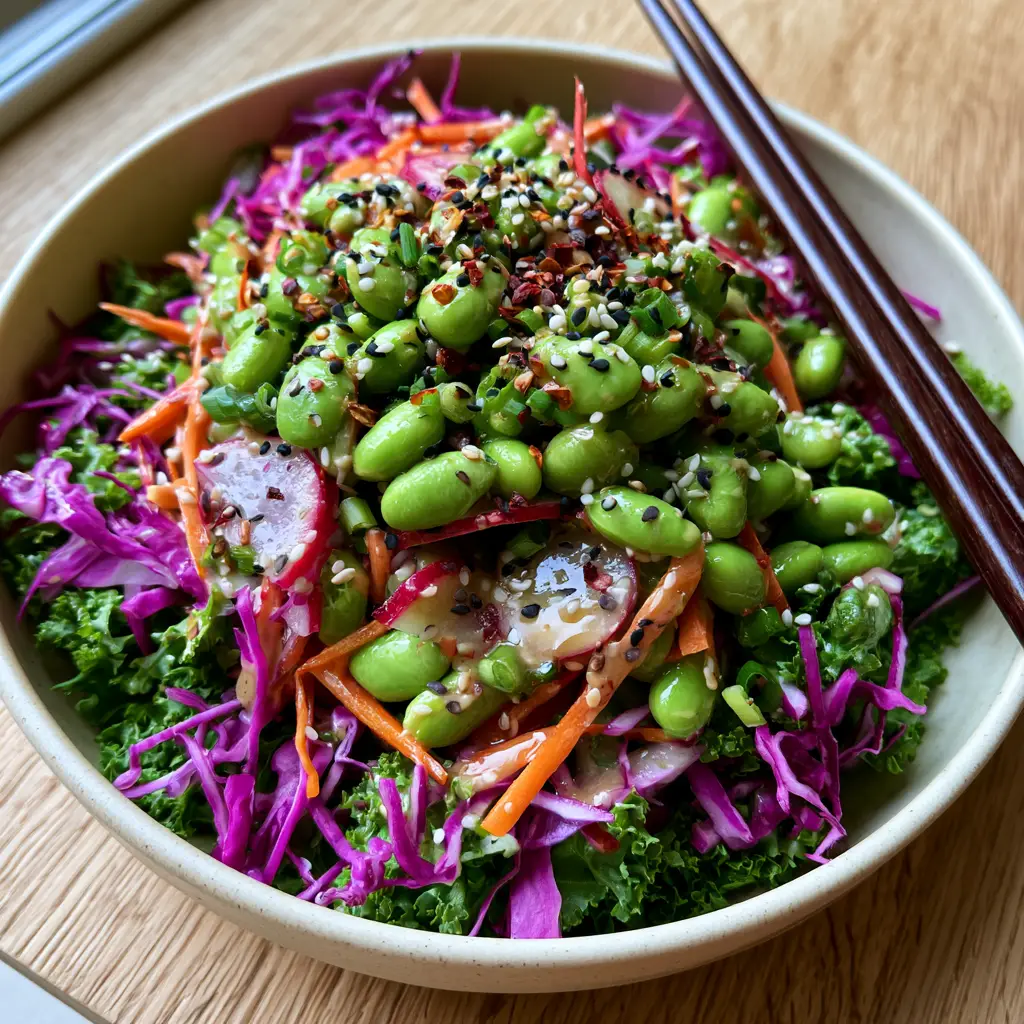
The Japanese edamame salad is a masterclass in texture, color, and nutritional density. If you have been searching for a dish that captures the vibrant energy of a high-end Tokyo bistro, this crunch-heavy salad is your answer. It is a visual feast, featuring a mountain of plump, emerald-green soybeans resting on a bed of finely shredded violet and forest-green brassicas.
Every bite of this Japanese edamame salad offers a satisfying snap, followed by the deep, umami-rich coat of a glossy ginger vinaigrette. This is not just another side dish; it is a meticulously layered experience designed to satisfy the palate and provide long-lasting energy. Whether you are prepping for a busy week or hosting a dinner, this recipe delivers restaurant-quality results at home.
The inspiration for this recipe comes from the clean, balanced flavors of Japanese “Wafu” salads. We focus on the contrast between the tender, blanched edamame and the structural integrity of kale and cabbage. When these ingredients meet our emulsified dressing, the result is a salad that doesn’t wilt, making it the ultimate choice for meal prep and gatherings.
Why You Will Love This Vibrant Asian-Inspired Crunch Bowl
- Textural Complexity: From the snap of the matchstick carrots to the translucent crunch of red radishes, every ingredient serves a specific tactile purpose.
- Glossy Umami Dressing: Our signature sesame ginger dressing is engineered to cling to every leaf, ensuring no bite is left unseasoned.
- High-Protein Plant Power: The edamame serves as a hearty, protein-rich star that makes this salad feel like a complete, satiating meal.
- Visual Brilliance: The contrast of purple cabbage, bright orange carrots, and deep green kale creates a stunning rainbow that is truly “eat-the-rainbow” personified.
The Essential Crunchy Components for This Protein-Packed Salad
To achieve the specific visual and structural results of a professional Japanese edamame salad, we must select ingredients that offer both color and “bite.” Each element in this list has been curated to match the forensic details of our culinary blueprint.
Shelled Edamame: You will need 2 cups (310g) of high-quality frozen or fresh shelled edamame. These provide the creamy yet firm protein base that defines the dish.
Purple Cabbage: Use 3 cups (270g) of very finely shredded purple cabbage. The thin ribbons ensure the dressing is absorbed while maintaining a structural “base” for the mountain of toppings.
Emerald Green Kale: We require 2 cups (130g) of finely sliced kale, with the woody stems removed. Kale adds an earthy depth and a beautiful forest-green hue to the foundation.
Matchstick Carrots: Prepare 1 cup (125g) of carrots cut into precise matchsticks. These provide a sweet, snappy contrast to the bitter greens.
Red Radishes: You need 4-5 large red radishes, sliced into translucent rounds. Use a mandoline for this to ensure they catch the light and provide a sharp, peppery finish.
Fresh Scallions: 3 medium scallions (30g), finely chopped on a bias. These add a mild onion bite and a professional garnish look.
Pantry Staples for the Glossiest Sesame Ginger Vinaigrette
The “gloss” mentioned in our visual prompt comes from a perfectly emulsified dressing. We combine traditional Japanese flavors with specific fats to create a coating that catches the light and stays put on the vegetables.
Toasted Sesame Oil: 2 tbsp (30ml) provides the signature nutty aroma that is quintessential to Japanese cuisine. It acts as the primary flavor carrier for the dressing.
Neutral Oil: 1/4 cup (60ml) of avocado or grapeseed oil is used to provide volume and that high-shine, glossy finish without overpowering the other delicate flavors.
Rice Vinegar: 3 tbsp (45ml) of unseasoned rice vinegar adds the necessary acidity to brighten the heavy umami notes of the sesame.
Fresh Ginger: 1 tbsp (15g) of freshly grated ginger root. This provides a spicy, aromatic heat that cuts through the richness of the oils.
Soy Sauce (or Tamari): 2 tbsp (30ml) of high-quality soy sauce provides the salt and deep brown color that anchors the dressing’s profile.
Honey or Maple Syrup: 1 tbsp (15ml) of liquid sweetener is essential to balance the acidity of the vinegar and the bitterness of the kale.
The Secret to Perfectly Blanched, Bright Green Edamame
The most common mistake when making a Japanese edamame salad is overcooking the beans until they turn a dull, olive green. To achieve the “plump, bright green” look from our visual guide, we must use a professional blanching technique.
Start by bringing a large pot of heavily salted water to a rolling boil. Salt is the “invisible” ingredient here; it seasons the bean through the skin and helps lock in the chlorophyll, keeping the color vibrant. Once boiling, drop in your shelled edamame.
Boil for exactly 3 to 4 minutes. You are looking for a bean that is tender but still has a slight “pop” when you bite it. While they boil, prepare an ice bath—a large bowl filled with cold water and ice cubes.
As soon as the timer goes off, use a slotted spoon to plunge the edamame into the ice bath. This “shocks” the beans, stopping the cooking process instantly. This step is non-negotiable if you want that professional, high-definition green contrast against the purple cabbage.
Professional Techniques for Slicing and Prepping Your Greens
A Japanese edamame salad lives and dies by its knife work. To recreate the “crunch-heavy base” described in our blueprint, we need to treat the kale and cabbage with specific care. If the kale is just chopped and tossed, it will be tough and unpalatable.
For the kale, remove the central rib and stack the leaves. Roll them tightly like a cigar and slice into very thin ribbons (a technique called chiffonade). Place the kale in a bowl with a pinch of salt and a teaspoon of oil. Massage the leaves with your hands for 60 seconds. You will see the kale turn from a dusty green to a vibrant emerald green as the cell walls break down, making it tender and glossy.
For the purple cabbage, use a very sharp chef’s knife or a mandoline. The goal is “shredded,” not chopped. The thinner the cabbage, the more surface area it has to grab onto that delicious dressing. Combine the massaged kale and shredded cabbage in a large bowl to form the foundation of your salad.
How to Emulsify a Restaurant-Quality Japanese Dressing
To achieve that “thick, glossy” texture that catches the light, you cannot simply stir your dressing ingredients together. You must emulsify them. Emulsification is the process of forced blending between oil and vinegar, which usually repel each other.
In a medium glass jar or a small blender, combine the rice vinegar, soy sauce, honey, and grated ginger. Slowly stream in the toasted sesame oil and neutral oil while whisking vigorously or blending. If you are doing this by hand, a teaspoon of Dijon mustard (though not a traditional Japanese ingredient) can act as a natural stabilizer to keep the oils from separating.
The resulting liquid should be opaque and significantly thicker than when you started. It should coat the back of a spoon smoothly. This thickness is what allows the dressing to “catch the soft natural window light” as described in our visual prompt, giving the salad its luxurious, expensive appearance.
Expert Assembly: Building the Perfect Salad Mountain
Presentation is a core pillar of Japanese culinary philosophy. We aren’t just tossing everything in a bowl; we are building a “mountain” of ingredients to create depth and visual interest.
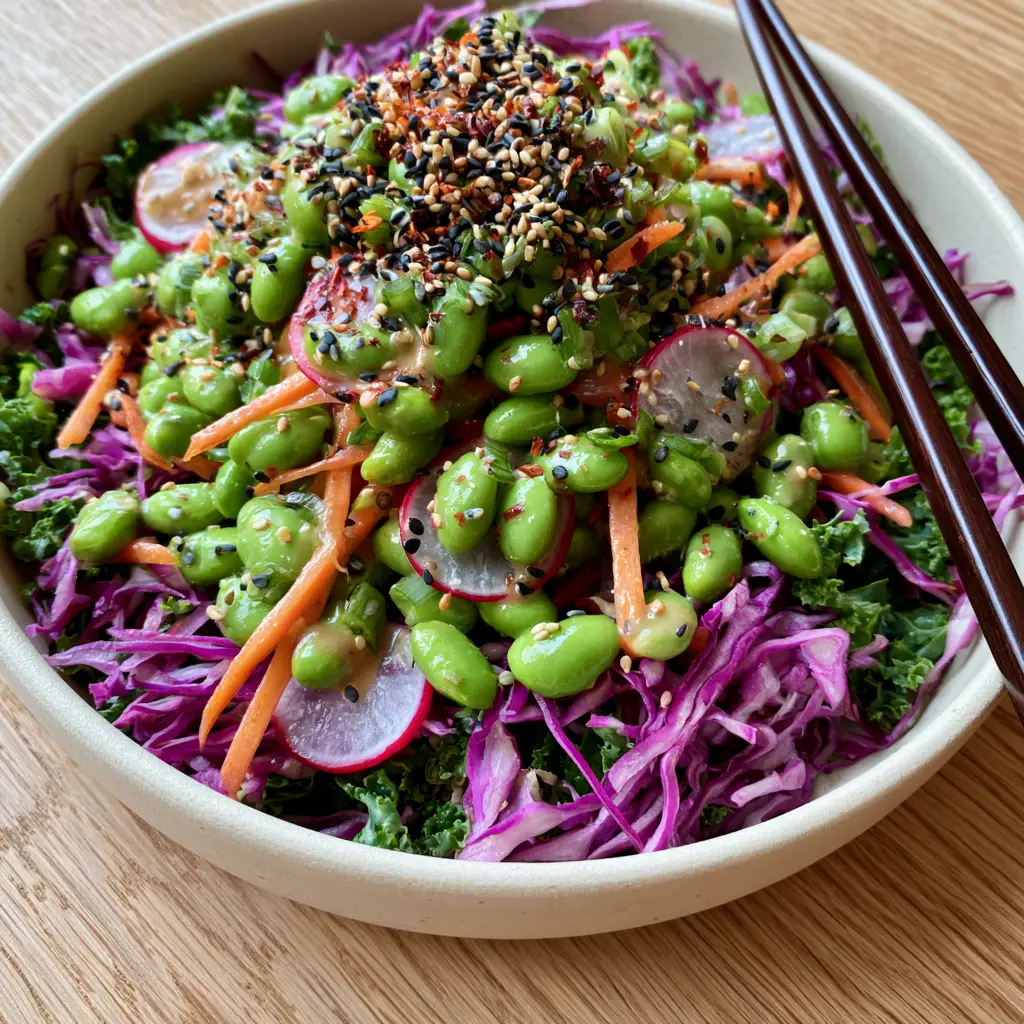
Start by placing your massaged kale and shredded purple cabbage in the bottom of a matte cream ceramic bowl. This creates a dense, colorful “nest.” Next, scatter the matchstick carrots and the translucent radish slices over the top, allowing some to fall into the crevices of the greens.
Now, create the “star” of the show. Pile the bright green blanched edamame directly in the center, forming a high mound. This verticality is what gives the dish its “mountain” aesthetic. Pour the glossy dressing over the peak of the edamame, allowing it to cascade down the sides of the cabbage and kale.
Finally, apply the heavy garnishes. Sprinkle a generous mix of toasted black and white sesame seeds over the top. The contrast of the black seeds against the green edamame is a classic Japanese visual cue. Finish with the chopped scallions and a deliberate pinch of dried red chili flakes for a pop of color and a hint of warmth.
Mastering the Art of Crunchy Japanese Salads
If you enjoy the textures in this Japanese edamame salad, you might find yourself exploring other similar flavor profiles. The key is always the balance of acidity, fat, and crunch. For instance, an Asian cucumber salad uses a similar vinegar-heavy base but focuses on the hydration of the cucumber rather than the protein of the bean.
For those looking for a heartier variation that could serve as a main dinner course, adding a protein like grilled chicken or tofu is a natural progression. You can see how we apply similar crunch principles in our Asian chicken crunch salad.
The beauty of these salads is their versatility. While this edamame version is perfectly vegan and gluten-free (if using tamari), the dressing technique can be applied to almost any vegetable base, from shaved Brussels sprouts to a quick Lebanese tabbouleh recipe if you want to experiment with different cultural herb profiles.
Maintaining Freshness: Storage and Meal Prep Tips
One of the greatest benefits of the Japanese edamame salad is its longevity. Unlike lettuce-based salads that wilt within an hour of being dressed, the kale and cabbage base actually improves after sitting in the dressing for a short period.
- Refrigeration: This salad stays fresh and crunchy in an airtight container for up to 3 to 4 days. In fact, many find the flavor peaks on day two as the ginger and garlic meld into the cabbage.
- Meal Prep Hack: If you are making this for the whole week, keep the sesame seeds and chili flakes in a separate small container. Add them just before eating to maintain their distinct toasted texture.
- Do Not Freeze: Due to the high water content of the radishes and cabbage, this salad does not freeze well. The vegetables will lose their structural integrity upon thawing.
The Best Main Courses to Pair with Edamame Salad
While this salad is a powerhouse on its own, it excels when paired with other Asian-inspired dishes. The brightness of the ginger dressing cuts through the richness of fried or grilled foods beautifully.
Consider serving this alongside a coconut chicken rice bowl for a tropical twist, or as a cooling side to a spicy dish like buldak. If you are hosting a larger dinner party focused on seafood, this salad is the perfect accompaniment to easy seafood recipes like miso-glazed salmon or seared scallops.
For a complete Japanese-themed evening, start with this salad, move to a main of General Tso’s chicken, and finish with a dessert of chewy, sweet mochi. The variety of textures will keep your guests engaged from the first bite to the last.
Frequently Asked Questions About This Healthy Japanese Side Dish
Yes, frozen shelled edamame is perfect. Just ensure you blanch them in boiling salted water for 3-4 minutes and immediately shock them in an ice bath to maintain their bright green color and firm texture.
The secret to a glossy dressing is proper emulsification. Slowly stream your oils into the vinegar and aromatics while whisking vigorously or using a blender until the mixture is thick and opaque.
Unlike many salads, this one holds up beautifully. Because it uses hearty vegetables like cabbage and kale, it stays crunchy for 3 to 4 days when stored in an airtight container.
It can be! Simply swap the traditional soy sauce for Tamari or coconut aminos in the dressing to make the entire salad 100% gluten-free.
Kale is naturally fibrous and can be tough to chew. Massaging it with a little salt and oil breaks down the cell walls, making it tender, easier to digest, and much more vibrant in color.
The Ultimate Japanese Edamame Salad Recipe
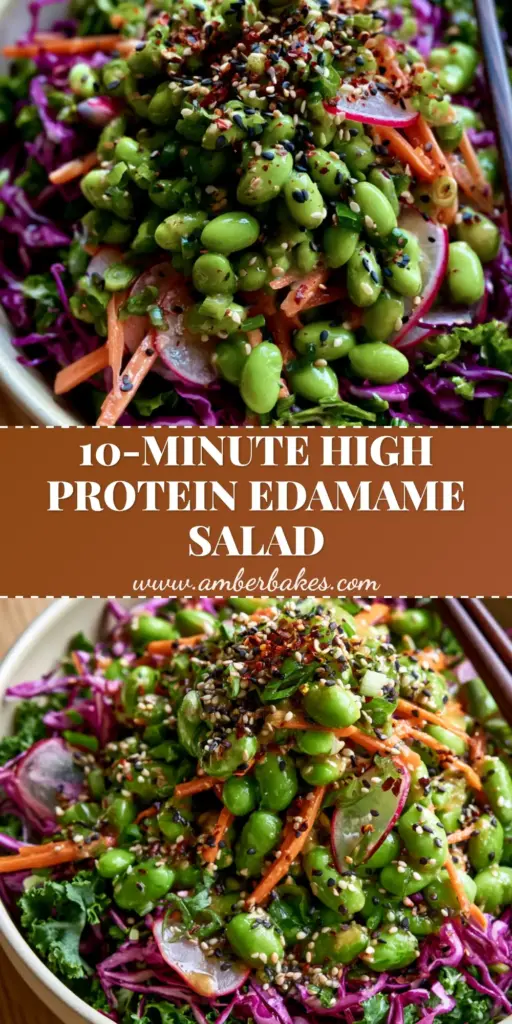
Japanese Edamame Salad with Toasted Sesame Ginger Dressing
Ingredients
Equipment
Method
- Bring a large pot of salted water to a boil. Add the shelled edamame and cook for 3-4 minutes until bright green and tender. Immediately drain and plunge into an ice bath to lock in the color.
- Place the finely sliced kale in a bowl with a pinch of salt. Massage with your hands for 1 minute until the leaves soften and turn emerald green.
- Shred the purple cabbage finely using a knife or mandoline. Slice the radishes into translucent rounds.
- In a jar, combine rice vinegar, soy sauce, ginger, and honey. Slowly pour in the oils while whisking vigorously until the dressing is thick, glossy, and fully combined.
- In a large ceramic bowl, layer the cabbage, kale, carrots, and radishes. Top with a mountain of edamame. Drizzle the dressing over everything. Finish with a heavy sprinkle of black and white sesame seeds, scallions, and chili flakes.
Notes
Always massage your kale to ensure it has the best texture and color.
Closing & Call to Action
The Japanese edamame salad is more than just a healthy choice; it is a vibrant, flavorful addition to your culinary repertoire that proves “salad” never has to be boring. With its mountain of protein-rich beans and its high-gloss dressing, it is guaranteed to be the star of your next meal. We hope you enjoy the incredible crunch and umami depth of this recipe!
Did you make this salad? We would love to hear how it turned out! Leave a comment below and let us know if you added any of your own twists. If you loved the visuals, be sure to follow us and share your creations on Pinterest to inspire other home cooks!