There is a specific kind of magic that happens on the streets of Istanbul, where the air smells of charcoal smoke and toasted spices. If you have ever sat down for a traditional kebab, you have undoubtedly encountered the vibrant, ruby-red Turkish onion salad, known locally as Sumaklı Soğan Salatası.
This isn’t just a side dish; it is a structural necessity for Mediterranean dining. The sharp, bright acidity of the sumac cuts through the richness of grilled meats, while the supple, massaged onions provide a refreshing crunch that cleanses the palate with every bite.
Our version stays true to the rustic roots of Turkish cuisine, focusing on the essential “massage” technique that transforms raw, pungent onions into translucent, sweet ribbons of flavor. Whether you are hosting a backyard barbecue or looking for a way to elevate a simple weeknight meal, this salad is the missing piece of your culinary puzzle.
The Anatomy of a Perfect Sumac-Infused Onion Salad
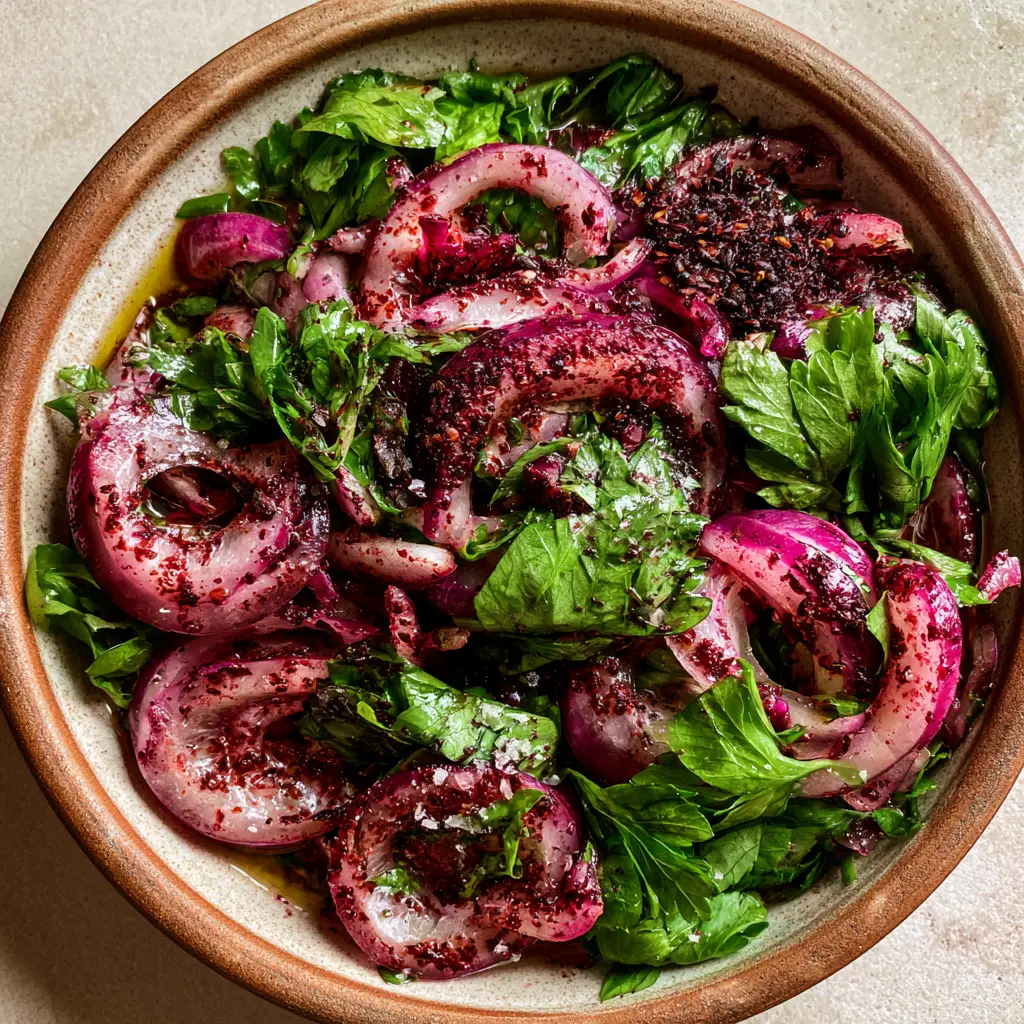
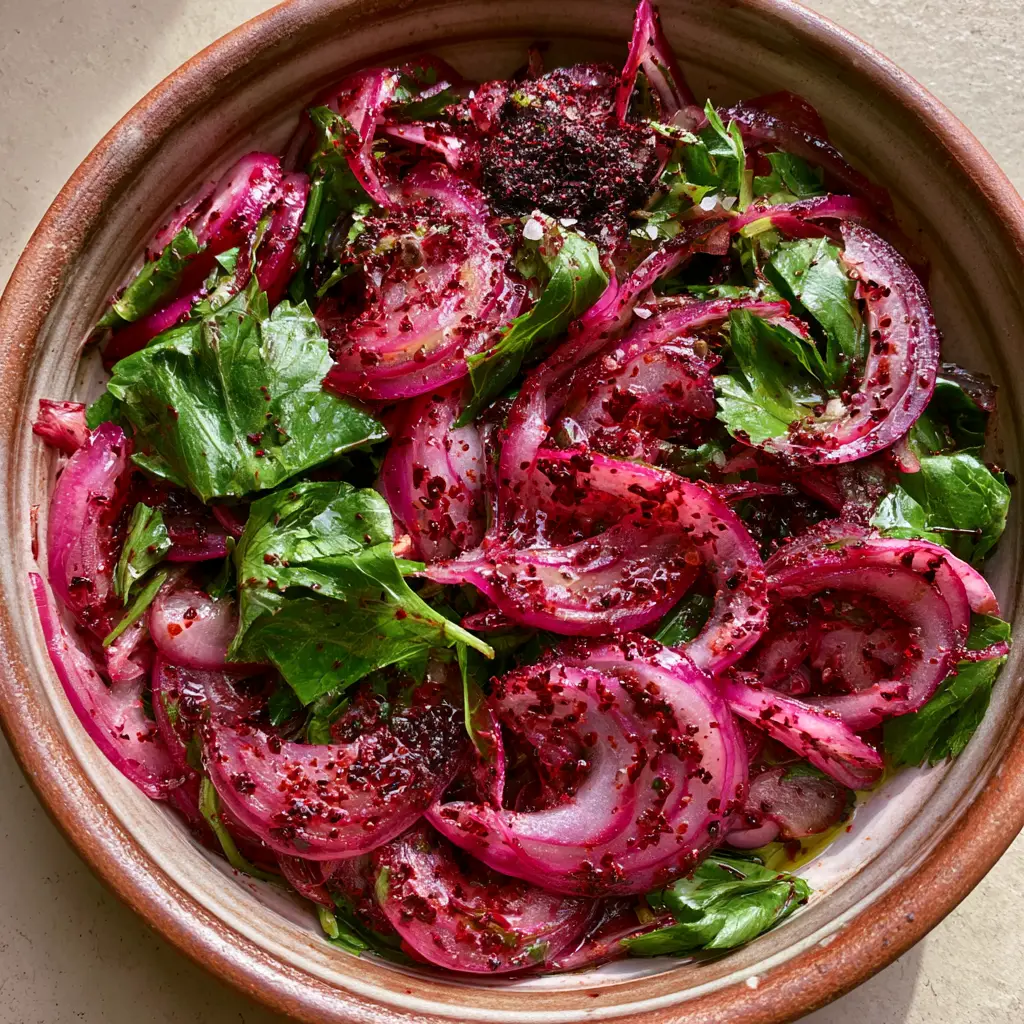
What makes this Turkish onion salad stand out is the interplay of texture and color. To achieve the result seen in high-end Turkish eateries, we rely on a few specific visual and culinary benchmarks:
- The Ruby Stain: We use high-quality, grainy sumac to provide a deep, jewel-toned finish that dyes the onions.
- The Supple Texture: Through the traditional massaging method, the onions lose their “bite” and become soft yet structural.
- The Herbaceous Contrast: Roughly torn flat-leaf parsley adds a splash of emerald green and an earthy freshness.
- The Glistening Finish: A precise ratio of extra virgin olive oil and lemon juice creates a coating that catches the light without being greasy.
- The Sea Salt Sparkle: A final garnish of flaky sea salt adds a crystalline texture that pops against the soft onions.
Sourcing the Soul: Essential Ingredients for Success
To recreate the authentic flavor profile of this Turkish onion salad, every ingredient must be chosen with intention. This is a minimalist recipe, which means there is nowhere for low-quality ingredients to hide.
Red Onions (Large, 1 unit / 200g): You want onions that are firm and heavy for their size. Red onions are preferred for their natural sweetness and the stunning visual they provide when sliced into paper-thin half-moons.
Ground Sumac (2 tbsp / 12g): This is the most important component. Sumac is a tangy, citrusy spice made from dried berries; look for a deep ruby-red color and a slightly moist texture, which indicates freshness.
Fresh Flat-Leaf Parsley (1/2 cup / 15g, packed): Also known as Italian parsley, these leaves provide a cleaner flavor than curly parsley. We want them roughly chopped or even hand-torn to maintain their bright emerald presence.
Extra Virgin Olive Oil (2 tbsp / 30ml): Use a high-quality, cold-pressed oil with peppery notes. It acts as the bridge between the sharp lemon and the earthy sumac.
Fresh Lemon Juice (1 tbsp / 15ml): Always use freshly squeezed juice. The bottled variety lacks the volatile oils necessary to make the onions truly “pop” under the afternoon sun.
Flaky Sea Salt (1/2 tsp / 3g): This provides more than just seasoning; the large crystals offer a delicate crunch and help draw out the initial moisture from the onions during the massaging phase.
Essential Tools for Paper-Thin Onion Slices
To achieve the translucent, “half-moon” look described in our visual blueprint, you need the right equipment. You don’t need a professional kitchen, but a few specific tools will make the process much easier.
A sharp chef’s knife is the most versatile tool, but for absolute consistency, a mandoline slicer set to 1/16th of an inch (1.5mm) is the gold standard. This ensures every slice is uniform, allowing them to soften at the same rate during the massage.
You will also need a rustic earthenware bowl or a large glass mixing bowl. Avoid reactive metal bowls (like aluminum), as the acid from the lemon and the compounds in the onion can sometimes create a metallic aftertaste.
Step-by-Step: From Pungent Onions to Supple, Ruby Ribbons
Preparing the Paper-Thin Half-Moons
Begin by peeling your red onion and slicing it in half from pole to pole. Place the flat side down on your cutting board and slice across the grain to create thin, translucent half-moons.
As you slice, you should be able to almost see the blade through the onion. This thinness is the secret to a salad that is elegant rather than overpowering. If the onions are too thick, the raw sulfurous flavor will dominate the dish.
The Secret Culinary “Massage” Technique
Place the sliced onions in your bowl and sprinkle with half of the sea salt. Using clean hands, gently but firmly “massage” the onions for about 60 seconds.
Look for the visual cue: the onions will begin to release their juices, turning from opaque to slightly translucent and supple. This process breaks down the cellular structure, removing the harsh “sting” associated with raw onions and making them incredibly tender.
Infusing the Deep Ruby Sumac
Add the ground sumac to the massaged onions. Toss them thoroughly until every single ribbon is heavily dusted and stained with the deep ruby-red powder.
The sumac should not just sit on the surface; it should merge with the residual onion moisture to create a vibrant red coating. This is the stage where the salad takes on its iconic, rustic appearance.
The Final Glistening Garnish
Add the roughly chopped flat-leaf parsley, extra virgin olive oil, and lemon juice. Toss gently with a spoon or your hands to ensure the emerald leaves are distributed evenly.
Before serving, sprinkle the remaining flaky sea salt and an extra pinch of sumac on top. The salad should glisten under the light, with visible droplets of oil and lemon juice clinging to the vibrant vegetables.
Secrets to Making This Salad Like a Turkish Usta
- The Cold Water Soak: If you find red onions too sharp even after massaging, soak the slices in ice-cold water for 10 minutes before the massage. Dry them thoroughly before proceeding.
- Balance the Acid: If your lemon is particularly tart, a tiny pinch of granulated sugar (1/8 tsp) can help balance the flavors without making the salad sweet.
- Sumac Quality: Avoid sumac that looks brown or dusty. It should be vibrant red. If yours is old, double the quantity to achieve the desired flavor and color.
- Resting Time: Let the salad sit for 5-10 minutes before serving. This allows the lemon juice to further “cook” the onions, making them even more supple.
Planning Your Feast: What to Serve with Sumac Onions
This Turkish onion salad is the ultimate companion for a variety of Mediterranean and Middle Eastern dishes. It is traditionally served alongside grilled meats, but its versatility extends much further.
Try serving it as a bright topping for a chicken shawarma rice salad to add a necessary crunch. It also works beautifully as a side for summer chicken recipes, providing a zesty contrast to roasted or charred poultry.
If you are creating a full mezze platter, pair it with a Mediterranean feta salad or even a refreshing watermelon salad during the hot summer months. The acidity of the onions balances the sweetness of the fruit and the saltiness of the cheese perfectly.
Frequently Asked Questions
While you can, red onions are preferred for their natural sweetness and the beautiful visual contrast they provide when stained with sumac.
It is best served fresh, but it can be stored in an airtight container for up to 2 days. Note that the onions will become softer the longer they sit.
No, it is not heat-spicy. The flavor is zesty, acidic, and bright. Any ‘sharpness’ is mellowed out during the massaging process.
Sumac has a bright, tangy, and slightly floral flavor profile similar to lemon juice but with a more earthy, berry-like undertone.
Massaging onions with salt breaks down their cellular walls, which removes the harsh raw ‘bite’ and makes them soft, supple, and more digestible.
The Ultimate Turkish Onion Salad Recipe
Turkish Onion Salad: The Authentic Sumac and Parsley Side Dish
Ingredients
Equipment
Method
- Using a mandoline or sharp knife, slice the red onion into paper-thin, translucent half-moons.
- Place onions in a bowl with half the sea salt. Massage firmly with your hands for 60 seconds until onions are supple and translucent.
- Add sumac and toss until onions are stained deep red. Add parsley, oil, and lemon juice. Toss again to coat.
- Finish with a final sprinkle of flaky salt and a pinch of sumac before serving.
Notes
If onions are too spicy, soak in ice water for 10 minutes before massaging.
Closing & Call to Action
Bringing the authentic flavors of Turkey into your home starts with mastering the Turkish onion salad. This simple yet profound dish proves that with the right technique—like the essential onion massage—a handful of humble ingredients can be transformed into a gourmet experience.
If you enjoyed this recipe, please leave a comment below and let us know how you served your sumac onions! Don’t forget to follow amber_bakes on Pinterest and save this recipe to your “Mediterranean Sides” board for your next feast.