If you have ever walked the bustling streets of Manila at dusk, the scent of Filipino chicken barbecue wafting through the air is unforgettable. It is a sweet, savory, and smoky aroma that triggers an immediate craving for charred, glistening meat on a stick. This recipe recreates that authentic experience, delivering juicy chicken thighs encased in a thick, red-orange banana ketchup glaze that crackles with caramelized sugar bubbles.
Achieving the perfect Filipino chicken barbecue requires more than just a grill; it requires a deep understanding of the “Sawsawan” culture and the specific viscosity of a banana-based marinade. Our version focuses on the forensic details seen in the best street stalls: deep mahogany char, a translucent sticky coating, and the fragrant garnish of toasted garlic. This isn’t just grilled chicken; it is a culinary icon of the Philippines.
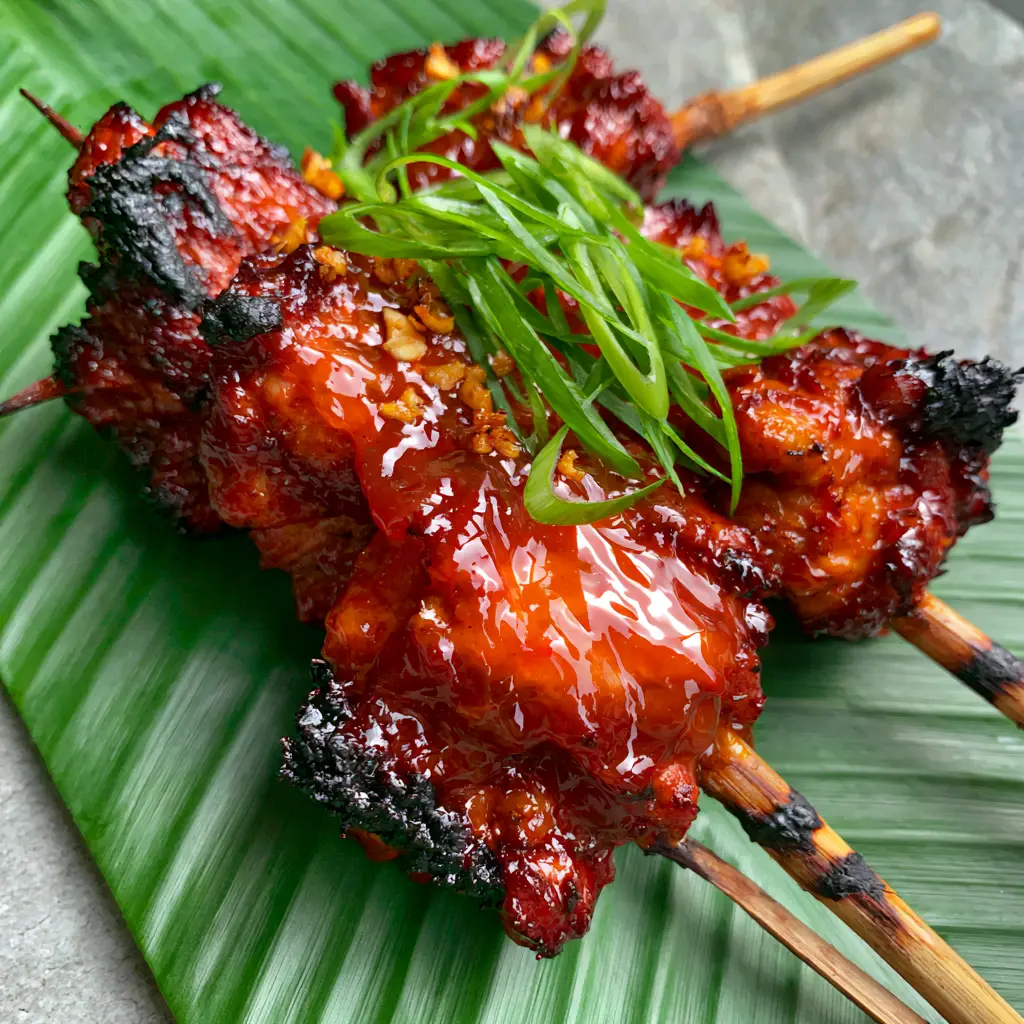
The Anatomy of the Perfect Pinoy Barbecue Skewer
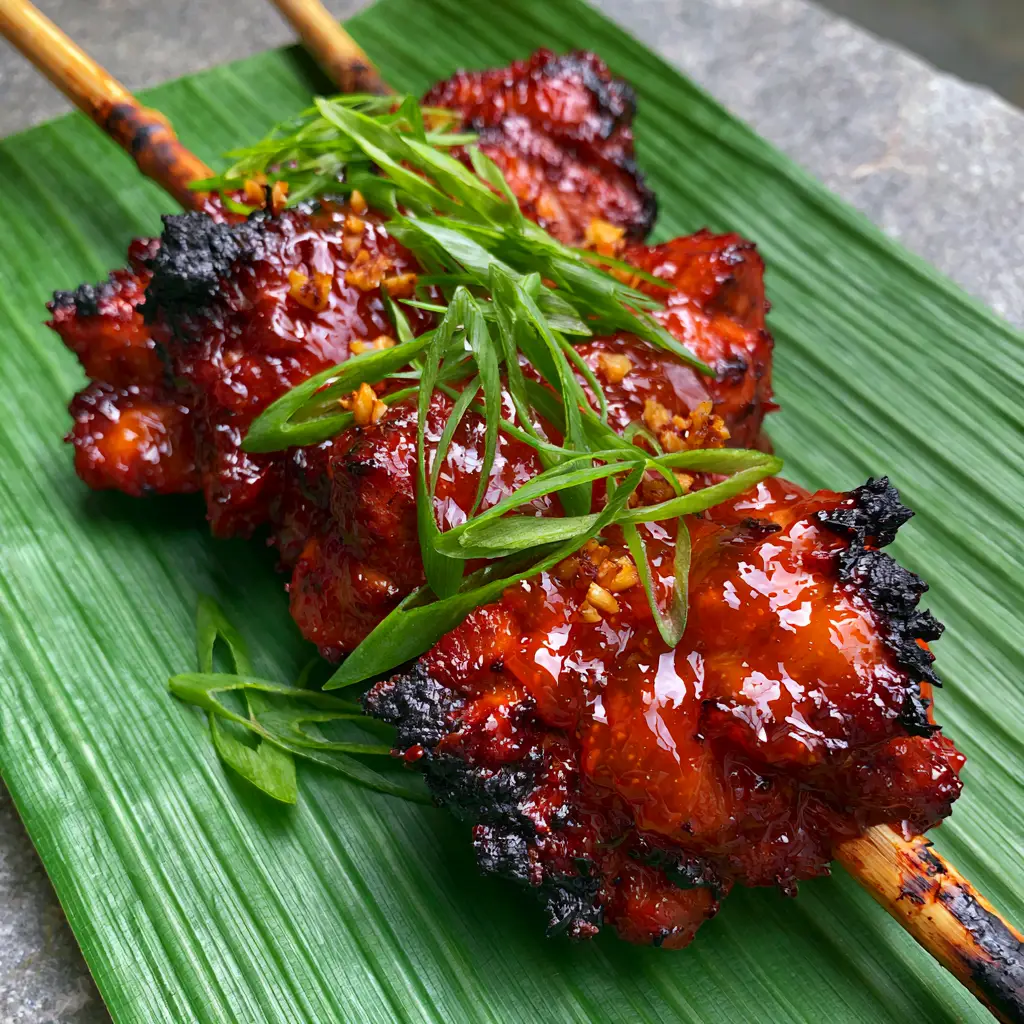
What sets this recipe apart from a standard Mexican barbecue chicken is the unique balance of acidity and sugar. The sugar doesn’t just sweeten; it creates a structural glaze that clings to the meat. When exposed to high heat, this glaze undergoes the Maillard reaction, resulting in those iconic black charred crispy edges while keeping the interior succulent.
- The Glaze: A viscous, translucent red-orange coating made primarily from authentic banana ketchup.
- The Texture: Juicy, thick chicken chunks with “caramelized sugar bubbles” forming on the surface during the final basting.
- The Aroma: A heady mix of calamansi citrus, fermented soy, and the pungent sweetness of toasted minced garlic.
- The Presentation: Served traditionally on a vibrant green textured banana leaf, which adds a subtle herbaceous scent to the hot meat.
The Essential Ingredients for Authentic Filipino Chicken Barbecue
Every ingredient in this list serves a specific chemical purpose in achieving the visual and flavor profile of authentic street-style skewers. We use boneless chicken thighs because their higher fat content allows for the “deep caramelization” required without drying out the meat.
Chicken Thighs: 2 lbs (900g) of boneless, skinless chicken thighs cut into 1.5-inch chunks. Thighs are superior to breasts here as they withstand the intense heat needed for charring.
Banana Ketchup: 1 cup (240ml) of Filipino-style banana ketchup. This is the “soul” of the glaze, providing that specific red-orange hue and a thicker consistency than tomato ketchup.
Soy Sauce: 1/2 cup (120ml) of silver swan or traditional soy sauce. This provides the salt and the dark pigment that helps the chicken achieve a deep mahogany color.
Calamansi Juice: 1/4 cup (60ml) or lemon juice if unavailable. The acid breaks down the muscle fibers for tenderness and cuts through the heavy sugar of the glaze.
Brown Sugar: 1/2 cup (100g) of packed light brown sugar. This is critical for the “caramelized sugar bubbles” and the sticky, glistening finish described in the visual blueprint.
Garlic: 6 cloves of minced garlic for the marinade, plus an extra 1/4 cup (40g) of toasted minced garlic for the final garnish. Garlic is the primary aromatic driver of this dish.
Black Pepper: 1 tsp (2g) of freshly cracked black pepper. This adds a subtle heat that balances the sweetness of the banana ketchup.
Neutral Oil: 2 tbsp (30ml) of canola or vegetable oil. This is a “foundational invisible” ingredient that prevents the high-sugar glaze from sticking instantly to the grill grates.
Must-Have Equipment for Masterful Grilling
To achieve the look of “natural bamboo skewers showing slight char,” you need the right tools. Using the wrong skewers or heat source can result in steamed meat rather than the “heavily coated” charred finish we desire.
Bamboo Skewers: 10-12 inch natural bamboo sticks. Essential Tip: Soak these in water for at least 30 minutes to ensure they char slightly without snapping or catching fire.
Charcoal Grill: While gas works, a charcoal grill provides the authentic smoky depth. For the “black charred crispy edges,” high-quality lump charcoal is recommended.
Basting Brush: A silicone or natural bristle brush is required for the “viscous” glaze application. You will be basting every 2-3 minutes during the final stage.
Step-by-Step: Mastering the Manila Street Grill
1. Preparing the Signature Marinade
In a large glass bowl, whisk together the banana ketchup, soy sauce, calamansi juice, brown sugar, 6 cloves of minced garlic, and black pepper. Reserve 1/2 cup (120ml) of this mixture in a separate bowl to use as your final basting glaze; this prevents cross-contamination and ensures a “glistening and sticky” finish.
Combine the chicken chunks with the remaining marinade. Massage the liquid into the meat to ensure every crevice is coated. Cover and refrigerate for at least 4 hours, though 24 hours is preferred for the deep color penetration seen in authentic Filipino chicken barbecue.
2. Threading and Skewering Technique
Thread 4-5 chunks of chicken onto each soaked bamboo skewer. Pack them tightly enough so they stay juicy, but leave enough surface area for the heat to create “charred crispy edges.” Unlike Japanese chicken skewers, which are often uniform, Filipino skewers should look rustic and substantial.
3. The High-Heat Searing Phase
Preheat your grill to medium-high heat (about 400°F / 200°C). Lightly oil the grates. Place the skewers on the grill and cook for 3-4 minutes per side without touching them. You are looking for the “visible deep caramelization” where the sugar in the marinade begins to darken and smoke.
4. Basting for the “Caramelized Sugar Bubbles”
During the last 4 minutes of cooking, begin basting generously with the reserved glaze. Flip the skewers and baste again. You will see “caramelized sugar bubbles” forming on the surface—this is the sign that the glaze is reducing into a thick, translucent coating. The chicken should reach an internal temperature of 165°F (74°C).
5. The Toasted Garlic Garnish
While the chicken rests, quickly fry your remaining minced garlic in a small pan with a teaspoon of oil until golden brown. This “toasted minced garlic” adds a crunch that contrasts beautifully with the sticky glaze. Scatter them generously over the skewers along with thin-sliced bright green scallions.
Expert Tips for Success
- The Water Soak: Never skip soaking your bamboo skewers. A dry skewer will incinerate before the chicken is cooked, whereas a soaked skewer will show that “slight char” without breaking.
- Don’t Overcrowd: Leave an inch of space between skewers on the grill. This allows the heat to circulate, creating the “crispy edges” rather than steaming the meat.
- The Glaze Temperature: If your glaze is too thin, simmer the reserved marinade in a small saucepan for 5 minutes before basting. This increases the viscosity for that “viscous, translucent” look.
- Visual Cue: Look for the “natural highlights” on the sauce under the light; if it looks matte, it needs more glaze and one more minute of heat.
What to Serve With Filipino Chicken Barbecue
To balance the intense sweetness of the barbecue, you need sides that offer acidity and crunch. In the Philippines, this is almost always served with “Atchara” (pickled papaya), but other bright salads work wonders.
Consider pairing these skewers with a spicy corn slaw or a refreshing Greek cucumber salad to cleanse the palate. For a full tropical spread, a blueberry peach feta salad provides a fruity acidity that complements the banana ketchup perfectly.
Of course, no Pinoy meal is complete without a massive scoop of garlic fried rice (Sinangag) served on a fresh green banana leaf to catch all those sticky glaze drippings.
Frequently Asked Questions
Yes, but you will lose the smoky charcoal flavor. Ensure your grill pan is screaming hot to achieve the charred crispy edges that define this dish.
While you can, the flavor profile will shift significantly. Banana ketchup is sweeter and thicker, providing the signature red-orange color and ‘sticky’ consistency essential for Filipino chicken barbecue.
For the best results, marinate for at least 4 hours. However, a 24-hour marinade allows the soy and calamansi to deeply penetrate the meat for maximum flavor and mahogany color.
The secret is the high sugar content in the marinade combined with frequent basting in the final minutes of grilling. The heat reduces the glaze into a thick, translucent coating that bubbles as it caramelizes.
You must soak bamboo skewers in water for at least 30 minutes before grilling. This ensures they only ‘slightly char’ rather than catching fire under high heat.
Authentic Filipino Chicken Barbecue Recipe
Filipino Chicken Barbecue: The Ultimate Sticky Pinoy Street Food Skewers
Ingredients
Equipment
Method
- Whisk banana ketchup, soy sauce, calamansi juice, brown sugar, garlic, and pepper. Reserve 1/2 cup for basting.
- Coat chicken chunks in the remaining marinade. Refrigerate for at least 4 hours (up to 24 hours).
- Thread chicken onto soaked bamboo skewers, leaving room for charred edges.
- Grill over medium-high heat for 3-4 minutes per side. Baste heavily with reserved glaze in the final minutes until glistening and bubbly.
- Remove from heat and top with toasted minced garlic and sliced scallions. Serve on a banana leaf.
Notes
Ensure the grill is very hot before adding chicken to get the best char.
Closing & Call to Action
This Filipino chicken barbecue is a testament to the power of simple ingredients like banana ketchup and garlic when combined with the right grilling technique. The result is a skewer that is as visually stunning—with its glistening red-orange glaze and charred edges—as it is delicious. Whether you are hosting a summer cookout or just craving street food flavors, this recipe brings the heart of Manila to your kitchen.
If you loved this recipe, please leave a comment below and let us know how your char turned out! Don’t forget to share your creations and follow us on Pinterest for more authentic global recipes and healthy summer dinner ideas.