When the sun hits your kitchen counter in the morning and illuminates a basket of gold, you know you need the best recipes for ripe mangoes. There is something truly ethereal about a perfectly matured mango, its skin yielding slightly to the touch and its aroma filling the room with tropical sweetness. This specific preparation isn’t just a dessert; it is a study in texture, transforming dense fruit into a cloud-like experience.
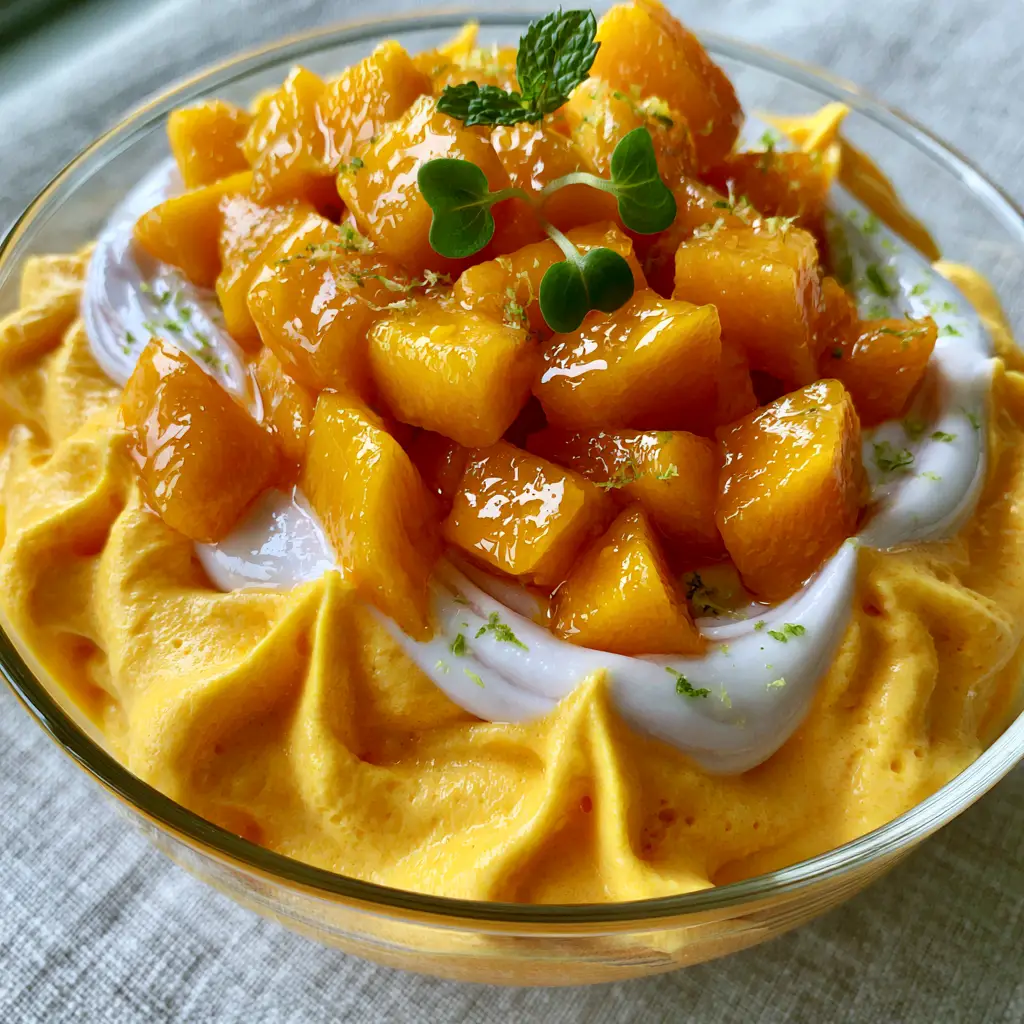
Imagine a vibrant, sun-drenched bowl of intense golden-orange mousse that feels like velvet on the tongue. By balancing the natural sugars of the fruit with a hint of floral honey and a bright whisper of lime, we create a dish that is both decadent and refreshing. This recipe is designed to showcase the fruit in its purest, most aerated form, topped with glistening succulent cubes for a necessary structural contrast.
Whether you are hosting a summer brunch or looking for a light finish to a spicy meal, mastering recipes for ripe mangoes like this one will elevate your culinary repertoire. We are going beyond basic smoothies to explore the science of aeration and the art of the garnish. Let’s dive into how you can achieve that perfect, thick, and airy whipped texture at home.
Why This Mango Mousse Stands Out
- Visual Vibrancy: The intense, saturated golden-orange hue comes from using high-quality, fully ripened fruit pulp.
- Textural Harmony: We combine a thick, velvety whipped base with the bite of juicy, glistening mango cubes.
- Aromatic Depth: A delicate swirl of thick white coconut cream and a dusting of lime zest provide layers of flavor that evolve with every spoonful.
- Pro-Level Presentation: Micro-mint leaves and fine lime zest offer a bright green contrast that makes this dish look like it came from a high-end bistro.
The Anatomy of Perfect Tropical Ingredients
The Star Fruit
2 cups (480ml) of whipped mango puree. For the best recipes for ripe mangoes, choose varieties like Ataulfo (Honey) or Alphonso for their fiberless, buttery texture. You will need approximately 3-4 large mangoes to yield enough puree and extra cubes for the topping.
The Aeration Agents
1.5 cups (360ml) of chilled heavy cream (at least 36% milk fat). The high fat content is scientifically necessary to trap air bubbles, creating that signature “soft peak” mousse texture described in our visual blueprint. Keep the cream in the coldest part of your refrigerator until the very moment you are ready to whip.
Natural Sweeteners and Stabilizers
2 tbsp (42g) of high-quality floral honey. Honey acts as a humectant, keeping the mousse moist and adds a complex floral note that granulated sugar lacks. We also use a pinch of fine sea salt to sharpen the perception of the mango’s natural acidity.
The Coconut Marbling
1/4 cup (60ml) of thick coconut cream. Do not use standard coconut milk; you need the thick, fatty layer from the top of a chilled can to achieve the “marbled” visual effect without thinning out the mousse base. This adds a rich, nutty undertone that complements the fruit perfectly.
Fresh Garnishes and Finishing Touches
1 tsp (2g) of fine lime zest and 3-5 micro-mint leaves. The lime zest provides an immediate olfactory hit of freshness, while the micro-mint adds a peppery, cooling finish. Ensure the lime is zested at the very last second to preserve the volatile oils.
Essential Equipment for a Velvety Finish
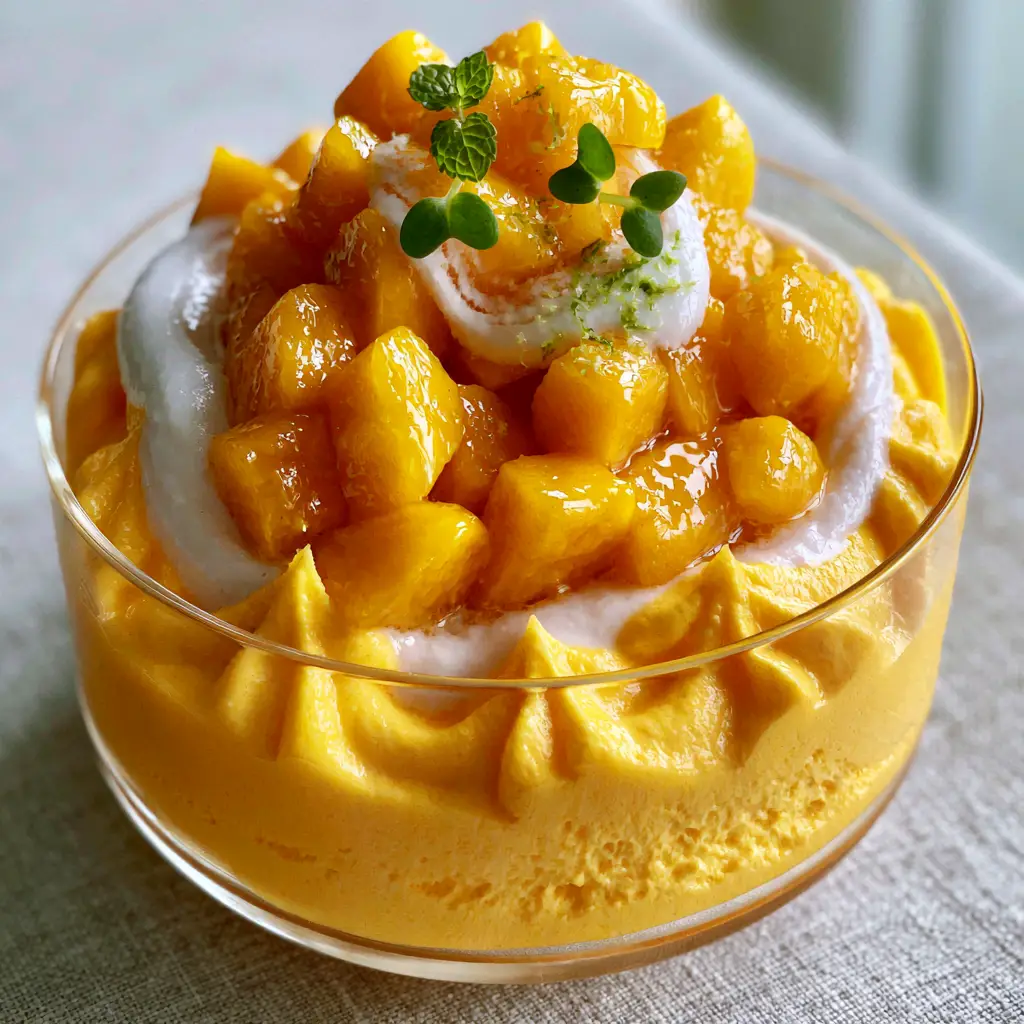
To achieve the “thick, airy, and velvety” texture seen in our smartphone-ready photo, you will need a high-speed blender or food processor to ensure the puree is absolutely smooth. A stand mixer or electric hand mixer is vital for reaching those stable soft peaks with the heavy cream. Finally, a microplane zester is required to get that “faint dusting” of lime zest without any bitter white pith.
Step-by-Step Evolution of the Mousse
Preparing the Golden Puree
Start by peeling your mangoes and slicing the flesh away from the pit. Place the majority of the fruit into a blender and process on high until it is a saturated, golden-orange liquid. Pass this puree through a fine-mesh sieve to remove any rogue fibers, ensuring the final texture is purely velvety.
Achieving the Perfect Peak
In a chilled metal bowl, begin whipping your heavy cream and honey. Watch for the visual cue: you want the cream to hold its shape but still look soft and billowy, not stiff or grainy. Fold the mango puree into the cream gently using a silicone spatula to maintain the air bubbles you’ve worked so hard to create.
The Art of the Coconut Swirl
Once the mousse is portioned into glass bowls, take a small spoon of the thick coconut cream. Drop it onto the surface and use a toothpick or the tip of a knife to gently marble it into the top layer. This creates that striking white-on-orange contrast that looks so appetizing in natural light.
Final Garnish and Presentation
Top each bowl with a generous heap of the remaining mango cubes, ensuring they look glistening and juicy. Finely zest the lime directly over the bowl so the oils land on the fruit. Place three tiny micro-mint leaves in the center to complete the professional look.
Expert Tips for Success
- Temperature Control: Ensure your mango puree is chilled before folding it into the cream; if the puree is room temperature, it can deflate the whipped cream.
- Sieving is Secret: Even “fiberless” mangoes have small strands; sieving the puree is the difference between a home-cooked snack and a professional mousse.
- Coconut Consistency: If your coconut cream is too hard, whisk it for 10 seconds until it reaches a “swirlable” consistency before adding it to the mousse.
- The Honey Balance: If your mangoes are exceptionally sweet, reduce the honey by half to ensure the dish remains refreshing rather than cloying.
Storage and Make-Ahead Advice
This mousse is best enjoyed within 4 hours of preparation to maintain the “thick and airy” texture. However, you can store it in the refrigerator for up to 2 days if covered tightly with plastic wrap. Note that the coconut cream may firm up slightly when chilled, and the mint leaves should only be added immediately before serving to prevent wilting.
What to Serve With Mango Mousse
This tropical delight pairs beautifully with savory dishes that have a bit of heat or zest. Try serving it after a main course of Peruvian grilled chicken or alongside some shish tawook for a refreshing palate cleanser. If you are looking for more recipes for ripe mangoes, this mousse is a fantastic follow-up to a light fruit salsa appetizer or even a hearty mango pancake breakfast.
Frequently Asked Questions
Yes, you can use frozen mango for the puree. Just ensure you thaw it completely and drain any excess liquid before blending to maintain the mousse’s thickness.
Use only the thick, solidified cream from the top of a chilled can of full-fat coconut milk. Whisk it slightly to soften, then drop small amounts onto the mousse and marble with a toothpick.
To make it vegan, replace the heavy cream with whipped coconut cream and swap the honey for agave nectar or maple syrup.
This usually happens if the mango puree was too warm when added, or if the heavy cream wasn’t whipped to enough volume. Ensure everything is chilled before mixing.
Ataulfo (Honey) or Alphonso mangoes are best because they are virtually fiber-free and have a high sugar content, resulting in a smoother, more velvety texture.
The Ultimate Whipped Mango Mousse Recipe
Recipes for Ripe Mangoes: The Ultimate Velvety Mango Mousse with Coconut Swirl
Ingredients
Equipment
Method
- Blend mango chunks until completely smooth. Sieve through a fine mesh to ensure a velvety texture.
- Whip chilled heavy cream and honey until soft peaks form. Gently fold in the chilled mango puree.
- Portion into bowls, swirl in coconut cream, and top with fresh cubes, lime zest, and mint.
Notes
Use only the thick coconut cream from a chilled can for the best marbling effect.
Closing & Call to Action
Creating beautiful recipes for ripe mangoes is all about respecting the natural integrity of the fruit while using modern techniques to enhance its texture. This mousse is a testament to how simple ingredients—cream, honey, and fresh fruit—can become a gourmet masterpiece. If you enjoyed this recipe, please leave a comment below and share your photos with us! Don’t forget to follow amber_bakes on Pinterest and save this to your favorite dessert boards.