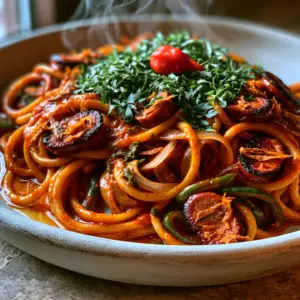
Haitian Spaghetti is not just a meal; it is a cultural institution that defies traditional Western breakfast norms. This vibrant, savory dish transforms humble pasta into a flavor powerhouse, combining smoky, salty, and spicy notes into a single, steaming bowl.
If you have ever scrolled through Caribbean food feeds, you have likely stopped at the sight of those al dente spaghetti strands coated in a glistening, red-orange sauce. The visual appeal is undeniable, especially when the dish is finished with seared, browned sausages and delicate flakes of smoky herring.
Our version of Haitian Spaghetti captures the authentic essence of the streets of Port-au-Prince. By focusing on the foundational “epis” seasoning and the precise searing of proteins, we ensure every bite delivers the complex depth this recipe is famous for.
Why This Authentic Espageti Ayisyen is a Caribbean Classic
- Symphony of Textures: Experience the contrast between firm, al dente spaghetti and the crispy, seared edges of sliced sausages.
- Deep Umami Base: The combination of Haitian epis and smoked herring (aranso) creates a savory foundation that ordinary pasta sauces simply cannot match.
- Vibrant Visual Appeal: The deep red-orange hue of the tomato-based sauce is punctuated by bright green bell peppers and freshly chopped parsley.
- Controlled Heat: A whole red scotch bonnet pepper provides an aromatic, fruity heat without overwhelming the palate, unless you choose to break it open.
The Visual Anatomy of a Perfect Plate of Haitian Spaghetti
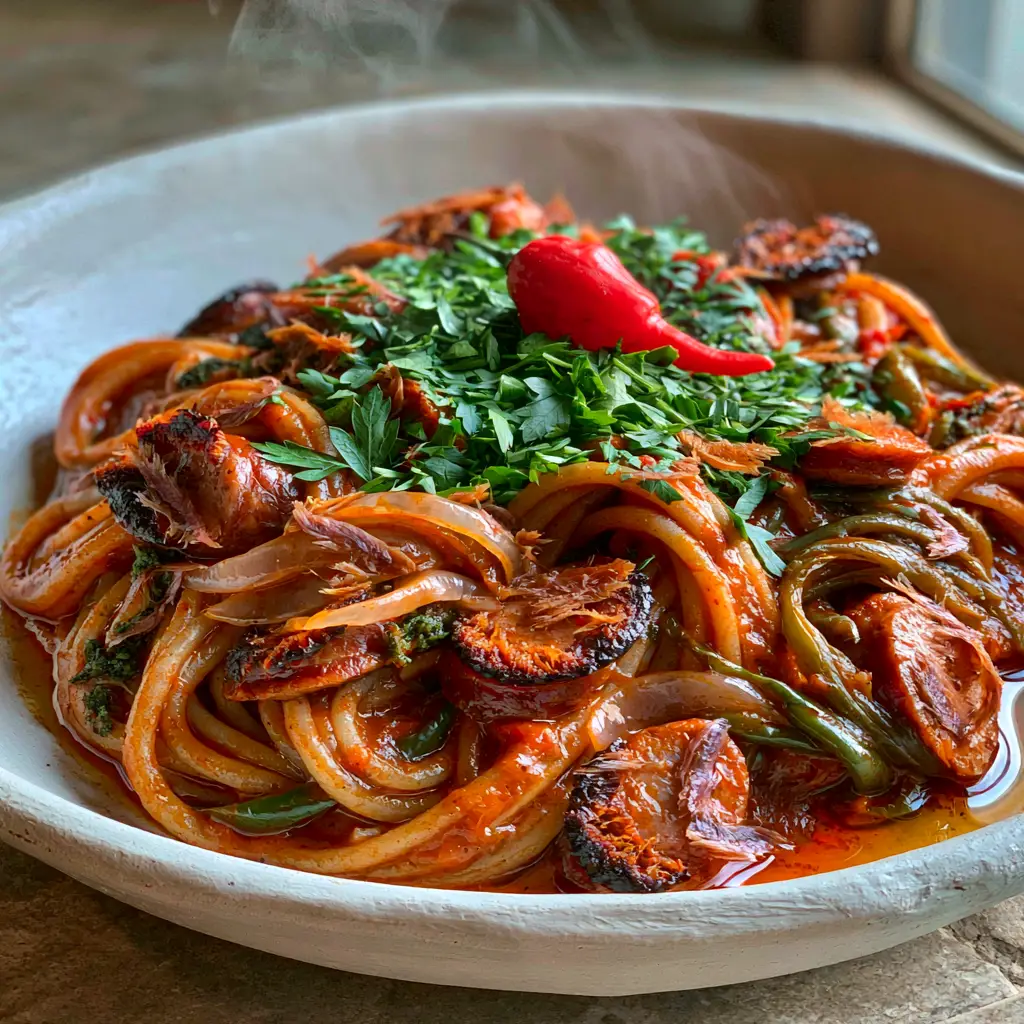
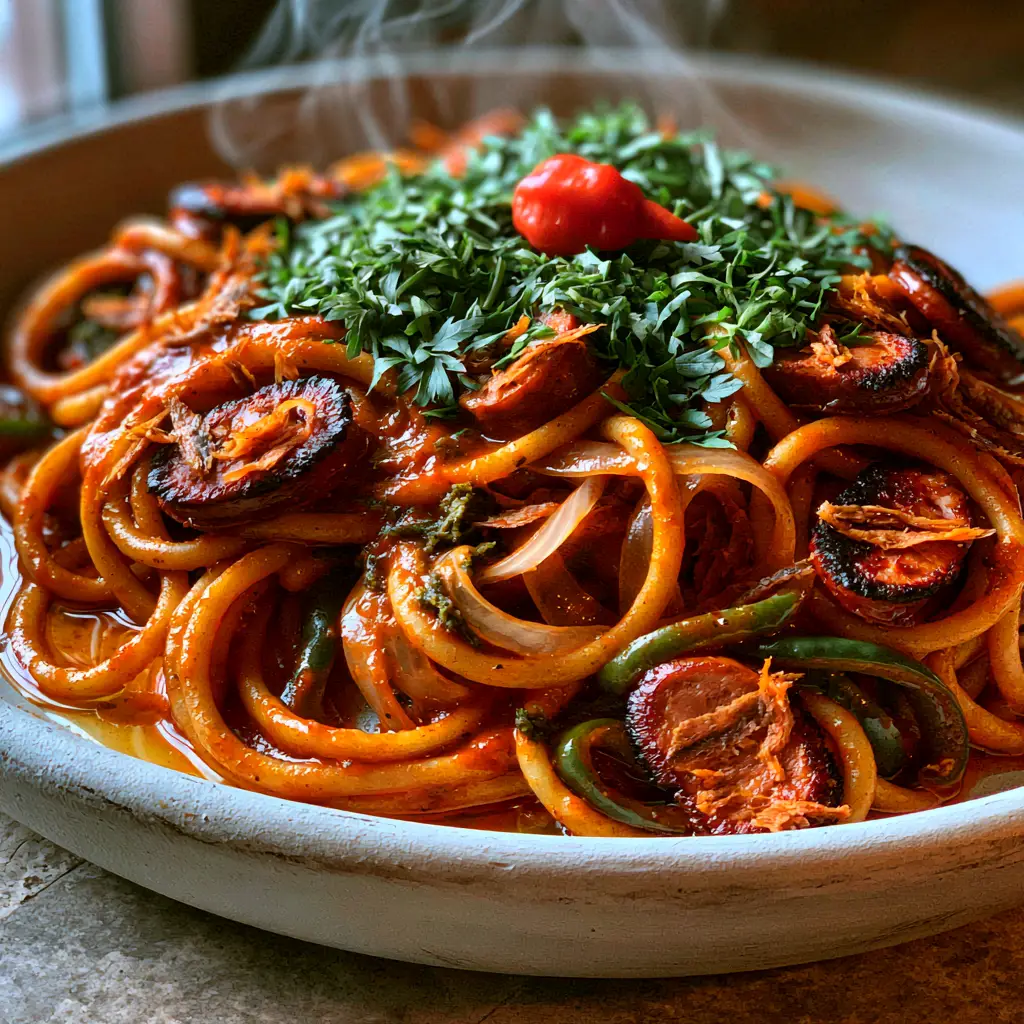
When you prepare this recipe, you are aiming for a very specific aesthetic that signals authenticity. The pasta should not be swimming in a thin liquid; rather, it should be thoroughly coated in a thick, vibrant red-orange tomato and epis sauce that leaves a light sheen of oil on the plate.
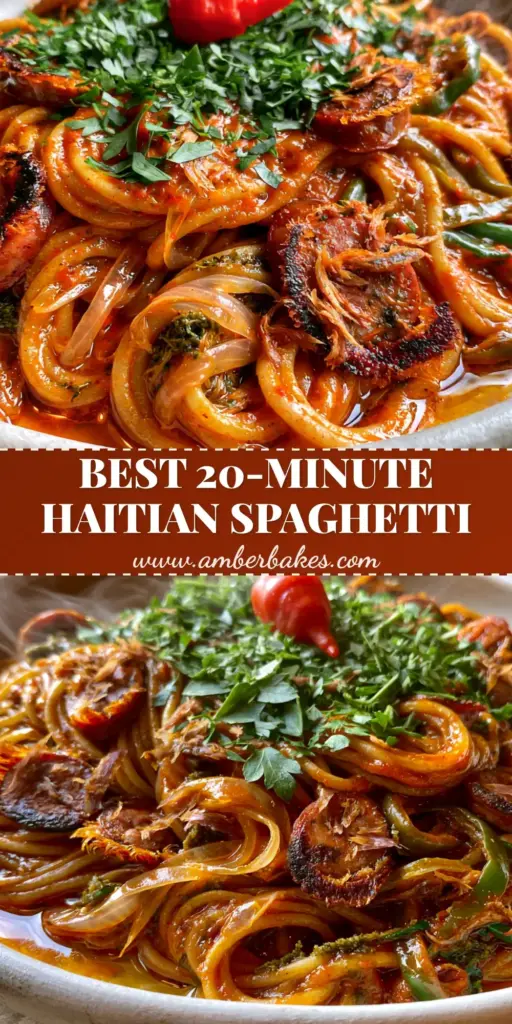
The protein elements are the stars of the show. You want to see distinct, thinly sliced sausages that have been pan-seared until they develop dark, caramelized edges. Intermingled with the pasta are the fine, delicate flakes of smoky herring, providing a textural counterpoint to the softened, translucent onion slivers and the vibrant green strips of sautéed bell pepper.
Finally, the garnish is the finishing touch that brings the entire visual together. A generous sprinkle of freshly chopped flat-leaf parsley adds a burst of verdant color, while a single, whole bright red scotch bonnet pepper sits atop the spaghetti like a culinary crown, signaling the bold flavors within.
Essential Pantry Staples for Deep Caribbean Flavor
Spaghetti: 1 lb (454g) of dried pasta. Look for a high-quality durum wheat variety that maintains its structural integrity and stays al dente during the final tossing phase.
Smoked Herring (Aranso): 4 oz (113g) of smoked herring fillets. This provides the signature smoky, salty “funk” that is essential for an authentic Haitian flavor profile; be sure to soak it first to control the salt levels.
Hot Dogs or Smoked Sausage: 4-6 links (approx. 340g), thinly sliced. These are the traditional protein choice, providing a familiar savoriness and a satisfying chew when seared to a crisp.
Haitian Epis: 1/2 cup (120ml) of homemade green seasoning. This is a blend of scallions, garlic, peppers, and herbs that acts as the primary aromatic base for the entire dish.
Tomato Paste: 3 tbsp (45g) of concentrated paste. This is the secret to achieving that iconic vibrant red-orange color and a deep, cooked-down sweetness.
Vegetable Oil: 3 tbsp (45ml). You need a neutral oil with a high smoke point to properly sear the sausages and bloom the tomato paste and epis.
Onion & Green Bell Pepper: 1 medium onion and 1 large pepper. Slicing these into thin strips ensures they soften into the sauce while still providing a slight textural bite.
Scotch Bonnet Pepper: 1 whole pepper. Do not slice this; the goal is to infuse the oil and sauce with the pepper’s unique fruity aroma and mild heat without the intense burn of the seeds.
Fresh Parsley: 1/4 cup (10g) chopped. Flat-leaf parsley provides a clean, peppery finish that cuts through the richness of the smoked fish and fried sausages.
Pasta Water: 1/2 cup (120ml) reserved cooking liquid. The starchy water is the invisible binder that helps the epis sauce emulsify and cling perfectly to the spaghetti strands.
Pro-Grade Kitchen Tools for Perfect Pasta
To achieve the seared edges on your sausages and the perfectly emulsified sauce, a wide, heavy-bottomed skillet or a traditional Haitian “mami” (cast aluminum pot) is ideal. The wide surface area allows for moisture to evaporate quickly, which is key to browning the ingredients rather than steaming them.
You will also need a large stockpot to boil the spaghetti. Remember to use plenty of salted water to season the pasta from the inside out. A pair of sturdy kitchen tongs is essential for tossing the long strands in the sauce, ensuring every millimeter of pasta is coated in that vibrant red-orange goodness.
Mastering the Sauce: Step-by-Step Culinary Breakdown
Preparing the Proteins and Aromatics
Start by boiling your smoked herring for about 10 minutes to remove excess salt. Once softened, drain the water and use two forks to flake the fish into small, delicate pieces, being careful to remove any large bones.
In your large skillet, heat the vegetable oil over medium-high heat. Add the sliced sausages in a single layer, resisting the urge to stir them immediately; let them sit for 2-3 minutes until you see those characteristic browned, crispy edges forming.
Add the flaked herring to the pan with the sausages. The smoky oil from the fish will begin to render out, creating a fragrant base for the rest of your ingredients.
Building the Epis Base
Push the proteins to the side and add the tomato paste to the center of the pan. Fry the paste in the oil for 1-2 minutes until it turns a shade darker—this “blooming” process removes the metallic raw taste and intensifies the color.
Stir in the Haitian epis, onions, and green bell peppers. Sauté these together until the onions become softened and translucent, and the peppers are tender but still hold their vibrant green color.
If you find the mixture sticking, add a splash of water or broth to deglaze the pan, scraping up all those flavorful browned bits from the bottom.
The Final Emulsion and Plating
While the sauce base simmers, boil your spaghetti in heavily salted water until it is just shy of al dente. Reserve 1/2 cup (120ml) of the starchy cooking water before draining the pasta.
Add the spaghetti to the skillet along with the reserved pasta water and the whole scotch bonnet pepper. Use your tongs to toss everything vigorously over medium heat. Watch as the water and oil combine with the epis to create a glistening, vibrant red-orange coating.
Remove the pan from the heat once the sauce has thickened and the pasta is perfectly tender. Discard the scotch bonnet pepper if you prefer a milder dish, or leave it as a garnish for a truly authentic presentation.
Avoiding Mushy Pasta: Professional Tips for Texture
The most common mistake when making Haitian Spaghetti is overcooking the pasta. Because the spaghetti finishes cooking inside the sauce, you must pull it out of the boiling water about 2 minutes before the package directions suggest.
Ensure your sausages are sliced thinly. This increases the surface area for caramelization, providing those “browned edges” that contrast so well with the soft pasta. If your sauce looks too dry, don’t just add oil; use the pasta water. The starch acts as a natural thickener and emulsifier.
When working with smoked herring, always taste a small flake after boiling. If it is still overwhelmingly salty, boil it for another 5 minutes in fresh water. Balancing the salt from the fish with the salt in the pasta water is the key to a professional-level dish.
How to Store and Reheat Your Leftovers
Haitian Spaghetti actually improves after a day in the fridge as the flavors of the epis and smoked herring continue to meld. Store leftovers in an airtight container for up to 3 days. To maintain the original texture, avoid the microwave if possible.
Instead, reheat the spaghetti in a skillet over medium-low heat. Add a tiny splash of water to loosen the sauce and cover the pan for 2-3 minutes. This creates a gentle steam that revives the pasta without making it rubbery or oily.
Complementary Pairings for a Full Island Feast
While this dish is a complete meal on its own, it is often served with specific sides in a traditional Haitian home. A side of sliced avocado provides a creamy, cool contrast to the spicy and smoky notes of the pasta.
If you are serving this for a hearty lunch, it pairs beautifully with a fresh, crisp salad like a Greek lettuce salad or even a light traditional Greek salad to cut through the richness. For a refreshing finish to such a savory meal, consider a bowl of homemade watermelon ice cream or some fruit-based yogurt pops.
If you want to stick to a theme of bold flavors, serving this alongside a spicy honey lime chicken can turn a simple breakfast into an impressive dinner spread.
Answers to Your Burning Caribbean Cooking Questions
If you cannot find smoked herring, you can use smoked mackerel or even high-quality bacon for a similar smoky profile, though the flavor will lack the traditional sea-salt funk of the original.
The color comes from ‘blooming’ the tomato paste in hot oil alongside the green epis seasoning. This chemical reaction deepens the pigment and creates the iconic vibrant hue.
The spice level is controllable. By leaving the scotch bonnet pepper whole, you get its fruity aroma without the intense heat. Breaking the pepper open will significantly increase the spiciness.
Haitian Epis is a foundational green seasoning base made of garlic, peppers, scallions, and herbs. It is essential for providing the aromatic depth and authentic ‘soul’ of the Haitian Spaghetti sauce.
In Haiti, a hearty, savory breakfast is traditional to provide energy for the day. Spaghetti is affordable, filling, and easily customized with local ingredients like aranso and sausages.
The Ultimate Haitian Spaghetti Recipe Card
Haitian Spaghetti: The Ultimate Savory Breakfast Recipe (Espageti Ayisyen)
Ingredients
Equipment
Method
- Boil the smoked herring in water for 10 minutes to remove excess salt. Drain, cool, and flake into small pieces, removing bones.
- Cook spaghetti in a large pot of salted water until slightly before al dente. Reserve 1/2 cup (120ml) of pasta water and drain.
- Heat oil in a large skillet. Add sliced sausages and sear until they have crispy, browned edges. Add flaked herring and fry for 2 minutes.
- Push proteins to the side. Add tomato paste to the center and fry for 1 minute until deep red and fragrant.
- Stir in the epis, onion slivers, and green bell pepper strips. Sauté until onions are translucent and peppers are soft.
- Add the spaghetti and reserved pasta water to the skillet. Toss vigorously over medium heat until the pasta is coated in a vibrant red-orange sauce.
- Place the whole scotch bonnet pepper on top and sprinkle with chopped parsley. Serve steaming hot.
Notes
Always keep the scotch bonnet whole to avoid excessive spice levels.
Bring the Flavors of Haiti to Your Kitchen
Haitian Spaghetti is a testament to the power of simple ingredients treated with traditional techniques. The combination of the aromatic epis, the salty-smoky herring, and the perfectly seared sausages creates a profile that is bold, comforting, and entirely unique.
Whether you are looking for a new weekend breakfast tradition or a quick weeknight dinner that packs a punch, this recipe is guaranteed to satisfy. The visual contrast of the vibrant red-orange sauce and the fresh green herbs makes it a showstopper on any table.
We would love to see your culinary creations! Please leave a comment below with your results, and don’t forget to share your photos and follow us on Pinterest for more authentic global recipes. Happy cooking!