There is nothing quite like the aroma of a fresh Manakeesh recipe wafting through a home in the early morning. This iconic Lebanese flatbread, often called the “pizza of the Arabic world,” is a sensory masterpiece of texture and flavor.
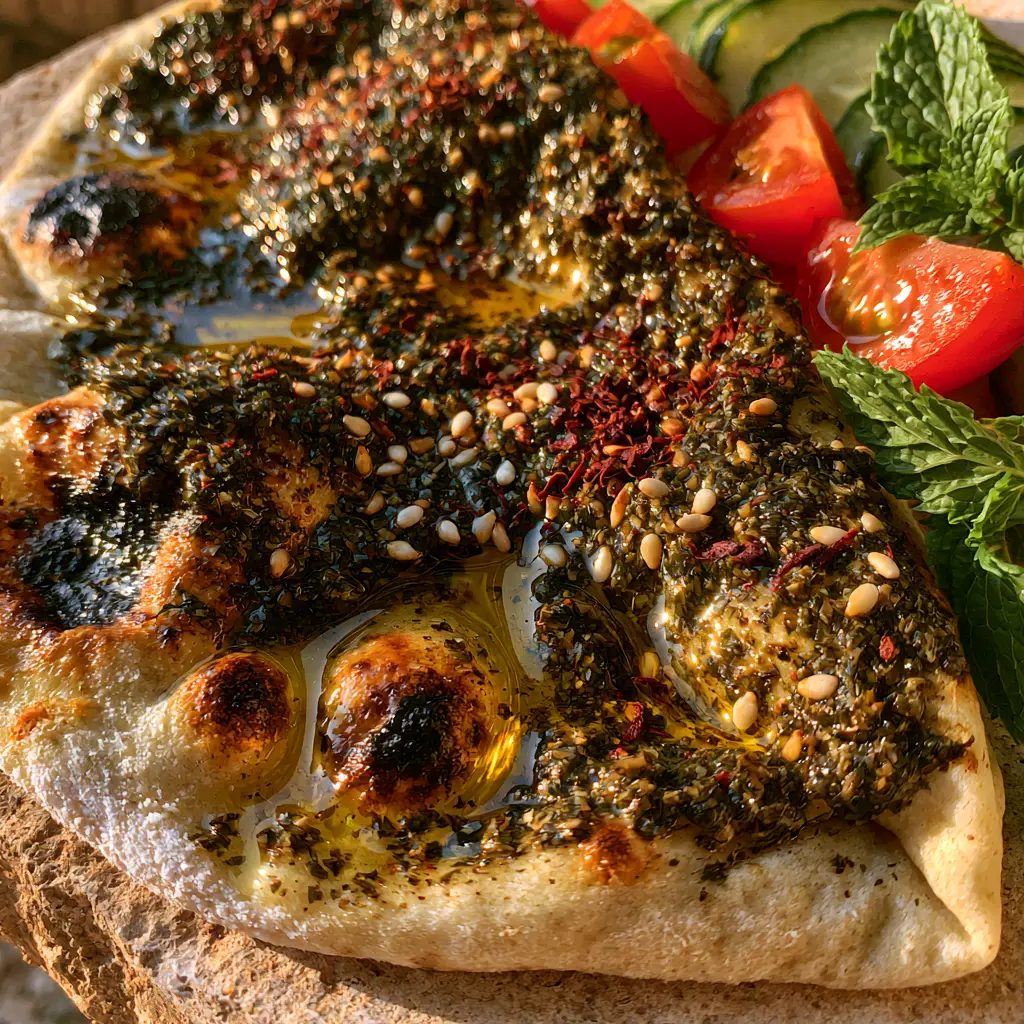
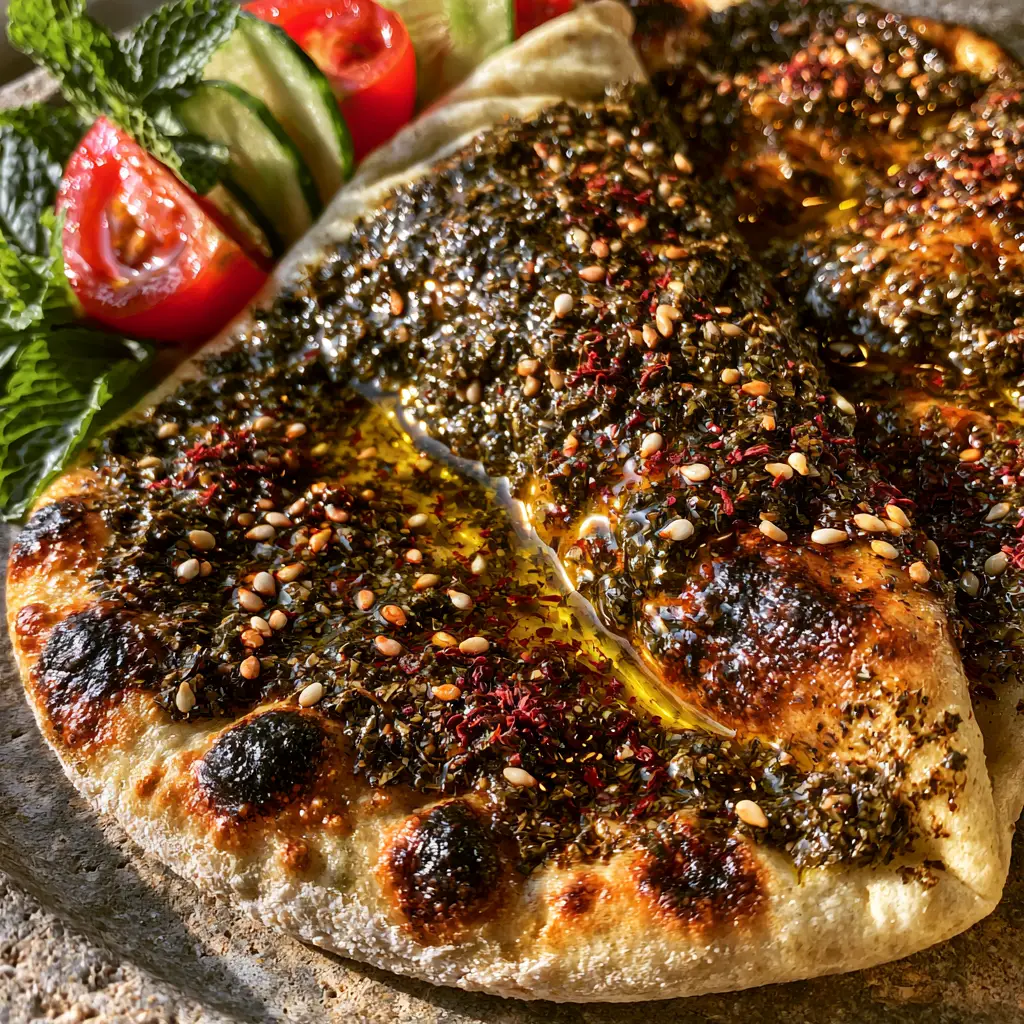
Imagine pulling a hand-stretched, pillowy yeast dough from the oven, its surface decorated with charred golden bubbles and deep craters filled with a thick, luscious zaatar herb paste. The shimmering extra virgin olive oil catches the morning light, highlighting the toasted white sesame seeds and crimson sumac flakes embedded within.
Whether you are folding it over a pile of crisp cucumber ribbons or pairing it with fresh mint sprigs and sliced cherry tomatoes, this authentic Manakeesh recipe brings the heart of the Mediterranean to your kitchen. Let’s dive into the culinary science of achieving that perfect, flexible crust and vibrant herb topping.
Why This Authentic Zaatar Flatbread is a Breakfast Game-Changer
- The Perfect Texture: A hand-stretched dough that balances a pillowy softness with characteristic golden-brown charred bubbles for a professional bakery finish.
- Vibrant Herb Topping: A thick, luscious paste made from dark green zaatar, crimson sumac, and toasted sesame seeds that won’t dry out during baking.
- Glistening Finish: Heavy use of high-quality extra virgin olive oil creates pools of liquid gold that soak into the dough’s craters.
- Fresh Visual Contrast: Served with vibrant red cherry tomato halves, crisp cucumber ribbons, and bright green mint for a balanced, handheld meal.
The Anatomy of a Perfect Manakeesh: Essential Ingredients
To achieve the visual and structural results of a professional Lebanese bakery, we must select ingredients that provide both flavor and the necessary chemical reactions for a flexible dough.
Bread Flour or All-Purpose Flour: 3 ½ cups (435g). We use a blend or high-protein flour to create the gluten structure needed for those beautiful, airy charred bubbles.
Warm Water: 1 ¼ cups (300ml). Ensure the water is between 105°F and 115°F (40°C-45°C) to activate the yeast without killing the delicate cultures.
Active Dry Yeast: 2 ¼ tsp (7g). This provides the essential lift and fermentation that creates the “pillowy” texture described in our visual blueprint.
Granulated Sugar: 1 tbsp (12g). A small amount of sugar feeds the yeast, ensuring a vigorous rise and aiding in the browning of the crust.
Extra Virgin Olive Oil: ¼ cup (60ml) for the dough and ½ cup (120ml) for the topping. The oil in the dough keeps it soft and flexible, while the topping oil provides that shimmering, luscious mouthfeel.
Zaatar Blend: ½ cup (50g). Seek out a high-quality blend containing dried wild thyme, toasted white sesame seeds, and plenty of red sumac flakes for that authentic tartness.
Fine Sea Salt: 1 ½ tsp (9g). Salt is critical for regulating yeast activity and tightening the gluten strands for a better chew.
The “Fresh” Elements: 1 cup (150g) cherry tomatoes, 1 large cucumber (ribboned), and 1 bunch of fresh mint. These provide the crisp, cooling contrast to the rich, earthy zaatar paste.
The Professional Tool Kit for Mediterranean Baking
Achieving the “handheld smartphone photo” quality of this Manakeesh recipe requires a few specific tools to mimic a traditional stone oven environment.
A heavy-duty baking stone or steel is the best way to get those charred golden bubbles on the bottom of the dough. If you don’t have one, an inverted heavy baking sheet will suffice to conduct high heat quickly.
You will also need a large glass mixing bowl for fermentation, a sharp vegetable peeler to create those ultra-thin cucumber ribbons, and a pastry brush for ensuring the shimmering olive oil is evenly distributed.
Step-By-Step: Engineering the Fluffiest Manakeesh Dough
Activating the Yeast and Initial Hydration
In your glass bowl, combine the warm water, sugar, and active dry yeast. Let it sit for 5-10 minutes until a thick, frothy foam forms on the surface, indicating the yeast is alive and ready to work.
Whisk in the ¼ cup (60ml) of extra virgin olive oil. The fats will coat the flour particles later, ensuring the dough remains soft and flexible enough to fold without snapping.
Kneading for Structure and Elasticity
Gradually add the flour and salt, stirring until a shaggy dough forms. Transfer to a lightly floured surface and knead for 8-10 minutes by hand.
You are looking for a specific sensory cue: the dough should be smooth, slightly tacky but not sticky, and should spring back slowly when poked. This elasticity is what allows the dough to trap gases and form those iconic charred bubbles.
The First Rise: Developing Flavor
Place the dough in a greased bowl, cover with a damp cloth, and let it rise in a warm, draft-free spot for 60-90 minutes. It should double in size and look airy and fragile.
During this time, you can prepare your sides. This is a great moment to explore other traditional Arabic breakfast staples to round out your morning spread.
Mastering the Zaatar Topping and High-Heat Bake
Creating the Luscious Zaatar Paste
In a small bowl, whisk together the zaatar blend and the ½ cup (120ml) of shimmering extra virgin olive oil. The consistency should be a thick, spreadable paste, not a runny liquid.
The toasted white sesame seeds and crimson sumac flakes should be clearly visible and suspended in the dark green herb mixture. This ensures every bite is packed with texture.
Shaping and Dimpling the Dough
Preheat your oven to 475°F (245°C) with your baking stone inside. Divide the dough into 8 equal balls. On a floured surface, hand-stretch each ball into a 7-inch (18cm) circle.
Use your fingertips to create deep dimples across the surface of the dough. This creates “pools” for the oil to collect in and prevents the dough from puffing up like a pita bread.
The Final Bake: Seeking the Char
Spread 1-2 tablespoons of the zaatar paste over each disc, leaving a small border. Slide the dough onto the hot stone and bake for 7-9 minutes.
Watch for the visual cue: the edges should be golden-brown with occasional dark charred bubbles, while the zaatar paste remains moist and glistening. The bread should remain soft and flexible enough to fold easily.
Expert Tips for Manakeesh Success
- Don’t Over-Bake: The most common mistake is leaving the flatbread in too long. As soon as you see the charred bubbles, pull them out to maintain that pillowy softness.
- Quality Oil Matters: Since the oil is a primary flavor, use a cold-pressed extra virgin olive oil with a peppery finish to complement the sumac.
- Dimple Deeply: Don’t be afraid to push your fingers nearly to the bottom of the dough; those craters are essential for holding the “luscious paste.”
- Keep it Covered: As soon as the Manakeesh come out of the oven, stack them and cover with a clean kitchen towel to trap the steam and keep them soft.
What to Serve With Your Manakeesh Recipe
This Manakeesh recipe is traditionally the star of a mezze-style breakfast. For a complete experience, serve it alongside a bowl of creamy labneh topped with more olive oil.
Pairing these flatbreads with slow-cooked fava beans or some crispy cheese fatayer creates a beautiful contrast of textures. If you’re looking for a heartier meal, they also go exceptionally well with a side of Lebanese-style meats.
Always include the visual garnishes from our blueprint: sliced cherry tomatoes for acidity, crisp cucumber ribbons for hydration, and fresh mint sprigs for a cooling herbal finish.
Frequently Asked Questions
Yes! Let them cool completely, wrap them tightly in foil or parchment, and place in a freezer bag. Reheat in a 350°F (175°C) oven for 5 minutes to restore the soft texture.
While you can use it in a pinch, store-bought pizza dough is often denser. For the authentic Lebanese ‘pillowy’ texture and charred bubbles, a high-hydration homemade dough with olive oil is recommended.
To maintain the pillowy flexibility, stack the hot Manakeesh on top of each other and cover them immediately with a clean kitchen towel. The trapped steam prevents the edges from becoming crunchy.
They are simply different English transliterations of the same Arabic word. Both refer to the iconic dimpled flatbread topped with zaatar, cheese, or meat.
A dry topping usually means not enough olive oil was used. Ensure you have a ‘luscious paste’ consistency where the herbs are fully submerged in shimmering oil before spreading it on the dough.
The Perfect Authentic Lebanese Zaatar Manakeesh
Manakeesh Recipe: The Ultimate Guide to Soft, Charred Zaatar Flatbread
Ingredients
Equipment
Method
- Combine warm water, sugar, and yeast in a bowl. Wait 10 minutes until frothy, then stir in the olive oil.
- Add flour and salt. Knead for 8-10 minutes until the dough is pillowy and springs back when poked.
- Place in a greased bowl, cover, and let rise for 60-90 minutes until doubled in size.
- Whisk zaatar and ½ cup olive oil into a thick, luscious paste with visible sesame seeds.
- Stretch dough into 7-inch circles and create deep dimples with your fingers to catch the oil.
- Spread paste on dough and bake at 475°F (245°C) for 7-9 minutes until golden charred bubbles appear.
Notes
Use high-quality Lebanese zaatar for the most authentic flavor profile.
Closing & Call to Action
Bringing the authentic flavors of a Lebanese bakery into your home is simpler than you think with this Manakeesh recipe. The combination of the soft, hand-stretched dough and the earthy, tart zaatar topping creates a breakfast experience that is both comforting and exotic.
If you enjoyed making this, please leave a comment below and let us know how your charred bubbles turned out! Don’t forget to share your creations and pin this recipe to your favorite boards on Pinterest so you can find it every time the craving for fresh flatbread hits.