There is nothing quite like the aromatic embrace of a traditional Hashweh recipe wafting through the kitchen. This iconic Lebanese dish, which translates literally to “stuffing,” has transcended its origins as a humble bird filler to become the glorious centerpiece of Middle Eastern hospitality. When you look at a perfectly executed bowl of Hashweh, you aren’t just looking at rice; you are looking at a masterclass in texture and warm, earthy spice.
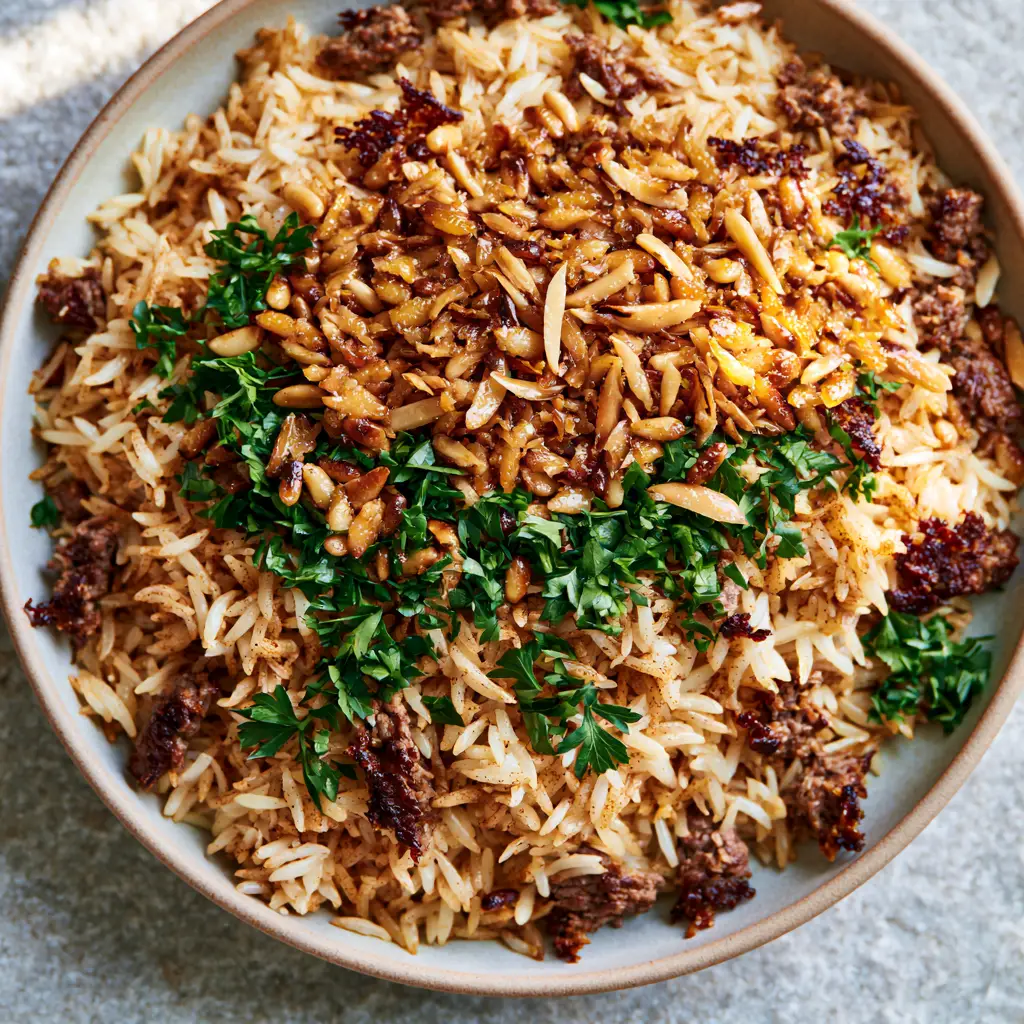
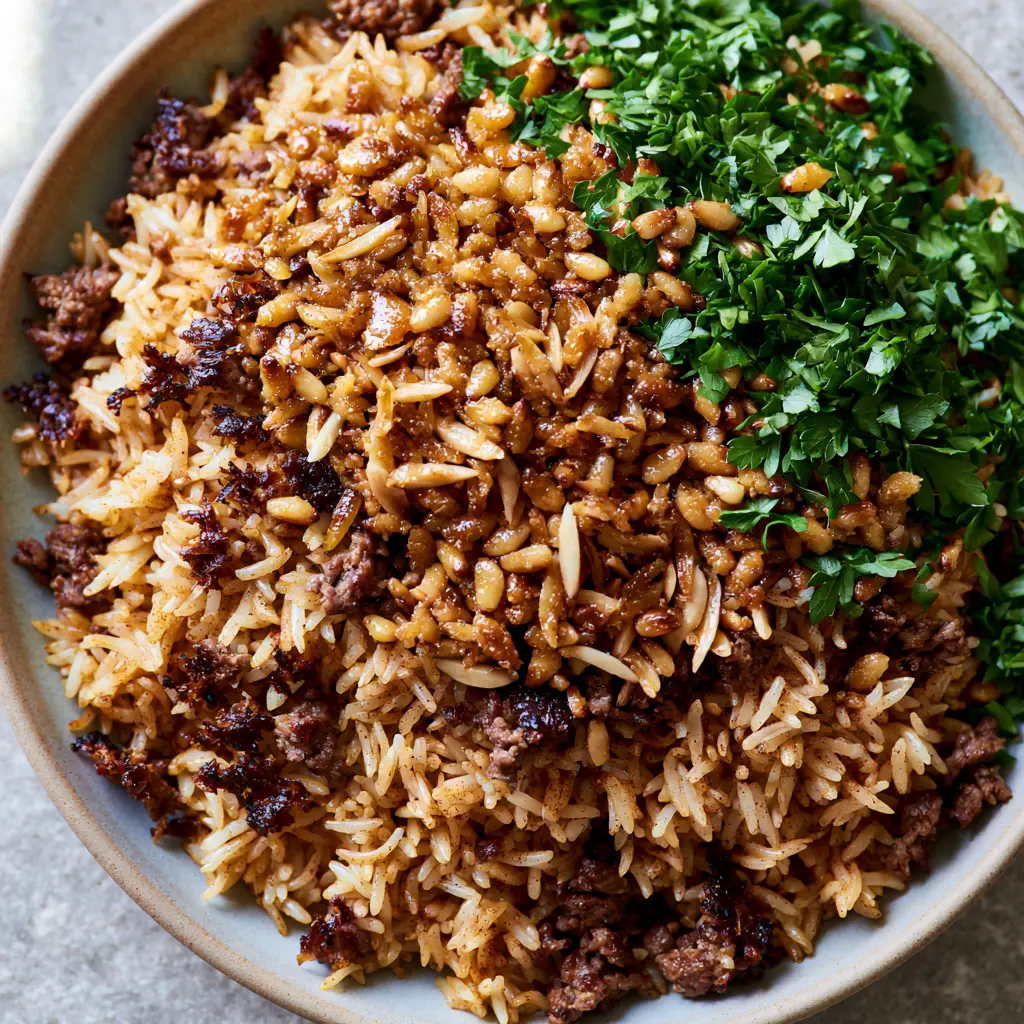
The visual appeal of this dish is undeniable. Imagine a mountain of long-grain basmati rice, each grain distinct and airy, tinted a deep golden-brown from the infusion of cinnamon and allspice. Studded throughout are crumbles of ground beef that have been seared to a deep, dark brown, providing those coveted crispy edges that contrast beautifully with the tender rice. A generous dusting of vibrant, finely chopped parsley and a glisten of buttery toasted pine nuts and almonds complete this culinary portrait.
Why This Spiced Rice Is the Ultimate Comfort Food
- Textural Harmony: The contrast between the soft, fluffy basmati rice and the crunch of golden-toasted pine nuts and slivered almonds creates a satisfying mouthfeel in every bite.
- Deep Maillard Complexity: By searing the ground beef until it develops crispy, caramelized edges, we unlock a savory depth that balances the sweet notes of the warm spices.
- Aromatic Spice Profile: The specific ratio of ground cinnamon and allspice creates an intoxicating fragrance that defines authentic Lebanese home cooking.
- Visually Stunning Presentation: With its warm golden hues and pops of fresh green parsley, this dish is as beautiful as it is delicious, making it perfect for dinner parties.
Pantry Staples for the Most Authentic Hashweh Recipe
Extra-Long Grain Basmati Rice: To achieve that “mountain of fluffy rice” where every grain is distinct, you must use a high-quality, aged basmati. The long grains expand during cooking without sticking together, provided they are rinsed properly to remove excess surface starch.
Ground Beef (80/20 Lean-to-Fat Ratio): The fat content in the beef is essential for achieving those crispy, seared edges described in our visual blueprint. As the fat renders out, it fries the meat crumbles in the pan, creating a deep brown crust and intense flavor.
Ghee or Unsalted Butter: You will need 2 tbsp (30g) of ghee or butter to toast the nuts until they are glistening and golden. Ghee has a higher smoke point, which is ideal for achieving that perfect buttery crunch without burning.
Ground Cinnamon and Allspice: These are the soul of the Hashweh recipe. Use 1 tsp (2.6g) of ground cinnamon and 1/2 tsp (1g) of allspice to provide that characteristic warm, golden-brown tint to the rice grains.
Pine Nuts and Slivered Almonds: A generous 1/4 cup (35g) of each provides the essential crunch. When toasted, these nuts release essential oils that make them glisten under soft light, as seen in the finest food photography.
Fresh Flat-Leaf Parsley: A small bunch, finely chopped, provides the “vibrant green contrast” that cuts through the richness of the meat and spices. Always use fresh; dried parsley cannot replicate the sharp, clean finish required here.
Beef Stock or Water: Using 3 cups (720ml) of high-quality beef stock instead of water will deepen the golden color and add another layer of savory umami to the rice base.
Essential Tools for Precision Cooking
To achieve the “distinct and airy” grain structure, a heavy-bottomed pot or Dutch oven is required to ensure even heat distribution. You will also need a fine-mesh strainer for rinsing the rice until the water runs clear, a step that cannot be skipped. A wide, shallow skillet is best for searing the beef, as it allows moisture to evaporate quickly, facilitating that deep browning and crispy texture. Finally, a small frying pan is perfect for monitoring the delicate toasting of the pine nuts and almonds.
Step-by-Step Guide to Mastering the Hashweh Recipe
Preparing the Long-Grain Basmati Rice
Start by measuring 2 cups (400g) of basmati rice. Place it in a fine-mesh strainer and rinse under cold water, gently agitating the grains with your fingers, until the water running through is no longer cloudy. This removes the surface starch that causes mushiness. For the best results, soak the rice in cold water for 20 minutes before draining and set aside.
Toasting the Nut Garnish to Golden Perfection
In a small skillet, melt 1 tbsp (15g) of ghee over medium-low heat. Add 1/4 cup (35g) of pine nuts and 1/4 cup (35g) of slivered almonds. Stir constantly for 3-5 minutes. Watch for the visual cue: the nuts should turn a uniform golden-brown and begin to glisten. Immediately remove them from the pan to a plate lined with a paper towel to stop the cooking process.
Searing the Beef for Crispy Edges
Heat 1 tbsp (15ml) of neutral oil in your large pot over medium-high heat. Add 1 lb (454g) of ground beef, breaking it into large chunks. Do not over-stir! Allow the meat to sit undisturbed for 3-4 minutes until a deep brown crust forms. Once seared, break the meat into smaller crumbles and continue cooking until you see the “deeply browned, seared crumbles with crispy edges” mentioned in our visual prompt. Season with salt and half of the spices.
Infusing the Rice with Warm Aromatics
Add the drained rice to the pot with the beef. Stir the rice gently for 2 minutes to coat each grain in the rendered beef fat and spices. Add the remaining cinnamon and allspice. Pour in 3 cups (720ml) of beef stock. Bring the mixture to a rolling boil, then immediately reduce the heat to the lowest setting, cover tightly, and simmer for 15-18 minutes.
The Final Fluff and Vibrant Garnish
Turn off the heat and let the pot sit, covered, for 10 minutes. This allows the steam to finish the grains, ensuring they remain distinct. Remove the lid and use a fork to gently fluff the rice from the edges inward. Transfer the Hashweh recipe to a shallow ceramic bowl. Top with a mountain of the toasted nuts and a heavy scattering of finely chopped parsley.
Expert Tips for Culinary Success
- The Soak is Sacred: Soaking the basmati rice for 20 minutes allows the grains to hydrate evenly, preventing the centers from being hard while the outsides are mushy.
- Avoid the Crowded Pan: If your pot is too small, the beef will steam in its own juices rather than searing. If necessary, brown the beef in two batches to ensure those crispy edges.
- Don’t Peek: Resist the urge to lift the lid while the rice is simmering. Losing steam will result in unevenly cooked rice and a loss of that “airy” texture.
- Salt Timing: Season the beef early, but taste the broth before the final simmer. The stock may already contain salt, and you want the flavors to be balanced, not overpowering.
Optimal Storage and Reheating Instructions
This Hashweh recipe keeps beautifully in the refrigerator for up to 4 days when stored in an airtight container. Because basmati rice can dry out when cold, we recommend reheating it on the stove with a splash of water or broth (about 1 tbsp per cup of rice). Cover the pan and heat on low until steaming. To maintain the “buttery and golden” texture of the nuts, store them separately at room temperature and add them just before serving.
What to Serve with Lebanese Spiced Rice
While this dish is a star on its own, it truly shines when paired with other Middle Eastern classics. It is the traditional accompaniment to sheikh el mahshi, where the spiced meat rice complements the tender stuffed eggplant. For a full mezze spread, serve it alongside authentic manakeesh and a side of creamy yogurt. If you are looking for a meatier feast, this rice is the perfect bed for grilled lebanese kofta or even a hearty traditional greek moussaka.
Frequently Asked Questions
Absolutely! Ground lamb is a very traditional alternative and provides a richer, more robust flavor that pairs beautifully with the cinnamon and allspice.
Use a higher fat content beef (80/20) and avoid crowding the pan. Let the meat sear undisturbed on medium-high heat for several minutes before breaking it up.
It can be both! It is often served as a hearty side dish during holidays, but because it contains protein, it works perfectly as a stand-alone main course served with yogurt.
The secret lies in two steps: rinsing the basmati rice until the water runs clear to remove surface starch, and allowing the cooked rice to rest, covered, for 10 minutes after the heat is turned off.
Authentic Lebanese Hashweh relies primarily on a blend of ground cinnamon and allspice, though some families add a touch of seven-spice (Baharat) for extra complexity.
The Ultimate Hashweh Recipe Card
Hashweh Recipe: Fluffy Lebanese Spiced Rice with Crispy Beef and Toasted Nuts
Ingredients
Equipment
Method
- Rinse 2 cups (400g) basmati rice under cold water until clear. Soak for 20 minutes, then drain.
- Heat 1 tbsp (15g) ghee in a small skillet. Toast pine nuts and almonds until golden and glistening. Set aside.
- In a large pot, brown ground beef in remaining ghee/oil over medium-high heat. Let sit to create crispy edges. Season with half the spices.
- Add drained rice to the beef. Stir for 2 minutes to coat in fat. Add remaining cinnamon and allspice.
- Add 3 cups (720ml) stock. Bring to boil, then simmer covered on low for 15-18 minutes.
- Let rest for 10 minutes. Fluff with a fork and garnish heavily with toasted nuts and fresh parsley.
Notes
For extra crispy beef, don't stir the meat for the first 4 minutes of searing.

Embrace the Flavors of the Levant
Creating this Hashweh recipe is more than just making a meal; it is about bringing a piece of Lebanese heritage into your home. The combination of warm spices, crispy beef, and toasted nuts creates a sensory experience that is truly unmatched. Whether you are serving this for a festive holiday or a cozy weeknight dinner, it is guaranteed to impress. We would love to see your creations! Please leave a comment below, share your photos, and be sure to follow us on Pinterest for more authentic inspiration.