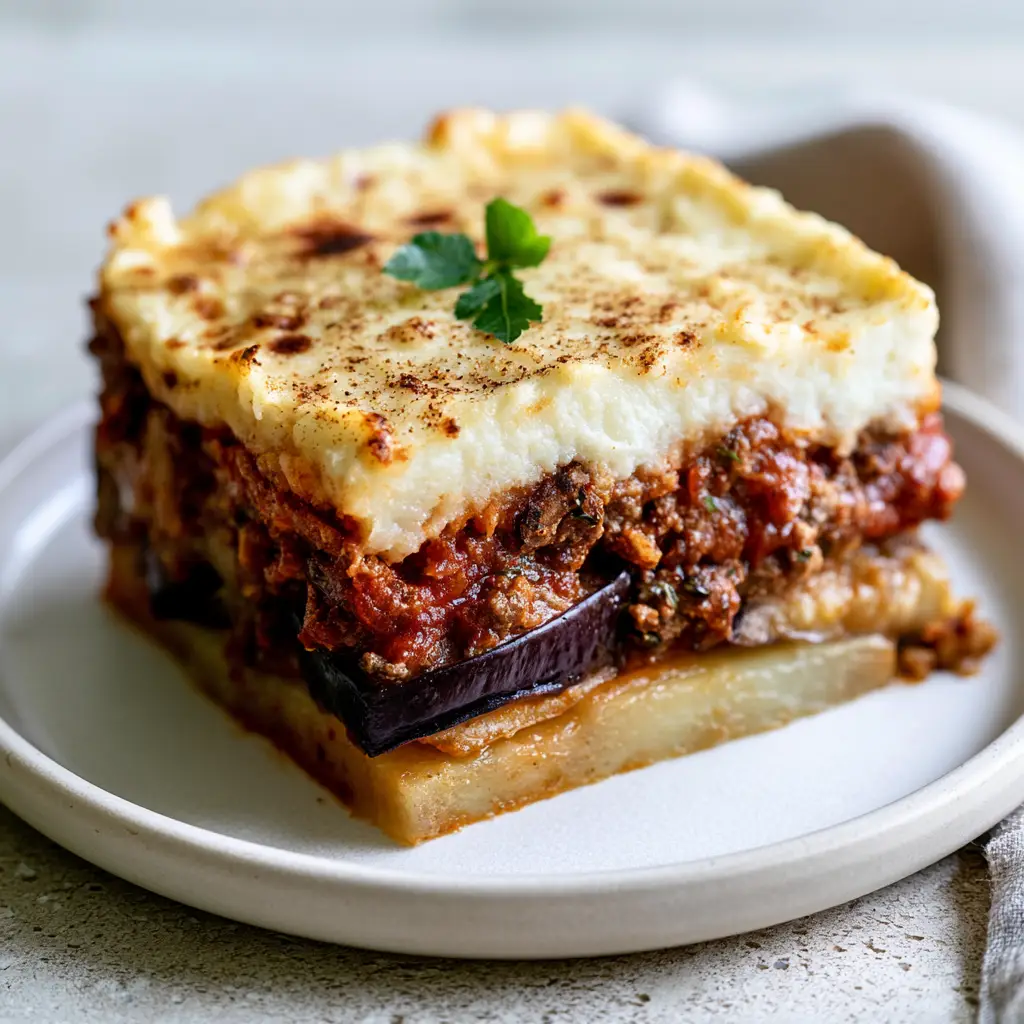
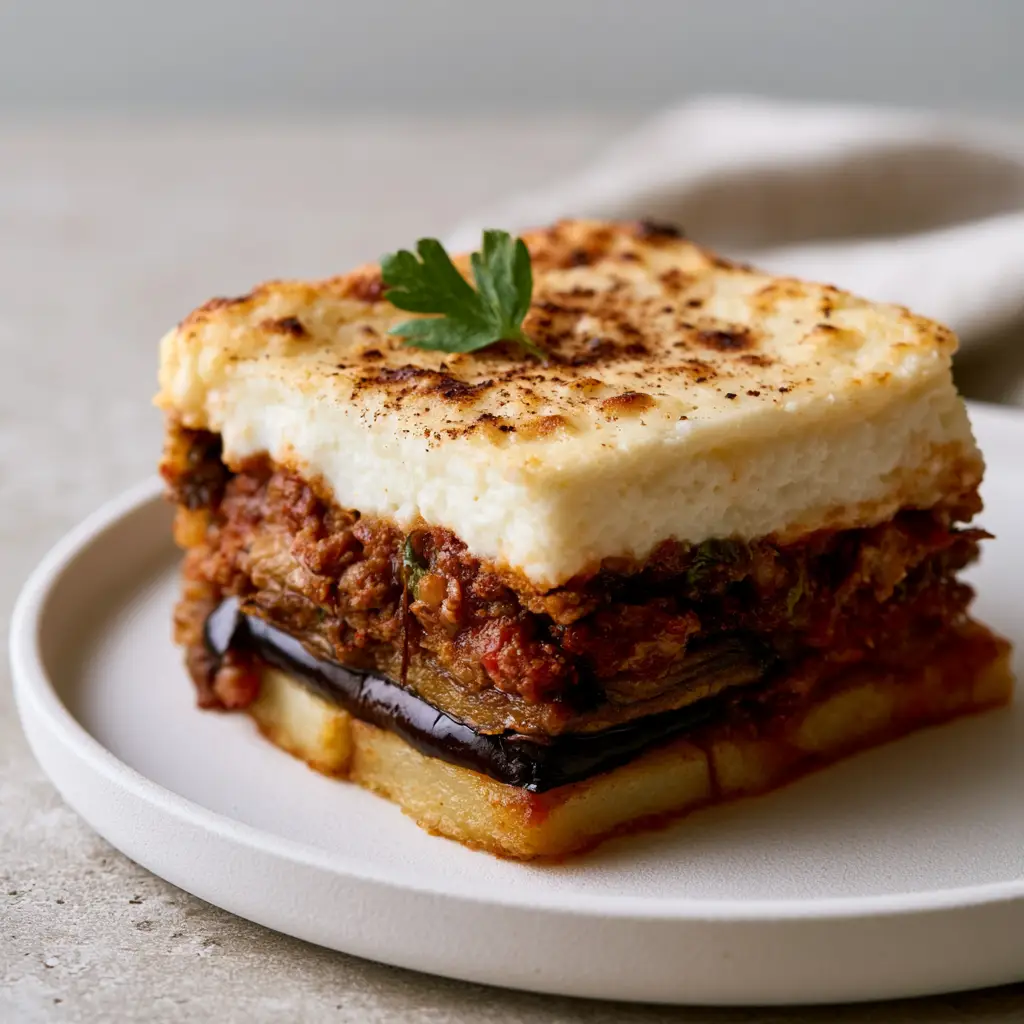
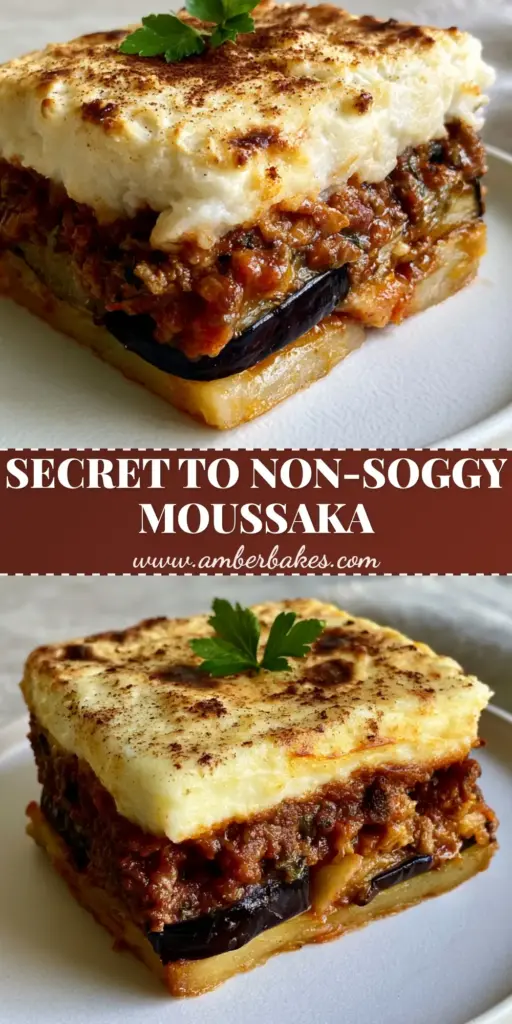
Mastering the perfect Greek moussaka recipe is a rite of passage for any serious home cook. This isn’t just a casserole; it is a structural marvel of Mediterranean architecture, featuring distinct, stable layers that stand tall on a ceramic plate. When done correctly, each square slice reveals a journey of textures—from the firm potato base to the velvety, two-inch thick cloud of Béchamel on top.
The visual appeal of this dish is undeniable. Imagine a side-profile view where oven-roasted eggplant with deep purple skins rests upon golden-brown potato rounds, all held together by a rich, herb-flecked lamb sauce. This recipe focuses on achieving that clean, professional look with a matte golden-brown finish and a fine dusting of aromatic nutmeg that defines the authentic experience.
Whether you are hosting a festive dinner or preparing a comforting weekend meal, this guide ensures your result is as stable and appetizing as a professional culinary photograph. We have refined the techniques to ensure no visible oil leakage, maintaining a clean presentation that honors the tradition of Greek island cooking.
Why You Will Love This Master-Level Layered Casserole
- Unmatched Structural Stability: Unlike watery versions, this recipe uses specific roasting techniques to ensure each slice holds its square shape perfectly when served.
- Velvety Two-Inch Béchamel: We utilize a specific ratio of dairy and tempered egg yolks to create an airy, matte-finish topping that stays firm yet creamy.
- Pure Flavor Profiles: By oven-roasting the vegetables instead of frying, we preserve the deep purple color of the eggplant and avoid a greasy mouthfeel.
- Visual Precision: From the toasted parmesan crust to the flecks of fresh parsley, every element is designed to be as beautiful as it is delicious.
Foundational Elements for a Perfectly Layered Greek Moussaka Recipe
To achieve the visual and textural heights described in our blueprint, every ingredient serves a specific culinary purpose. We focus on quality fats and specific vegetable cuts to ensure the layers remain distinct.
3 large (900g) Globe Eggplants: These provide the tender, meaty middle layer. Slicing them into 1/2-inch (1.25cm) rounds ensures they remain substantial enough to be seen in the side profile without collapsing.
4 large (800g) Russet or Yukon Gold Potatoes: These act as the foundation. Their starch content, when roasted until golden-brown, creates a firm base that supports the weight of the lamb and Béchamel layers.
2 lbs (900g) Ground Lamb: While some use beef, ground lamb offers the traditional, rich flavor profile essential for an authentic result. Its fat content carries the warmth of the spices throughout the dish.
1 cup (240ml) Dry Red Wine: Used to deglaze the lamb sauce, this acidity cuts through the richness and adds a deep, complex color to the meat layer.
1/2 cup (50g) Grated Parmesan Cheese: This is the secret to the “toasted spots” on the Béchamel crown. It provides a savory crust and helps the sauce achieve its matte, golden-brown finish.
Foundational Spices: Ground cinnamon and finely ground nutmeg are non-negotiable. The nutmeg, specifically, provides that signature dark brown dusting on the very top of the airy sauce.
Essential Tools for Building a Stable Casserole
Achieving a clean, square slice requires the right vessel and preparation tools. You will need a deep 9×13 inch (23x33cm) ceramic or glass baking dish to accommodate the significant height of the layers.
A heavy-bottomed saucepan is required for the Béchamel to ensure even heat distribution and prevent scorching. You will also need two large baking sheets lined with parchment paper for roasting the vegetables, which is the key to removing excess moisture for a “no visible oil” result.
Crafting the Layers: A Step-by-Step Guide
Preparing the Roasted Vegetable Foundation
Preheat your oven to 400°F (200°C). Slice the potatoes into 1/4-inch (0.6cm) rounds and the eggplants into 1/2-inch (1.25cm) rounds. Lightly brush both sides with olive oil and season with salt.
Arrange the potatoes on one tray and the eggplant on another. Roast the potatoes for 20-25 minutes until they are firm and golden-brown. Roast the eggplant for 15-20 minutes until tender but still holding their deep purple skin color. Set these aside to cool slightly, which helps them firm up for layering.
Simmering the Rich Herb-Flecked Lamb Sauce
In a large skillet over medium-high heat, brown the ground lamb until no pink remains. Drain any excess rendered fat to keep the final dish clean. Add finely diced onions and garlic, sautéing until translucent.
Stir in tomato paste, crushed tomatoes, cinnamon, and a pinch of allspice. Pour in the red wine and let it simmer for 30 minutes. The goal is a thick, concentrated sauce with visible flecks of fresh herbs like dried oregano and chopped parsley. If it looks runny, continue simmering; a dry sauce is the secret to a stable slice.
Architecting the Two-Inch Airy Béchamel
Melt 1/2 cup (115g) butter in a saucepan, then whisk in 1/2 cup (65g) all-purpose flour. Slowly pour in 4 cups (950ml) of whole milk, whisking constantly until the sauce thickens to a velvety consistency.
Remove from heat and temper in 3 large egg yolks. This creates the “airy” texture and stable structure. Stir in half of the parmesan and a generous grating of fresh nutmeg. The sauce should be thick enough to hold a soft peak.
Assembly and the Matte Golden Bake
Grease your baking dish. Lay the golden-brown potatoes in a tight, overlapping pattern at the bottom. Follow with a layer of the roasted eggplant. Spread the thick lamb sauce evenly over the vegetables.
Finally, pour the Béchamel over the top, smoothing it to a flat surface. Sprinkle the remaining parmesan and an extra dusting of nutmeg. Bake at 350°F (175°C) for 45-50 minutes. You are looking for a matte finish with small toasted spots and no bubbling oil around the edges.
Expert Tips for Success
- The “Sweat” Step: If your eggplants are particularly large, salt the raw slices for 20 minutes and pat dry before roasting to ensure they don’t release water in the oven.
- Cooling is Mandatory: Never slice a moussaka straight out of the oven. Let it rest for at least 45-60 minutes. This allows the Béchamel to set and the layers to bond.
- Avoid Over-Oiling: Use an oil sprayer for the vegetables rather than a heavy pour. This guarantees the “no visible oil” look seen in elite food photography.
- Fresh Nutmeg: Always grate your nutmeg fresh for the topping; the pre-ground version loses the volatile oils that provide that signature aroma.
Mediterranean Pairings for a Complete Feast
This Greek moussaka recipe is a heavy, rich dish that benefits from bright, acidic sides. A crisp Greek salad with plenty of vinegar and feta is the traditional choice.
If you are looking to expand your Mediterranean spread, consider serving this alongside crispy meat pie or start the meal with freshly baked manakeesh. For those who prefer a meatless version of this specific profile, our vegetarian eggplant moussaka offers a similar texture using lentils. If you enjoy the warm spice profile of the lamb sauce, you will also love the flavors in traditional hashweh rice.
Frequently Asked Questions About Authentic Moussaka
Yes, ground beef is a common substitute. However, lamb provides the traditional flavor profile. If using beef, ensure it is lean to avoid excess oil in the layers.
The secret is using a specific milk-to-flour ratio and adding tempered egg yolks, which provide structure and airiness, allowing the sauce to stand tall without collapsing.
While some regional versions only use eggplant, the potato base is a staple of the ‘modern’ Greek moussaka (standardized by Nikos Tselementes) and provides necessary structural stability for slicing.
This usually happens if the meat sauce is too watery or the vegetables aren’t pre-roasted. Additionally, the moussaka MUST rest for at least 45 minutes after baking to allow the Béchamel and juices to set.
Roasting removes moisture and concentrates flavor without the eggplant soaking up excessive oil. This ensures a clean presentation with no greasy residue on the plate.
The Ultimate Greek Moussaka Recipe Card
Greek Moussaka Recipe: The Ultimate Layered Mediterranean Classic
Ingredients
Equipment
Method
- Arrange potato and eggplant rounds on baking sheets, brush with oil and salt, then roast at 400°F until golden-brown and tender.
- Brown the lamb with onions and garlic, add wine, tomatoes, and spices. Simmer until thick and the liquid has mostly evaporated.
- Create a roux with butter and flour, whisk in milk until thick, then whisk in egg yolks, half the cheese, and nutmeg for a velvety finish.
- Layer potatoes, then eggplant, then meat sauce. Pour the Béchamel over the top, sprinkle with remaining cheese and nutmeg. Bake at 350°F for 50 minutes.
Notes
Roasting the eggplant instead of frying prevents the dish from becoming greasy.
Closing & Call to Action
Achieving the perfect Greek moussaka recipe is about patience and precision. By following these roasting and layering techniques, you will produce a dish that is as visually stunning as it is deeply flavorful. The contrast between the firm potato base and the two-inch velvety Béchamel is a culinary experience your guests won’t forget.
If you enjoyed this recipe, please leave a comment below and share your results! Don’t forget to pin this recipe to your favorite boards on Pinterest so you can find it for your next Sunday dinner. For more authentic tastes, explore our collection of classic Arabian recipes and traditional Lebanese kofta.