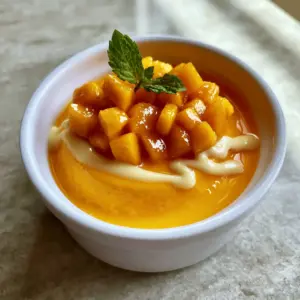
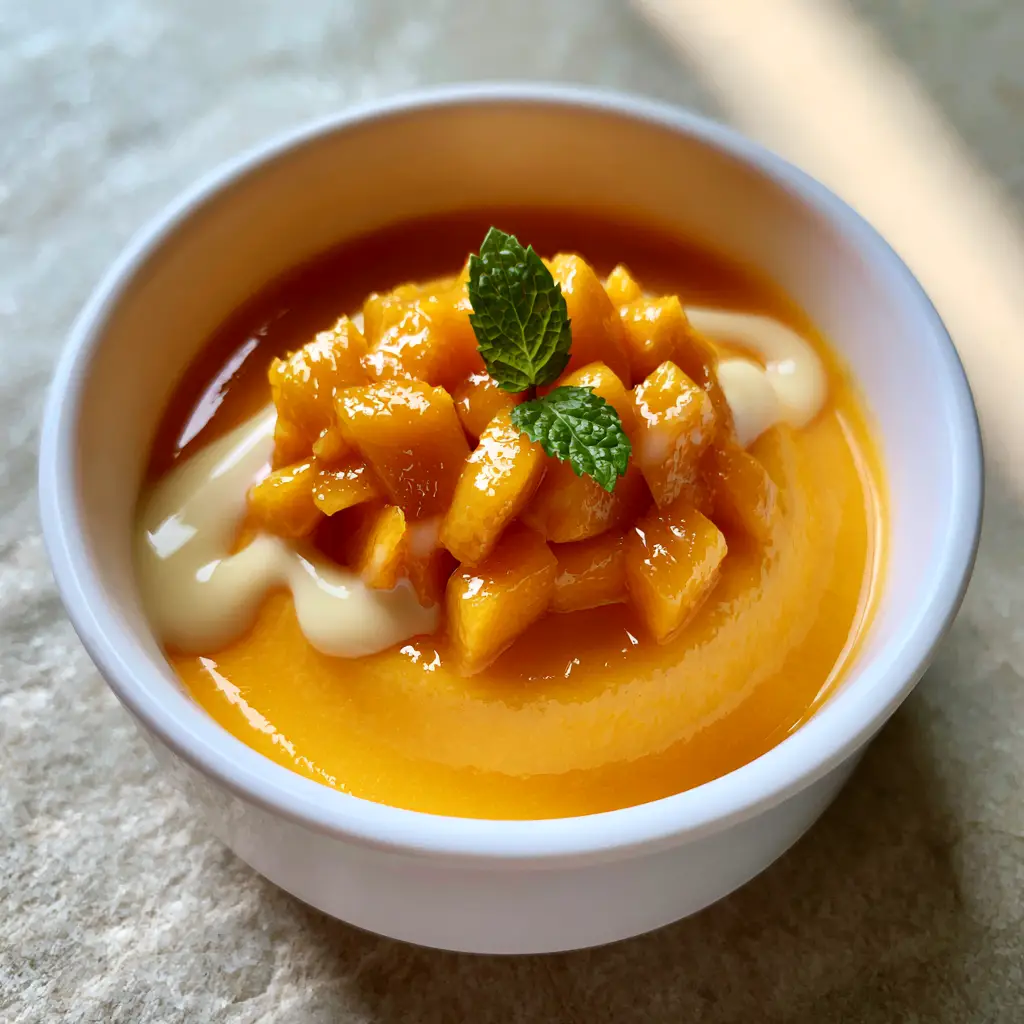
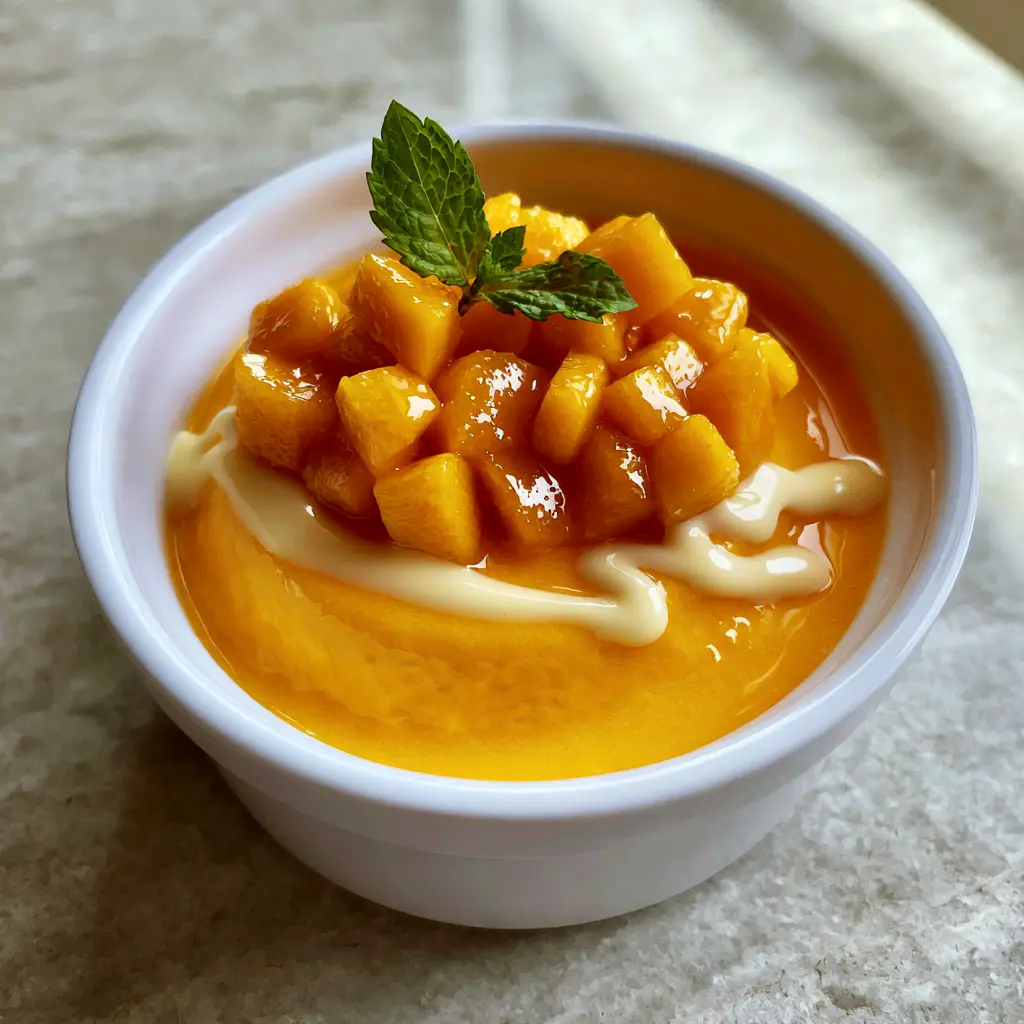
There is something inherently magical about a dessert that captures the very essence of summer in a single spoonful. This Mango pudding is more than just a sweet treat; it is a masterpiece of texture and color, designed to transport your senses to a sun-drenched tropical grove. With its vibrant, deep sun-kissed orange hue and a surface so glossy it reflects the soft morning light, this pudding is the pinnacle of fruit-based elegance.
Imagine a dessert with a soft, hypnotic jiggle that yields to the slightest pressure of a spoon, revealing a silky interior that melts away instantly. The contrast between the cool, set mango custard and the mound of glistening, freshly diced ripe mango cubes creates a sensory experience that is both refreshing and indulgent. Finished with a thin, artistic drizzle of ivory-colored condensed milk and a single vibrant green mint leaf, this is the mango dessert recipe you have been searching for to elevate your culinary repertoire.
Why This Vibrant Mango Custard Wins Every Time
- Structural Perfection: Achieves a professional “soft jiggle” that holds its shape while maintaining a melt-in-the-mouth silkiness.
- Visual Brilliance: The deep orange color is achieved naturally through high-quality fruit, creating a stunning centerpiece without artificial dyes.
- Balanced Sweetness: The richness of condensed milk perfectly offsets the bright, tangy notes of fresh mango puree.
- Gourmet Presentation: The combination of the ivory drizzle and fresh mint leaf provides a professional, handheld-photo-ready aesthetic.
- Simple Sophistication: Requires no baking and minimal active time, yet delivers a result that looks like it came from a high-end patisserie.
Essential Elements for the Perfect Sun-Kissed Custard
To achieve the ultra-close-up worthy texture described in our visual blueprint, every ingredient must serve a specific culinary purpose. We aren’t just making a snack; we are engineering a stabilized emulsion of fruit and dairy that remains light yet rich.
Fresh Mango Puree (2 cups / 480ml): Use the highest quality, non-fibrous mangoes like Alphonso or Honey (Ataulfo) to ensure a perfectly smooth base. This is the source of that vibrant, deep sun-kissed orange color.
Sweetened Condensed Milk (1/2 cup / 120ml): This provides the creamy, ivory-toned richness and acts as the primary sweetener. A portion is reserved for that final, artistic thin drizzle across the top.
Unflavored Gelatin Powder (1 tbsp / 10g): The invisible structural hero that provides the “soft jiggle” without making the pudding rubbery. It must be bloomed correctly to avoid lumps.
Hot Water (1/2 cup / 120ml): Used specifically to dissolve the bloomed gelatin, ensuring it integrates seamlessly into the cold mango puree. This temperature control is vital for a glossy, reflective surface.
Cold Water (1/4 cup / 60ml): Necessary for the initial blooming of the gelatin, allowing the proteins to hydrate before heat is applied. This prevents the “grainy” texture often found in amateur puddings.
Freshly Diced Ripe Mango (1 cup / 150g): These glistening cubes add a necessary structural contrast to the smooth custard. Look for fruit with visible moisture on the surface for the best visual appeal.
Fresh Mint Sprig: A single, tiny, vibrant green leaf provides the ultimate color contrast against the orange and ivory. It adds a faint, refreshing aroma that rounds out the tropical profile.
The Professional Toolkit for Silky Success
Achieving a professional-grade Mango pudding requires a few specific tools to ensure the texture is flawless. A high-powered blender is essential for processing the mango into a puree that is completely free of fibers. Even the smallest thread of mango fiber can ruin the “silky” experience described in our visual prompt.
Additionally, a fine-mesh sieve is your best friend here. Even after blending, straining the mixture ensures that the final custard has that glossy, reflective surface. You will also need minimalist white ceramic ramekins, which provide a neutral background to make the orange hue pop. A small squeeze bottle or a fine-tipped spoon will help you achieve the thin, artistic drizzle of condensed milk that catches the light so beautifully.
The Path to a Flawless Tropical Set
Blooming and Dissolving the Stabilizer
Start by sprinkling the gelatin powder over the cold water (1/4 cup / 60ml) in a small heat-proof bowl. Let it sit for about 5 minutes until it looks like a thick sponge; this is “blooming” and is critical for a smooth set. Once bloomed, pour in the boiling hot water (1/2 cup / 120ml) and whisk vigorously until the gelatin is completely transparent and dissolved.
Crafting the Vibrant Orange Base
Place your mango chunks into a blender and process until completely liquefied. Measure out exactly 2 cups (480ml) of this puree to ensure the ratio of fruit to gelatin is perfect. Pour the puree into a large mixing bowl and whisk in the sweetened condensed milk (save 2 tablespoons for drizzling later) until the mixture is a uniform, sun-kissed orange color.
Integrating the Gelatin and Straining
Slowly stream the dissolved gelatin into the mango mixture while whisking constantly. This “tempering” motion prevents the gelatin from setting too quickly in the cold puree, which would cause streaks. For a truly professional result, pass the entire mixture through a fine-mesh sieve into a clean pitcher. This removes any tiny air bubbles or overlooked fibers, guaranteeing a silky mouthfeel.
The Set and The Garnish
Pour the mixture into your minimalist white ceramic ramekins, leaving about half an inch of space at the top. Chill in the refrigerator for at least 4 hours, or until the surface shows a soft, glossy jiggle when gently shaken. Just before serving, top with a neat mound of freshly diced mango cubes. Use a small spoon to create a thin, artistic swirl of the reserved condensed milk across the top, and finish with the single mint leaf.
Expert Tips for Culinary Forensic Accuracy
- Temperature Control: Ensure your mango puree is at room temperature before adding the hot gelatin to prevent “thermal shock,” which can cause the pudding to set unevenly.
- Eliminating Bubbles: If you see small bubbles on the surface after pouring into ramekins, lightly run a kitchen torch over the top or pop them with a toothpick for a glass-like finish.
- Mango Selection: If your mangoes aren’t vibrant orange, add a tiny drop of natural turmeric juice; it enhances the color without changing the flavor of the Mango pudding.
- The Drizzle Technique: Warm the reserved condensed milk slightly so it flows in a thin, continuous line rather than thick clumps.
Storage and Preservation of Freshness
Because this dessert relies on fresh fruit and dairy, it is best enjoyed within 48 hours of setting. Keep the ramekins tightly covered with plastic wrap to prevent the surface from drying out or absorbing refrigerator odors. Do not add the fresh mango cubes or the mint leaf garnish until immediately before serving, as the fruit will release moisture and the mint will wilt.
We do not recommend freezing this Mango pudding. Gelatin-based custards tend to lose their structural integrity and “soft jiggle” upon thawing, resulting in a grainy texture and a loss of that beautiful glossy surface. For more chilled inspiration, check out our watermelon smoothie bowl for another refreshing summer option.
What to Pair With Your Mango Masterpiece
This pudding is a star on its own, but it fits beautifully into a larger spread of mango dessert recipes. If you are hosting a themed dinner, consider starting with something savory like Egyptian Hawawshi to provide a hearty contrast to the light dessert. The bright acidity of the mango also cleanses the palate after rich meals.
For a lighter lunch pairing, a tuna salad or a vibrant roasted sweet potato salad creates a balanced nutritional profile. The goal is to keep the surrounding flavors clean so the intense tropical notes of the mango can truly shine.
Frequently Asked Questions
Yes, you can substitute the gelatin with 1 teaspoon of agar-agar powder and use sweetened coconut condensed milk instead of dairy.
Yes, frozen mango puree works well, but ensure it is completely thawed and at room temperature before adding the gelatin to avoid lumps.
It typically takes at least 4 hours in the refrigerator, but for the best reflective surface and firm set, chilling overnight is recommended.
Alphonso or Honey (Ataulfo) mangoes are best because they are non-fibrous, sweet, and have an intense orange color, ensuring a silky texture.
This usually happens if the gelatin wasn’t fully dissolved in hot water or if the mangoes were too acidic. Ensure your gelatin is transparent before mixing.
The Perfect Mango Pudding Recipe
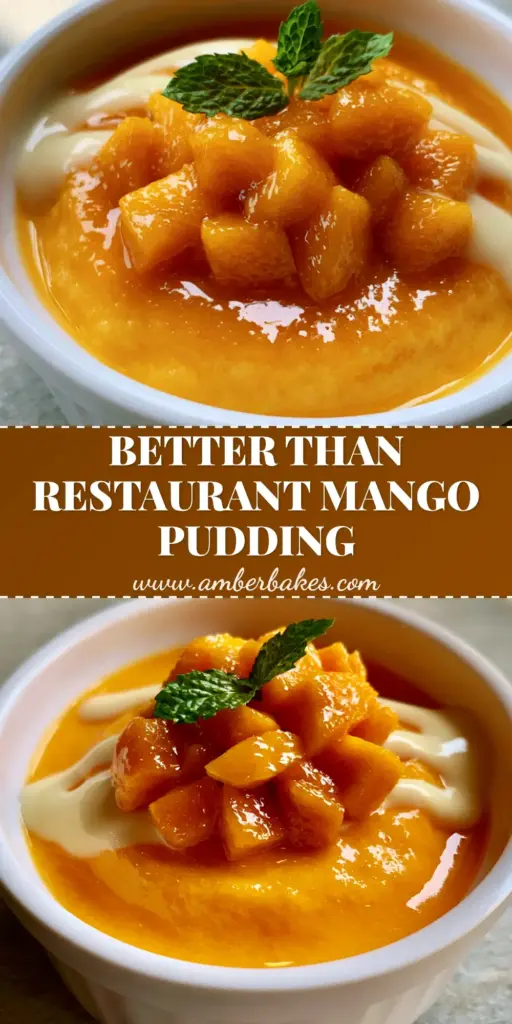
Mango pudding: The Ultimate Silky and Vibrant Tropical Dessert
Ingredients
Equipment
Method
- Sprinkle 1 tbsp (10g) gelatin over 1/4 cup (60ml) cold water. Let sit for 5 minutes.
- Whisk in 1/2 cup (120ml) boiling hot water until the gelatin is completely clear.
- Combine 2 cups (480ml) mango puree and most of the condensed milk. Whisk in the gelatin mixture.
- Pass the mixture through a fine-mesh sieve to ensure a silky, glossy surface.
- Pour into ramekins and refrigerate for at least 4 hours until it has a soft jiggle.
- Top with diced mango cubes, a drizzle of condensed milk, and a mint leaf.
Notes
Strain the mixture twice if you notice any fibers remaining.
Conclusion: A Taste of the Tropics
Creating a Mango pudding that looks as good as it tastes is a rewarding culinary endeavor. By focusing on the quality of your fruit and the precision of your gelatin set, you can achieve a dessert that rivals any professional pastry shop. The vibrant colors, the soft jiggle, and the silky texture make this a guaranteed crowd-pleaser for any summer gathering.
If you enjoyed this recipe, please leave a comment below and let us know how your pudding turned out! Don’t forget to share your creations on Pinterest and tag us. Your feedback helps us continue to develop high-quality, visually stunning recipes for home cooks everywhere.