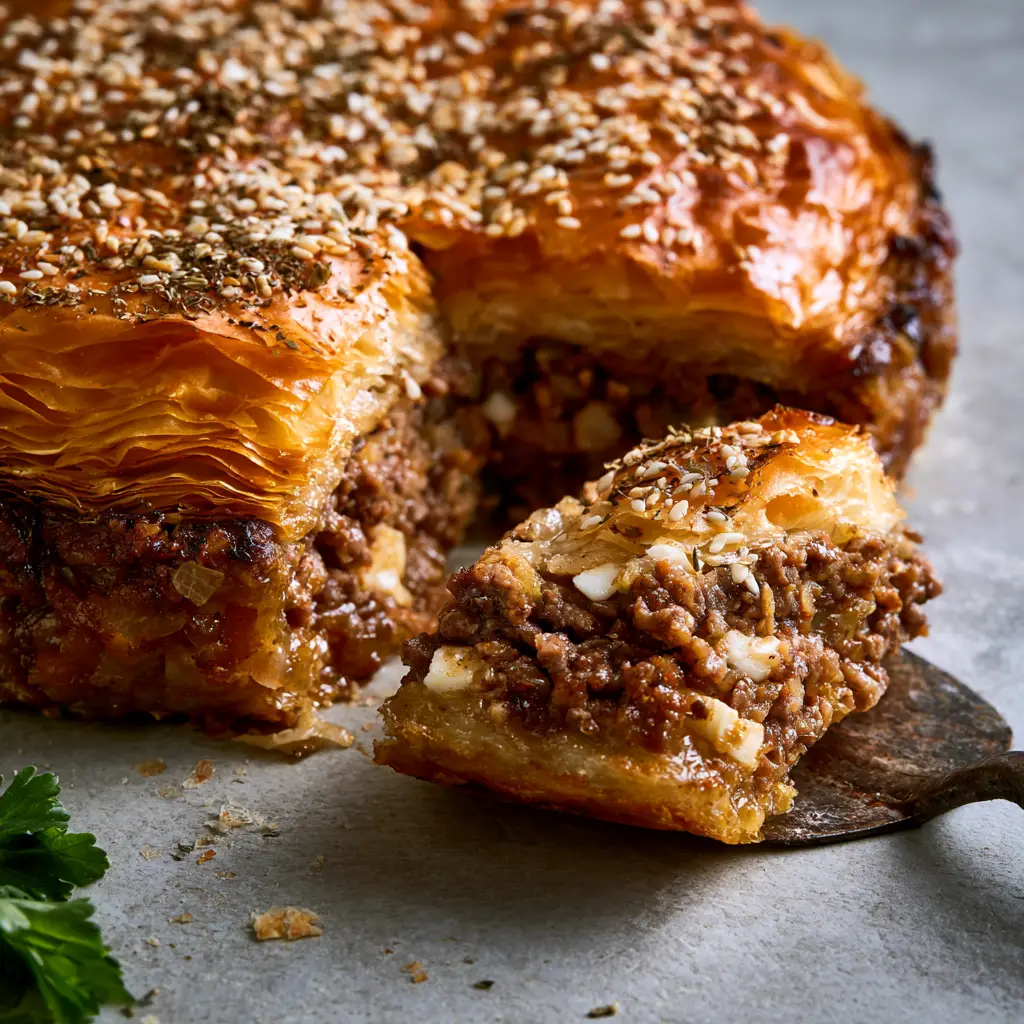
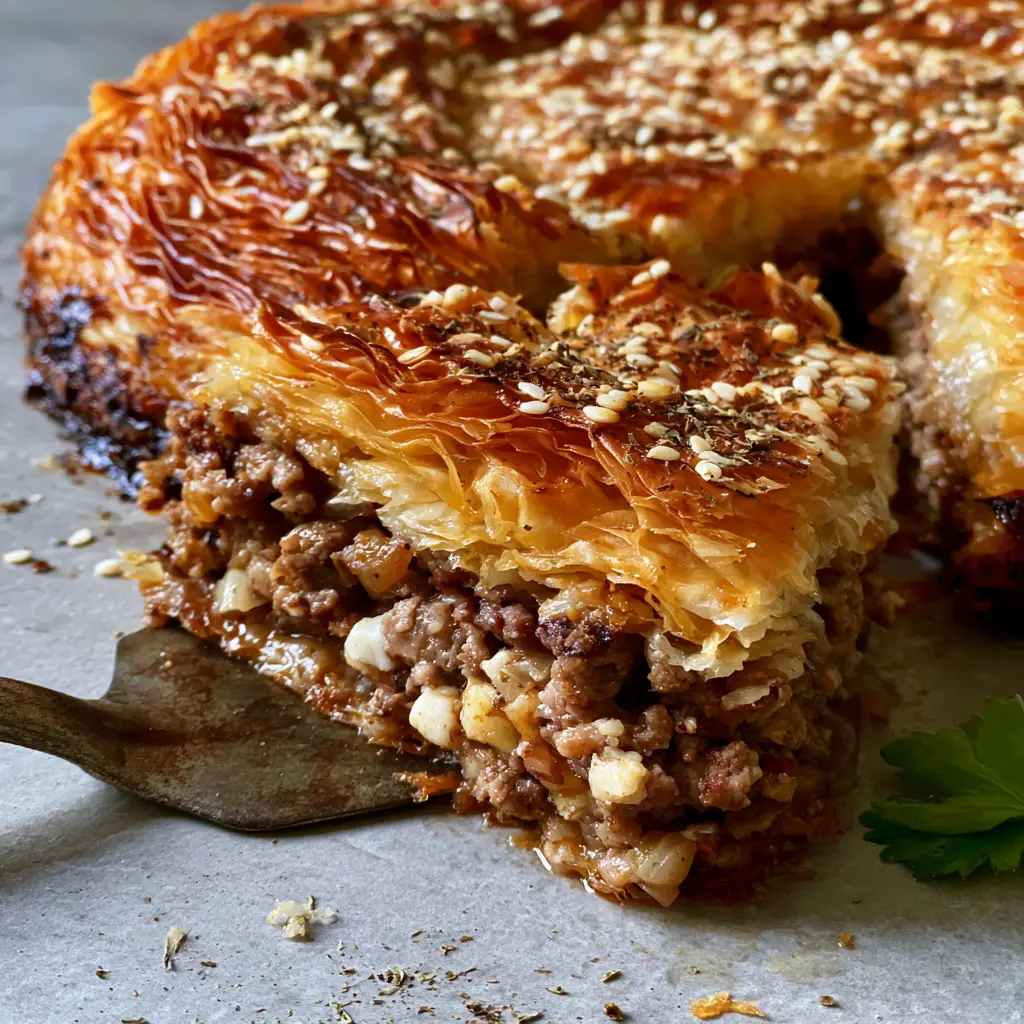
There is a specific sound that defines a perfect Greek kreatopita recipe: the unmistakable, high-pitched crackle of dozens of ultra-thin phyllo sheets yielding to a sharp knife. This isn’t just a meat pie; it is a masterclass in textural contrast. Imagine lifting a heavy, rustic metal server to reveal a slice where the top is a golden-brown mountain of flakes, and the interior is a steaming, juicy blend of seasoned beef and lamb punctuated by sharp, salty cubes of Kefalotyri cheese.
Capturing the essence of a traditional Hellenic kitchen requires more than just ingredients; it requires an understanding of how fat, heat, and pastry interact. Whether you are serving this for a festive Sunday lunch or as a centerpiece for a Mediterranean spread, the visual of toasted white sesame seeds and dried oregano scattered across a glistening, oily crust is enough to stop anyone in their tracks. This guide will walk you through the forensic details of achieving that professional, bakery-style finish in your own home oven.
The beauty of this Greek kreatopita recipe lies in the morning window light hitting those oily layers, highlighting the craftsmanship of every brushstroke of olive oil. By focusing on a perfectly browned, non-soggy bottom crust and a filling that remains succulent without being greasy, you will create a dish that rivals the best tavernas in Athens. Let’s dive into the architecture of the ultimate savory Greek pastry.
Why This Savory Greek Meat Pie Is a Culinary Masterpiece
- Shatteringly Crisp Pastry: We use a specific layering technique with high-quality fats to ensure the phyllo never turns gummy, resulting in a top layer that resembles delicate shards of gold.
- The Kefalotyri Factor: Unlike feta which crumbles and softens, tiny cubes of white salty Kefalotyri cheese provide distinct, chewy pockets of savory flavor that stand out against the minced meat.
- Dual-Protein Depth: By blending lean ground beef with rich ground lamb, we achieve a complex flavor profile that is far superior to single-meat fillings.
- Aromatic Heritage: The combination of toasted white sesame seeds and dried oregano flakes on the crust provides an immediate sensory hook before you even take the first bite.
- Structural Integrity: Our method ensures a browned bottom crust that is sturdy enough to be lifted with a server, avoiding the dreaded “soggy bottom” common in home-baked meat pies.
The Anatomy of Ingredients: Choosing the Best for Your Kreatopita
The Foundation: Beef and Lamb
For the heart of this Greek kreatopita recipe, you need 1 lb (450g) of lean ground beef and 1 lb (450g) of ground lamb. The beef provides the structural bulk and classic savory notes, while the lamb introduces a necessary richness and characteristic Mediterranean fat profile that keeps the filling juicy during the long bake.
The Texture King: Phyllo Pastry
You will need 1 package (16 oz / 450g) of No. 4 or “Thin” phyllo pastry. These ultra-thin sheets are what create the dozens of layers required for that shatteringly crisp finish; ensure they are fully thawed in the refrigerator overnight to prevent cracking and tearing during the assembly process.
The Salty Soul: Kefalotyri Cheese
Use 1.5 cups (200g) of Kefalotyri cheese, cut into 1/4-inch (6mm) tiny cubes. This hard, salty sheep’s milk cheese has a high melting point, meaning it won’t disappear into the meat; instead, it creates the visually distinct white cubes seen in the side profile of a professional Kreatopita slice.
The Aromatics and Invisible Essentials
Freshness comes from 2 large yellow onions, finely diced, and 3 cloves of garlic, minced. You will also need 1/2 cup (120ml) of extra virgin olive oil and 1/2 cup (115g) of melted unsalted butter; this 50/50 fat blend is the secret to a crust that is both flavorful and structurally sound. Don’t forget 2 tbsp (30g) of toasted white sesame seeds and 1 tbsp (5g) of dried oregano for the iconic topping.
Essential Seasonings
Beyond salt and black pepper, a true Greek meat pie requires a hint of warmth. We include 1/2 tsp (1g) of ground cinnamon and 1/4 tsp (0.5g) of ground allspice, which don’t make the dish sweet but rather enhance the natural sweetness of the sautéed onions and the richness of the lamb, similar to the flavor profile found in a classic Greek moussaka recipe.
Essential Equipment for a Perfect Bake
To achieve the visual results described, a 9×13 inch (23x33cm) rectangular baking pan is non-negotiable. Metal pans are preferred over glass or ceramic because they conduct heat more rapidly, which is essential for developing that perfectly browned, non-soggy bottom crust that supports the heavy meat filling.
A natural bristle or high-quality silicone pastry brush is your most important tool during assembly. You must be able to apply a thin, even coat of the oil-butter mixture to every single sheet of phyllo without tearing the delicate pastry. Finally, a rustic metal server or a wide offset spatula is needed to lift the slices cleanly, showcasing the juicy interior and the distinct layers of the side profile.
Step-by-Step Evolution of the Greek Kreatopita
Developing the Savory Meat Filling
Start by heating 2 tbsp (30ml) of olive oil in a large skillet over medium-high heat. Add the diced onions and sauté for 6-8 minutes until they are soft and translucent, bordering on golden. This moisture evaporation is key to preventing a soggy pie later. Add the minced garlic and cook for another 60 seconds until fragrant.
Add the ground beef and lamb to the skillet. Use a wooden spoon to break the meat into small crumbles, searing it until a deep golden-brown crust forms on the proteins. Drain about 70% of the rendered fat—you want enough left for flavor and juiciness, but not so much that it pools. Stir in the cinnamon, allspice, salt, pepper, and a splash of water or beef stock (about 1/4 cup / 60ml) to create a light emulsion. Simmer until the liquid has mostly reduced, leaving the meat looking glossy and succulent.
Preparing the Pastry Architecture
While the meat cools slightly (never put hot filling on raw phyllo!), whisk together your melted butter and remaining olive oil. Lightly grease your baking pan. Lay out your phyllo sheets and cover them with a damp kitchen towel to prevent them from becoming brittle. The air is the enemy of the perfect Greek kreatopita recipe.
Layer 8 sheets of phyllo into the bottom of the pan, brushing each individual sheet thoroughly with the fat mixture. Ensure the sheets slightly overlap and crawl up the sides of the pan. This creates the “cradle” that protects the bottom crust from the moisture of the meat. Just as you might prepare the base for a savory cheese manakish, the foundation must be robust.
The Assembly and the Kefalotyri Cubes
Once the meat filling has cooled to room temperature, fold in 1/2 cup (15g) of freshly chopped parsley. Spread the meat mixture evenly over the bottom layers of phyllo. Now, take your tiny cubes of Kefalotyri and press them evenly into the meat. This ensures that every bite contains a pocket of salty, melted cheese, creating that beautiful white-on-brown contrast in the side profile.
Top the meat with the remaining phyllo sheets. Again, brush every single sheet with the oil-butter mixture. For the top layer, use a slightly more generous amount of fat to encourage that “shatteringly crisp” texture. Use a sharp knife to score the top few layers of phyllo into squares or diamonds; this allows steam to escape and makes serving much easier.
The Final Flourish and the Bake
Sprinkle the toasted white sesame seeds and the dried oregano flakes evenly across the top. The oregano should be crushed between your palms as you sprinkle to release its oils. Lightly spritz the top with a tiny bit of water—this is a professional trick that helps the phyllo puff up and become extra crispy rather than just hard.
Bake in a preheated oven at 375°F (190°C) on the lower-middle rack for 45-55 minutes. You are looking for a deep, honey-gold brown across the top and visible bubbling around the edges. If the top browns too quickly, tent it loosely with foil. The goal is a crust that looks like it’s glowing in the morning window light, with oily highlights on every flake.
Expert Tips for a Non-Soggy Crust
- Cool the Filling: Never add hot meat filling to phyllo. The steam will immediately compromise the delicate pastry, leading to a gummy interior rather than a crisp one.
- The Bottom Rack Trick: For the last 10 minutes of baking, move the pan to the lowest rack of the oven. This direct heat ensures the bottom crust browns perfectly, preventing the meat juices from making it soft.
- Fat is Flavor: Do not skimp on the oil-butter mixture. Phyllo needs fat to separate the layers; without it, they fuse together into a dense block.
- Rest Before Slicing: Allow the kreatopita to rest for at least 15-20 minutes after coming out of the oven. This allows the juices in the beef and lamb to redistribute, ensuring a juicy interior that doesn’t run out when sliced.
Serving Suggestions and Internal Pairings
A slice of this Greek kreatopita recipe is a hearty meal on its own, but it pairs beautifully with a crisp cucumber and tomato salad dressed in lemon and olive oil. For a full Mediterranean feast, consider serving it alongside other regional favorites. The spiced meat profile is a wonderful companion to the flavors found in a traditional hashweh recipe or a side of warm ful medames.
If you are hosting a large brunch, this meat pie acts as the savory anchor, providing a counterpoint to sweeter options like a fresh mango tart. The salty Kefalotyri and rich lamb are best balanced by bright, acidic side dishes or a dollop of thick, garlicky tzatziki.
Frequently Asked Questions
You can prepare the meat filling 24 hours in advance. You can also assemble the entire pie and refrigerate it for a few hours before baking, but do not bake it too early or the phyllo will lose its crispness.
If you can’t find Kefalotyri, the best substitutes are Pecorino Romano, Halloumi, or a very firm, aged Graviera cheese. Look for a hard, salty cheese that holds its shape when heated.
Ensure the meat filling is completely cooled before assembly, use a metal baking pan for better heat conduction, and bake the pie on the lower rack of the oven to crisp the bottom layers.
Reheat slices in a 350°F (175°C) oven for 10-15 minutes. Avoid the microwave, as it will make the crispy phyllo layers soft and rubbery.
Phyllo cracks when it dries out. Always keep your phyllo covered with a damp (not soaking) kitchen towel while working, and ensure it is fully thawed in the refrigerator before use.
The Ultimate Greek Kreatopita Recipe
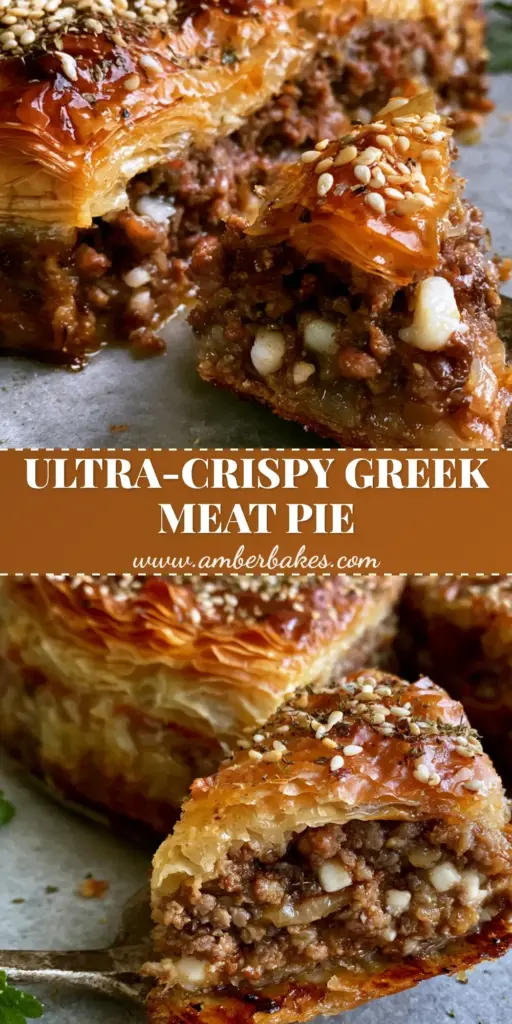
Greek Kreatopita Recipe: The Secret to Shatteringly Crisp Meat Pie
Ingredients
Equipment
Method
- Heat 2 tbsp olive oil in a skillet. Sauté onions for 6-8 minutes until soft. Add garlic for 60 seconds.
- Add beef and lamb, browning until a deep crust forms. Drain 70% of the fat. Stir in cinnamon, allspice, salt, and pepper with 1/4 cup of water. Simmer until liquid reduces. Cool to room temperature.
- Mix melted butter and olive oil. Grease the pan. Layer 8 phyllo sheets in the pan, brushing each with the oil-butter mixture.
- Spread the cooled meat filling over the phyllo. Press the Kefalotyri cubes evenly into the meat. Fold in the parsley.
- Layer the remaining phyllo sheets on top, brushing each with oil/butter. Score the top layers with a sharp knife.
- Sprinkle with sesame seeds and oregano. Spritz lightly with water.
- Bake at 375°F (190°C) for 45-55 minutes until golden brown and crisp. Rest for 15 minutes before serving.
Notes
Cool the filling completely to avoid a soggy bottom crust.
Closing & Call to Action
Mastering the Greek kreatopita recipe is a rite of passage for any home cook who loves the flavors of the Mediterranean. The combination of the crackling phyllo, the juicy meat, and those sharp pockets of Kefalotyri cheese creates a sensory experience that is truly unmatched. Whether you’re lifting that first slice with a rustic server or sweeping up the stray crumbs from a stone countertop, this dish is pure comfort.
We would love to see your results! Did you get that perfect golden-brown glow? Leave a comment below and let us know how your bake turned out. Don’t forget to share your photos and tag us, and be sure to pin this recipe to your favorite boards on Pinterest so you never lose this kitchen staple!