When it comes to the vast and flavorful world of Arabian recipes, few dishes capture the essence of the Middle East quite like a perfectly assembled Kofta Bowl. This isn’t just a meal; it is a sensory journey that balances the heat of a searing grill with the cooling creaminess of whipped chickpeas. Imagine walking through a bustling souq, the air thick with the scent of toasted spices and charred meats—this recipe brings that exact atmosphere into your home kitchen.
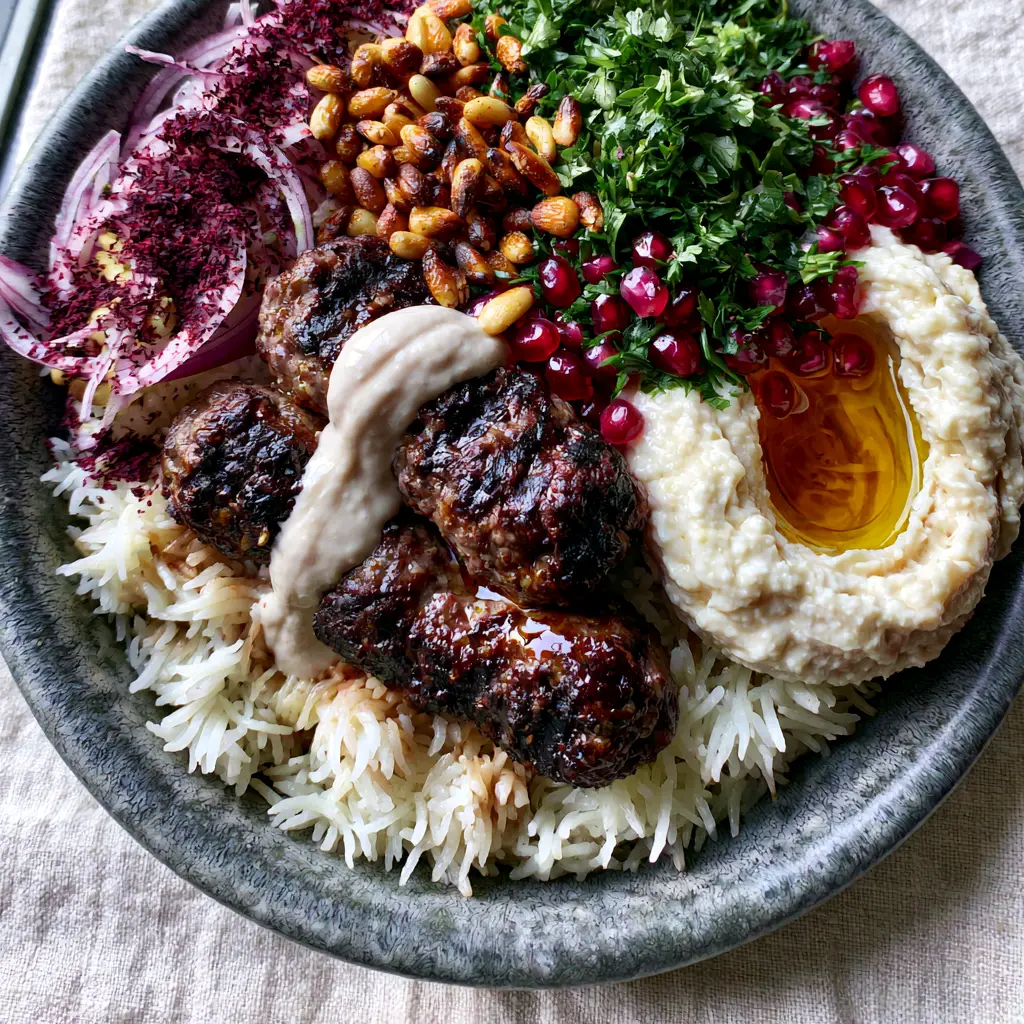
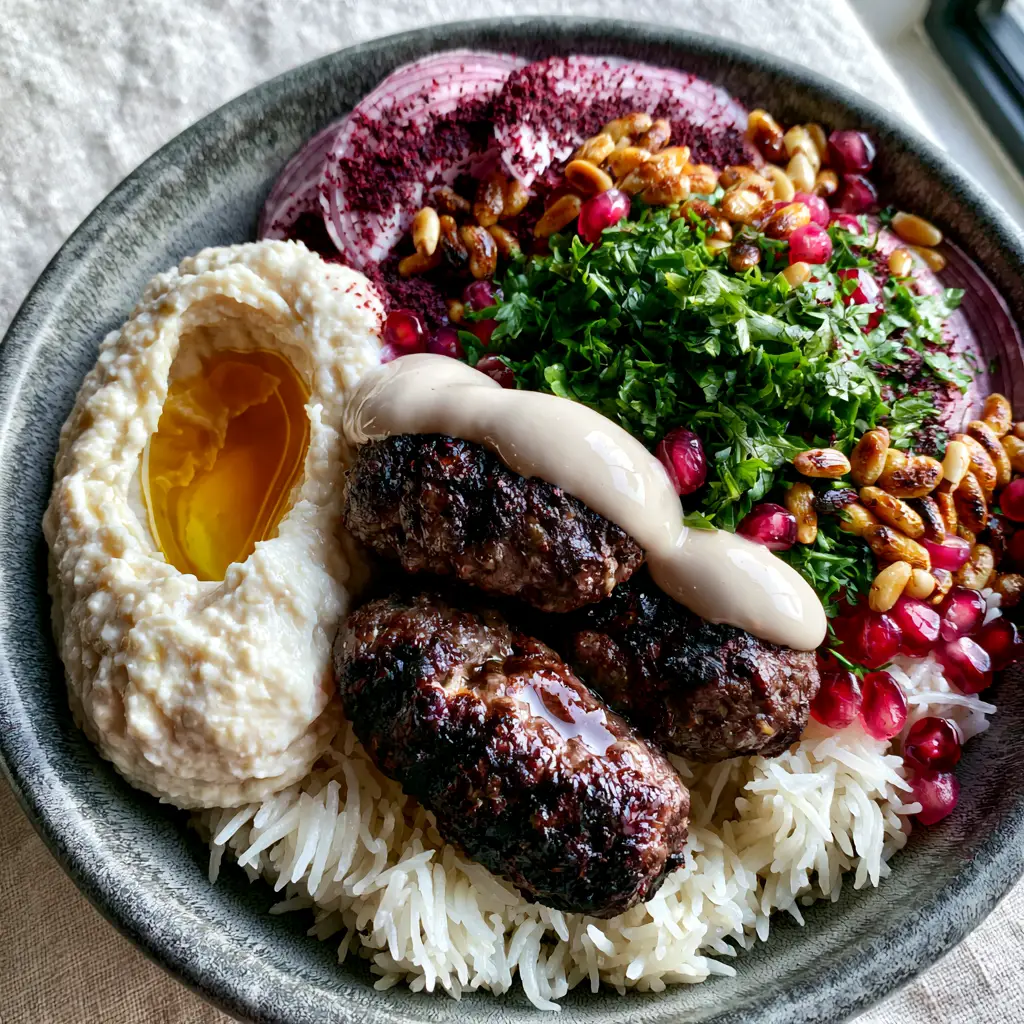
The beauty of this gourmet bowl lies in its contrasts. You have the deep, dark brown sear of the succulent lamb kofta, the vibrant emerald-green of fresh parsley, and the jewel-like ruby red of pomegranate seeds. Every bite offers a new texture, from the crunch of toasted pine nuts to the velvety finish of a thick tahini drizzle. It is a visual masterpiece that tastes even better than it looks.
Whether you are a seasoned cook or just beginning to explore the depths of Arabian recipes, this guide will provide the technical precision needed to achieve a restaurant-quality result. We are going to focus on the “forensic” details—the exact sear on the meat, the fluffiness of the rice, and the specific ivory hue of the hummus—to ensure your final plate matches the high-end aesthetic of professional food photography.
The Sensory Magic of a Perfectly Balanced Kofta Bowl
- Visual Brilliance: A vibrant palette of dark crimson sumac, emerald parsley, and golden pine nuts resting on a bed of snowy basmati.
- Texture Symphony: Succulent, juicy lamb kebabs paired with individual, steaming grains of rice and ultra-smooth, ivory hummus.
- Aromatic Depth: The earthy scent of dried za’atar combined with the bright, citrusy punch of sumac-rubbed red onions.
- Culinary Authenticity: A dish that honors traditional techniques while presenting them in a modern, high-protein bowl format.
The Building Blocks of Flavor: Essential Ingredients
To recreate this masterpiece, we must look beyond the surface. While the lamb and rice are the stars, the invisible foundations—the fats, the acids, and the salts—are what truly elevate the dish to the realm of elite Arabian recipes.
Ground Lamb: Use a blend with at least 20% fat content. This ensures that when you sear the kebabs, they remain succulent and release those glistening juices described in our visual blueprint. If you cannot find high-quality lamb, you can explore variations like Middle Eastern kofta which sometimes blends beef and lamb.
Long-Grain Basmati Rice: 1.5 cups (300g) of aged basmati is required for that signature long, individual grain. Rinsing the starch away is non-negotiable for achieving a fluffy, non-sticky bed for your meat.
Sumac and Red Onions: 1 medium red onion, sliced paper-thin, provides the necessary bite. The dark crimson sumac adds a unique tartness that cuts through the richness of the lamb, a staple technique in traditional Iraqi dishes.
Extra Virgin Olive Oil (EVOO): Use a high-quality, cold-pressed oil. You will need enough to create a deep, translucent golden well in the center of your thick hummus.
Tahini and Za’atar: 1/4 cup (60ml) of hulled tahini creates the opaque white drizzle. The sprinkle of dried za’atar—a blend of thyme, sesame seeds, and sumac—adds the final layer of herbaceous complexity.
The Garnishes: Fresh pomegranate seeds, toasted pine nuts, and flat-leaf parsley aren’t just for show; they provide the sweetness, crunch, and freshness that balance the savory meat. These elements are frequently seen in Lebanese kofta presentations.
Kitchen Gear for a Professional Chef Finish
Achieving those dark brown grill marks and that ultra-smooth hummus requires the right tools. You don’t need a commercial kitchen, but specific equipment will make the process seamless.
A heavy-bottomed cast iron skillet or a stovetop grill pan is essential for the lamb. The heat retention of cast iron is what creates the “deeply seared” exterior while keeping the inside moist. A high-speed food processor is also vital for the hummus to achieve that “ivory-colored” and thick, velvety texture.
For the rice, a tight-fitting lid is your best friend. The steam must stay trapped to ensure each grain remains distinct and fluffy. Finally, a sharp mandoline or a very sharp chef’s knife is required to get those paper-thin red onions that soak up the sumac perfectly.
Mastering the Art of Succulent Lamb Kofta
Preparing the Kofta Meat
In a large bowl, combine 1 lb (450g) of ground lamb with 2 cloves of minced garlic, 1 tsp (5g) ground cumin, 1 tsp (5g) ground coriander, and a pinch of cinnamon. Adding a tablespoon of grated onion (with the juice squeezed out) adds moisture without making the kebabs fall apart.
Gently mix the ingredients with your hands, but do not overwork the meat. Overworking leads to a rubbery texture, whereas we want succulent kebabs that melt in the mouth. Shape the mixture into three distinct, elongated kebabs per serving.
The Science of the Perfect Sear
Heat your skillet over medium-high heat with 1 tbsp (15ml) of high-smoke point oil. Once the pan is shimmering, lay the lamb kebabs down. You should hear a loud sizzle immediately—this is the sound of the Maillard reaction beginning.
Sear the kebabs for 3-4 minutes per side. Do not move them prematurely; you want to develop those dark brown grill marks. The meat should be glistening with its own juices when you remove it from the heat. Let it rest for 5 minutes before plating to keep the juices inside the meat.
Developing the Fluffiest Basmati Foundation
Rinsing and Soaking
Place 1.5 cups (300g) of basmati rice in a fine-mesh sieve and rinse under cold water until the water runs completely clear. This removes excess surface starch that causes clumping. Soak the rice for 20 minutes before cooking to ensure the longest possible grains.
The Steaming Process
Bring 2.25 cups (540ml) of water and a pinch of salt to a boil. Add the rice, reduce the heat to the lowest setting, and cover tightly. Cook for 12 minutes, then remove from heat and let it sit, covered, for another 5 minutes. Fluff with a fork to reveal individual, steaming grains.
Crafting the Ivory Hummus and Sumac Onions
Whiping the Hummus
For the thickest, creamiest hummus, process 1 can (400g) of drained chickpeas with 1/3 cup (80ml) tahini, the juice of 1 lemon, and 1 small garlic clove. The secret to the ivory color? Add two ice cubes during the blending process. This aerates the mixture and lightens the color significantly.
Macerating the Red Onions
Thinly slice half a red onion. In a small bowl, toss the slices with 1 tsp (5g) of ground sumac and a squeeze of lemon juice. Massage the sumac into the onions until they take on a dark crimson hue. This softens the raw bite of the onion while intensifying the flavor.
Expert Tips for Success with Arabian Recipes
- Temperature Control: Ensure your skillet is screaming hot before the lamb hits the pan to achieve that gourmet crust.
- Rice Ratio: Use exactly 1.5 parts water to 1 part rice for basmati to ensure the grains don’t turn mushy.
- Pine Nut Precision: Toast pine nuts in a dry pan over low heat; they go from golden to burnt in seconds, so stay vigilant!
- The Hummus Well: Use the back of a spoon to create a deep circular indentation in the hummus to hold the EVOO without it spilling over the rice.
Preservation: Storing and Reheating Your Bowl
Arabian recipes are often excellent for meal prep, provided you store the components correctly. The lamb and rice can be stored together in an airtight container for up to 3 days in the refrigerator. However, keep the hummus, tahini sauce, and fresh garnishes in separate containers.
To reheat, sprinkle a teaspoon of water over the rice and lamb before microwaving or heating in a pan. This creates steam that revives the moisture of the meat and the fluffiness of the grains. The sumac onions actually improve after a day as the flavors meld, but the parsley should be added fresh each time.
Complementary Pairings and Serving Suggestions
This Kofta Bowl is a complete meal, but it pairs beautifully with other elements from the region. If you are looking for a breakfast twist, consider serving the leftovers alongside traditional Arabic breakfast items like olives and labneh.
For a larger spread, you might include warm cheese fatayer or a side of slow-cooked ful medames. If you have extra rice, it can be transformed into a savory hashweh by adding ground meat and more toasted nuts. For a lighter dinner alternative, the lamb mixture can even be shaped into patties for a Lebanese-style burger.
Common Culinary Inquiries
You can, but the texture will be significantly different. Basmati is preferred for its long, individual grains that stay fluffy and light, balancing the heavy meat and hummus.
Use high heat on a cast iron skillet and ensure your lamb has at least 20% fat content. Sear quickly for 3-4 minutes per side and let the meat rest for 5 minutes after cooking.
Sumac is a tart, citrusy spice made from dried berries. If you cannot find it, a mix of lemon zest and a tiny pinch of salt can mimic the acidity, though you’ll miss the deep crimson color.
The secret is adding ice cubes or ice-cold water during the final blending phase. This aerates the tahini and chickpeas, creating a lighter color and velvety texture.
Mastering the Gourmet Arabian Kofta Bowl
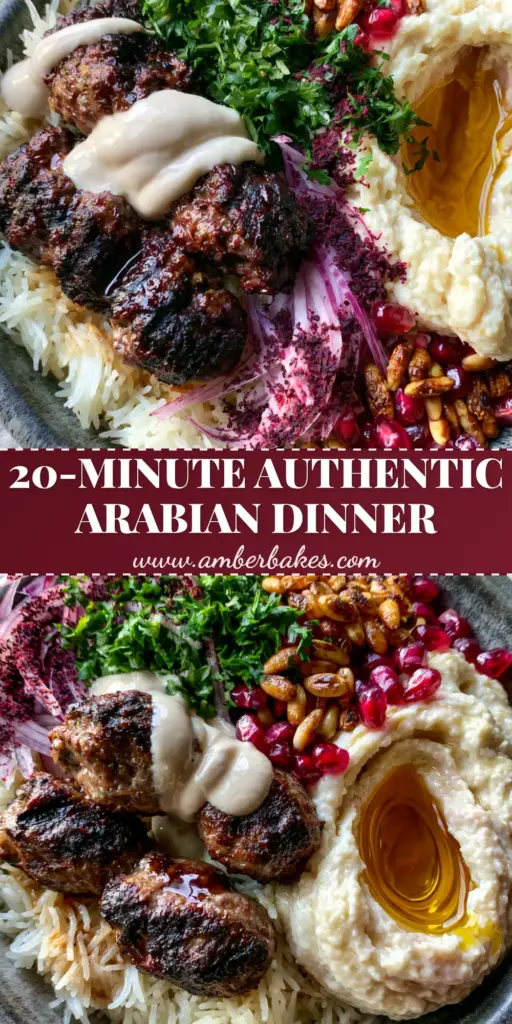
Arabian recipes: The Ultimate Gourmet Kofta Bowl with Succulent Lamb and Creamy Hummus
Ingredients
Equipment
Method
- In a bowl, combine ground lamb, minced garlic, cumin, and coriander. Mix gently until just combined.
- Shape into 6 elongated kebabs (3 per bowl). Sear in a hot cast iron skillet for 3-4 minutes per side until dark brown grill marks appear and meat is succulent.
- Rinse basmati until water is clear. Simmer with 2.25 cups of water for 12 minutes, then fluff for individual grains.
- Process chickpeas, tahini, lemon, and ice cubes until ivory-colored and thick. Create a well in the center for olive oil.
- Place rice in a charcoal bowl, top with 3 kofta kebabs and a dollop of hummus. Drizzle with tahini and EVOO. Add sumac onions, parsley, pine nuts, and pomegranate seeds. Finish with za'atar.
Notes
Add two ice cubes to the food processor for the creamiest, lightest-colored hummus.
Bring the Flavors of Arabia to Your Kitchen
Creating professional-grade Arabian recipes at home is all about the details—the sear on the lamb, the acidity of the sumac, and the creaminess of the tahini. This Kofta Bowl is designed to be a showstopper, providing a healthy, high-protein meal that doesn’t compromise on gourmet aesthetics.
If you enjoyed this recipe, please leave a comment below and let us know how your sear turned out! Don’t forget to share your creations and pin this recipe to Pinterest for your next dinner party inspiration. Happy cooking!