Moroccan couscous is the ultimate vibrant, fluffy side dish that brings the soul of North African cuisine straight to your dinner table. This recipe focuses on achieving that elusive, airy texture where every single grain is perfectly separated and light. By combining warm spices like turmeric and cinnamon with the crunch of pomegranate seeds, you create a sensory experience that is as beautiful as it is delicious.
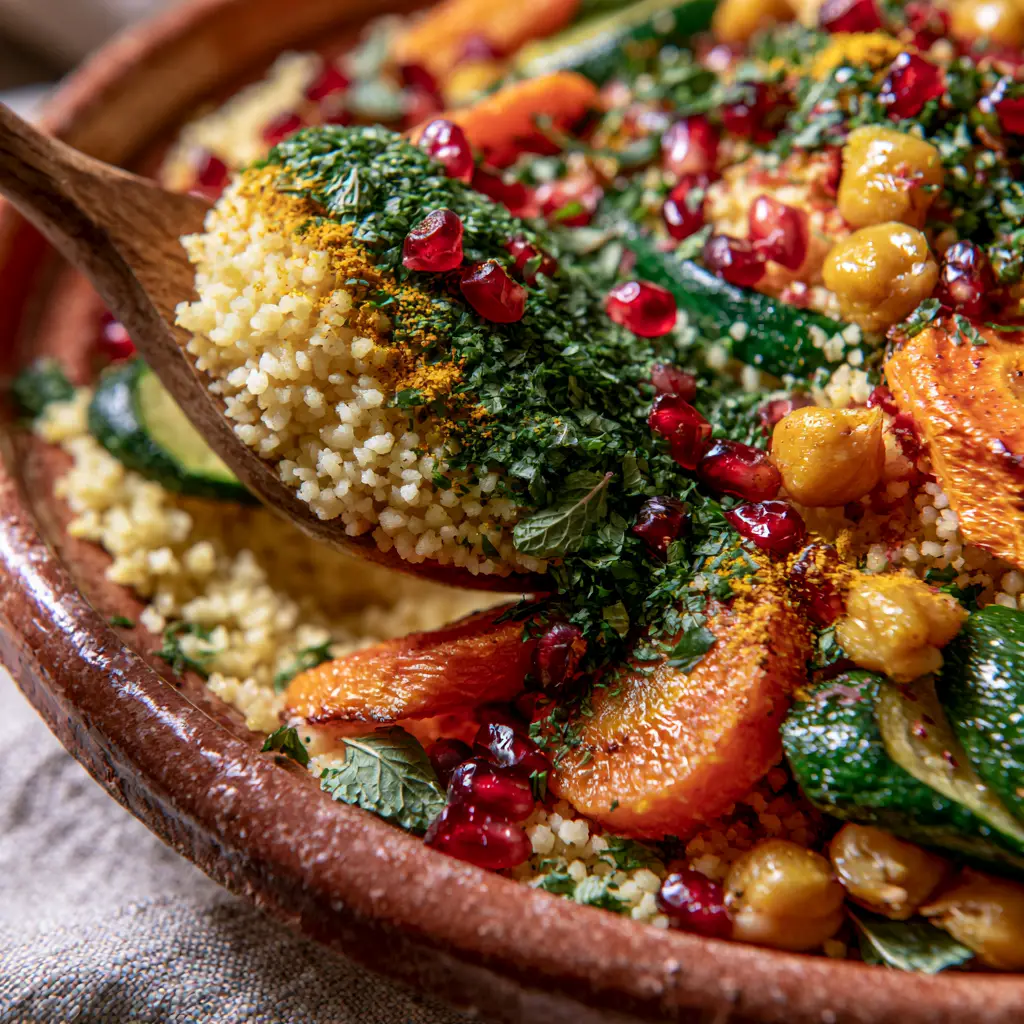
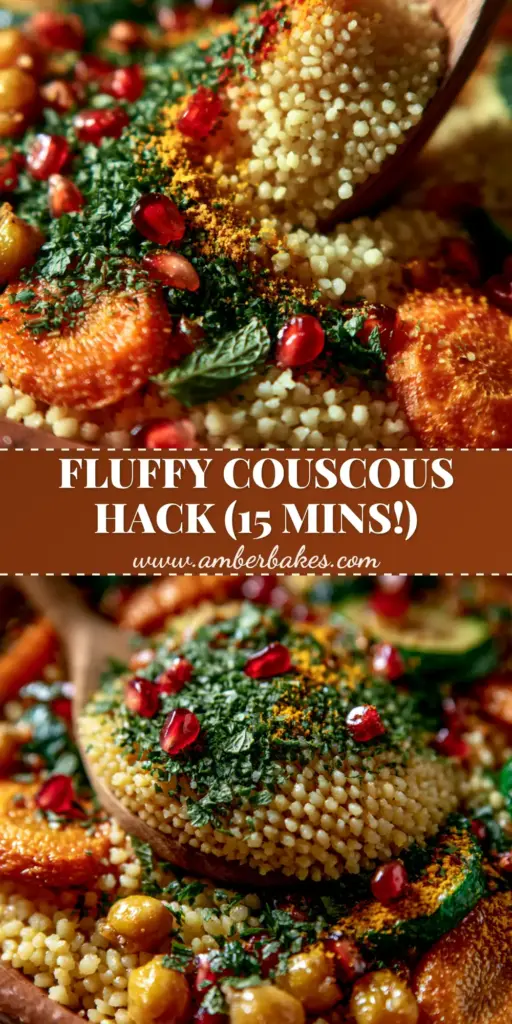
Whether you are looking for a quick weeknight meal or a show-stopping centerpiece for a dinner party, this Moroccan couscous delivers. The combination of roasted carrot medallions, golden chickpeas, and sautéed zucchini creates a rainbow of colors in a rustic tagine bowl. It is a dish that invites you to pick up a wooden spoon and dive into the mountain of golden grains.
Why This Is the Only Moroccan Couscous Recipe You Need
- Ultra-Fluffy Texture: We use a specific steaming and fluffing technique to ensure zero clumping and maximum airiness.
- Vibrant Visual Appeal: From the golden turmeric glow to the emerald green mint and ruby red pomegranate seeds, this dish is a feast for the eyes.
- Perfectly Balanced Flavors: The earthy warmth of ground cinnamon meets the brightness of fresh mint and the sweetness of roasted carrots.
- Versatile Pairing: It serves as a stunning base for tender Moroccan meatballs or a light, refreshing lunch on its own.
The Secret Ingredients for High-Vibrancy Moroccan Couscous
To achieve the visual and culinary depth required for an authentic Moroccan couscous, each ingredient serves a specific purpose. We don’t just want flavor; we want a sheen and a texture that rivals the best Mediterranean kitchens.
Couscous Grains: Use fine or medium-grain semolina couscous. This is the foundation of the dish and must be handled with care to remain light and airy.
Roasted Carrot Medallions: Slicing carrots into rounds (medallions) allows them to caramelize evenly in the oven, providing a sweet, tender contrast to the grains.
Golden Canned Chickpeas: These provide plant-based protein and a buttery texture. Rinsing them thoroughly ensures they stay “golden” and don’t muddy the dish.
Zucchini Slices: A quick sauté gives these an emerald green edge and a soft bite that melts into the warm Moroccan couscous.
The Spice Duo: Turmeric provides that iconic golden hue, while cinnamon adds a faint, mysterious sweetness that defines the region’s palate.
Pomegranate Seeds & Fresh Mint: These are your “jewels.” The pomegranate adds a tart pop, and the finely chopped mint provides a cooling finish.
Detailed Ingredient List (Imperial and Metric)
Gather these high-quality components to start your Moroccan couscous journey. Ensure your spices are fresh for the most vibrant color and aroma.
- 1 ½ cups (260g) Dry Moroccan Couscous (fine semolina)
- 1 ¾ cups (420ml) Vegetable Broth or water, boiling
- 2 medium (200g) Carrots, peeled and cut into medallions
- 1 small (150g) Zucchini, sliced into half-moons
- 1 can (425g) Chickpeas, drained and rinsed
- 3 tbsp (45ml) Extra Virgin Olive Oil, divided
- 1 tsp (2g) Ground Turmeric
- ½ tsp (1g) Ground Cinnamon
- ½ cup (87g) Pomegranate Seeds
- ¼ cup (10g) Fresh Mint, finely chopped
- ½ tsp (3g) Sea Salt, or to taste
- ¼ tsp (1g) Black Pepper
How to Make the Fluffiest Moroccan Couscous Ever
Step 1: Roasting the Vegetable Medallions
Preheat your oven to 400°F (200°C). Toss your carrot medallions with 1 tablespoon (15ml) of olive oil and a pinch of salt. Spread them on a baking sheet and roast for 15-20 minutes until they are tender and slightly caramelized on the edges.
While the carrots roast, heat another tablespoon of oil in a skillet over medium-high heat. Add the zucchini slices and sauté for 4-5 minutes until they have a beautiful golden-brown sear but remain vibrant green. Set aside with the golden canned chickpeas.
Step 2: Blooming the Spices and Hydrating the Grains
In a large heat-proof bowl, combine the dry Moroccan couscous, ground turmeric, ground cinnamon, and sea salt. Stir the dry grains to ensure the turmeric is evenly distributed—this ensures every grain turns a beautiful sun-kissed yellow.
Pour the boiling vegetable broth and 1 tablespoon (15ml) of olive oil over the spiced grains. Immediately cover the bowl tightly with plastic wrap or a lid. Let it sit undisturbed for 5-8 minutes. This “steam-lock” method is essential for fluffiness.
Step 3: The Critical Fluffing Technique
Remove the cover. Use a fork (never a spoon at this stage!) to gently scrape the surface of the Moroccan couscous. Work from the edges toward the center, lifting and separating the grains. You want to see the steam escaping as the grains become light and airy.
Continue fluffing until no clumps remain. The grains should look like tiny, individual pearls of gold. If you see a wooden spoon lifting a large mound in your mind’s eye, this is the moment it should look exactly like that macro shot.
Step 4: The Final Assembly and Garnish
Gently fold in the roasted carrots, sautéed zucchini, and golden chickpeas. Transfer the mixture to a rustic clay tagine bowl or a large serving platter. The olive oil sheen should be visible on the vegetables, making them glisten under the light.
Top the dish with a generous dusting of finely chopped fresh mint and a heavy sprinkle of vibrant red pomegranate seeds. A final light dusting of turmeric over the top adds that professional, “handheld smartphone photo” aesthetic that Pinterest loves.
Expert Tips for Success
- Don’t Overwater: Too much liquid leads to gummy Moroccan couscous. Stick to the 1:1.15 ratio of couscous to liquid for the best results.
- Quality Oil Matters: Use a high-quality extra virgin olive oil. It provides the “sheen” mentioned in our visual blueprint and carries the flavor of the spices.
- Temperature Control: Ensure your broth is truly boiling when it hits the grains to activate the starch correctly.
- Room Temp Serving: This dish is excellent warm, but it is also one of the best side dishes served at room temperature for summer gatherings.
How to Store and Reheat
Storage: Keep leftover Moroccan couscous in an airtight container in the refrigerator for up to 4 days. The flavors actually deepen as the spices meld with the vegetables.
Reheating: To maintain the fluffy texture, avoid the microwave if possible. Instead, steam it briefly or fluff it in a pan with a splash of water and a drizzle of olive oil over low heat.
Freezing: You can freeze the couscous grains alone for up to 3 months. However, we recommend adding the fresh mint and pomegranate seeds only after thawing to keep the colors vibrant.
What to Serve with Moroccan Couscous
This dish is incredibly versatile. It works beautifully as part of a larger spread of famous regional dishes or as a base for grilled proteins. For a vegan feast, pair it with a chickpea beet and feta salad for extra texture and tang.
If you are looking for comfort, this dish qualifies as a lighter version of classic comfort food that doesn’t leave you feeling heavy. The lightness of the grains makes it a perfect partner for spicy harissa chicken or lamb skewers.
Frequently Asked Questions
Yes! It stores beautifully in the fridge. For the best visual appeal, add the fresh mint and pomegranate seeds just before serving to keep them from wilting or bleeding color into the grains.
This recipe is specifically designed for Moroccan couscous (small semolina grains). Pearl couscous requires a different simmering method on the stovetop and won’t result in the same airy, fine texture.
The secret is two-fold: use a precise liquid-to-grain ratio and always fluff with a fork rather than a spoon. A fork separates the grains while they are steaming, whereas a spoon can mash them together.
No, traditional couscous is made from semolina flour, which contains wheat and gluten. For a gluten-free alternative, you can use the same spice and vegetable blend with quinoa.
The signature golden hue comes from ground turmeric. Adding it to the dry grains before hydrating ensures an even color across every single grain.
The Ultimate Moroccan Couscous Recipe Card
Moroccan Couscous with Roasted Carrots and Pomegranate Seeds
Ingredients
Equipment
Method
- Preheat oven to 400°F (200°C). Toss carrot medallions with 1 tbsp olive oil and salt. Roast on a baking sheet for 15-20 minutes until caramelized.
- Sauté zucchini in 1 tbsp olive oil over medium-high heat for 4-5 minutes until seared but vibrant green.
- Combine couscous, turmeric, cinnamon, and salt in a bowl. Pour boiling broth and 1 tbsp olive oil over the top. Cover tightly for 5-8 minutes.
- Remove cover and fluff vigorously with a fork until grains are individual and airy.
- Fold in roasted carrots, zucchini, and chickpeas. Top with fresh mint and pomegranate seeds before serving.
Notes
Ensure the broth is at a rolling boil before adding to the grains.
Join the Community!
Did you make this Moroccan couscous? I want to see your results! Save this recipe to your Pinterest boards so you never lose it. Follow amber_bakes for more vibrant, Pinterest-ready meals.
Please leave a 5-star rating in the recipe card above and drop a comment below with a photo of your dish. Seeing your fluffy grains and roasted veggies makes my day!