When you think of famous French dishes, your mind likely wanders to a sun-drenched bistro in Lyon or a cozy corner in Paris. There is a specific kind of magic that happens when high-quality poultry meets the silky richness of a white wine reduction and heavy cream. This recipe for Poulet à la Crème (Chicken in Cream Sauce) is the epitome of French culinary tradition, delivering a restaurant-quality experience right to your home kitchen.
Mastering famous French dishes doesn’t require a culinary degree; it requires patience, heat control, and the right ingredients. The combination of crispy, crackling chicken skin and a velvet-smooth sauce is a textural masterpiece. In this guide, we will break down the technique of deglazing and emulsifying to ensure your sauce is never broken and always glistening.
Whether you are preparing a special Sunday dinner or looking for famous French dishes to impress guests, this one-pan wonder is a total showstopper. Let’s dive into the science of searing and the art of the French herb bouquet to create a meal you will want to save to your Pinterest boards immediately.
Why You Will Love This Classic Bistro Recipe
- Unmatched Texture: We focus on achieving incredibly crispy, golden-brown skin that provides a “crunch” against the soft cream.
- Layered Flavor Profile: The white wine reduction cuts through the fat of the heavy cream, creating a balanced, bright finish.
- Herb-Forward Aroma: Fresh tarragon and chives provide a licorice-like sweetness and oniony bite that elevates the dish from simple to sophisticated.
- Authentic Technique: You’ll learn the foundational French method of building a pan sauce using fonds (the flavorful brown bits).
If you love the depth of flavor found in famous French dishes, you might also enjoy exploring famous foods in France or trying your hand at a cozy French onion orzo bake for a modern twist on tradition.
The Essential Ingredients for French Cream Sauce
Every element in this dish serves a specific purpose in the flavor architecture. Do not skip the fresh herbs, as dried versions will not provide the same vibrant green aesthetic or delicate flavor required for authentic famous French dishes.
- Chicken Thighs (Bone-in, Skin-on): The bone keeps the meat juicy during the high-heat sear, while the skin provides the essential golden fat.
- Heavy Cream (240ml / 1 cup): This provides the “crème” in the title, creating a thick, ivory coating for the meat.
- Dry White Wine (120ml / 0.5 cup): A Sauvignon Blanc or Pinot Grigio works best to deglaze the pan and add acidity.
- Unsalted Butter (30g / 2 tbsp): Melted into the sauce at the end for that signature French “gloss.”
- Fresh Tarragon & Chives: Tarragon is the secret weapon of French cooking, offering a sophisticated, aromatic profile.
- Garlic (3 cloves, minced): Provides a foundational aromatic base without overpowering the cream.
- Flaky Sea Salt & Cracked Peppercorns: Essential for the final macro-visual texture and seasoning.
This dish fits perfectly into a menu of Bastille Day recipes or as a centerpiece for a night of classic French comfort food.
Mastering the Golden Sear: Step-by-Step
1. Preparing the Poultry
Start by patting the chicken thighs completely dry with paper towels. Any moisture on the skin will create steam, preventing that crackling texture found in the most famous French dishes. Season generously with flaky sea salt and cracked black peppercorns on both sides.
2. The Maillard Reaction
Heat a shallow porcelain or cast-iron pan over medium-high heat. Add a splash of neutral oil. Place the chicken thighs skin-side down. Do not move them for at least 6-8 minutes. You are looking for a deep, golden-brown crust. Once crispy, flip and cook for another 4 minutes, then remove the chicken and set aside.
3. Building the Aromatics
Lower the heat to medium. In the same pan, add your minced garlic. Sauté for 30 seconds until fragrant, being careful not to burn the bits. The smell of garlic hitting the rendered chicken fat is the first sign of a successful French meal.
4. Deglazing and Reducing
Pour in the dry white wine. Use a wooden spoon to scrape up the brown bits (the fond) from the bottom of the pan. This is where the concentrated flavor of famous French dishes lives. Let the wine reduce by half until it looks syrupy.
5. The Creamy Finish
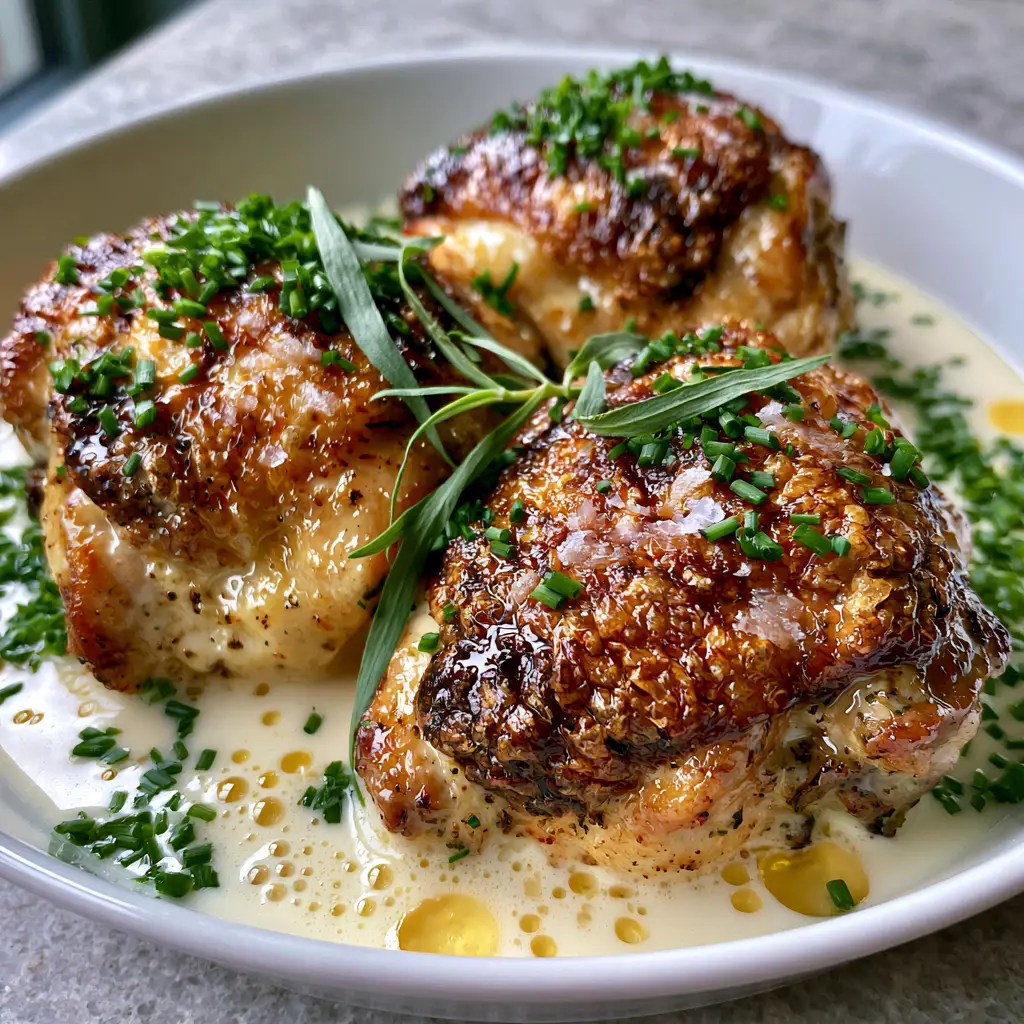
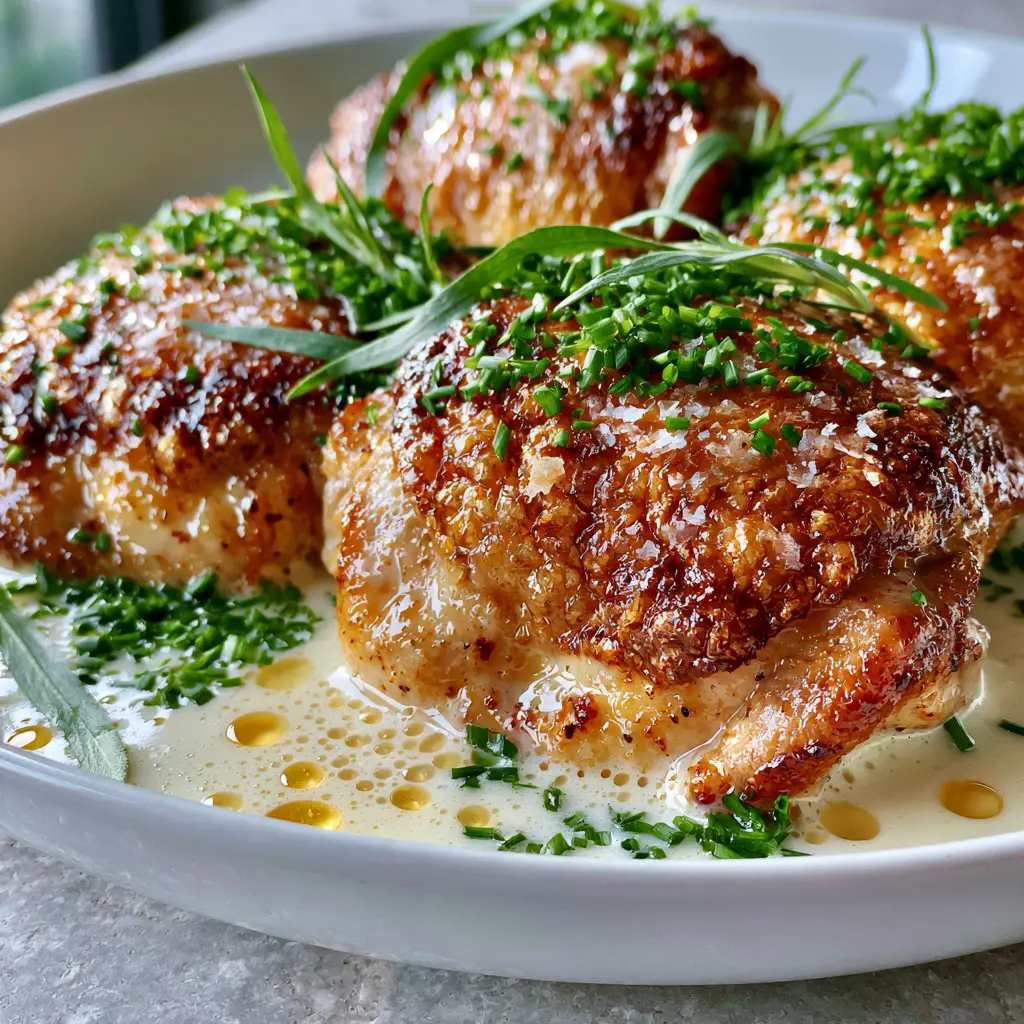
Pour in the heavy cream (240ml) and bring to a gentle simmer. Do not boil vigorously or the cream may break. Whisk in the cold butter (30g) one tablespoon at a time to create a glossy, thick ivory sauce. You should see tiny bubbles and golden butter droplets forming on the surface.
6. The Final Garnish
Place the chicken thighs back into the sauce, skin-side up (keep the skin dry!). Top with a heavy dusting of vibrant green chopped chives and whole, delicate tarragon leaves. Sprinkle one last pinch of flaky sea salt for that macro-shot finish.
Expert Tips for Success
- Temperature Control: If your cream starts to separate, whisk in a teaspoon of warm water immediately to re-emulsify the sauce.
- Dry the Skin: For the ultimate Pinterest-worthy crackle, leave the chicken uncovered in the fridge for 2 hours before cooking to dry out the skin.
- Wine Choice: Never cook with a wine you wouldn’t drink. The flavor concentrates as it reduces, so quality matters.
- Herb Freshness: Add the tarragon at the very last second. Heat kills the volatile oils that give tarragon its unique scent.
Storage, Reheating & Freezing
Storage: Keep leftovers in an airtight container in the fridge for up to 3 days. The sauce will thicken significantly when cold.
Reheating: Gently reheat in a pan over low heat. Add a splash of chicken broth or extra cream to loosen the sauce back to its original silky consistency.
Freezing: We do not recommend freezing this dish, as the heavy cream sauce tends to separate and become grainy upon thawing.
What to Serve With This Dish
To balance the richness of the cream, serve this with light French side dishes like a simple green salad with a mustard vinaigrette or steamed haricots verts. A crusty baguette is mandatory for soaking up every drop of that white wine reduction.
Frequently Asked Questions
You can, but breasts dry out much faster. If using breasts, reduce the cooking time and ensure you keep the skin on to maintain the classic texture of these famous French dishes.
Poulet à la Crème and Boeuf Bourguignon are excellent starting points because they focus on foundational techniques like searing and slow reduction, which are core to French cuisine.
A dry, high-acidity white wine like Sauvignon Blanc, Muscadet, or a dry Chardonnay is best. Avoid sweet wines, as the sugar will become overwhelming when reduced.
Famous French dishes prioritize the quality of the fat and the aromatics, specifically using butter and fresh herbs like tarragon to create a deeper, more layered flavor profile.
Sauces usually break if the heat is too high or if the cream is added too quickly to an acidic base. Keep the simmer gentle and whisk in cold butter at the end to stabilize the emulsion.
The Complete Poulet à la Crème Recipe
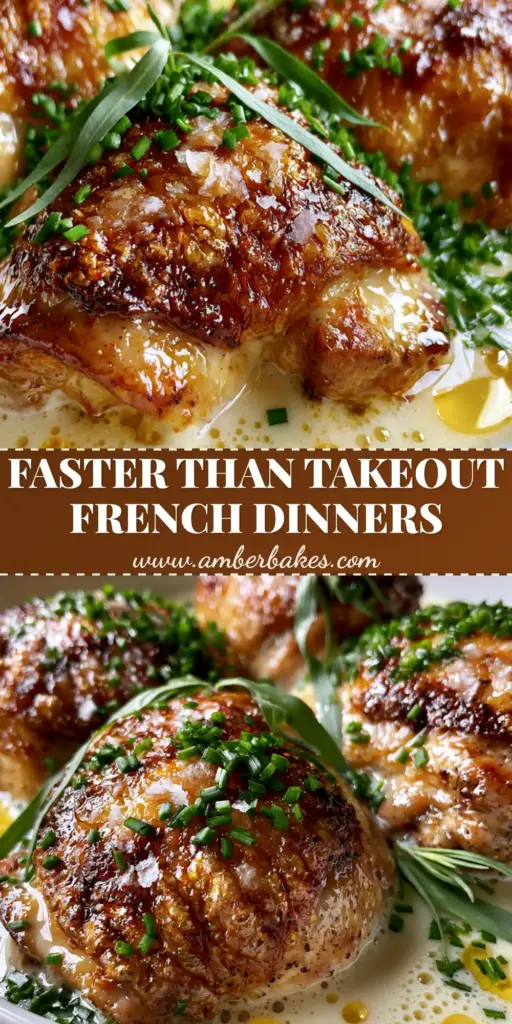
Famous French Dishes: The Ultimate Creamy Poulet à la Crème
Ingredients
Equipment
Method
- Pat chicken thighs extremely dry with paper towels. Season both sides with salt and cracked pepper.
- Place chicken skin-side down in a hot pan. Cook for 8 minutes until skin is golden and crackling. Flip and cook for 4 more minutes, then remove from pan.
- Sauté garlic for 30 seconds. Add white wine to deglaze, scraping up the brown bits. Reduce wine by half.
- Whisk in heavy cream and cold butter. Simmer until the sauce is thick and glossy with tiny bubbles.
- Return chicken to the pan. Garnish heavily with chives, tarragon, and extra sea salt.
Notes
Use a high-quality dry white wine for the best reduction flavor.
Save This to Pinterest!
Did you love making one of the most famous French dishes at home? If so, please save this recipe to your Pinterest boards so you can find it later! Following @amber_bakes ensures you never miss a gourmet update.
We want to see your results! Upload a photo of your crispy chicken thighs in the comments below and give this recipe a 5-star rating if it brought a taste of Paris to your dining room. Happy cooking!