West African Fufu is more than just a dish; it is the soul of the dinner table across Nigeria, Ghana, and beyond. This iconic “swallow” is prized for its perfectly smooth, glossy, and elastic texture that allows it to scoop up vibrant stews with ease. If you have been searching for that authentic, lump-free consistency that mimics the best roadside kitchens in Lagos or Accra, you are in the right place.
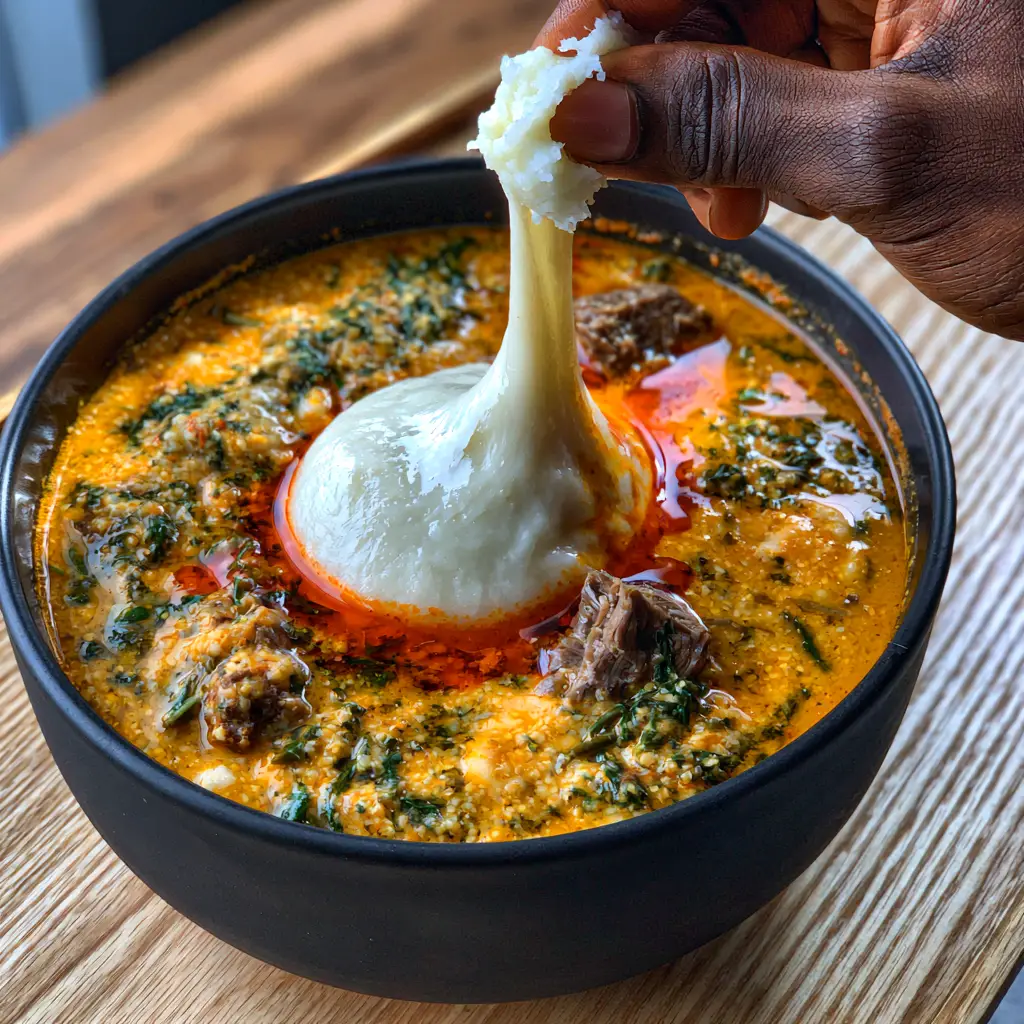
The beauty of a well-made West African Fufu lies in its simplicity and its strength. When paired with a steaming bowl of golden-orange Egusi soup, the combination of fermented cassava notes and nutty toasted melon seeds creates a flavor profile that is unmatched. In this guide, I will show you how to achieve that signature finger indent elasticity and glistening finish every single time.
Why This Authentic West African Fufu Recipe Works
- Unbeatable Elasticity: We use specific heat-control techniques to ensure your fufu is stretchy and pliable, never brittle or sticky.
- Lump-Free Guaranteed: By following our specialized “folding” method, you will achieve a perfectly smooth white cassava fufu texture.
- Pinterest-Perfect Presentation: We focus on the aesthetic glistening red palm oil drizzle and rising steam that makes this dish a viral sensation.
- Scientifically Accurate Ratios: No more guessing water levels; our Imperial and Metric measurements ensure consistent results for authentic African dishes.
The Essential Ingredients for Fufu and Egusi Soup
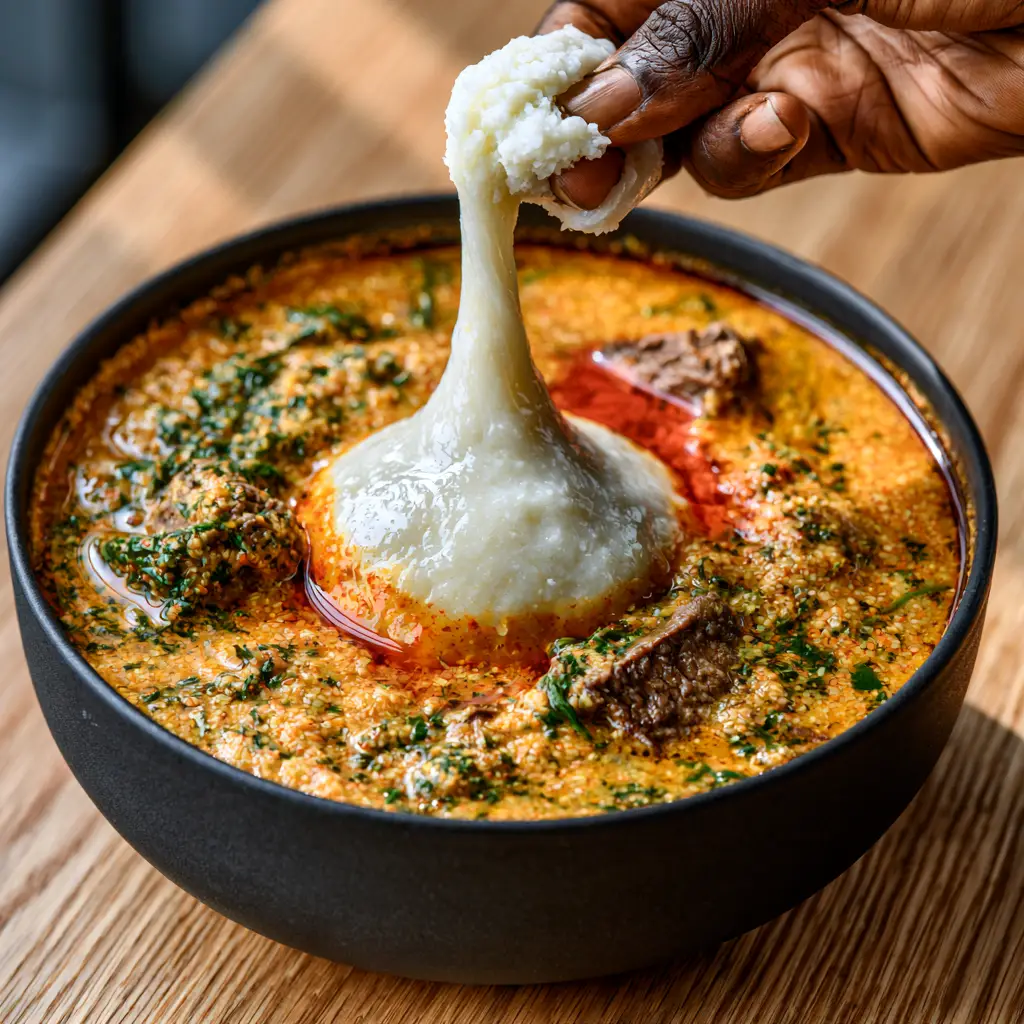
To recreate the exact visual from our blueprint—a vibrant bowl of soup with a central mound of fufu—you will need two sets of ingredients. Each component is vital for the visual recipe blueprint we are following today.
For the Stretchy Cassava Fufu
Cassava Flour (or Fermented Cassava Mash): 2 cups (240g) of high-quality, fine-milled cassava flour is the base for our West African Fufu. This provides the bright white color and the starch necessary for that famous stretch.
Water: 4 cups (960ml) of filtered water. The ratio of water to flour is the most critical factor in determining final firmness.
For the Golden-Orange Egusi Soup Base
Toasted Ground Melon Seeds (Egusi): 1.5 cups (200g). These provide the unique, curd-like texture visible in the high-angle shots.
Red Palm Oil: 1/3 cup (80ml). This creates the glistening red palm oil drizzle on the surface and gives the soup its iconic golden-orange hue.
Braised Beef Chunks: 1 lb (450g) of chuck steak or beef brisket, pre-braised until tender. These add the hearty, “meaty” visual required for easy African dinner recipes.
Fresh Spinach: 2 cups (60g) of chopped fresh spinach. This adds the vibrant green flecks that contrast beautifully against the orange base.
Aromatics: 2 large Roma tomatoes (to be blistered), 1 red bell pepper, and 1 Scotch Bonnet for heat.
Step-by-Step: Mastering the Fufu Stretch
Creating West African Fufu is a physical process. It requires constant movement to develop the gluten-like strands of starch that result in a smooth, elastic ball.
Step 1: Preparing the Egusi Soup Base
Start by roasting your tomatoes and peppers under a broiler until you see blistered tomatoes with charred skins. Blend these with onions to create a thick base. Heat the red palm oil in a heavy pot until it flows like water, then sauté your blended mix. This creates the “golden-orange” foundation seen in our Visual Recipe Blueprint.
Step 2: Building the Soup Texture
Mix your ground melon seeds with a little water to form a thick paste. Drop small clumps of this paste into the boiling tomato base. Do not stir immediately. Allow the seeds to “set” into curds for 5-7 minutes. Add your tender braised beef chunks and a splash of beef stock. Finally, fold in the chopped spinach until just wilted.
Step 3: The Fufu Workout
In a separate pot, whisk the cassava flour into cold water until no lumps remain. Place over medium heat. Stir constantly with a sturdy wooden spatula (an omorogun). As the mixture thickens, it will turn from a liquid paste into a translucent, heavy dough.
Step 4: Developing Elasticity
This is where the magic happens. Use the spatula to fold and pound the dough against the side of the pot. Add a few tablespoons of hot water if it feels too stiff. Continue this for 10 minutes until the fufu is glossy, white, and lump-free. When you press a finger into it, it should bounce back slightly, showing high elasticity.
Expert Tips for the Perfect “Swallow”
- The Steam Factor: Keep your fufu covered with a damp cloth or plastic wrap immediately after cooking to maintain the rising steam visual and prevent a skin from forming.
- Cold Water Start: Always mix your flour with cold water first. Adding flour directly to boiling water is a recipe for internal lumps that ruin the West African Fufu experience.
- The Palm Oil Shine: For the most photogenic results, drizzle a tiny bit of extra palm oil over the soup just before serving. This creates the “glistening” effect prized in nigerian-soups.
- Beef Tenderness: Ensure your beef is braised for at least 90 minutes prior to adding to the soup so it falls apart with just a touch of the fufu.
Storage and Reheating Instructions
West African Fufu is best enjoyed fresh, but it can be stored. Wrap individual portions tightly in BPA-free plastic wrap to maintain moisture. It will stay fresh in the refrigerator for up to 3 days.
To reheat, place the wrapped fufu in a microwave-safe bowl with a teaspoon of water and heat for 1 minute. Alternatively, steam the fufu balls in a steamer basket for 5 minutes until they regain their glossy, elastic texture. The Egusi soup freezes beautifully for up to 3 months.
What to Serve With West African Fufu
While Egusi is the classic pairing, this fufu is a versatile vessel for many african-food-recipes. You might try it with Nigerian Spinach Stew (Efo Riro) for a darker, earthier flavor, or a light Nigerian Chicken Stew if you prefer poultry. For those exploring more authentic-african-dishes, a side of fried plantains adds a lovely sweetness to the meal.
Frequently Asked Questions
Yes! This recipe uses the ‘stovetop pounding’ method where you use a sturdy wooden spatula to vigorously fold and press the dough against the sides of the pot to develop elasticity.
The fufu is ready when it transitions from a stark white, floury appearance to a slightly translucent, glossy finish and feels very heavy and stretchy on your spatula.
Yes, traditional fufu made from cassava flour or fermented cassava is naturally gluten-free, making it a great option for those with gluten sensitivities.
The vibrant golden-orange color comes from high-quality red palm oil and a base of blistered red tomatoes and bell peppers.
Lumps usually form if the flour is added directly to hot water. To ensure a smooth texture, always whisk your cassava flour into cold water first to create a slurry before turning on the heat.
The Authentic West African Fufu & Egusi Recipe
West African Fufu: The Ultimate Recipe for Smooth and Stretchy Results
Ingredients
Equipment
Method
- Broil tomatoes and peppers until charred/blistered. Blend with onions until smooth.
- Heat palm oil in a pot and fry the blended mixture for 10 minutes until the oil rises to the top.
- Mix ground melon seeds with water to form paste; drop into soup. Let set for 5-7 mins to create texture.
- Add braised beef and simmer. Stir in spinach at the end until wilted.
- Whisk cassava flour into cold water in a pot until smooth.
- Stir over medium heat constantly. Once thickened, pound and fold against the pot sides for 10 minutes until glossy and elastic.
Notes
Ensure the beef is salted during the braising process for maximum flavor depth.

Save This Recipe to Pinterest!
If you loved learning how to make this West African Fufu, don’t forget to save it to your “African Dinner Ideas” board on Pinterest! Following amber_bakes ensures you never miss a new recipe. If you make this dish, upload a photo in the comments below—I love seeing your stretchy fufu results! Please leave a 5-star rating if this guide helped you master the art of the swallow.