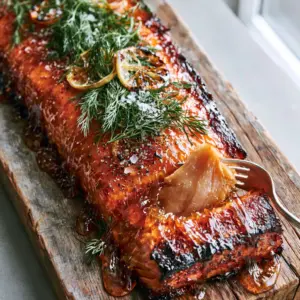
This Apricot Dijon Glazed Salmon is the ultimate intersection of elegance and convenience. If you are looking for a restaurant-quality meal that looks like it took hours but actually comes together in under 30 minutes, you have found it. The vibrant, glossy orange glaze creates a stunning contrast against the bright green asparagus and charred yellow lemons.
Pinterest is currently obsessed with “glowy” food, and this recipe delivers exactly that. The Apricot Dijon Glazed Salmon features succulent Atlantic salmon fillets coated in a thick, translucent, and glossy golden-orange glaze. It bubbles and caramelizes at the edges, creating a high-shine “glisten and glow” effect that makes it impossible not to save this pin.
Whether you are a seasoned home cook or a beginner, this sheet pan wonder is designed for success. We are combining the natural sweetness of apricot preserves with the sharp, acidic tang of Dijon mustard. The result is a balanced flavor profile that highlights the richness of the salmon without overpowering it.
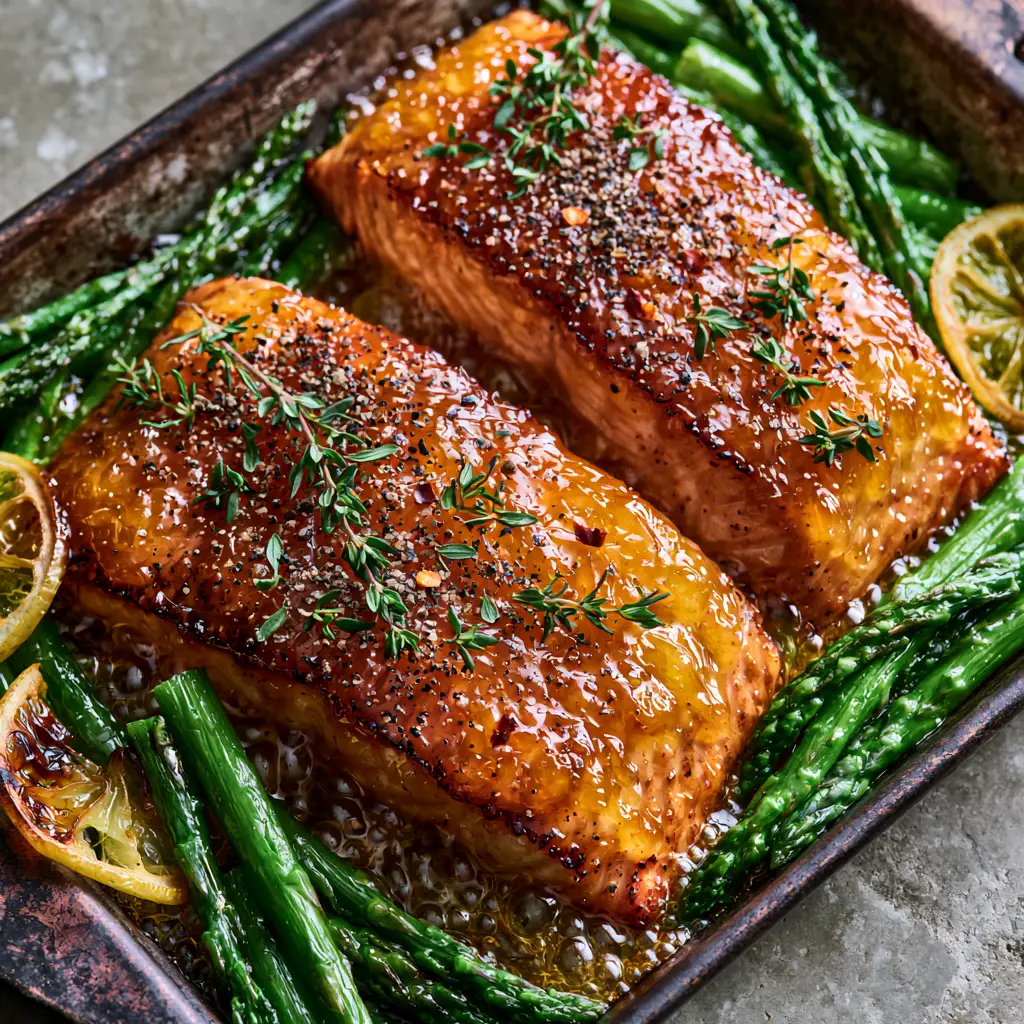
Why You Will Crave This Glossy Glazed Salmon
- Succulent Texture: The thick Atlantic fillets stay incredibly flaky and moist under the protective layer of the apricot reduction.
- Visual Masterpiece: The combination of charred lemon wheels, bright green asparagus, and fresh thyme creates a professional “handheld smartphone photo” aesthetic.
- Perfect Flavor Balance: You get the sweetness of the fruit, the heat from the red chili flakes, and the earthy punch of coarse cracked black pepper.
- Effortless Cleanup: By roasting everything on a single rustic sheet pan, you spend less time at the sink and more time enjoying your meal.
If you enjoy this flavor profile, you might also want to try our zesty orange glazed salmon or our popular sweet honey glazed salmon for your next meal prep session.
The Essential Ingredients for a Perfect Glaze
Atlantic Salmon Fillets: Look for thick, center-cut fillets about 1.5 inches (4cm) thick. Thick fillets allow the glaze to caramelize perfectly without overcooking the center of the fish.
Apricot Preserves: This is the base of our high-shine glaze. The natural pectins in the preserves create that “glisten and glow” effect when exposed to the high heat of the oven.
Dijon Mustard: Use a high-quality Dijon for that signature vinegar-forward tang. It cuts through the sugar of the apricot and the fat of the salmon beautifully.
Fresh Asparagus: Choose medium-thickness spears. They roast in the exact same time it takes the salmon to reach a perfect medium-rare, making them the ideal sheet pan companion.
Fresh Thyme & Lemon: These aren’t just garnishes. The charred lemon wheels provide a smoky acidity, while the thyme adds an aromatic floral note that elevates the entire dish.
The Seasoning Trio: Coarse cracked black pepper, sea salt, and red chili flakes. The chili flakes add a tiny pop of color and a subtle back-end heat that makes the Apricot Dijon Glazed Salmon truly addictive.
For more seasoning inspiration, check out our guide on the best perfect salmon seasoning blends to keep in your pantry.
How to Make Apricot Dijon Glazed Salmon
Step 1: Prep the Sheet Pan and Salmon
Preheat your oven to 400°F (200°C). Line a dark, rustic sheet pan with parchment paper or a silicone mat for easy cleanup. Pat your salmon fillets dry with a paper towel; removing moisture is key to ensuring the glaze sticks rather than sliding off.
Place the three thick salmon fillets in the center of the pan. Arrange the trimmed asparagus spears and thin lemon slices around the fish. Drizzle the vegetables with 1 tablespoon (15ml) of olive oil and a pinch of salt.
Step 2: Whisk the “Glisten and Glow” Glaze
In a small bowl, combine 1/2 cup (120ml) apricot preserves, 2 tablespoons (30ml) Dijon mustard, 1 clove of minced garlic, and 1 teaspoon (5ml) of apple cider vinegar. Whisk until smooth and translucent.
Generously coat the surface of each salmon fillet with the glaze. You want a heavy coating—think of it as a thick blanket of golden-orange flavor. The glaze should look high-shine and glossy even before it hits the heat.
Step 3: The Roasting Process
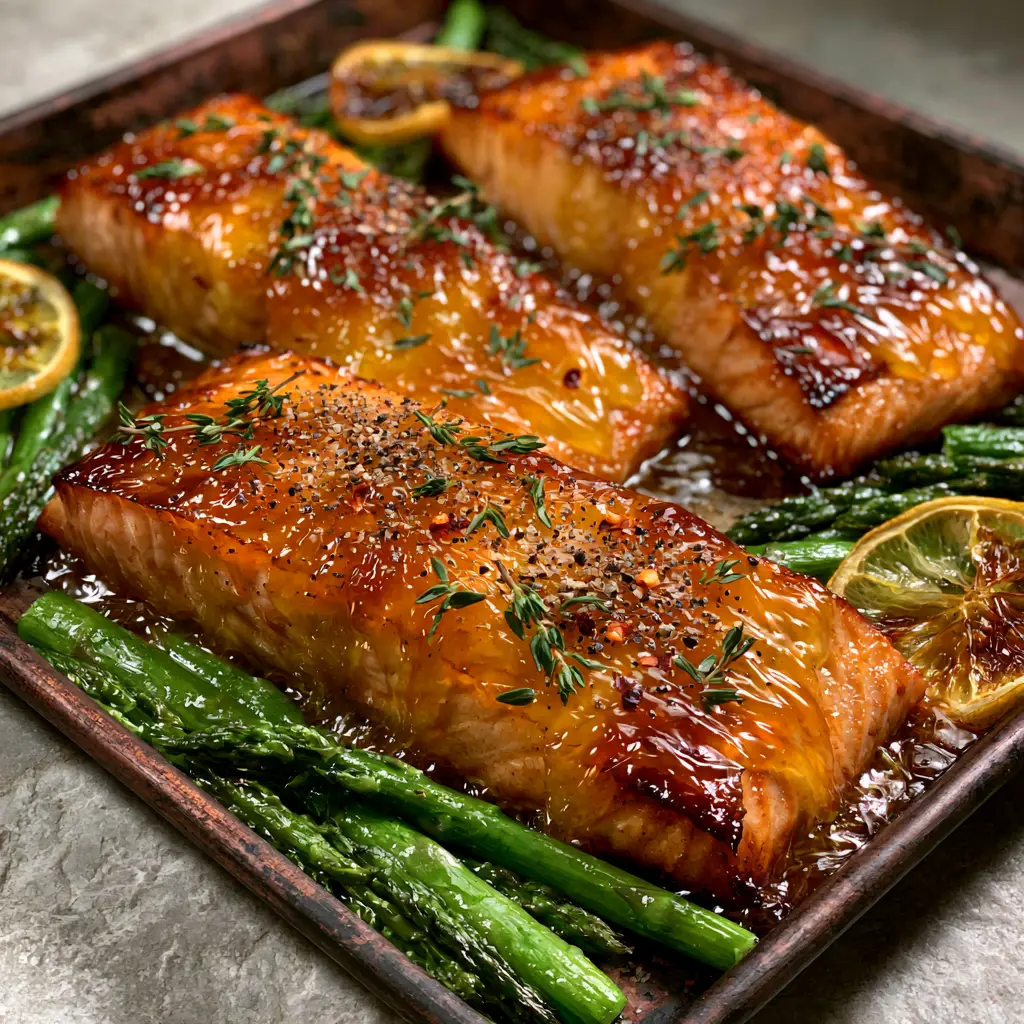
Slide the sheet pan into the center rack of the oven. Roast for 12-15 minutes. You are looking for specific visual and sensory cues: the glaze should be bubbling and slightly caramelized at the edges, and the salmon should flakes easily with a fork.
For the last 2 minutes, you can turn on the broiler to achieve those slightly charred, dark edges on the lemon wheels and the asparagus tips. This creates the “authentic food blog” look that performs so well on Pinterest.
Step 4: Finishing Touches
Remove the pan from the oven. Immediately scatter a heavy dusting of fresh thyme leaves over the top. The residual heat will wake up the oils in the herbs, creating an incredible aroma.
Finish with a generous amount of coarse cracked black pepper and a few tiny red chili flakes. The red flakes against the golden glaze provide that professional color contrast that stops the scroll.
Expert Tips for Success
- Room Temperature Salmon: Take your fillets out of the fridge 15 minutes before cooking. This ensures even roasting and a more succulent interior.
- Don’t Overcook: Salmon continues to cook for a few minutes after it leaves the oven. Pull it out when the internal temperature reaches 135°F (57°C) for a perfect medium finish.
- Glaze Consistency: If your apricot preserves are very chunky, give them a quick pulse in a blender or mash them with a fork to ensure a smooth, glossy finish on the fish.
- Char the Lemons: Don’t skip the lemon wheels. The heat transforms the sour juice into a mellow, sweet, and smoky nectar that tastes incredible when squeezed over the finished Apricot Dijon Glazed Salmon.
If you are looking for a different fruit profile, our tropical pineapple glazed salmon offers a similar sweetness with a bright, island twist.
Storage, Reheating, and Freezing
To Store: Keep leftovers in an airtight container in the refrigerator for up to 3 days. The glaze will thicken further, making it even more flavorful the next day.
To Reheat: Avoid the microwave if possible, as it can make the salmon rubbery. Instead, place the salmon in a 275°F (135°C) oven for 10 minutes until warmed through. This preserves the flaky texture.
To Freeze: While you can freeze cooked salmon, the texture of the asparagus will suffer. We recommend freezing only the glazed salmon fillets for up to 2 months. Thaw overnight in the fridge before reheating.
What to Serve With This Dish
While the asparagus and lemons make this a complete meal, you might want to bulk it up for a hungrier crowd. A side of jasmine rice or quinoa is excellent for soaking up any extra Apricot Dijon Glazed Salmon sauce that drips onto the pan.
Alternatively, a light cucumber salad or a simple salmon pasta side dish works beautifully. If you’re into meal prepping, you can even flake the leftovers into a fresh salmon salad the following afternoon.
Frequently Asked Questions
Absolutely! Cook the salmon at 380°F (190°C) for 8-10 minutes. However, you may need to cook the asparagus separately to ensure everything is perfectly tender.
Yes! Just ensure the salmon is completely thawed and patted very dry with paper towels before applying the glaze to prevent it from becoming watery.
If your glaze seems thin, simmer it in a small saucepan for 3-5 minutes before brushing it onto the salmon to reduce and concentrate the sugars.
It has a very mild kick from the red chili flakes. If you’re sensitive to heat, you can omit the flakes entirely without losing the core flavor.
Peach preserves or orange marmalade make excellent substitutes and provide a similar sugar-to-pectin ratio for that signature glossy finish.
The Official Apricot Dijon Glazed Salmon Recipe

Apricot Dijon Glazed Salmon: The Ultimate 30-Minute Sheet Pan Dinner
Ingredients
Equipment
Method
- Preheat oven to 400°F (200°C). Line a sheet pan with parchment. Pat salmon fillets dry and place them in the center.
- Place asparagus and lemon wheels around the salmon. Drizzle the vegetables with olive oil and a pinch of salt.
- Whisk apricot preserves, Dijon, garlic, and vinegar in a small bowl until glossy.
- Spoon a thick layer of glaze over each salmon fillet, ensuring the entire surface is covered.
- Bake for 12-15 minutes. Optional: Broil for the final 2 minutes to char the lemons and asparagus.
- Top with fresh thyme leaves, coarse cracked black pepper, and red chili flakes before serving.
Notes
If the glaze is too thick, warm it in the microwave for 10 seconds to make it spreadable.
Save This Recipe for Later!
If you loved this Apricot Dijon Glazed Salmon, make sure to save it to your “Dinner Ideas” or “Healthy Recipes” board on Pinterest! Saving our pins helps us continue to create free recipes for you.
We want to see your recreations! If you make this dish, snap a photo and share it in the comments below or tag @amber_bakes on social media. Don’t forget to leave a 5-star rating in the recipe card above—it helps other home cooks find this delicious meal!