There is a specific kind of culinary magic that happens when humble yellow onions meet low heat and plenty of time. This Caramelized Onion Pasta isn’t just a meal; it is a masterclass in flavor development, transforming basic pantry staples into a dish that looks like it belongs on a high-end bistro menu.
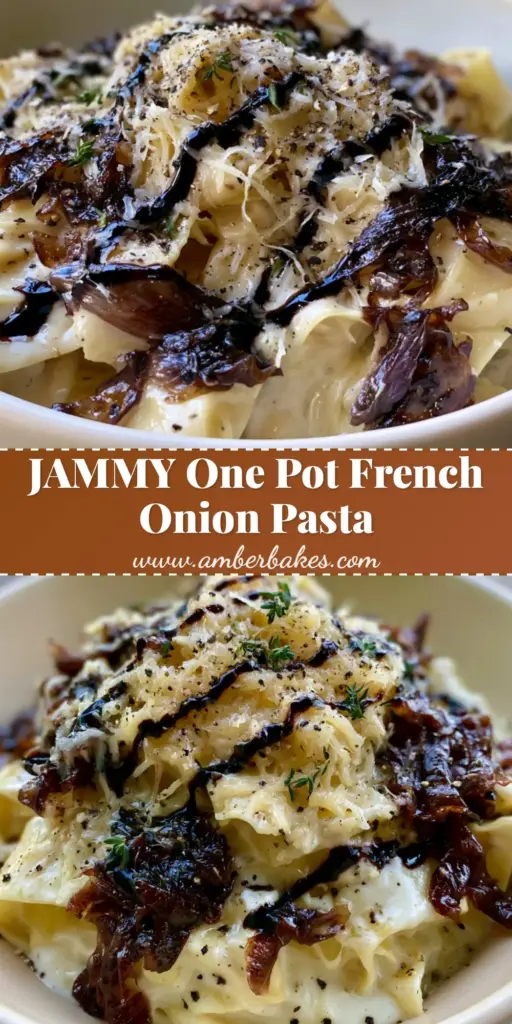
The visual contrast is the first thing you notice—deep, mahogany-toned onion ribbons tangled within wide, ivory-colored pappardelle pasta. Every forkful offers a balance of savory-sweet jammy onions and a thick, velvety cream sauce that clings to the ridges of the noodles.
Whether you are looking for a comforting weeknight treat or a sophisticated centerpiece for mini wedding menu planning, this recipe delivers. We finish the dish with a zig-zag of dark balsamic glaze and a generous layer of melted, stringy Gruyere cheese that pulls away in satisfying threads with every bite.
Why You Will Crave This Silky Onion Pappardelle
- The Texture Profile: You get the bite of al dente pappardelle ribbons combined with the melt-in-your-mouth texture of long-simmered onions.
- Visual Sophistication: The dark balsamic drizzle against the pale cream sauce creates a professional, “chef-plated” look right in your own kitchen.
- Deep Umami Base: By using the Maillard reaction to its full potential, we create a savory depth that rivals meat-based sauces.
- Aromatic Finish: Fresh thyme leaves and coarse cracked black pepper provide a bright, herbal top note that cuts through the richness of the cheese.
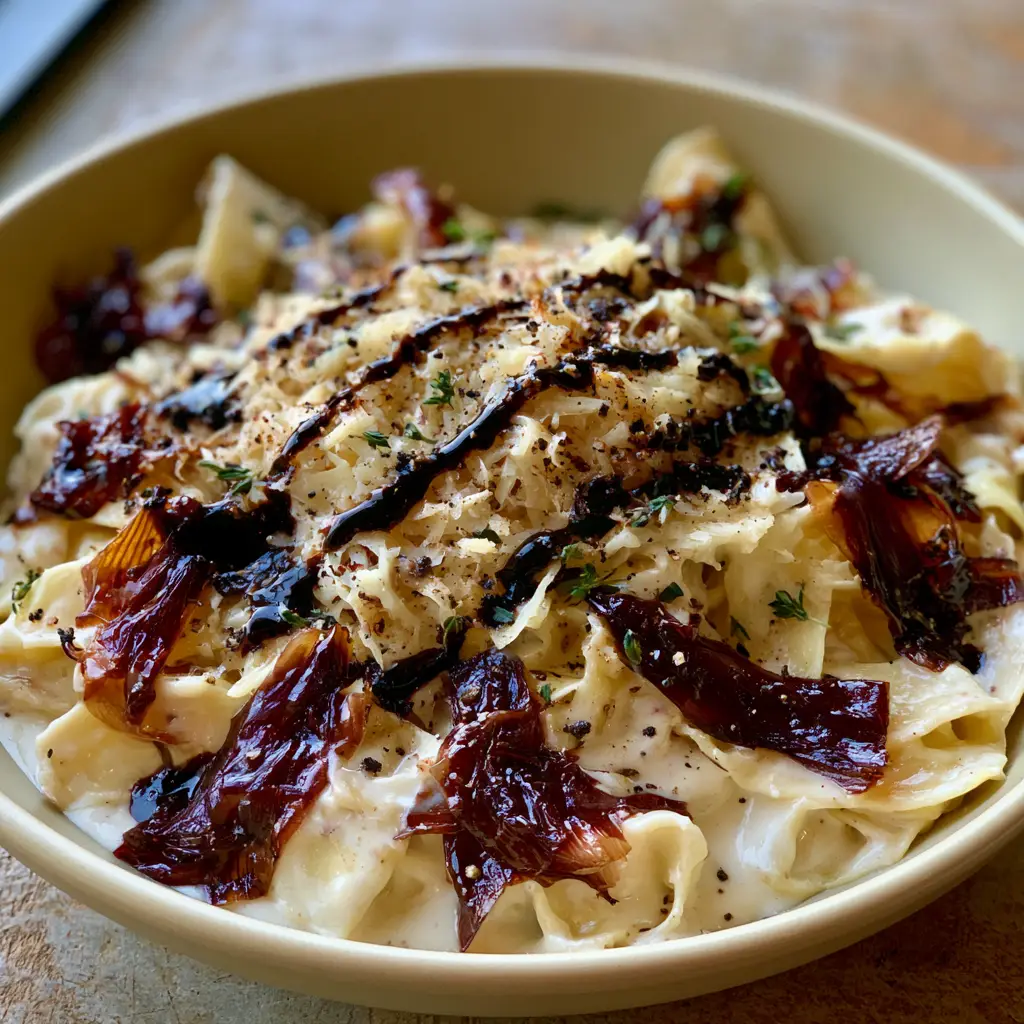
The Essential Components for a Five-Star Pasta
To achieve the specific visual and flavor profile described in our blueprint, every ingredient serves a structural and aesthetic purpose. Here is what you need to gather for the ultimate Caramelized Onion Pasta experience.
Wide Pappardelle Pasta: We use 12 oz (340g) of wide ribbons because the large surface area is essential for catching the heavy cream sauce and holding onto the glistening onion strands. If you cannot find pappardelle, a wide fettuccine is a suitable second choice.
Large Yellow Onions: You will need 3 large onions (approx. 900g). When sliced thin and cooked down, they reduce significantly in volume to create those signature mahogany ribbons of concentrated sweetness.
Heavy Whipping Cream: 1 cup (240ml) of high-fat cream is the foundation of our ivory sauce. It provides the “velvety” mouthfeel that is central to the dish’s identity.
Shredded Gruyere Cheese: 1.5 cups (150g) of Gruyere adds a nutty, complex saltiness. Its superior melting capability ensures the “stringy” texture seen in the visual prompt.
Balsamic Glaze: A thick reduction of balsamic vinegar is used for the final artistic drizzle. It provides a sharp acidity to balance the decadence of the cream and cheese.
Fresh Thyme Leaves: 1 tbsp (4g) of fresh leaves adds a woody fragrance. Avoid dried thyme here, as the fresh green color is vital for the final visual presentation.
Unsalted Butter and Olive Oil: 2 tbsp (30g) of butter and 1 tbsp (15ml) of oil work together. The oil prevents the butter from burning during the long caramelization process.
Beef or Vegetable Broth: 1/2 cup (120ml) is used to deglaze the pan. This lifts the “fond” (the brown bits) from the bottom of the pan, incorporating that flavor into the sauce.
Foundational Seasonings: Coarse sea salt and freshly cracked black pepper are non-negotiable for layering flavors at every stage of the cook.
The Kitchen Tools You’ll Need
To replicate the authentic home-cooked aesthetics of our reference, you don’t need fancy gadgets, just the right basics. A heavy-bottomed stainless steel or cast iron skillet is crucial for even heat distribution—this prevents the onions from scorching before they turn mahogany.
You will also want a large pasta pot for boiling your pappardelle and a sturdy silicone spatula for deglazing. For serving, a shallow cream-colored ceramic bowl provides the perfect neutral backdrop to make the dark onions and white sauce pop. If you’re feeling adventurous with your menu, you might even pair this with a strawberry rum cocktail for a summer evening vibe.
The Science of Mahogany Onion Perfection
Caramelization is a slow chemical reaction where heat breaks down sugar molecules. For this Caramelized Onion Pasta, we aren’t just sautéing; we are transforming the cellular structure of the onion.
Mastering the Long, Slow Sauté
Start by melting your butter and oil over medium-low heat. Add your sliced onions with a generous pinch of salt. The salt draws out moisture, which allows the onions to soften without browning too quickly.
Stir every 5 to 8 minutes. After about 30 minutes, you will see the onions transition from translucent to a pale gold. By the 45-minute mark, they should reach a deep, jammy, mahogany hue. This is the visual cue that the sugars have fully developed.
Building the Ivory Cream Foundation
Once the onions are mahogany, pour in your broth to deglaze. Scrape the bottom of the pan vigorously; those brown bits are pure flavor. Reduce the liquid by half before pouring in the heavy cream.
Simmer the cream over low heat until it thickens enough to coat the back of a spoon. It should look like liquid silk. This “ivory” appearance is the hallmark of a well-executed cream sauce.
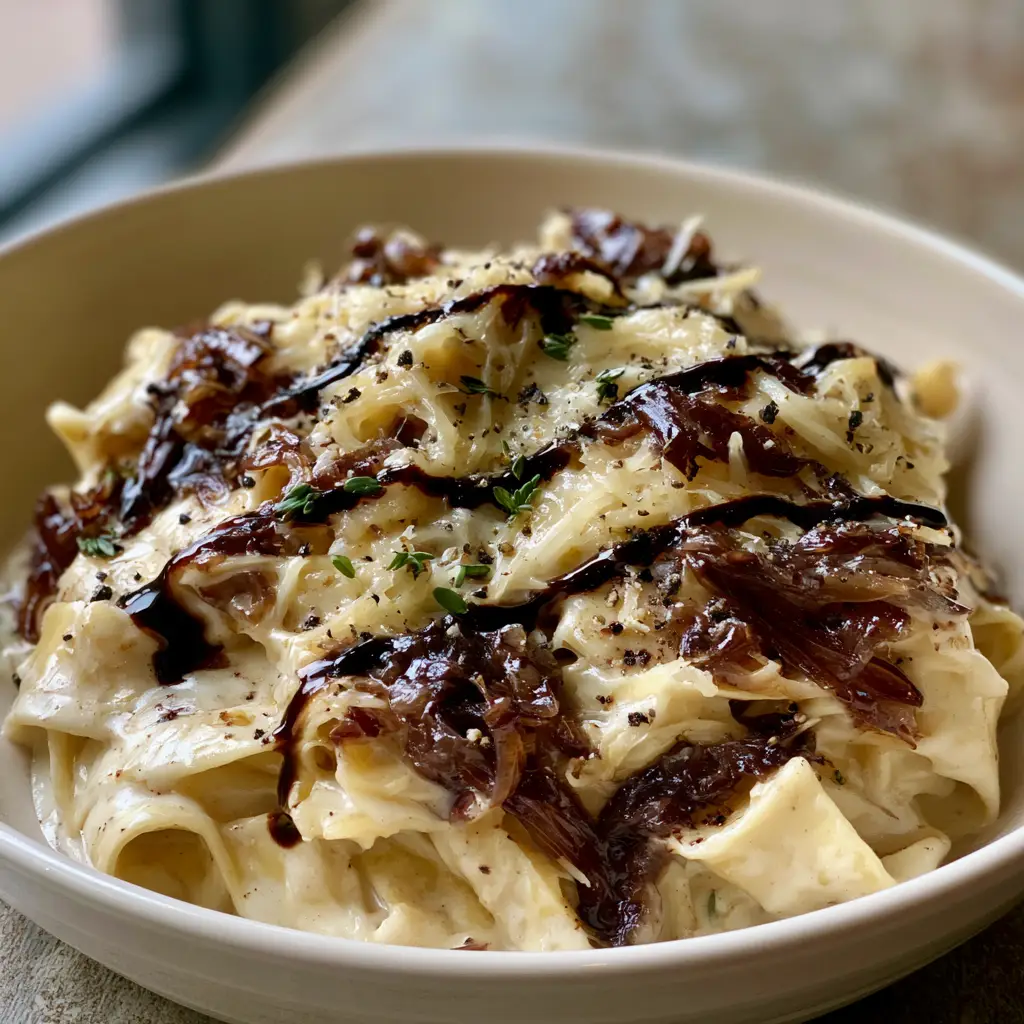
Achieving the Perfect Pasta Fold
Boil your pappardelle in salted water until it is just shy of al dente. Reserve about a half cup of the starchy pasta water before draining. Toss the pasta directly into the skillet with the cream and onions.
The starch in the pasta water helps the sauce emulsify, ensuring the cream clings to every millimeter of the pasta ribbons. If the sauce looks too thick, add a splash of that reserved water until the movement of the pasta in the pan sounds “squelchy” and wet.
Expert Tips for Success
- Don’t Rush the Onions: You cannot fake caramelization with high heat. If the onions look like they are burning, add a tablespoon of water to the pan to cool it down and redistribute the sugars.
- The Gruyere Grate: Always grate your Gruyere from a block. Pre-shredded cheeses are coated in potato starch or cellulose, which prevents them from achieving that “stringy” melt we see in the visual prompt.
- Temperature Control: When adding the cream, ensure the heat is low. High heat can cause the dairy to break or curdle, ruining the velvety texture.
- The Artistic Drizzle: To get a clean zig-zag with the balsamic glaze, use a squeeze bottle. Start the motion off the plate, move across the pasta, and finish off the plate for clean lines.
The Ideal Pairings for a Cohesive Meal
This Caramelized Onion Pasta is incredibly rich, so it benefits from being served alongside something bright or acidic. A crisp Greek salad recipe provides the perfect vinegar-forward crunch to reset your palate between bites.
If you are serving this as part of a larger spread, consider adding a light seafood option like rainbow trout almondine to provide a lean protein contrast. For a truly unique fusion experience, some of our readers enjoy following a rich pasta with a refreshing watermelon mochi for dessert.
Proper Storage and Reheating Methods
In the Fridge: Store leftovers in an airtight container for up to 3 days. Note that the pasta will continue to absorb the sauce as it sits, so it may appear “drier” the next day.
Reheating: To restore the velvety cream sauce, reheat the pasta in a skillet over low heat. Add a splash of milk or cream (about 2 tablespoons) and stir gently until the sauce loosens and the Gruyere becomes stringy again. Avoid the microwave if possible, as it can cause the fats in the cheese to separate.
Freezing: We do not recommend freezing this dish. The cellular structure of the cream and the delicate pappardelle ribbons tend to break down and become mushy upon thawing.
Frequently Asked Questions
Absolutely. You can caramelize the onions up to 3 days in advance and store them in the fridge. This reduces the active cooking time on the day you serve the pasta to just 15 minutes.
Yes, red onions can be used, though they will provide a slightly sharper sweetness and a darker, more purple-hued result. Yellow or Spanish onions are preferred for their higher sugar content and classic savory profile.
Ensure your heat is set to low before adding the heavy cream. Avoid letting the sauce come to a rolling boil; a gentle simmer is all that’s needed to thicken it without breaking the emulsion.
You can use full-fat oat milk or cashew cream combined with nutritional yeast for a similar texture, though the flavor profile will differ from the traditional dairy-based ivory sauce.
Fontina or a high-quality Swiss cheese are the best substitutes for Gruyere as they offer similar melting properties and a nutty flavor profile.
The Ultimate Caramelized Onion Pasta Recipe
Caramelized Onion Pasta with Velvety Cream Sauce and Gruyere
Ingredients
Equipment
Method
- In a large skillet, melt butter and olive oil over medium-low heat. Add sliced onions and a pinch of salt. Cook, stirring occasionally, for 40-45 minutes until deep mahogany and jammy.
- Pour in the broth to deglaze the pan, scraping up all the brown bits from the bottom.
- Cook pappardelle in salted boiling water until al dente. Reserve 1/2 cup of pasta water before draining.
- Reduce skillet heat to low. Stir in heavy cream and simmer for 3-5 minutes until the sauce is velvety and ivory in color.
- Add the cooked pasta to the skillet. Toss gently to coat in the cream and onion mixture, adding reserved pasta water if needed to loosen.
- Transfer to a ceramic bowl. Top with shredded Gruyere, a zig-zag drizzle of balsamic glaze, fresh thyme, and cracked black pepper.
Notes
Always grate your own cheese for the best melted texture.
Share Your Culinary Masterpiece!
This Caramelized Onion Pasta is a testament to the power of patience in the kitchen. The way the mahogany onions melt into the ivory cream is a sensory experience that every home cook should enjoy. We would love to see your results! If you make this dish, please leave a comment below and share your thoughts.
For more visual inspiration and recipe ideas, be sure to follow us on Pinterest. Don’t forget to pin the image below to your “Comfort Food” or “Dinner Ideas” board!