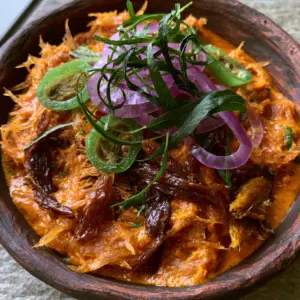
Enugu Abacha is more than just a meal; it is a vibrant, sensory journey through the heart of Igboland. This legendary “African Salad” captures the perfect balance of textures, from the translucent soaked cassava shreds to the thick emulsified orange palm oil sauce. Whether you are walking the streets of Enugu or cooking in a modern kitchen, the aroma of fermented ugba and fresh utazi leaves is unmistakable.
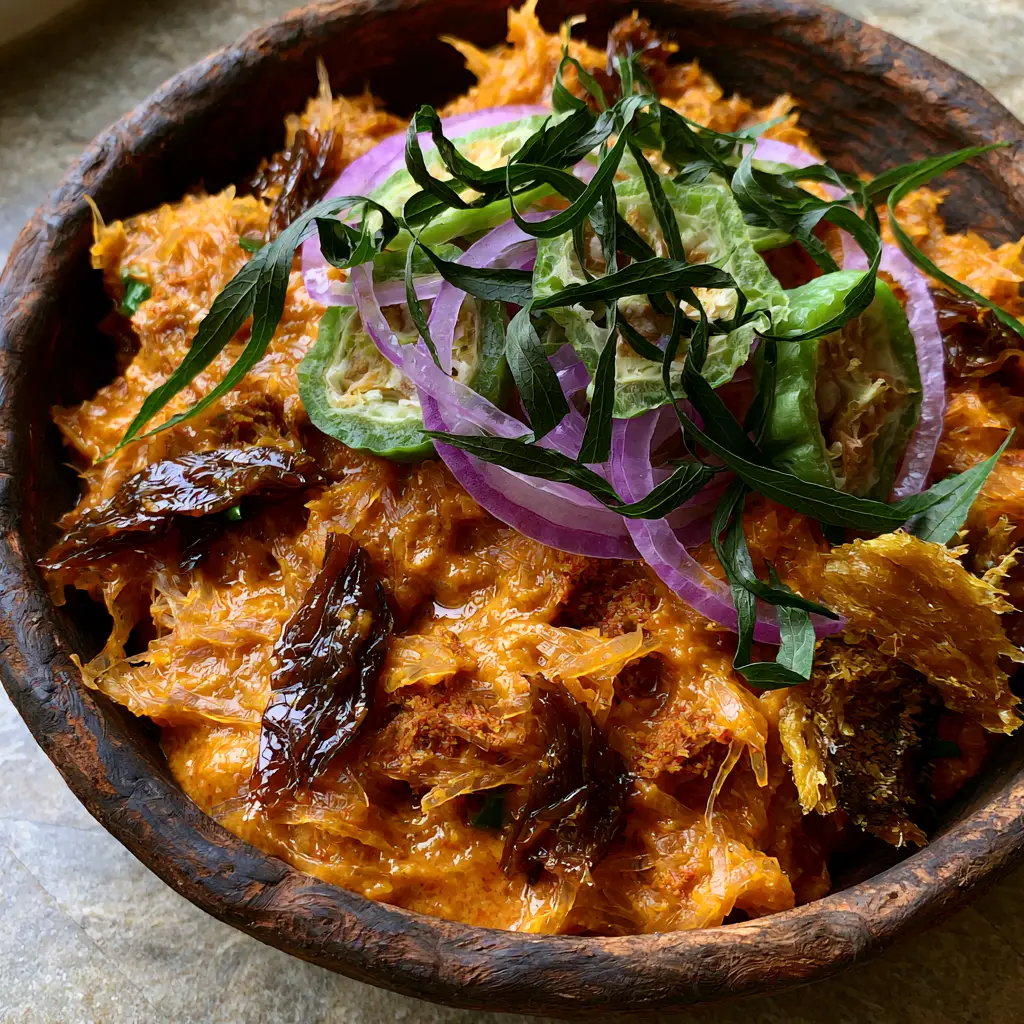
If you have been searching for that specific, hyper-realistic texture seen in gourmet West African photography, you are in the right place. This recipe yields a dish that looks exactly like a high-resolution masterpiece: glossy fermented ugba slivers, thin red onion rings, and whole steamed prawns nestled in a rustic clay bowl. It is a masterpiece of indigenous culinary science.
Why This Enugu Abacha Recipe Works
- Perfect Translucency: We use a specific soaking technique to ensure the cassava shreds are tender yet firm, never mushy.
- The “Ncha” Emulsion: Learn the chemistry of mixing palm oil and alkalinity to create that velvety, vibrant orange sauce.
- Layered Umami: The combination of deboned dry fish chunks and ground crayfish flakes provides a deep, savory base.
- Fresh Contrast: The bitterness of finely shredded fresh utazi leaves cuts through the richness of the oil perfectly.
While many people enjoy this as a light lunch, its complexity makes it stand out even when compared to global favorites like traditional side dishes or heavy comfort meals. The visual appeal of the sliced raw green garden eggs against the orange sauce makes it a Pinterest showstopper.
Essential Ingredients for Authentic Enugu Abacha
To achieve the forensic visual accuracy required for a true Enugu-style preparation, you cannot skip these components. Each ingredient serves a specific culinary purpose.
4 cups (400g) Dried Cassava Shreds (Abacha): These are the backbone of the dish. When soaked correctly, they become beautifully translucent and carry the flavor of the sauce.
1 cup (240ml) Pure Grade-A Red Palm Oil: This provides the base for the emulsion. It must be high quality to achieve that vibrant orange glow seen in professional food photography.
1 teaspoon (5g) Food-Grade Potash (Akaun) or Ngor: This is the catalyst. When dissolved in 2 tablespoons (30ml) of water, it reacts with the palm oil to create a thick, velvety emulsion.
1/2 cup (100g) Glossy Fermented Ugba (Oil Bean): These dark brown slivers add a unique, pungent earthiness and a slippery, glossy texture that is non-negotiable for authenticity.
2 tablespoons (30g) Ground Crayfish: These grainy flakes act as a natural seasoning, providing the essential “sea breeze” umami flavor.
1 cup (150g) Deboned Dry Fish Chunks: Use Mangala or Stockfish pieces. The golden-brown textures provide a chewy contrast to the soft cassava.
6-8 Large Whole Steamed Prawns: These add a luxury element and a beautiful curved visual to the top of the bowl.
Garnish Aromatics: You will need thin red onion rings, sliced raw green garden eggs, and finely shredded utazi leaves for that signature bitter finish.
The Science of the Perfect Orange Emulsion
The hallmark of a professional Enugu Abacha is the sauce. It shouldn’t be oily or thin; it must be a thick, velvety, vibrant orange emulsion known as “ncha.”
Step 1: Hydrating the Cassava Shreds
Place your dried cassava shreds in a large bowl. Pour room-temperature water over them and let them soak for 40-60 minutes. Pro Tip: Do not use boiling water, or you will lose that translucent soaked cassava look; they will turn opaque and gummy.
Once tender, drain them in a colander and set them aside. They should be flexible but still have a slight “bite” to them.
Step 2: Creating the “Ncha” Base
In a separate large pot (without heat), pour in the 1 cup (240ml) of red palm oil. Slowly whisk in your potash liquid. Watch closely as the oil transforms from a deep, translucent red into a thick, opaque, vibrant orange sauce.
This is a cold process. If you heat the oil too much, the emulsion will break, and you will lose that velvety highlights look that makes this dish so photogenic. If you enjoy the technical side of cooking, you might find this as fascinating as mastering a perfectly blended smoothie.
Step 3: Building the Flavor Profile
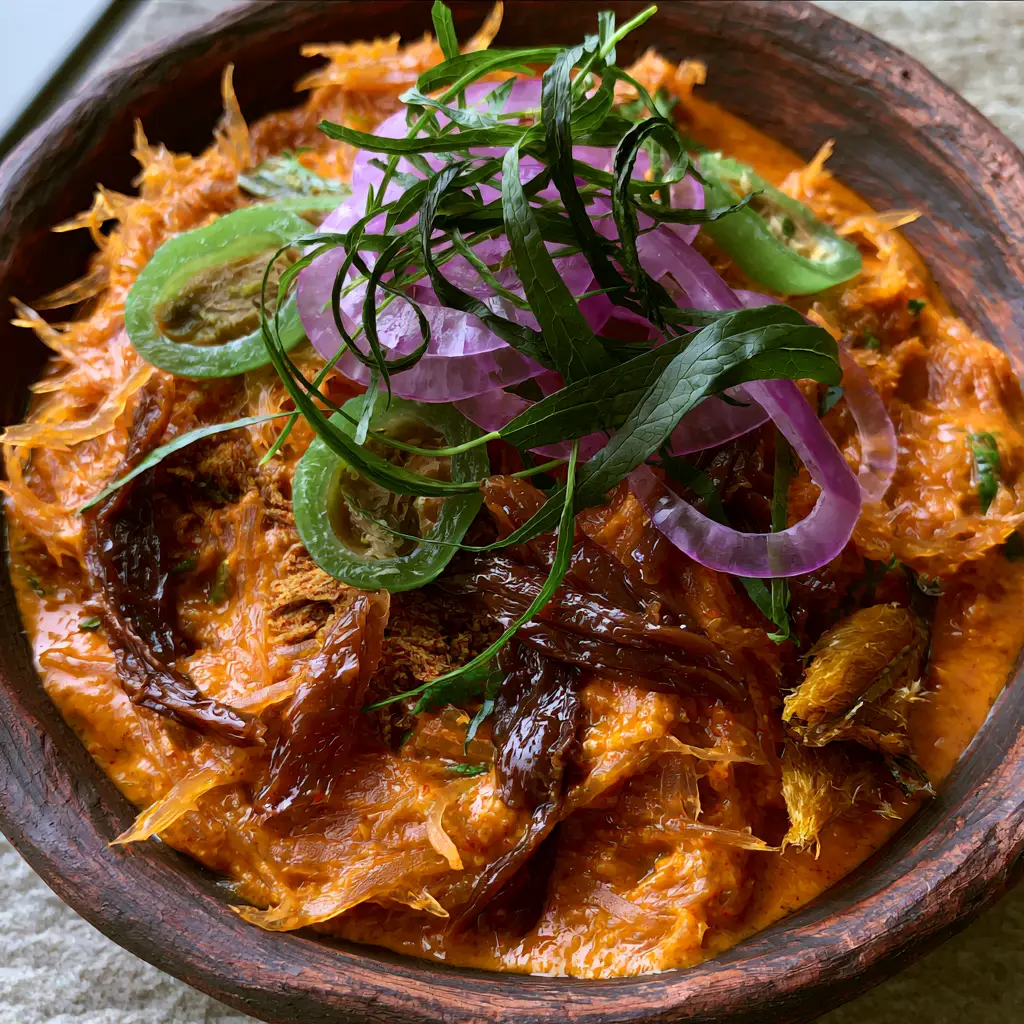
To the orange sauce, add your ground crayfish flakes, salt, and boullion (if using). Stir in the glossy fermented ugba slivers and the deboned dry fish chunks. The ugba should look dark and glistening against the bright orange backdrop.
Now, gently fold in the translucent soaked cassava shreds. Use a large wooden spoon to ensure every single strand is perfectly coated in the orange emulsion. The visual cue here is a consistent, glowing orange color across the entire mix.
Assembling the Rustic Clay Bowl
Authentic Enugu Abacha is all about the presentation. To mirror our visual blueprint, follow these layering steps:
The Garnishing Ritual
Transfer the coated cassava to a dark, rustic clay bowl. This creates a high-contrast background that makes the colors pop. Place the whole steamed prawns on top in a circular pattern.
Scatter the thin red onion rings and the sliced raw green garden eggs over the surface. The bright green of the garden eggs provides a necessary visual “pop” against the orange. Finally, sprinkle the delicate ribbons of dark green utazi leaves. The dark green against the orange is the classic aesthetic of Igbo cuisine.
For those who love complex flavor profiles, this dish rivals even the most sophisticated international comfort foods in terms of depth and satisfaction.
Expert Tips for Pinterest-Perfect Abacha
- Utazi Caution: Utazi is very bitter. Shred it into thin, delicate ribbons so it enhances rather than overpowers the dish.
- Potash Balance: Use only enough potash to curdle the oil. Too much will give the dish a soapy aftertaste.
- Temperature Matters: Serve at room temperature. The thick orange palm oil sauce will thicken further if chilled, losing its silky mouthfeel.
- Texture Contrast: Ensure your garden eggs are crisp and raw. The crunch against the soft cassava is vital for the sensory experience.
Storage and Reheating Guidelines
Enugu Abacha is best enjoyed immediately after mixing. Because of the fresh vegetables and the nature of the oil emulsion, it does not freeze well.
Storage: If you have leftovers, store the cassava mix and the fresh garnishes (onions, utazi, garden eggs) in separate airtight containers in the fridge for up to 24 hours.
Reheating: Do not microwave on high heat. Instead, place the bowl in a warm water bath (bain-marie) to gently soften the palm oil without breaking the emulsion. Add fresh garnishes only after warming.
What to Serve with Enugu Abacha
While this is a complete meal, it is often paired with a cold beverage. In Enugu, a chilled bottle of palm wine is the traditional choice. If you are looking for a modern twist, a refreshing drink from our non-alcoholic list can provide a sweet contrast to the savory spices.
For a full spread of appetizers, you might consider adding some light Mediterranean bites to the table to cater to a global palate.
Frequently Asked Questions
Authentic Enugu Abacha specifically uses dried and rehydrated cassava shreds. Fresh cassava has a different starch content and won’t achieve the signature translucent look.
The bitterness is intentional, but you can minimize it by shredding the leaves into paper-thin ribbons and using them sparingly as a garnish rather than a main ingredient.
It is traditionally served at room temperature. Heating the dish directly can cause the palm oil emulsion to break and become greasy.
You can use ‘Ngor’ (a natural alkaline ash) or, in a pinch, a tiny amount of baking soda dissolved in water, though the flavor and color of the emulsion will differ slightly.
This happens if the potash isn’t reacting with the palm oil. Ensure your potash is active and that you are whisking it into room-temperature oil vigorously.
The Authentic Enugu Abacha Recipe Card
Enugu Abacha: The Ultimate Authentic African Salad Recipe
Ingredients
Equipment
Method
- Place dried cassava shreds in a bowl of room-temperature water. Soak for 40-60 minutes until they become tender and translucent. Drain thoroughly.
- In a large pot, mix palm oil and potash water. Whisk vigorously until a thick, vibrant orange emulsion (ncha) forms.
- Add ground crayfish, salt, and deboned dry fish to the sauce. Stir in the glossy ugba slivers until well combined.
- Fold in the soaked cassava until every shred is orange. Serve in a bowl topped with prawns, onion rings, garden eggs, and utazi.
Notes
Always whisk the oil and potash off the heat to maintain the thick emulsion.
Join the Community!
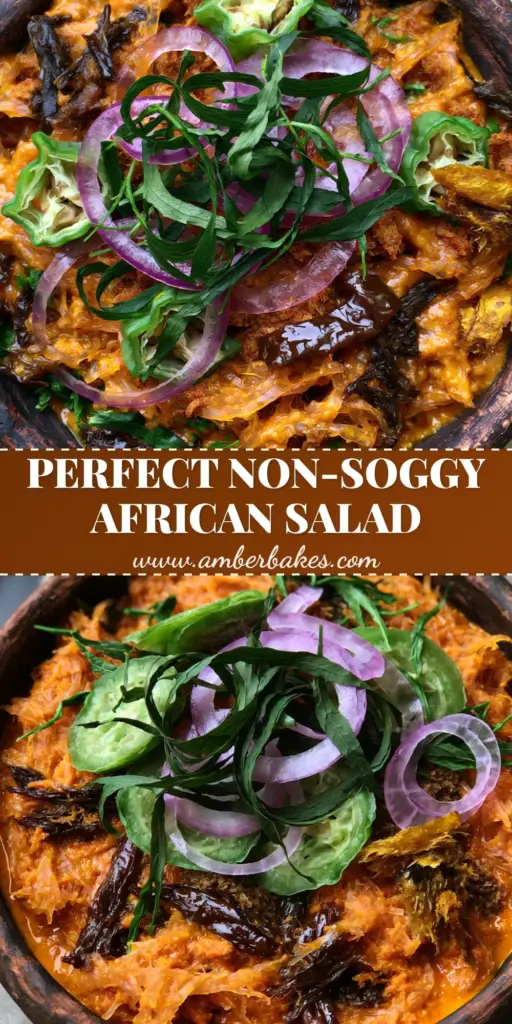
Did you try making this Enugu Abacha? We want to see your translucent cassava shreds and vibrant orange sauce! Save this recipe to your Pinterest boards so you never lose it, and follow amber_bakes for more authentic global recipes.
Please leave a 5-star rating in the recipe card above if you loved it, and share a photo of your rustic clay bowl in the comments below. Happy cooking!