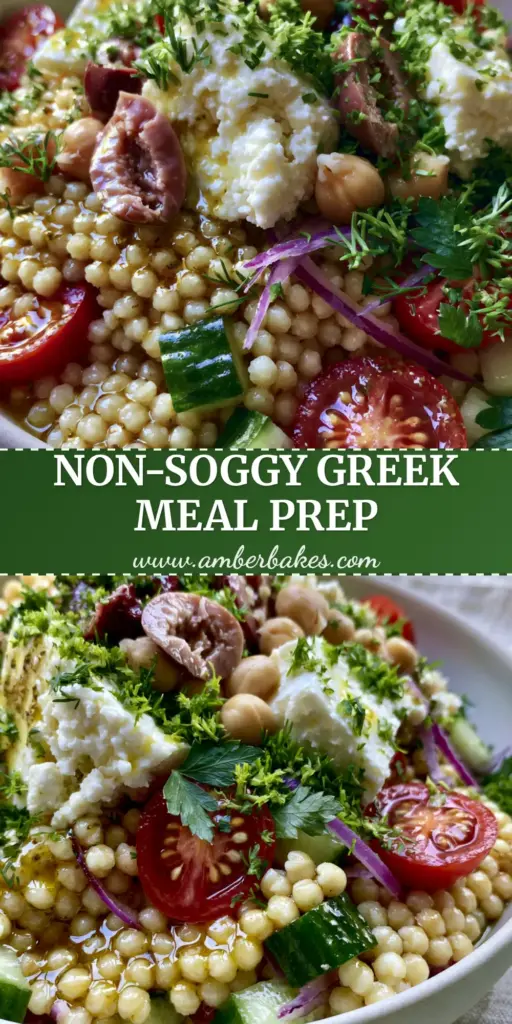
There is something undeniably satisfying about the texture of a perfectly executed Greek Couscous Salad. Imagine oversized, plump pearl couscous grains, each one glistening with a golden lemon-herb glaze, nestled against the snap of emerald-green cucumbers and the burst of juicy cherry tomatoes. This isn’t just a side dish; it’s a vibrant, handheld masterpiece of Mediterranean flavors designed for those who crave both comfort and freshness.
When you look into a bowl of this salad, the first thing you notice is the sharp contrast of colors—the deep purple of sliced Kalamata olives against the creamy white chunks of feta cheese. Every bite offers a symphony of textures, from the chewy pearls of Israeli couscous to the protein-rich bite of rinsed chickpeas. Whether you are prepping for a sunny afternoon lunch or looking for the ultimate potluck showstopper, this recipe delivers professional-grade results with simple, wholesome ingredients.
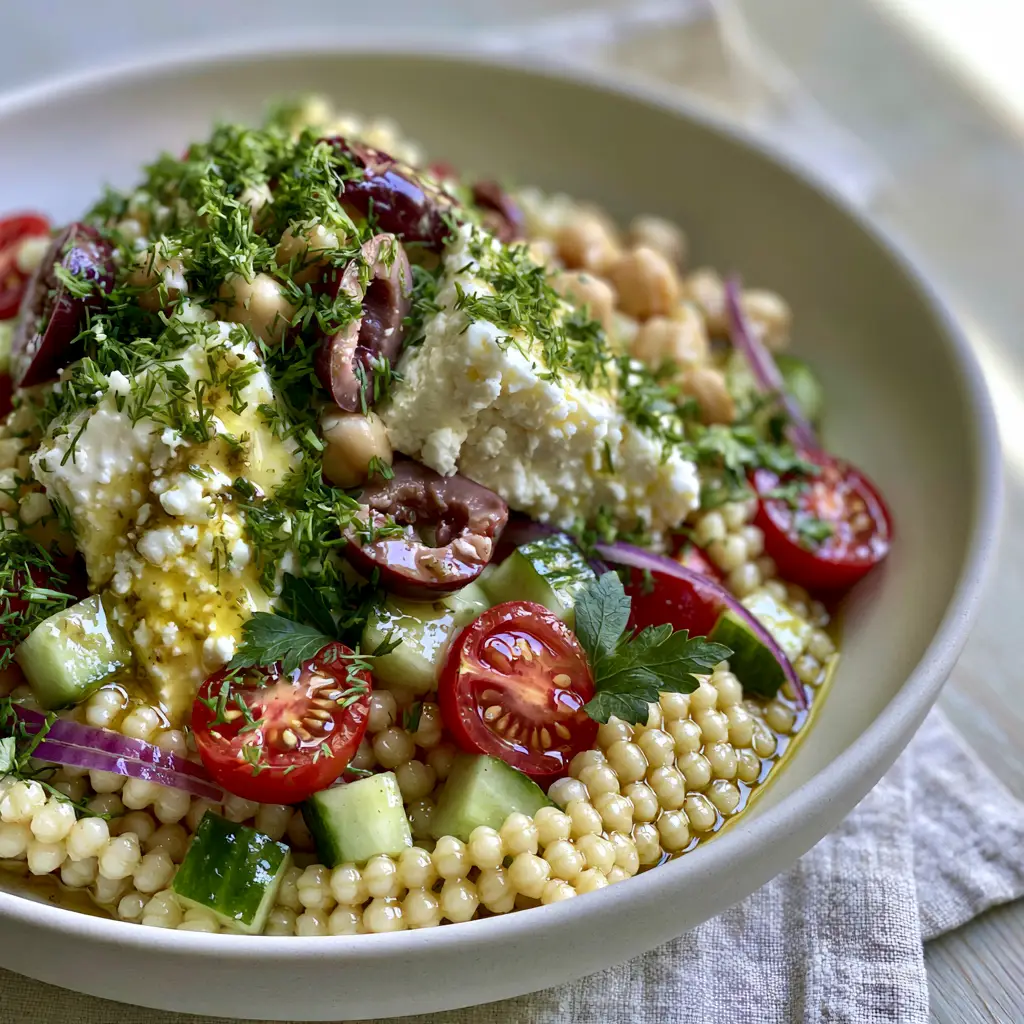
Why This Vibrant Mediterranean Pearl Couscous Bowl Works
- The Pearl Factor: Unlike tiny traditional grains, oversized pearl (Israeli) couscous provides a satisfying, pasta-like chew that holds up beautifully under a heavy herb glaze.
- Visual Vibrancy: The combination of neon-green fresh dill, flat-leaf parsley, and thin slivers of red onion creates a “smartphone-ready” aesthetic that looks as good as it tastes.
- Textural Balance: We pair soft, creamy feta and buttery chickpeas with high-crunch elements like diced cucumbers and halved cherry tomatoes for a complete sensory experience.
- The Emulsified Glaze: Instead of a thin dressing, our lemon-herb vinaigrette acts as a glaze, coating every ingredient in a glossy, golden sheen that prevents the salad from drying out.
The Mediterranean Pantry: Every Ingredient for Our Bold Greek Salad
Pearl (Israeli) Couscous: 2 cups (340g) of these oversized grains act as our base. They are toasted slightly before boiling to ensure they remain plump and distinct rather than mushy.
Cherry Tomatoes: 1.5 cups (225g) of bright red tomatoes, halved to reveal their juicy seeds. These provide the essential acidity and moisture that mingles with the vinaigrette.
English Cucumber: 1 large (300g) cucumber, finely diced. We prefer English cucumbers for their thin skin and emerald color, which adds a crucial crispness to every forkful.
Kalamata Olives: 1/2 cup (75g) of sliced, briny olives. These deep purple slivers offer a salty, fermented punch that balances the sweetness of the tomatoes.
Crumbled Feta Cheese: 1 cup (150g) of high-quality sheep’s milk feta. Look for large, creamy chunks rather than pre-crumbled varieties to maintain that luxurious mouthfeel.
Red Onion: 1/2 small onion (50g), sliced into paper-thin slivers. These provide a sharp, peppery bite and a beautiful purple visual accent.
Canned Chickpeas: 1 can (425g), thoroughly rinsed and drained. These add a nutty flavor and boost the protein content, making this chickpea-heavy salad a complete meal.
Fresh Herb Duo: 1/4 cup (10g) each of chopped fresh dill and flat-leaf parsley. The dill brings a neon-green brightness, while the parsley adds an earthy, clean finish.
Foundational Vinaigrette Ingredients: 1/3 cup (80ml) extra virgin olive oil, 3 tbsp (45ml) fresh lemon juice, 1 tsp (5g) dried oregano, and 1 clove of minced garlic. These emulsify into the “glaze” described in our visual blueprint.
Essential Kitchen Tools for Perfect Salad Assembly
To achieve the sharp focus and glossy finish seen in professional culinary photography, you’ll need a few key tools. A large matte white ceramic bowl is the best vessel for making the colors of the vegetables “pop.” You will also need a fine-mesh strainer to rinse your chickpeas until the water runs clear, ensuring no “bean liquid” dulls the shine of your salad grains.
A sharp chef’s knife is non-negotiable for achieving those clean, diced emerald cucumbers and thin purple onion slivers. Finally, a small glass jar or whisk is necessary to emulsify the lemon-herb vinaigrette into a thick glaze that will coat the couscous without pooling at the bottom of the bowl.
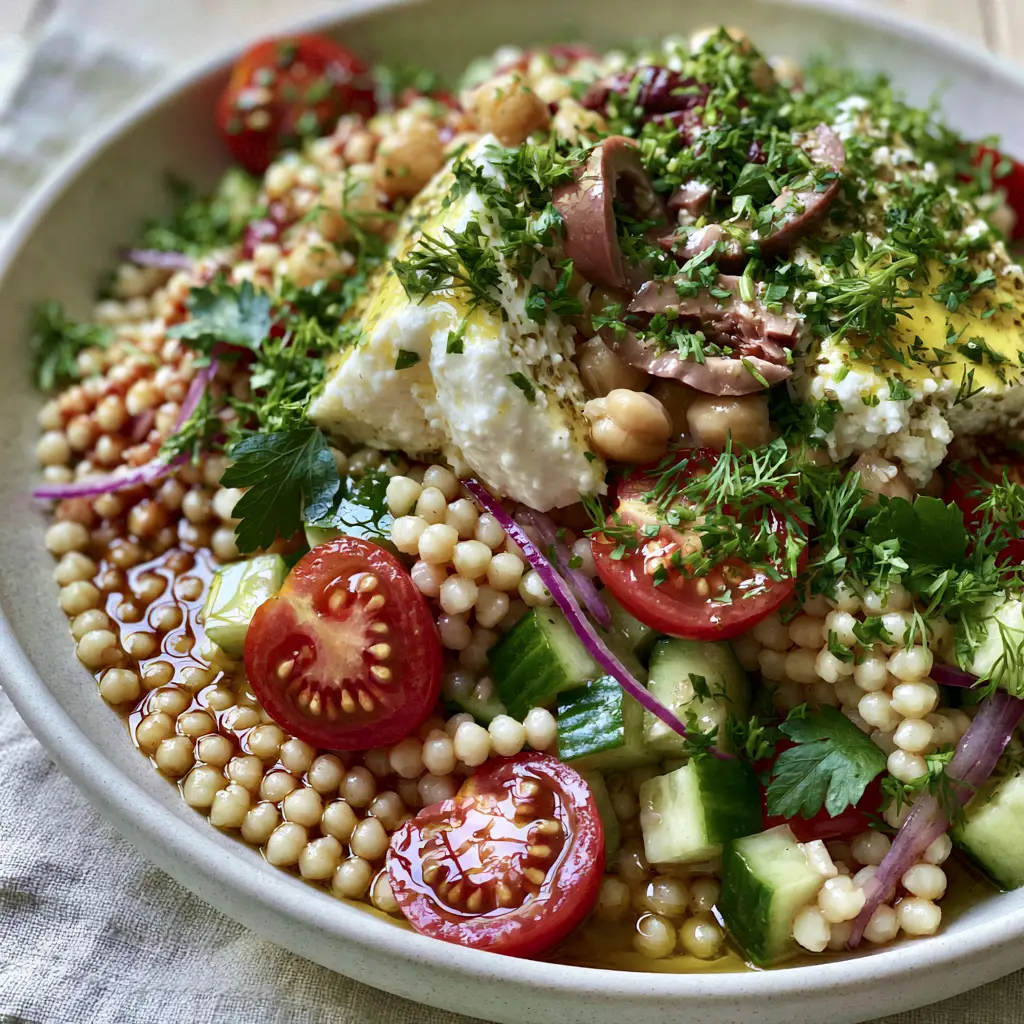
Step 1: Achieving Perfectly Plump Pearl Couscous
Start by heating 1 tbsp (15ml) of olive oil in a medium saucepan over medium heat. Add your 2 cups (340g) of pearl couscous and toast for 2-3 minutes until you smell a nutty aroma and see the grains turn a faint golden hue. This “invisible” step is the secret to grains that stay separate and glossy.
Add 2.5 cups (600ml) of water or vegetable broth and a pinch of salt. Bring to a boil, then reduce to a simmer, cover, and cook for about 8-10 minutes. Look for the visual cue of the water being fully absorbed and the grains appearing oversized and tender. Fluff with a fork and spread on a baking sheet to cool—this prevents the heat from wilting your fresh herbs later.
Step 2: Prepping Your Garden Fresh Produce
While the couscous cools, focus on your knife work. Slice the cherry tomatoes in half, ensuring the juicy seeds are visible, as this adds to the “vibrant” look of the final dish. Dice the English cucumber into uniform 1/2-inch (1cm) pieces to match the scale of the pearl grains.
Thinly slice the red onion into crescent slivers and soak them in cold water for 5 minutes if you prefer a milder flavor. Finely chop the fresh dill and parsley, removing any thick stems. The goal is a “neon-green” dusting of herbs that will cling to the glossy vinaigrette once tossed together.
Step 3: Whisking the Zesty Lemon Herb Glaze
In a small bowl, whisk together the extra virgin olive oil, fresh lemon juice, minced garlic, and dried oregano. Season with a generous pinch of kosher salt and cracked black pepper. Whisk vigorously until the oil and lemon juice move from separated layers to a singular, thickened golden glaze.
This emulsification is critical. If the dressing is too thin, it will simply soak into the couscous. A thickened glaze ensures that light sheen that makes the ingredients glisten under natural light. This technique is similar to what you might find in a high-end Mediterranean feta salad.
Step 4: The Art of the Toss and Garnish
In your large matte white ceramic bowl, combine the cooled couscous, chickpeas, cucumbers, tomatoes, and onions. Pour the lemon herb glaze over the mixture and toss gently with large spoons. You want to see every grain of couscous become coated and shiny.
Fold in the large chunks of feta cheese and sliced Kalamata olives last. This prevents the feta from breaking down too much and clouding the salad. Finish with a heavy handed garnish of the chopped dill and parsley. The final result should look like a handheld smartphone photo—vibrant, sharp, and incredibly fresh.
Chef Secrets for the Best Salad Texture
- Cool the Grains: Never mix hot couscous with fresh cucumbers and herbs. The residual heat will steam the veggies, turning your emerald greens into a dull olive color.
- Rinse the Chickpeas: Canned chickpea liquid (aquafaba) is starchy and cloudy. Rinsing them thoroughly ensures the “light sheen” of your glaze remains clear and appetizing.
- Herb Freshness: Only chop your dill and parsley right before serving. Freshly cut herbs have more volatile oils, which provide that “bright natural window light” sparkle and intense aroma.
- Salt the Veggies: If you aren’t serving immediately, wait to add the salt. Salt draws moisture out of tomatoes and cucumbers, which can dilute your glaze over time.
Making This Salad Ahead: Storage and Meal Prep Tips
This Greek Couscous Salad is an elite candidate for meal prep because pearl couscous does not get soggy as quickly as traditional pasta. Store the salad in an airtight container in the refrigerator for up to 4 days. The flavors actually deepen as the red onion and dried oregano infuse into the grains.
If you are making this more than 24 hours in advance, consider keeping the feta and fresh herbs in a separate container. Add them just before serving to maintain the textural contrast between the creamy cheese and the crisp herbs. This salad is best served chilled or at room temperature; do not freeze, as the cucumbers and tomatoes will lose their structural integrity.
Creative Pairings for Your Greek Feast
This salad is substantial enough to stand alone as a lunch, but it also pairs beautifully with other Mediterranean-inspired dishes. For a full summer spread, serve it alongside a refreshing watermelon salad or a protein-heavy chicken salad recipe.
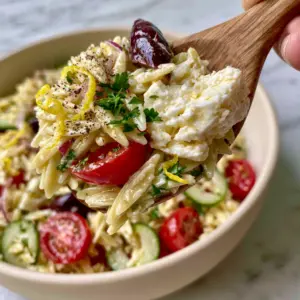
If you love the flavor profile of this dish but want to try different grains, our Moroccan couscous salad offers a spicier alternative. For those who prefer traditional pasta shapes, this same lemon-herb glaze works perfectly on a Greek orzo pasta salad.
Frequently Asked Questions
Yes! This salad is excellent for meal prep as the pearl couscous maintains its shape. It stays fresh in the refrigerator for up to 4 days, though it is best to add fresh herbs just before serving.
To keep the grains plump and distinct, toast them in a small amount of oil before adding liquid. Additionally, be sure to fluff them with a fork and cool them on a flat surface immediately after cooking.
Standard pearl couscous is made from wheat flour and contains gluten. To make this recipe gluten-free, you can substitute the pearl couscous with gluten-free grains like quinoa or a certified gluten-free pearl pasta.
If English cucumbers are unavailable, you can use Persian cucumbers. If using standard garden cucumbers, we recommend peeling them and scooping out the seeds to prevent the salad from becoming watery.
Regular couscous consists of tiny, semolina grains that are steamed, whereas pearl (or Israeli) couscous is larger, toasted pasta in the shape of small balls. Pearl couscous has a chewier, more substantial texture that holds up better in salads.
The Ultimate Vibrant Greek Pearl Couscous Salad
Greek Couscous Salad with Pearl Grains and Lemon Herb Glaze
Ingredients
Equipment
Method
- Toast pearl couscous in 1 tbsp olive oil for 2 mins until fragrant. Add 2.5 cups water, bring to boil, then simmer covered for 8-10 mins until water is absorbed and grains are plump.
- Fluff with a fork and spread on a baking sheet to cool completely to maintain vegetable crispness.
- Whisk olive oil, lemon juice, garlic, oregano, salt, and pepper until emulsified into a thick, golden glaze.
- Combine cooled couscous, chickpeas, and vegetables in a matte white bowl. Toss with the glaze. Fold in feta, olives, and fresh herbs just before serving.
Notes
Use English cucumbers to keep the emerald green color without peeling.
Share Your Culinary Creations!
We hope this Greek Couscous Salad brings a burst of Mediterranean sunshine to your kitchen. The combination of plump grains, briny olives, and that signature lemon-herb glaze is a proven crowd-pleaser that looks just as good as it tastes. If you enjoyed this recipe, please leave a comment below and tell us how yours turned out!
Don’t forget to snap a photo of your vibrant bowl and share it with us. For more seasonal inspiration, follow amber_bakes on Pinterest and pin this recipe to your “Summer Faves” board. Happy cooking!