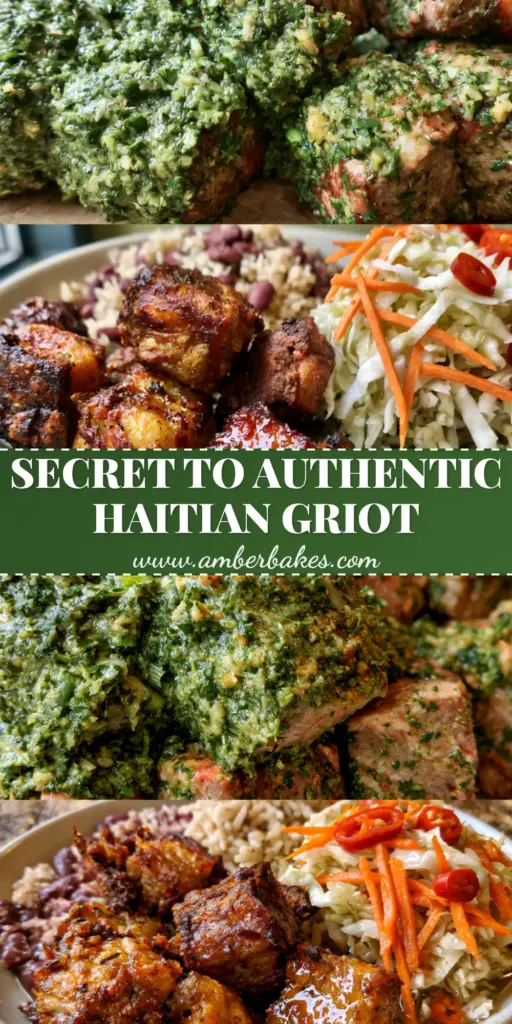
Haitian food is a masterclass in flavor, texture, and vibrant colors that tell a story of cultural fusion and culinary resilience. If you have been searching for that iconic, golden-brown crispy pork known as Griot, you have arrived at the definitive guide. This recipe captures the soul of the Caribbean with its deep green Epis marinade and the sharp, vinegar-drenched heat of traditional Pikliz.
There is something undeniably addictive about the contrast between a caramelized, crunchy exterior and a succulent, tender interior. When paired with fluffy rice and beans, this dish isn’t just a meal; it’s a celebration of heritage that has dominated dinner tables for generations. Whether you are a fan of French comfort food or looking to expand your spice cabinet, this Haitian classic is your next obsession.
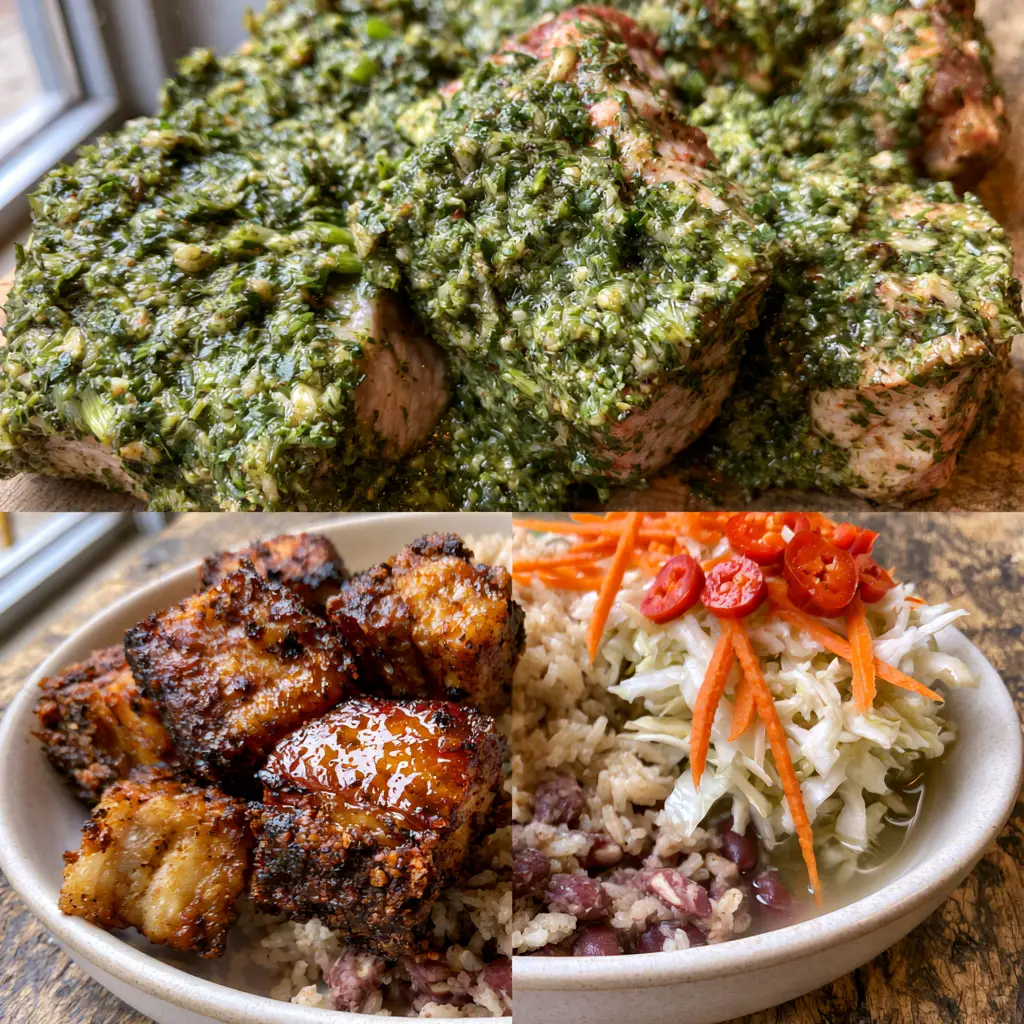
Why This Authentic Haitian Griot Works Every Single Time
- The Epis Bridge: A thick, vibrant green marinade that infuses the pork shoulder cubes with aromatics like parsley, garlic, and bell peppers.
- Dual-Texture Pork: A specialized parboiling-then-frying technique that ensures the meat is melt-in-your-mouth tender inside while remaining shatteringly crisp outside.
- The Pikliz Punch: A crunchy slaw of shredded cabbage, carrots, and scotch bonnet peppers that cuts through the richness of the fried pork.
- Visual Masterpiece: The glistening, juicy sheen of the pork against the bright orange and red hues of the spicy Pikliz makes this a Pinterest-viral sensation.
The Secret Ingredients for Your Haitian Food Masterpiece
Success in Haitian cooking starts with high-quality ingredients and a commitment to the marinating process. Here is what you need to gather for the most authentic result.
The Vibrant Green Epis Marinade
Fresh Parsley: Use 2 cups (60g) of flat-leaf parsley. This provides the earthy, herbal base that defines the color of the marinade. Do not skip the stems, as they hold intense flavor.
Garlic Cloves: 8-10 large cloves. Haitian food relies heavily on the pungent, savory depth of garlic to stand up to the richness of the pork shoulder.
Green Bell Pepper & Scallions: One large pepper and a bunch of scallions create the aromatic “holy trinity” of the Epis, giving it a textured, thick consistency.
The Pork Shoulder (Griot)
Pork Shoulder: 3 lbs (1.36kg) cut into 2-inch cubes. The fat marbling in the shoulder is essential for that juicy interior during the high-heat frying process.
Sour Orange Juice: 1 cup (240ml). If you cannot find sour oranges, a mix of lime and orange juice mimics the traditional acidity needed to tenderize the meat. This is a staple in many French side dishes and Caribbean marinades alike.
The Crunchy Pikliz & Sides
White Cabbage & Carrots: 4 cups (300g) of shredded cabbage and 1 cup (150g) of julienned carrots. This forms the base of the slaw, much like a spicy version of popular crunchy slaw recipes.
Scotch Bonnet Peppers: 2-4 peppers, thinly sliced. Warning: These provide the signature heat. Handle with gloves!
Red Kidney Beans & Long Grain Rice: 1 can (425g) of beans and 2 cups (400g) of rice to create the “Riz et Pois” that completes the plate.
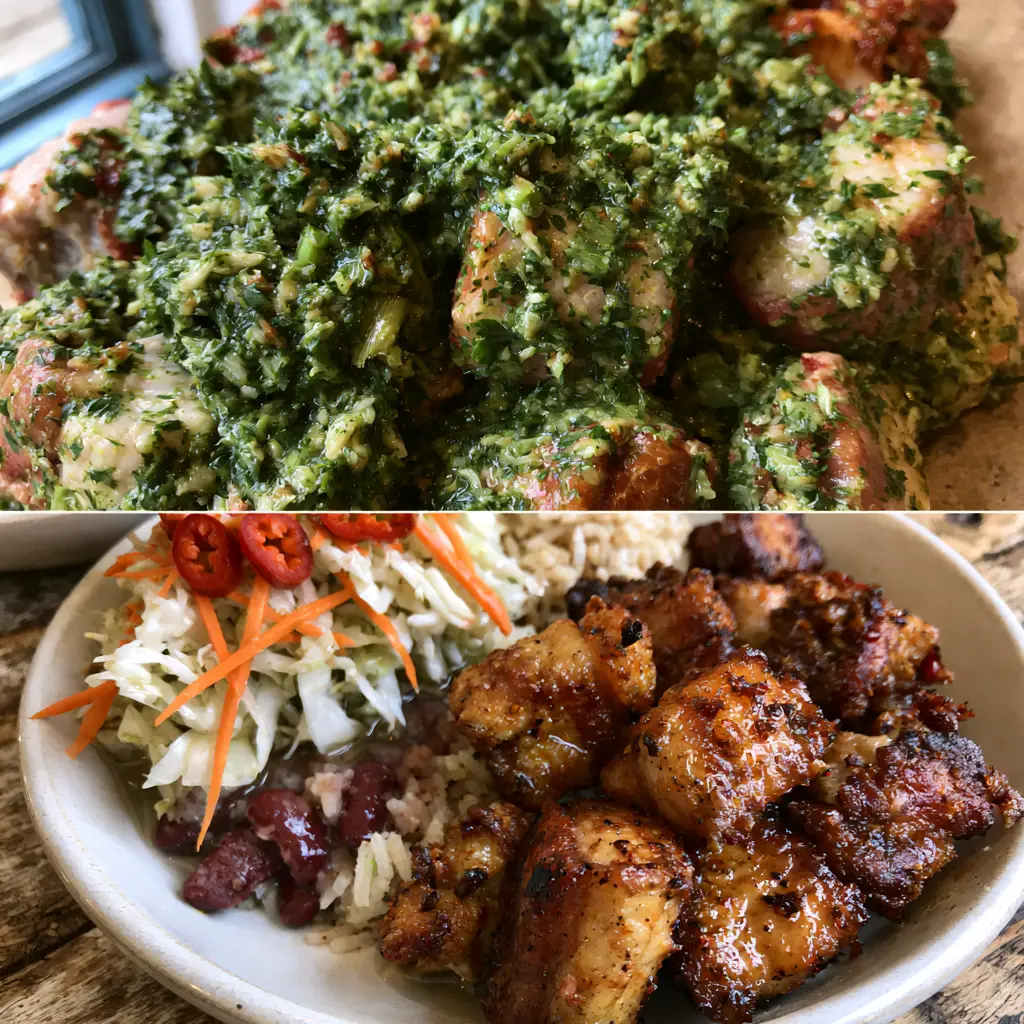
How to Make Authentic Haitian Pork Griot: Step-by-Step
1. Creating the Textured Green Epis
In a high-powered blender or food processor, combine the parsley, garlic, bell peppers, scallions, and a splash of oil. Pulse until you achieve a thick, vibrant green paste. You want some texture remaining—don’t turn it into a watery juice. This is the foundation of all great Haitian food.
2. The Long Soak: Marinating the Pork
Place your cubed pork shoulder in a large bowl. Pour the sour orange juice over the meat and rub it in. Add 1/2 cup (120ml) of your fresh Epis, salt, and black pepper. Massage the marinade into the meat until every cube is heavily coated. Let this sit in the refrigerator for at least 4 hours, though overnight is preferred for maximum flavor penetration.
3. The Parboil Technique
Transfer the pork and the marinade into a large pot. Add just enough water to halfway cover the meat. Throw in a few fresh thyme sprigs. Simmer over medium heat for 40-50 minutes. The goal is to cook the pork until it is tender but not falling apart. Once finished, remove the pork and reserve the liquid (this is liquid gold for flavoring your rice!).
4. Achieving the Caramelized Exterior
In a heavy-bottomed skillet or Dutch oven, heat 2 cups (480ml) of high-smoke-point oil. Carefully add the parboiled pork cubes. Fry until the edges are golden-brown and caramelized. The pork should have a glistening, juicy sheen and a dark, crispy crust. Drain on paper towels immediately.
5. Assembling the Pikliz
While the pork fries, toss the shredded cabbage, carrots, and sliced scotch bonnets in a bowl. Pour in white vinegar until the vegetables are submerged. Add a pinch of salt. The vinegar brine will quickly pickle the vegetables, providing that essential crunch and acidity.
Expert Tips for Success
- Wash the Meat: Traditionally, Haitian cooks wash pork with lime or vinegar before marinating to remove “rawness.” It makes a difference in the final clean taste.
- Don’t Overcrowd the Pan: When frying the Griot, work in batches. If the pan is too full, the meat will steam rather than develop that crispy brown exterior.
- Save the Epis: You will likely have leftover Epis. Store it in a jar with a layer of oil on top; it’s perfect for seasoning traditional Haitian Akra or even grilled chicken.
- Control the Heat: If you want the flavor of scotch bonnets without the fire, leave them whole in the Pikliz jar rather than slicing them.
Storage, Reheating & Freezing
Storage: Keep fried Griot in an airtight container for up to 4 days. Store Pikliz separately in a glass jar; it actually tastes better after 24 hours and stays good for weeks.
Reheating: To maintain the crispiness, avoid the microwave. Reheat the pork in an air fryer at 375°F (190°C) for 5-7 minutes or in a hot oven until sizzling.
Freezing: You can freeze the parboiled pork (before frying) for up to 3 months. Simply thaw and fry whenever you need a quick Haitian food fix.
What to Serve With This Dish
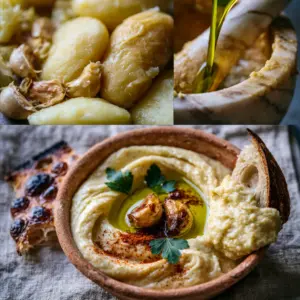
While rice and red kidney beans are the classic choice, you can also serve Griot with fried plantains (tostones) for extra starch and crunch. If you are looking for a lighter side, a fresh chickpea salad can provide a cool contrast to the spicy Pikliz.
Frequently Asked Questions
It is not recommended. Pork loin is too lean and will become dry during the parboiling and frying process. The fat in the shoulder is necessary for flavor and texture.
The pork itself is savory and aromatic, but not necessarily spicy. The heat comes from the Pikliz (the pickled slaw) served on the side, which contains scotch bonnet peppers.
The secret is the Epis. It is a blended base of aromatics like parsley, garlic, and peppers that acts as the primary seasoning for almost every savory dish.
Parboiling ensures the pork shoulder cubes are tender and fully cooked on the inside. Frying alone would leave the center tough while burning the outside.
The Final Recipe: Authentic Haitian Griot
Haitian Food: The Ultimate Guide to Crispy Pork Griot and Pikliz
Ingredients
Equipment
Method
- Blend parsley, garlic, and bell peppers into a thick green paste.
- Coat pork cubes in Epis and sour orange juice; refrigerate for 4+ hours.
- Simmer pork in a pot with marinade and thyme until tender (45 mins).
- Flash fry parboiled cubes in hot oil until caramelized and crispy brown.
Notes
The reserved boiling liquid can be used to flavor your rice and beans.
Save This Recipe to Pinterest!
If you loved this guide to authentic Haitian food, don’t forget to save it to your “Caribbean Recipes” or “Dinner Ideas” board! Following amber_bakes on Pinterest ensures you never miss a viral recipe. If you make this Griot, upload a photo in the comments below—I love seeing your caramelized pork masterpieces. Please leave a 5-star rating if this recipe hit the spot!