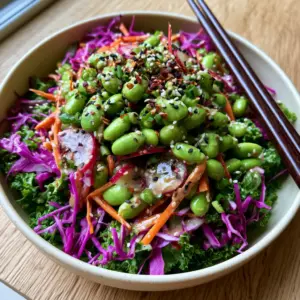
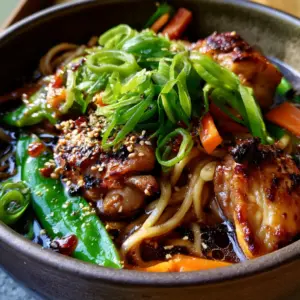
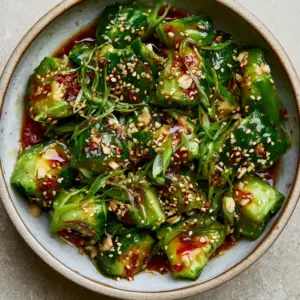
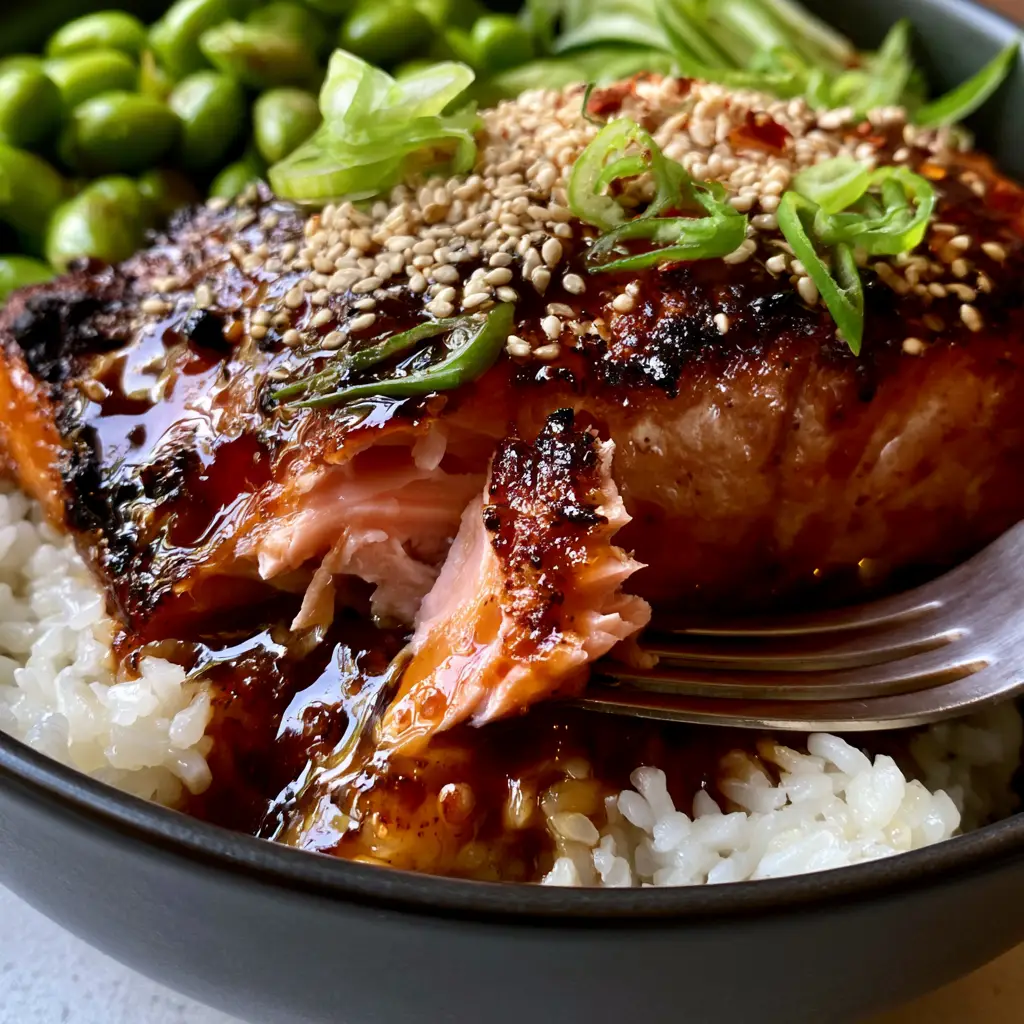
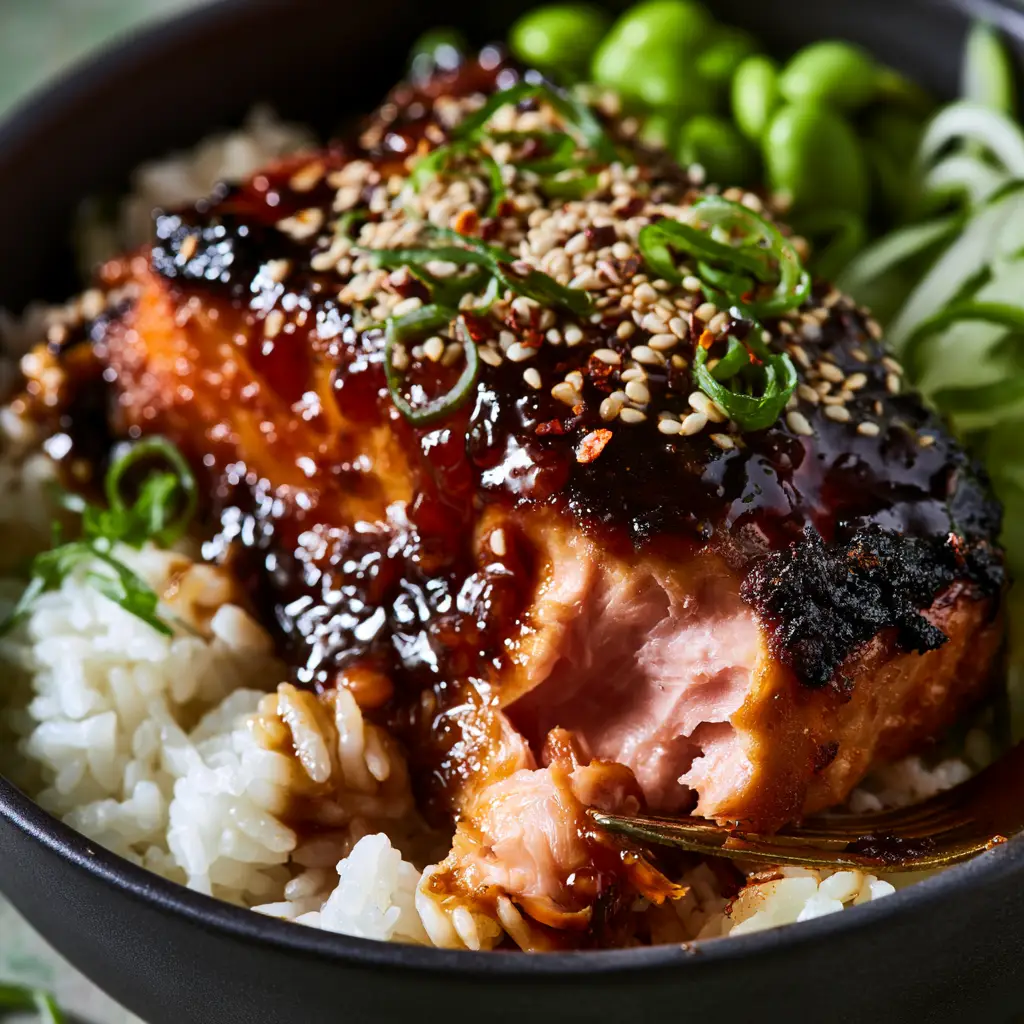
There is a specific culinary magic that happens when high-velocity hot air meets a rich, fatty piece of Atlantic salmon. This teriyaki salmon recipe is designed to replicate that exact moment of perfection: a deeply caramelized, charred exterior that shatters under the fork, revealing a moist, buttery, flaky pink center.
The visual contrast is the star of the show here. We are aiming for a thick, dark, glossy, amber-toned garlic teriyaki glaze that isn’t just a sauce, but a bubbling, reflective coating that clings to every crevice of the fish.
Served over a bed of pearly white, fluffy jasmine rice and accented by the crunch of chilled cucumber ribbons and vibrant edamame, this dish is a masterclass in texture and temperature. It’s the kind of meal that looks like it belongs in a high-end bistro but comes together in your kitchen in under 30 minutes.
Why This Air-Fried Teriyaki Salmon Recipe Dominates Your Weeknight Rotation
- The Ultimate Texture Play: The air fryer provides a level of “charred caramelization” that traditional ovens struggle to achieve without overcooking the delicate interior.
- A Glossy, High-Viscosity Glaze: By using a specific ratio of sugars and aromatics, we create a glaze that is reflective and thick, ensuring it doesn’t just run off the fish into the basket.
- Symphony of Colors: Between the bright green edamame, the translucent cucumber ribbons, and the white jasmine rice, the visual appeal is as satisfying as the flavor.
- Scientifically Sound Cooking: We utilize the Maillard reaction to deepen the umami profile of the soy and garlic, creating those signature “dark amber” tones seen in professional food photography.
The Essential Components for a Professional Teriyaki Salmon Bowl
Center-Cut Salmon Fillets: 1.5 lbs (680g) of fresh salmon. I recommend skin-on for structural integrity during the air-frying process, even if you don’t eat the skin, as it protects the meat from drying out.
Jasmine Rice: 1.5 cups (270g) of dry rice. Jasmine provides the necessary floral aroma and “pearly” aesthetic that balances the heavy, salty notes of the teriyaki.
Low-Sodium Soy Sauce: 1/2 cup (120ml). This acts as the foundational salt and color for our glaze; using low-sodium allows us to reduce the sauce significantly without it becoming overly salty.
Dark Brown Sugar: 1/4 cup (50g). The molasses content in dark brown sugar is the secret to achieving that “deeply caramelized” look and the sticky, bubbling texture on the crust.
Fresh Garlic: 3 cloves (approx. 15g), finely minced. Garlic is the primary aromatic that cuts through the fat of the salmon and the sweetness of the honey.
Honey: 2 tbsp (42g). Honey provides a different molecular structure of sugar than the brown sugar, adding that “reflective high-gloss sheen” to the final glaze.
Rice Vinegar: 1 tbsp (15ml). A necessary acid to brighten the sauce and balance the richness of the fish.
Fresh Ginger: 1 tsp (5g), grated. Ginger adds a subtle heat and complexity that differentiates a “store-bought” flavor from a “chef-crafted” one.
Cornstarch Slurry: 1 tsp (3g) cornstarch mixed with 1 tsp (5ml) cold water. This is our insurance policy for a thick, “bubbling” sauce that won’t slide off the salmon.
The Visual Garnishes: You will need 1 tbsp (9g) toasted white sesame seeds, 2 thinly sliced green scallions, a pinch of dried red chili flakes, and 1 large cucumber for those signature ribbons. Also, ensure you have 1 cup (155g) of shelled, steamed green edamame ready for the side.
Precision Equipment for High-Heat Salmon Success
To achieve the “extreme macro” levels of perfection, you need a high-performance Air Fryer. A basket-style air fryer is preferred for this teriyaki salmon recipe because it circulates air more tightly around the fillets, ensuring those edges char quickly.
You will also need a professional-grade vegetable peeler or a mandoline to create the “thin ribbons of cucumber.” A small saucepan is required to reduce the glaze to its “thick, amber-toned” state before it ever touches the fish.
Step-by-Step: Crafting the Perfect Teriyaki Salmon Bowl
1. Preparing the Aromatic Jasmine Base
Rinse 1.5 cups (270g) of jasmine rice under cold water until the water runs clear. This removes excess surface starch, ensuring the grains remain “pearly and fluffy” rather than gummy.
Combine the rice with 1.75 cups (415ml) of water in a pot or rice cooker. Bring to a boil, then reduce to a simmer, cover, and cook for 15 minutes. Let it rest off the heat for 10 minutes before fluffing with a fork.
2. Engineering the High-Gloss Garlic Teriyaki Glaze
In a small saucepan over medium heat, combine the soy sauce, brown sugar, honey, rice vinegar, minced garlic, and grated ginger. Bring the mixture to a gentle simmer.
Whisk in the cornstarch slurry and continue to simmer for 3-5 minutes. You are looking for a specific sensory cue: the sauce should coat the back of a spoon and have a “bubbling, reflective” appearance. Remove from heat; it will thicken further as it cools.
3. Air-Frying for Maximum Caramelization
Preheat your air fryer to 400°F (200°C). Pat the salmon fillets completely dry with paper towels; moisture is the enemy of a “crispy, charred” edge. Brush each fillet generously with the thickened glaze.
Place the salmon in the air fryer basket, ensuring they are not touching. Cook for 8-10 minutes. At the 6-minute mark, open the basket and apply a second “heavy” layer of glaze to create that “drenched” look.
Look for the visual cue of “charred, bubbling edges” and a center that is just starting to flake. The internal temperature should reach 135°F (57°C) for a moist, pink center.
4. Preparing the Fresh Components
While the salmon cooks, use your peeler to shave the cucumber into long, translucent ribbons. Steam the edamame until “vibrant green” and lightly season with sea salt.
These cold, crisp elements are essential for the balance of this versatile salmon rice bowl. The cucumber ribbons provide a cooling contrast to the “amber-toned” heat of the glaze.
Expert Tips for Flawless Salmon Texture
- Don’t Overcrowd: If the air cannot circulate, the edges will steam instead of charring. Cook in batches if necessary.
- The Double-Glaze Technique: Applying glaze twice—once before cooking and once midway—is the secret to that “bubbling and reflective” surface.
- Rest the Fish: Allow the salmon to rest for 2 minutes after removing it from the air fryer. This allows the juices to redistribute, ensuring a “moist, flaky pink center.”
- Mind the Sugar: Because the glaze is high in sugar, it can burn. If your air fryer runs hot, drop the temperature to 375°F (190°C) but increase the time by 2 minutes.
Storage, Reheating, and Meal Prep
This teriyaki salmon recipe is excellent for meal prep. Store the cooked salmon, rice, and edamame in an airtight container for up to 3 days. Keep the cucumber ribbons in a separate container with a damp paper towel to maintain their “vibrant” crispness.
To reheat, use the air fryer at 350°F (175°C) for 3-4 minutes. This will revive the “crispy edges” better than a microwave, which would make the salmon rubbery. If you enjoy this style of meal prep, you might also like my coconut chicken rice bowl for another high-protein option.
What to Serve With This Sticky Salmon
While this bowl is a complete meal, you can expand your spread by adding homemade fried rice if you prefer a heartier base than plain jasmine. For those looking for a lighter accompaniment, a fresh Lebanese tabbouleh offers a zesty herbal contrast to the sweet teriyaki.
If you are exploring quick seafood recipes, this salmon pairs beautifully with a side of blistered snap peas or a quick seaweed salad. It also fits perfectly as a nourishing meal for your Ramadan recipes rotation due to its high protein and energy-dense jasmine rice.
Frequently Asked Questions
Yes. Bake at 400°F (200°C) for 12-15 minutes, then broil on high for 2 minutes to achieve the charred, caramelized edges seen in the photos.
The secret is the combination of brown sugar, honey, and a cornstarch slurry reduced over medium heat until it coats a spoon and looks reflective.
You can marinate for 30 minutes, but since this is a thick glaze applied during cooking, marinating isn’t strictly necessary for flavor penetration.
Yes, skin-on fillets hold together better in the air fryer and help keep the meat moist, even if you choose not to eat the skin after cooking.
Use the air fryer at 350°F for 3 minutes. It restores the crispy edges without overcooking the center like a microwave would.
The Ultimate Sticky Teriyaki Salmon Recipe Card
Teriyaki Salmon Recipe with Air-Fried Crispy Edges and Sticky Garlic Glaze
Ingredients
Equipment
Method
- Rinse rice until water is clear. Combine 1.5 cups (270g) rice with 1.75 cups (415ml) water. Bring to boil, simmer covered for 15 mins, and rest for 10 mins.
- In a saucepan, simmer soy sauce, brown sugar, honey, garlic, vinegar, and ginger. Whisk in cornstarch slurry and simmer until thick and reflective.
- Preheat air fryer to 400°F (200°C). Pat salmon dry, brush with glaze, and air fry for 8-10 mins. Apply more glaze halfway through for a charred, bubbling finish.
- Divide rice into matte black bowls. Top with salmon, edamame, and cucumber ribbons. Garnish with sesame seeds, scallions, and chili flakes.
Notes
Apply the glaze in two stages to create a thick, glossy, bubbling layer.
Bring the Bistro Home with this Air-Fried Masterpiece
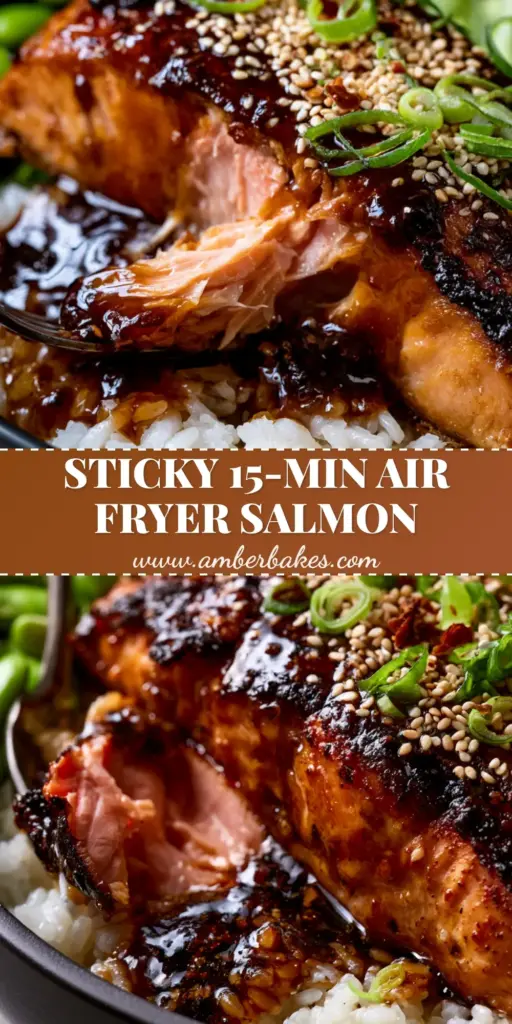
Creating a restaurant-quality teriyaki salmon recipe at home is all about mastering the heat and the sugar. By utilizing the air fryer’s convection power, you achieve a “deeply caramelized” crust that rivals any professional kitchen. The combination of the “thick, dark glaze” and the “moist, flaky pink center” makes this a visually stunning and delicious dinner.
I would love to see how your bowls turn out! Did you get those perfect charred edges? Tag me in your photos and follow my latest culinary adventures on Pinterest for more inspiration. Don’t forget to sign up for the newsletter to get more easy seafood recipes delivered straight to your inbox!