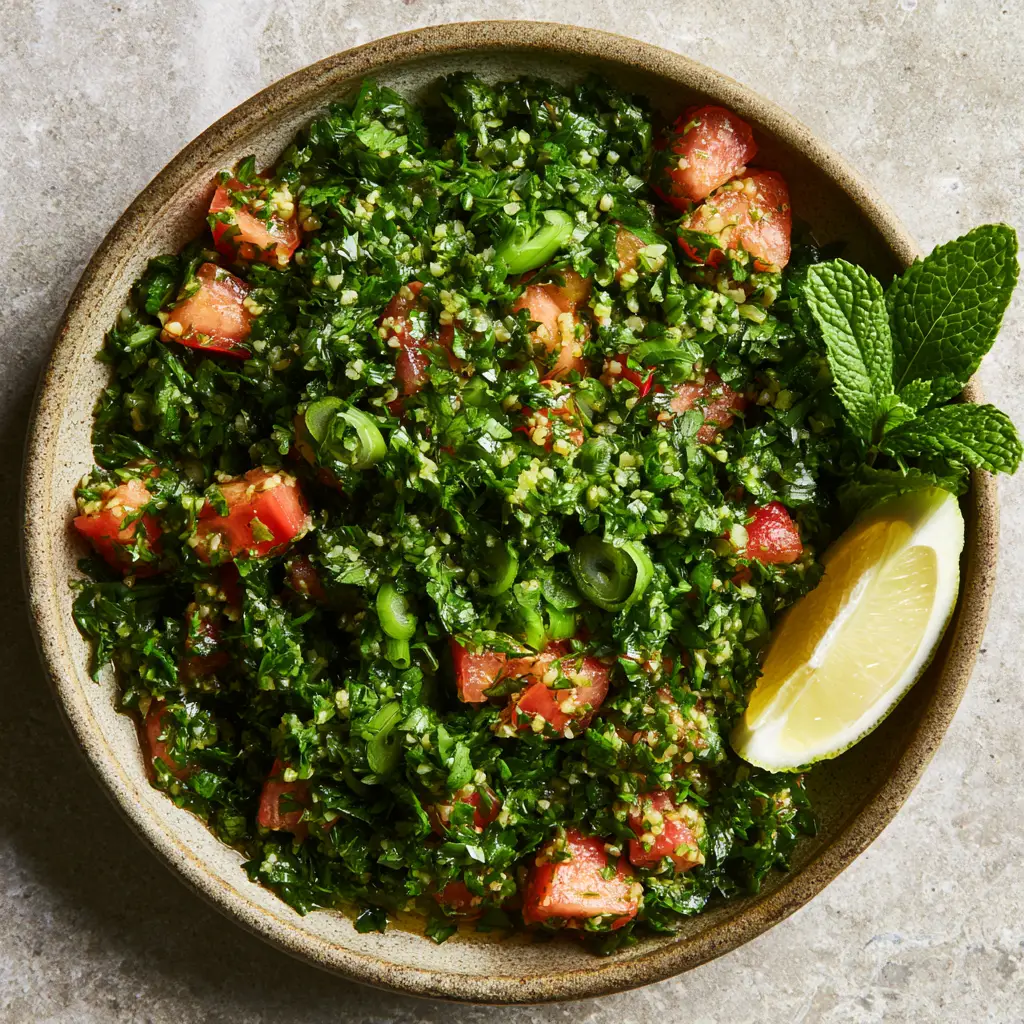
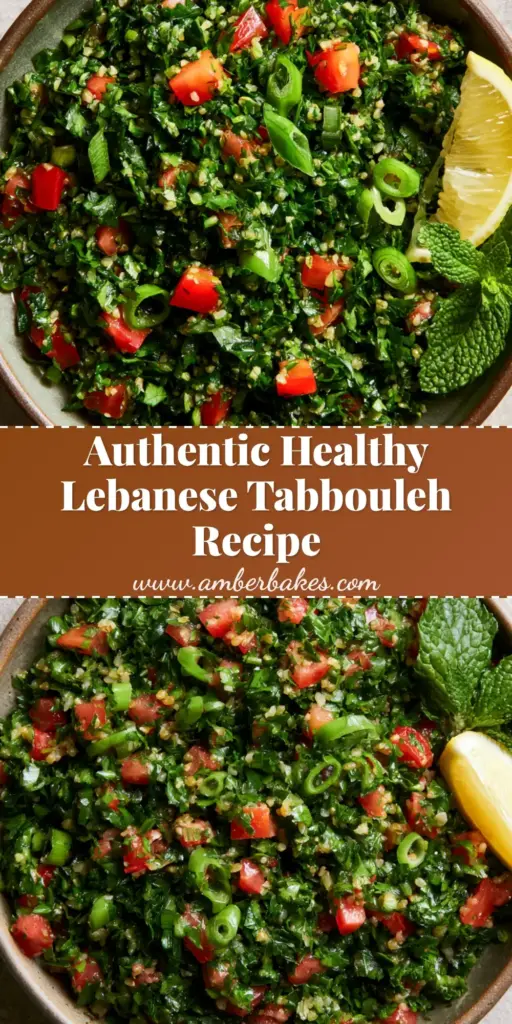
Mastering the Lebanese tabbouleh recipe is a rite of passage for any home cook looking to explore the vibrant world of Levantine cuisine. This isn’t just a side dish; it is a masterpiece of precision, texture, and herbal brightness. When you look at a bowl of authentic tabbouleh, you shouldn’t see a “grain salad” with parsley. Instead, you should see a vibrant forest-green base of ultra-finely chopped flat-leaf parsley, punctuated by microscopic bits of ruby-red tomato and sparse pearls of ivory bulgur wheat.
The secret to an elite Lebanese tabbouleh recipe lies in the knife work. Every ingredient is treated with forensic care to ensure a glistening sheen of extra virgin olive oil and fresh lemon juice coats every microscopic leaf. Whether you are preparing this for a summer mezze platter or as a refreshing companion to a traditional Greek salad, this recipe delivers a sensory explosion of citrus and spice.
In this guide, we will break down the culinary science behind preventing soggy parsley and how to achieve that professional 1/8-inch tomato dice. Prepare to elevate your kitchen skills as we dive into the most detailed, visually stunning, and aromatically complex salad in the Mediterranean repertoire.
The Signature Textures of an Authentic Lebanese Tabbouleh Recipe
- The Forest-Green Foundation: Unlike Western versions, the star here is the parsley, chopped so finely it resembles a soft moss.
- Uniform Precision: Microscopic 1/8 inch (3mm) cubes of firm ruby-red tomatoes provide bursts of acidity without diluting the salad with excess juice.
- Sparse Ivory Pearls: Fine bulgur wheat acts as a texture accent rather than a filler, soaked until just tender to the bite.
- Glistening Citrus Emulsion: A perfect balance of premium extra virgin olive oil and fresh lemon juice creates a high-definition shine on the greens.
- Aromatic Depth: The inclusion of minced fresh mint and sliced green onions adds layers of cooling and pungent flavor.
Essential Components for Culinary Excellence
To achieve the visual and structural integrity required for a world-class Lebanese tabbouleh recipe, each ingredient must be selected and prepared with specific goals in mind.
The Greens and Aromatics
Flat-Leaf Parsley: You will need 3 large bunches (approx. 150g) of Italian flat-leaf parsley. This variety offers a more robust flavor and a smoother texture than curly parsley, allowing for that microscopic “shredded” look.
Fresh Mint: 1/2 cup (15g) of firmly packed mint leaves provides a cooling contrast to the peppery parsley. Ensure the mint is minced until it is almost invisible to the eye but potent to the nose.
Green Onions (Scallions): 3-4 medium scallions (approx. 40g) should be sliced into incredibly thin rings. These provide a mild, sweet onion bite that doesn’t overpower the delicate herbs.
The Structural Elements
Extra-Fine Bulgur Wheat (#1 Grade): 3 tbsp (45g) of extra-fine bulgur is essential. This specific grade soaks quickly and stays in tiny ivory pearls, preventing the dish from becoming heavy or “bready.”
Firm Ruby-Red Tomatoes: 2 medium-sized firm tomatoes (approx. 200g) are required. Use a serrated knife to achieve those uniform 1/8 inch cubes, ensuring you remove the watery seeds first.
The Dressing and Seasoning
Extra Virgin Olive Oil: 1/4 cup (60ml) of high-quality, cold-pressed oil is used to coat the leaves. This protects the parsley from wilting too quickly under the acidity of the lemon.
Fresh Lemon Juice and Zest: 3 tbsp (45ml) of juice and 1 tsp (2g) of zest provide the sharp, bright top notes. The zest adds an aromatic oil that juice alone cannot provide.
Sea Salt and Cracked Black Pepper: 1/2 tsp (3g) of fine sea salt and a pinch of freshly cracked black pepper heighten all the natural flavors without masking them.
Professional Tools for Precision Chopping
Achieving the forensic accuracy of this Lebanese tabbouleh recipe requires more than just a standard knife. You need tools that respect the cell structure of the herbs.
- Ultra-Sharp Chef’s Knife: A dull knife will bruise the parsley, causing it to turn black and slimy rather than staying vibrant forest-green.
- Large Wooden Cutting Board: Provides enough surface area to “drag” the herbs during the mincing process without crowding.
- Fine-Mesh Strainer: Crucial for rinsing and draining the bulgur wheat and the diced tomatoes to remove excess moisture.
- Microplane Zester: To achieve those microscopic bits of lemon zest that distribute evenly throughout the salad.
Step-by-Step Culinary Forensics: Crafting the Tabbouleh
Hydrating the Ivory Bulgur Pearls
Start by placing your 3 tbsp (45g) of extra-fine bulgur in a small bowl. Cover it with 1/4 cup (60ml) of room temperature water and a splash of lemon juice. Let it sit for 15-20 minutes until the pearls are tender but still have a slight “al dente” pop. Drain any excess liquid through a fine-mesh sieve and press down to ensure the bulgur is dry; this prevents the salad from becoming soggy.
The “Master Chop” Parsley Technique
Wash your parsley bunches in ice-cold water and—this is critical—dry them completely using a salad spinner or paper towels. Once dry, gather the parsley into a tight, cigar-like roll on your cutting board. Use your sharp knife to shave the parsley into microscopic ribbons. Once shaved, go over the pile with a rocking motion until the parsley is reduced to tiny green flecks, but stop before it becomes a paste.
Achieving the 1/8 Inch Tomato Micro-Dice
Slice your firm tomatoes into halves and scoop out the seeds and watery pulp. Slice the remaining flesh into thin matchsticks, then turn them and cut across to create uniform 1/8 inch (3mm) cubes. Place these cubes in a strainer for 5 minutes to let any lingering juice drip away. This ensures your Lebanese tabbouleh recipe remains crisp and glistening rather than swimming in tomato water.
The Final Emulsion and Assembly
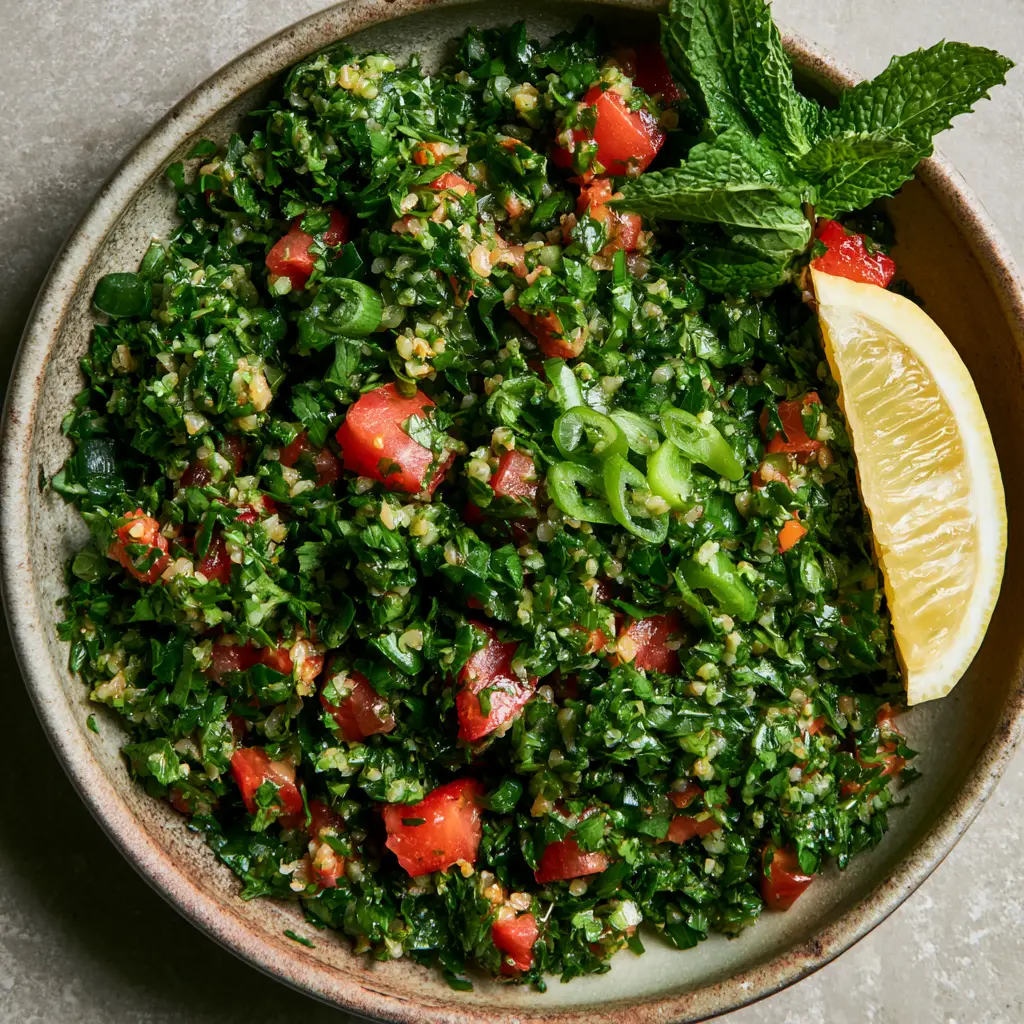
In a rustic matte ceramic bowl, combine the finely chopped parsley, minced mint, and thin scallion rings. Add the soaked bulgur pearls and the micro-diced tomatoes. Drizzle the extra virgin olive oil over the greens first; this fat-barrier prevents the lemon juice from immediately wilting the herbs. Finally, add the lemon juice, zest, salt, and pepper. Toss gently with two large spoons until every leaf has a glistening sheen.
Expert Tips for Success
- The Dryness Rule: The number one enemy of a great Lebanese tabbouleh recipe is water. If your parsley is even slightly damp when you chop it, it will clump together and bruise.
- Stem Management: While the very tops of the parsley stems are tender and flavorful, remove the thick bottom stems before chopping to maintain a uniform, soft texture.
- Chill the Bowl: For the most refreshing experience, chill your ceramic serving bowl in the refrigerator for 10 minutes before assembling the salad.
- Season at the End: Only add the salt and lemon juice right before serving. Salt draws out moisture from the tomatoes and parsley, which can lead to pooling at the bottom of the bowl.
Optimal Storage and Meal Prep
While this Lebanese tabbouleh recipe is best enjoyed immediately after assembly, it can be stored in an airtight container in the refrigerator for up to 24 hours. The flavors actually deepen over the first few hours as the bulgur absorbs the dressing. However, the parsley will lose its vibrant green color and crispness after the first day. This dish is not suitable for freezing, as the delicate herbs will turn to mush upon thawing.
What to Serve With Authentic Tabbouleh
Tabbouleh is a versatile star of the Mediterranean table. It pairs beautifully with hearty grains like a savory rice pilaf or a protein-packed Atlantic salmon rice bowl. If you are hosting a festive gathering during the holidays, this salad is a staple in many traditional Ramadan recipes because of its hydrating properties.
For a lighter lunch, serve it alongside a cool watermelon salad to balance the peppery notes of the parsley with sweet fruit. It also serves as a perfect acidic contrast to rich dishes like crispy Greek potatoes.
Frequently Asked Questions
Authentic Lebanese tabbouleh should always be hand-chopped. A food processor often bruises the delicate flat-leaf parsley and creates a wet, mushy texture rather than the distinct, microscopic flecks required.
Tabbouleh is best served fresh but will stay vibrant for about 24 hours. Beyond that, the acid in the lemon juice will cause the parsley to lose its forest-green color and become soft.
The secret lies in three steps: ensuring the parsley is bone-dry before chopping, seeding the tomatoes and draining them in a sieve, and coating the herbs in olive oil before adding lemon juice to prevent wilting.
Flat-leaf Italian parsley is the preferred choice for a Lebanese tabbouleh recipe. It has a more sophisticated flavor profile and a smoother texture that is easier to chop into fine, uniform ribbons.
You must use #1 grade extra-fine bulgur wheat. It requires minimal soaking and remains in tiny, delicate ivory pearls that don’t overwhelm the parsley-forward nature of the dish.
The Ultimate Lebanese Tabbouleh Recipe Card
Lebanese Tabbouleh Recipe: The Ultimate Authentic Parsley Salad
Ingredients
Equipment
Method
- Place extra-fine bulgur in a small bowl with 1/4 cup water and a splash of lemon juice. Soak for 20 minutes until ivory pearls are tender.
- Seed firm tomatoes and dice into 1/8 inch (3mm) uniform cubes. Place in a strainer to remove excess juice.
- Ensure parsley is bone-dry. Roll into a bunch and shave with a sharp knife until it forms a forest-green pile of microscopic flecks.
- Mince mint leaves and slice scallions into very thin rings, ensuring they blend seamlessly with the parsley.
- In a ceramic bowl, combine herbs, tomatoes, and bulgur. Drizzle with olive oil first to coat, then add lemon juice, zest, salt, and pepper.
- Toss gently until glistening. Garnish with a sprig of fresh mint and a single lemon wedge with visible pulp.
Notes
Use only #1 grade extra-fine bulgur for the correct texture.
Closing & Call to Action
This Lebanese tabbouleh recipe brings the authentic flavors of Beirut directly to your kitchen. By focusing on the microscopic dice of the tomatoes and the ultra-fine chop of the parsley, you create a dish that is as visually stunning as it is delicious. The forest-green base and ivory bulgur pearls are the hallmarks of a truly professional Mediterranean salad.
Did you master the micro-dice? We would love to see your results! Leave a comment below and let us know how your tabbouleh turned out. Don’t forget to follow us on Pinterest for more culinary inspiration and share this recipe with your fellow home cooks!