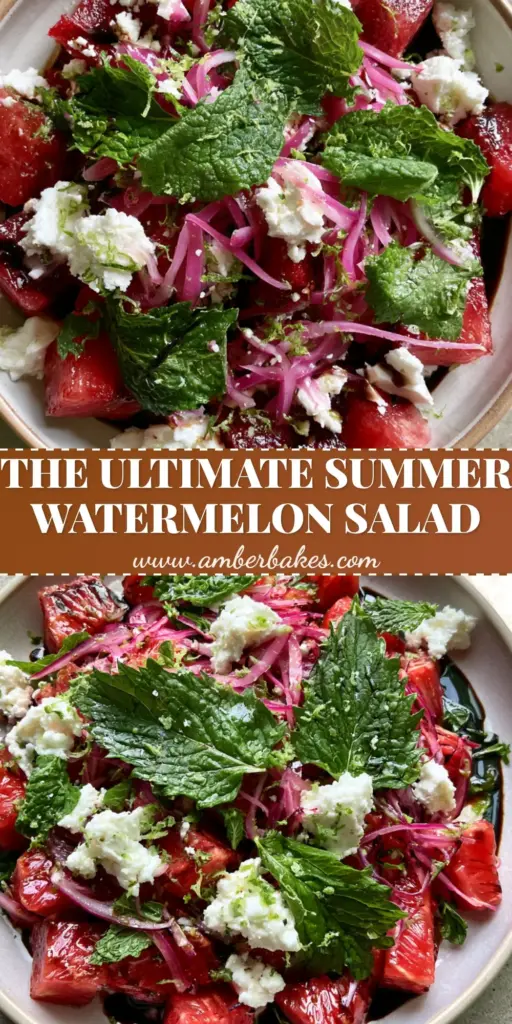
When the mercury rises and the air grows thick with summer heat, few things offer the immediate, cooling relief of a perfectly executed watermelon salad recipe. This isn’t just a side dish; it is a masterclass in textural contrast and the sophisticated interplay between sweet, salt, and acid.
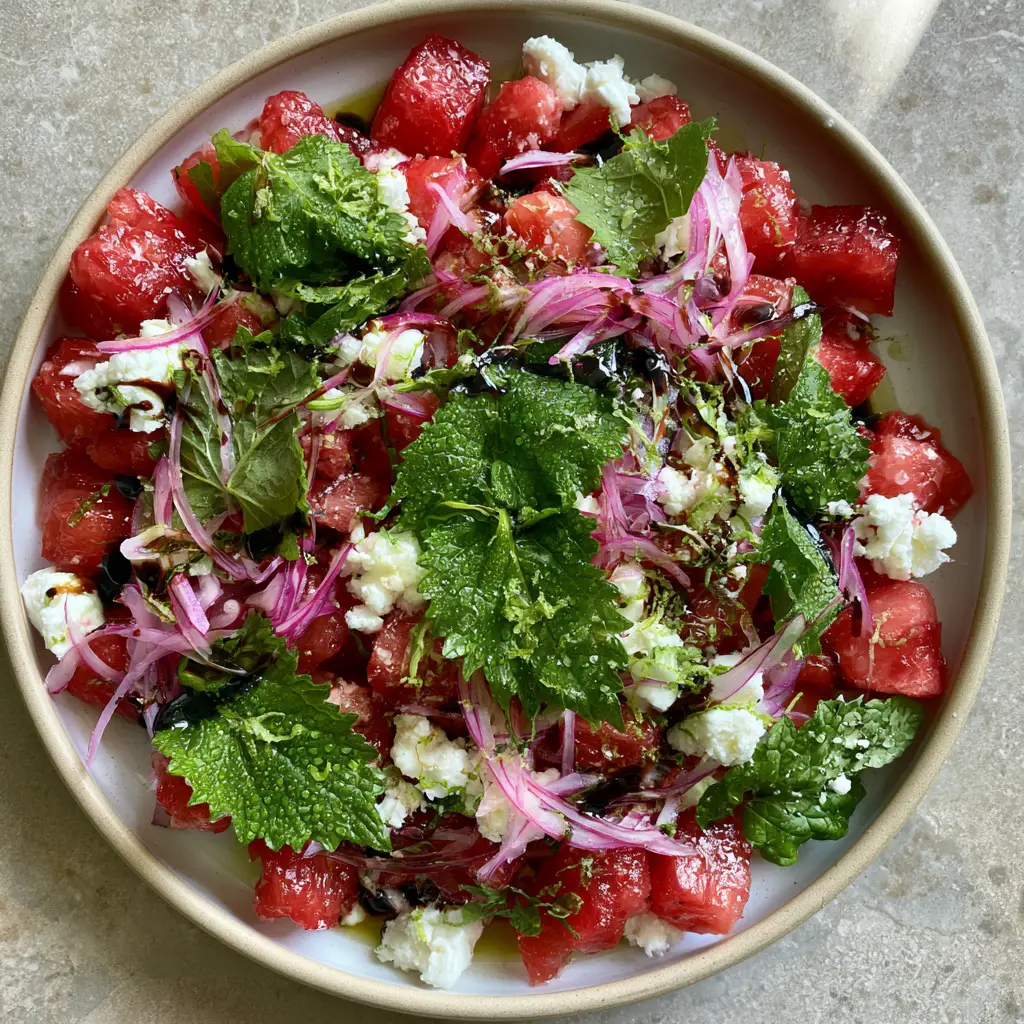
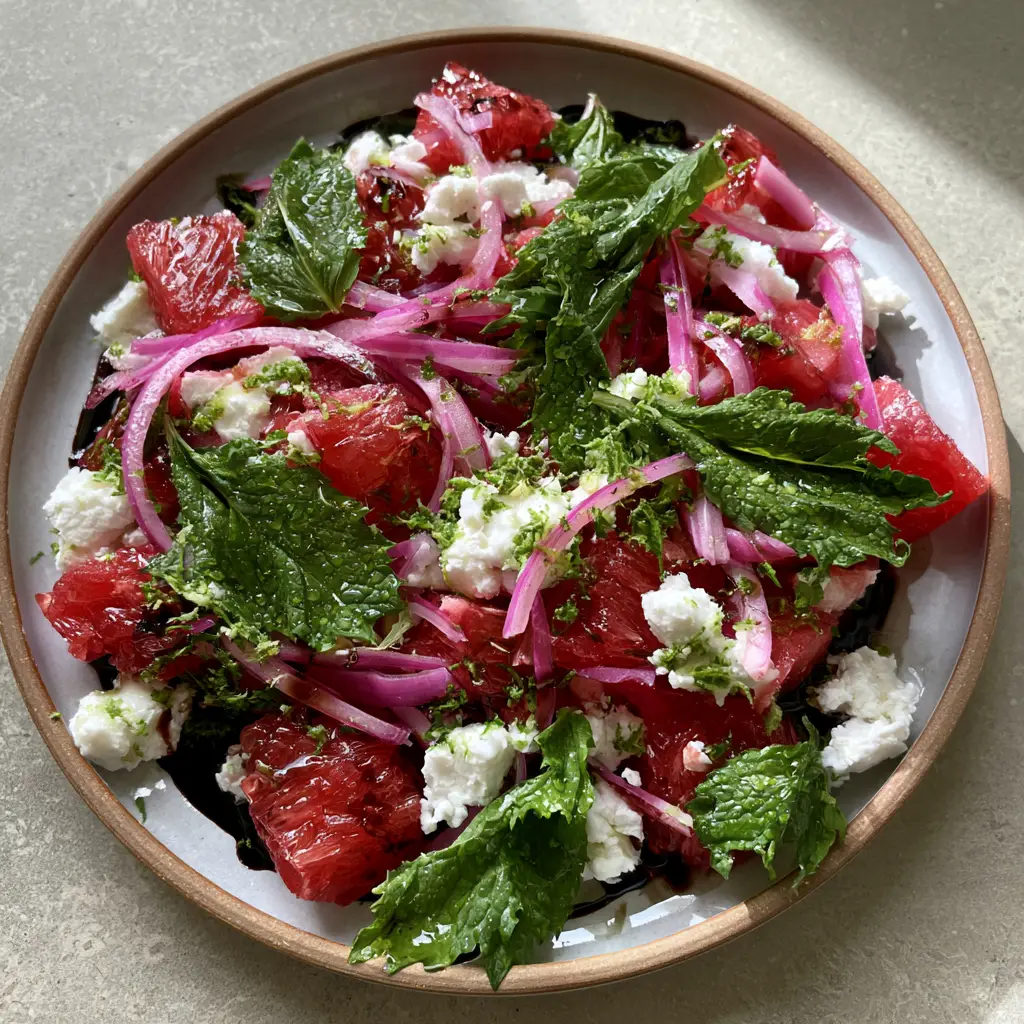
Imagine biting into a jagged, ice-cold cube of deep crimson fruit that possesses a glistening, crystalline texture, only to have it met by the creamy, tangy punch of chunky white feta. The aroma of dew-covered emerald mint leaves hits you first, followed by the sharp, clean bite of paper-thin red onion slivers.
In this guide, we will explore the culinary forensics of building this vibrant platter, ensuring every element—from the micro-planed lime zest to the glossy balsamic drizzle—creates a professional-grade experience in your own kitchen.
Why This Crimson Watermelon Salad Recipe Defines Summer Sophistication
- Structural Integrity: By using large, jagged cubes rather than uniform spheres, we increase the surface area for the balsamic glaze to cling to, ensuring flavor in every bite.
- The Saline-Sweet Axis: The combination of flaky sea salt and cracked black pepper draws out the natural sugars of the fruit while providing a savory backbone that prevents the dish from feeling like a dessert.
- Aromatic Depth: The dual use of hand-torn mint and micro-planed lime zest provides a top-note of freshness that cuts through the richness of the sheep’s milk cheese.
- Visual Contrast: The striking purple of the red onion against the deep red fruit and emerald greens makes this a centerpiece-worthy dish for any gathering.
The Essential Components for a Vibrant Summer Platter
To achieve the specific visual and flavor profile described in our blueprint, you must select your ingredients with the eye of a chef. Each element plays a functional role in the final architecture of the dish.
6 cups (approx. 900g) Seedless Crimson Watermelon: Look for a melon that feels heavy for its size with a creamy yellow field spot, indicating it ripened on the vine to achieve that deep red, crystalline interior. You can learn more about choosing the best fruit in our guide on surprising watermelon facts.
3/4 cup (approx. 110g) High-Quality Feta Cheese: Opt for a block of feta in brine rather than pre-crumbled varieties; this allows you to create those “generous, chunky crumbles” that provide a creamy mouthfeel.
1/2 medium (approx. 60g) Red Onion: These slivers must be sliced paper-thin to provide a mild piquant note without overpowering the delicate fruit. If you enjoy this flavor profile, you might also like our authentic Greek salad.
1/2 cup (approx. 15g) Fresh Mint Leaves: We use large, hand-torn leaves to prevent the bruising and oxidation that occurs with fine chopping, keeping the emerald color vibrant and “dew-covered.”
1 large (approx. 30ml) Lime: We will use both the juice for macerating the onions and the micro-planed zest for a final hit of citrus oil aromatics.
2 tbsp (30ml) Glossy Balsamic Glaze: This should be a reduced syrup that is thick enough to hold its shape as a drizzle, providing a sharp, dark contrast against the crimson fruit.
Foundational Seasonings: 1 tsp (5g) flaky sea salt and 1/2 tsp (2g) freshly cracked black pepper. These “invisible” ingredients are what bridge the gap between a simple fruit bowl and a professional salad.
Professional Tools for the Perfect Texture
Achieving the “glistening, crystalline texture” and “sharp, defined elements” mentioned in our visual prompt requires the right culinary equipment.
First, a sharp Chef’s Knife is non-negotiable for creating those large, jagged cubes without crushing the cell structure of the watermelon. A Mandoline Slicer is highly recommended for achieving the paper-thin red onion slivers that drape elegantly over the fruit.
Finally, a Microplane Zester is essential for the lime. Standard graters produce zest that is too thick and bitter; a microplane creates feather-light wisps of zest that melt into the salad, releasing fragrance without adding grit.
Step-by-Step Architecture of the Watermelon Salad Recipe
Phase 1: Preparing the Aromatics and Acids
Start by slicing your red onion into paper-thin slivers using a mandoline or a very sharp knife. To remove the harsh “bite” of the raw onion and enhance its vibrant purple hue, submerge the slivers in a small bowl of ice-cold water with a squeeze of lime juice for 10 minutes.
While the onions soak, prepare your mint. Instead of using a knife, take the “dew-covered” sprigs and gently tear the leaves by hand into large, irregular pieces. This releases the essential oils without the grassy, oxidized flavor that comes from steel blades.
Phase 2: Carving the Crystalline Watermelon
Cold fruit is essential for the “ice-cold” sensation. Take your chilled watermelon and slice it into 1-inch thick rounds. Trim the rind away entirely.
Instead of perfect squares, use your knife to break the fruit into jagged, rustic 1.5-inch (4cm) cubes. This creates more “crystalline” surface area for the salt and glaze to interact with. Place these cubes on a wide, modern ceramic platter in a single, slightly overlapping layer.
Phase 3: Layering for Maximum Visual Impact
Drain the onions and pat them dry; scatter them loosely over the crimson cubes. Next, take your block of feta and, using your hands, break it into large, chunky crumbles. Scatter these generously, ensuring they nestle into the crevices of the fruit.
Distribute the hand-torn mint leaves throughout the dish. The green against the red and white creates that signature Mediterranean aesthetic found in recipes like our classic tabbouleh.
Phase 4: The Final Flavor Accents
Using your microplane, zest the lime directly over the entire platter. The tiny green flecks should settle like dust over the feta and fruit. Sprinkle the flaky sea salt and cracked black pepper from a height to ensure even distribution.
Lastly, take your balsamic glaze. With a steady hand, create a thin, glossy drizzle across the platter. The dark syrup should create a striking contrast, beading up slightly on the moisture-rich surface of the watermelon cubes.
Expert Tips for Culinary Success
- Temperature Control: Always chill your watermelon for at least 4 hours before slicing. A warm watermelon will release too much juice and lose that “crystalline” crunch.
- The Salt Timing: Do not salt the salad until the very moment you are ready to serve. Salt draws out moisture through osmosis; salting too early will result in a soupy platter.
- Feta Selection: If you can find it, use a French or Greek feta made from sheep’s milk. It has a higher fat content and creamier texture than cow’s milk versions, which can be overly crumbly or dry.
- Glaze Consistency: If your balsamic glaze is too thin, simmer it in a small saucepan for 5-8 minutes until it coats the back of a spoon. Let it cool completely before drizzling.
Strategic Pairings and Serving Suggestions
This watermelon salad recipe is exceptionally versatile. For a light lunch, it pairs beautifully with a side of chilled cucumber salad to lean into the hydrating theme. If you are serving this at a barbecue, the acidity of the balsamic and lime makes it a perfect palate cleanser for heavier dishes like grilled teriyaki salmon.
For those looking for a more adventurous fruit preparation, consider trying our spiced watermelon fries as a companion appetizer. The sweetness of the melon also complements spicy dishes like bang bang salmon, cutting through the heat with its cooling properties.
Frequently Asked Questions
You can prep the ingredients ahead of time (slicing the melon and onions, crumbling the feta) and keep them in separate containers in the fridge. Assemble the salad just minutes before you plan to eat for the best texture.
The key is timing. Only add the salt and balsamic glaze immediately before serving. Salt draws water out of the melon, so if it sits too long, it will create a pool of liquid at the bottom of your platter.
Yes, you can use a high-quality almond-based or coconut-oil-based vegan feta. Look for one that is firm enough to be crumbled into chunks rather than a soft spreadable version to maintain the visual blueprint.
Instead of uniform squares, use a large chef’s knife to cut jagged, irregular 1.5-inch cubes. This creates more surface area and a ‘crystalline’ look that helps the garnishes and glaze adhere better to the fruit.
Soaking paper-thin slivers of red onion in ice water with a little lime juice removes the harsh sulfurous ‘burn’ of the raw onion, making them crisp and mild, while also enhancing their vibrant purple color.
The Ultimate Chilled Watermelon & Feta Salad
Watermelon Salad Recipe with Feta, Mint, and Glossy Balsamic Glaze
Ingredients
Equipment
Method
- Sliver the red onion paper-thin and soak in ice water with a splash of lime juice for 10 minutes to remove harshness.
- Carve the chilled watermelon into large, jagged cubes, ensuring a glistening crystalline texture. Arrange on a ceramic platter.
- Top the watermelon with drained onions, chunky feta crumbles, and hand-torn emerald mint leaves.
- Microplane lime zest over the top, season with sea salt and cracked pepper, and finish with a glossy balsamic glaze drizzle.
Notes
Wait to salt the dish until immediately before serving to prevent the fruit from becoming watery.
Closing & Call to Action
This watermelon salad recipe proves that with the right technique, simple ingredients can be transformed into a gourmet experience. The balance of the “crimson fruit” and “glossy glaze” makes it a visual and culinary triumph for any summer host.
If you enjoyed this recipe, please leave a comment below and let us know your favorite summer fruit pairings! Don’t forget to share your creations and follow us on Pinterest for more visual recipe inspiration.