Watermelon Facts are the key to unlocking the sweetest, most hydrating experience of the summer season. There is nothing more disappointing than lugging a heavy melon home only to find pale, flavorless flesh inside. By understanding the scientific markers of ripeness—like the creamy yellow field spot and intricate sugar webbing—you can guarantee a ruby-red, grainy, and succulent treat every single time.
In this comprehensive guide, we are diving deep into the culinary forensics of the Citrullus lanatus. We aren’t just looking at the surface; we are exploring the biological signals that tell us exactly when a watermelon is at its peak sugar content. Whether you are preparing a refreshing snack or a sophisticated dessert, these insights will transform your fruit selection process.
The Science of Sweetness: Visual Markers of a Ripe Melon
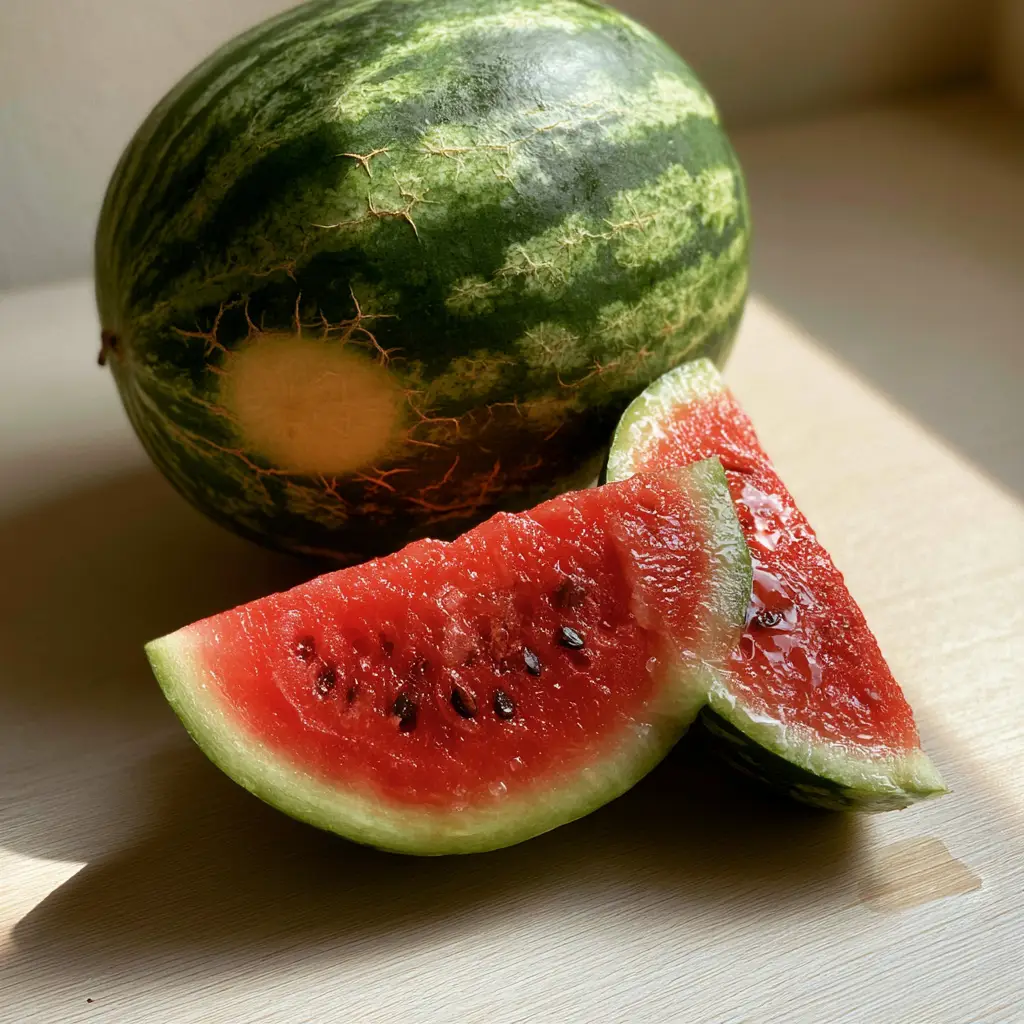
- The Golden Field Mark: A deep, creamy-yellow spot indicates the melon sat on the ground long enough to ripen fully under the sun.
- Brown Spider-Webbing: These dry, brown scars (often called sugar spots) are caused by bees pollinating the flower; more pollination equals a sweeter fruit.
- Grainy Ruby Flesh: The specific “sandiness” of the flesh is a sign of high sugar crystallization, providing that classic crisp texture.
- Glossy Black Seeds: Mature seeds are a biological indicator that the fruit has reached full developmental maturity.
- Acoustic Resonance: A deep, hollow “thump” suggests the fruit is full of water and at its peak juice capacity.
Essential Components for the Perfect Chilled Watermelon Platter
A Heavy, Webbed Watermelon: Look for a specimen that feels heavier than its size suggests, featuring those critical brown spider-webbing scars and a large yellow field mark. The weight indicates high water content, while the webbing promises concentrated sugars.
Flaky Sea Salt (Optional but Recommended): A light dusting of 1/2 tsp (3g) of flaky sea salt acts as a flavor enhancer, suppressing bitterness and making the ruby-red flesh taste even sweeter. It creates a beautiful contrast against the glistening juice droplets.
Fresh Lime Zest: The zest of 1 medium lime (approx. 1 tbsp) provides an acidic brightness that cuts through the dense sweetness of the melon. This adds a sophisticated olfactory layer to the sensory experience.
Cold Filtered Water: Used strictly for a deep-clean soak of the rind before slicing. Ensuring the rind is pristine prevents surface bacteria from being dragged into the vibrant flesh by your knife.
Tools for Precision Slicing and Presentation
To achieve the ultra-realistic, crisp edges seen in our visual guide, you need a long, sharp Chef’s Knife or a dedicated watermelon slicer. A dull blade will bruise the cell walls, causing the juice to leak out prematurely and ruining that “grainy” texture we crave.
A large, sturdy wooden cutting board is essential for stability. The neutral light wood background not only looks beautiful for presentation but provides a non-slip surface for handling a heavy, rolling melon. Finally, keep a clean lint-free towel nearby to wipe away excess moisture, keeping those “glistening droplets” intentional rather than messy.
Mastering the Harvest: How to Prepare Your Watermelon
Sanitizing the Rind and Initial Prep
Start by placing your heavy watermelon in a clean sink and rinsing it under cold, running water. Use a soft vegetable brush to scrub the rind, focusing on the textured spider-webbing areas where dust can settle.
Dry the exterior completely with a clean towel. A dry rind is essential for a safe, stable grip when you begin your first vertical cuts through the thick green skin.
Executing the Perfect Wedge Cut
Place the watermelon on your light wood surface, identifying the creamy yellow field mark. Slice about 1/2 inch (1.25cm) off both the stem and blossom ends to create flat, stable bases.
Stand the melon upright on one of the flat ends. Cut the melon in half vertically from top to bottom, revealing the vibrant ruby-red interior and those glossy black seeds.
Lay one half flat-side down and slice it into 1-inch (2.5cm) thick semi-circles. Cut these semi-circles into triangular wedges, ensuring the rind remains attached to provide a natural handle for serving.
Enhancing the Visual and Flavor Profile
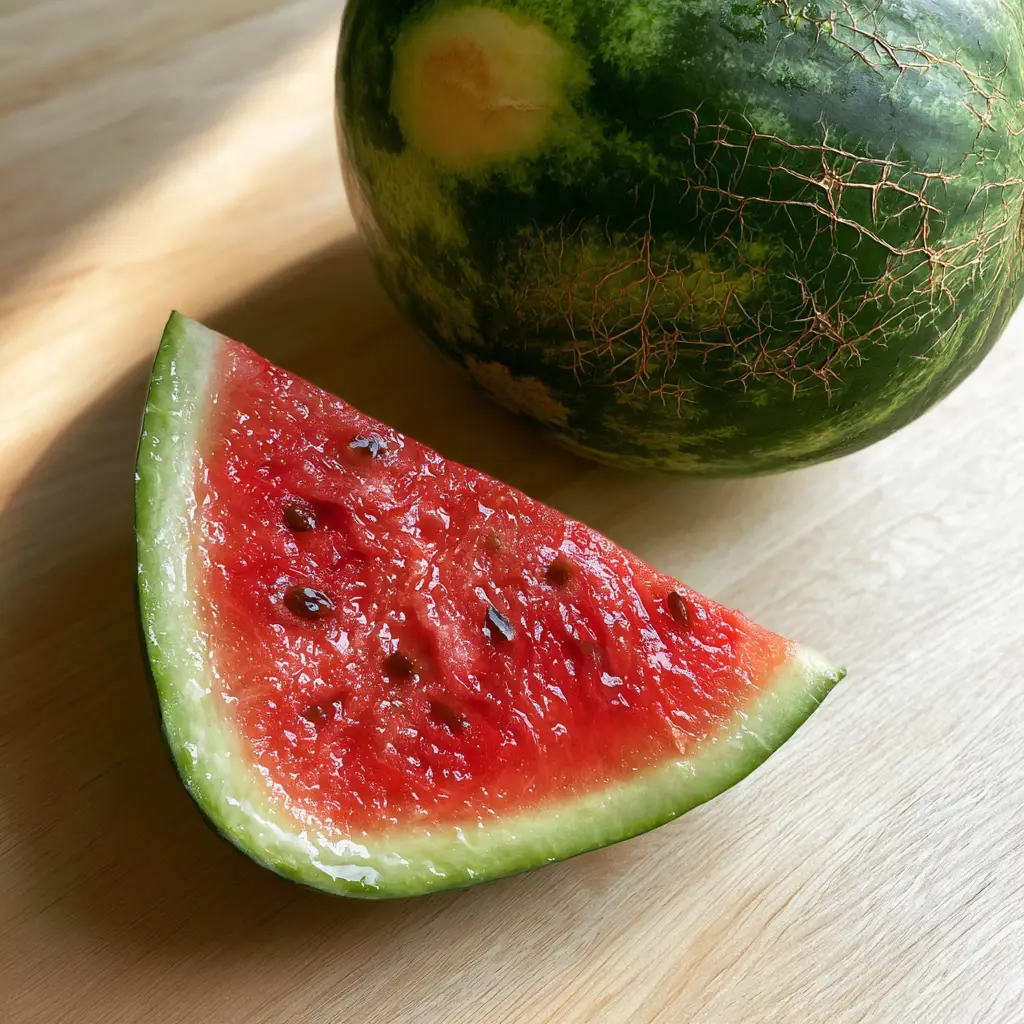
Arrange the wedges on your wooden board, allowing the natural juice to glisten under soft, warm light. If using, sprinkle a tiny pinch of flaky salt over the grainy flesh from a height to ensure even distribution.
Garnish with a whisper of lime zest for a professional finish. The contrast between the deep yellow field mark on the remaining whole melon and the ruby-red slices creates a stunning, rustic aesthetic.
Expert Tips for Watermelon Success
- Temperature Matters: While a room-temperature melon is easier to cut, chilling the watermelon for at least 4 hours before serving makes the flesh significantly crisper.
- Avoid the Soft Spot: Press the ends of the melon; if they feel soft or mushy, the fruit is overripe and the interior will likely be “mealy” rather than “grainy.”
- Seed Logic: If you prefer a cleaner look, you can use these same selection techniques for seedless varieties, though many purists argue that seeded melons possess a deeper, more complex sugar profile.
- The Rind Rule: Don’t throw away the white part of the rind! It is highly nutritious and can be pickled or added to stir-frys for a texture similar to cucumber.
Creative Ways to Use Your Harvest
Once you’ve mastered these Watermelon Facts, you can expand your culinary repertoire. If you have leftover wedges, consider making a refreshing watermelon salad recipe with feta and mint for a savory twist.
For those looking for a unique texture, exploring watermelon mochi offers a chewy, sweet alternative to fresh slices. If you are hosting a summer BBQ, these slices pair beautifully after a main course of chicken zucchini stir fry or even a spicy bowl of buldak.
Don’t forget the kids! You can easily transform these wedges into watermelon fries by cutting the flesh into batons and serving them with a yogurt dipping sauce. For a refreshing drink, a side of classic lemonade is the ultimate companion to a tray of fresh fruit.
Sustainable Storage and Freshness
Whole watermelons can stay fresh at room temperature for about 7-10 days, but once you see that deep yellow field mark, it is best to consume it soon. Once sliced, the watermelon must be refrigerated.
Store cut wedges in an airtight container or cover the exposed flesh tightly with bees-wax wrap. Properly stored, cut watermelon will maintain its grainy texture for 3-4 days. If the flesh becomes too soft, blend it into a juice or freeze it for granita.
Frequently Asked Questions
Actually, those brown spider-webbing scars (sugar spots) are a great sign! They indicate that bees touched the pollinating parts of the flower many times, which typically results in a much sweeter fruit.
Pick it up! A juicy watermelon should feel heavy for its size, indicating high water content. You can also thump it; a deep, hollow sound usually means it is at peak hydration and ripeness.
In culinary lore, ‘male’ watermelons are longer and more watery, while ‘female’ watermelons are rounder and sweeter. While not strictly botanical, choosing the rounder ones often leads to a sweeter experience.
The yellow spot, or field mark, is where the watermelon rested on the ground. A creamy, deep yellow color indicates it ripened fully in the sun, whereas a white spot suggests it was picked too early.
A grainy or ‘sandy’ texture is often a sign of high sugar content and maturity. It occurs when the sugar solids in the fruit crystallize slightly, providing that sought-after crisp mouthfeel.
The Perfect Chilled Watermelon Platter
Watermelon Facts: The Ultimate Guide to Selecting and Serving the Perfect Summer Fruit
Ingredients
Equipment
Method
- Rinse the whole watermelon under cold water and scrub the rind with a vegetable brush to remove debris from the webbing.
- Slice 1/2 inch (1.25cm) off both ends of the melon to create a stable base on your cutting board.
- Stand the melon upright and slice vertically through the center to reveal the ruby-red flesh.
- Cut each half into 1-inch (2.5cm) thick semi-circles, then slice those into triangles, leaving the rind attached.
- Arrange wedges on a wooden board. Sprinkle with a tiny amount of sea salt and lime zest to make the juice droplets glisten.
Notes
Brown webbing is a sign of high sugar content from bee pollination.
Why These Watermelon Facts Change Everything
Understanding the visual cues of a perfect watermelon isn’t just about aesthetics; it’s about honoring the effort of the growers and the science of nature. When you see those brown spider-webbing scars, you aren’t seeing “damage”—you are seeing a map of sweetness drawn by honeybees.
We hope this guide helps you choose the best fruit of the season. If you found these tips helpful, please share this post and follow us on Pinterest for more culinary deep-dives and seasonal inspiration!