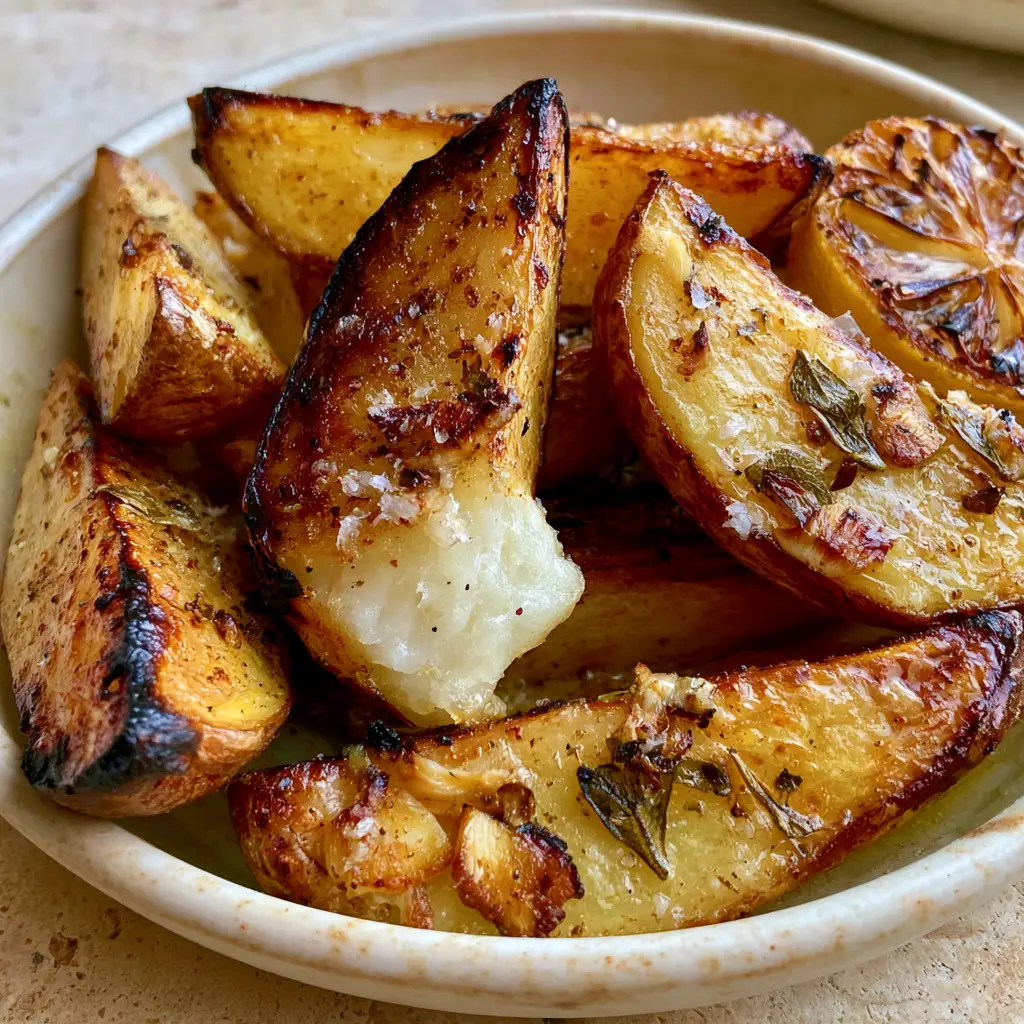
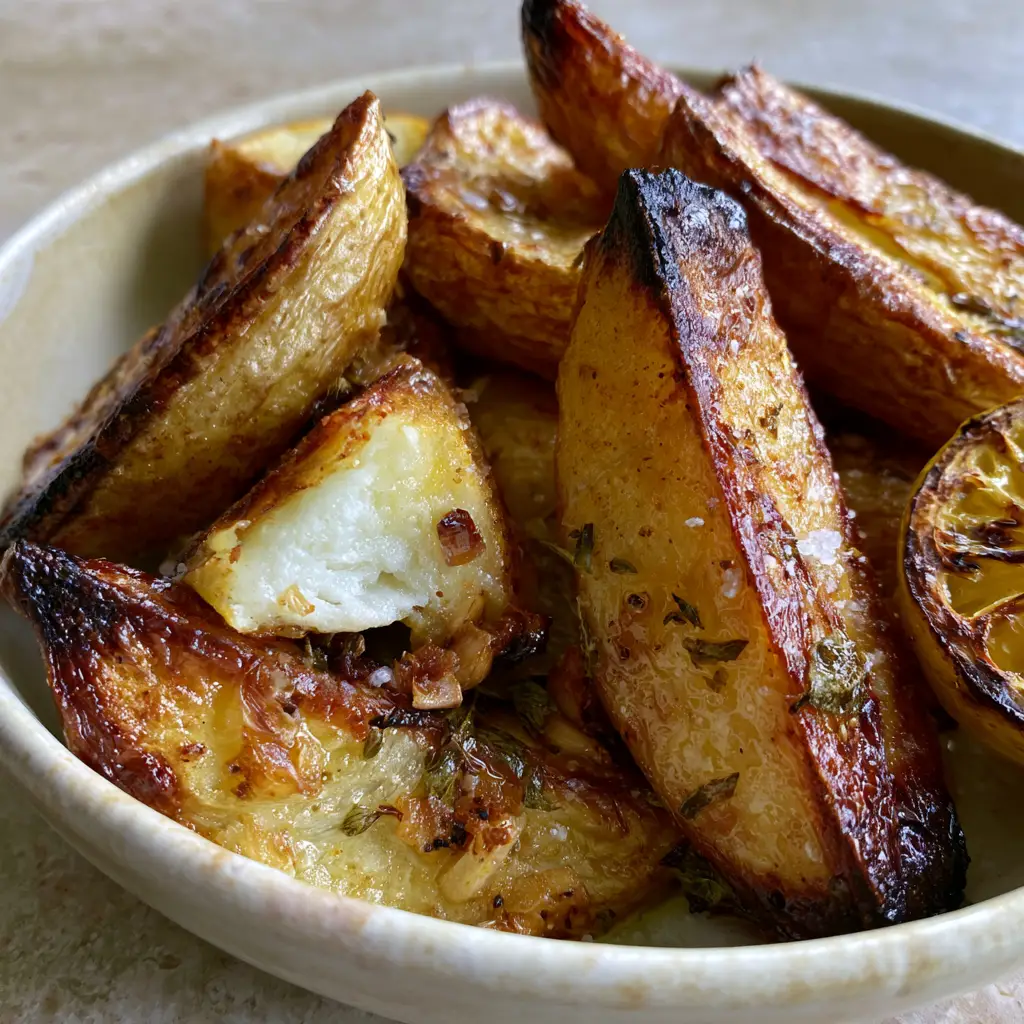
There is nothing quite like a perfectly executed Greek potatoes recipe to elevate a meal from simple to spectacular. Imagine thick-cut wedges with a deep golden-brown, shattered-glass crispy crust that yields to a steaming, snow-white fluffy interior.
This isn’t just another side dish; it is a masterclass in texture and Mediterranean flavor. We are recreating that iconic rustic look found in the best tavernas, complete with charred garlic bits and a glistening lemon-olive oil emulsion.
Whether you are pairing these with juicy Greek chicken skewers or serving them as the star of a plant-based feast, these potatoes deliver a sensory experience. The aroma of dried Greek oregano and roasted lemon will fill your kitchen long before the first bite.
The Anatomy of the Perfect Mediterranean Potato Texture
- Shattered-Glass Crust: Achieved through a specific par-boiling technique that creates a starchy slurry on the surface.
- Fluffy Snow-White Center: We select high-starch potatoes to ensure the interior remains light and airy, never waxy.
- Glistening Emulsion: A precise balance of extra virgin olive oil and fresh lemon juice that coats every wedge.
- Aromatic Depth: Hand-crushed dried oregano and minced garlic that caramelizes into dark, savory bits during the roast.
- Visual Contrast: The rustic presentation in a ceramic dish, punctuated by a charred lemon half and coarse sea salt flakes.
The Essential Elements for This Greek Potatoes Recipe
To achieve the hyper-realistic, appetizing results seen in professional food photography, every ingredient serves a structural and flavorful purpose.
3 lbs (1.4kg) Russet or Yukon Gold Potatoes: High-starch varieties are non-negotiable for that snowy interior. Peel and cut them into thick, uniform wedges to ensure even roasting.
1/2 cup (120ml) Extra Virgin Olive Oil: This provides the fat necessary for deep caramelization and the base of our lemon emulsion. Use a robust oil for authentic flavor.
1/3 cup (80ml) Fresh Lemon Juice: The acidity cuts through the richness of the oil and tenderizes the potato surface. You will also need one extra lemon, halved, for charring.
6 cloves Garlic, minced: These will transform into those sought-after charred bits of minced garlic. Avoid using a press; hand-mincing provides better texture.
2 tbsp (4g) Dried Greek Oregano: This specific herb provides the earthy, floral backbone of the dish. Rub it between your palms to release the oils before sprinkling.
1 tsp (5g) Baking Soda: Our “invisible” foundational ingredient. Adding this to the boiling water breaks down the potato pectin, creating more surface area for the crust.
1 tbsp (15g) Coarse Sea Salt: Large flakes provide a necessary crunch and bursts of salinity that contrast with the bright lemon. Plus, it looks stunning on the final dish.
Professional Tools for Culinary Success
To recreate the rustic look of our Greek potatoes recipe, you will need a large stockpot for par-boiling and a heavy-rimmed baking sheet. A ceramic roasting dish is essential for the final presentation, as it retains heat and mimics traditional Mediterranean serving styles.
High-quality parchment paper or a well-seasoned roasting pan ensures the potatoes don’t stick when you flip them to reveal those dark caramelized edges. A handheld smartphone camera is optional, but you’ll definitely want to capture the “steaming interior” once you break one open!
Mastering the Golden-Brown Crunch: Step-by-Step
1. The Alkaline Par-Boil
Preheat your oven to 425°F (220°C). Bring a large pot of water to a boil and add the baking soda and a pinch of salt.
Add your thick-cut potato wedges and boil for 8–10 minutes. You want the edges to be softened and slightly “fuzzy,” but the wedges should still hold their shape.
2. Creating the Starchy Slurry
Drain the potatoes and let them steam-dry in the colander for 2 minutes. Shake the colander vigorously; this roughens the edges, creating a starchy coating that becomes the shattered-glass crust.
Transfer the potatoes to a large bowl and toss with 1/4 cup (60ml) of the olive oil and a pinch of salt. Listen for the “hissing” sound of the steam escaping.
3. The Initial High-Heat Roast
Spread the wedges on a baking sheet in a single layer, ensuring they aren’t touching. Roast for 25 minutes until the bottoms are deep golden-brown.
While they roast, whisk together the remaining olive oil, lemon juice, minced garlic, and dried oregano to create the emulsion.
4. The Lemon-Garlic Infusion
Remove the tray from the oven. Flip each wedge carefully. Pour the lemon-olive oil emulsion over the potatoes and toss to coat.
Place the lemon half cut-side down on the tray. Return to the oven for another 20–25 minutes. Look for the garlic to turn into dark caramelized bits.
5. The Final Finishing Touches
Transfer the steaming potatoes to a rustic ceramic dish. Squeeze the charred lemon half over the top for a smoky, acidic finish.
Sprinkle generously with coarse sea salt and extra oregano flakes. Serve immediately while the crust is at its peak “shattered” state.
Expert Tips for Success
- Don’t Overcrowd: If the potatoes are too close, they will steam instead of roast. Use two trays if necessary to ensure that crispy crust.
- The Potato Choice: Russets give the crunchiest skin, but Yukon Golds offer a creamier, buttery flavor. Both work excellently for this Greek potatoes recipe.
- Temperature Control: If your garlic is browning too fast, move it to the center of the tray where the heat is slightly less intense.
- The Emulsion Timing: Adding the lemon juice too early can prevent the potatoes from crisping. Following our two-stage roasting method is the secret.
Storage, Reheating & Freezing
While these are best served fresh, you can store leftovers in an airtight container for up to 3 days. To maintain the crunch, avoid the microwave.
Reheat in an oven or air fryer at 375°F (190°C) for 10 minutes. Freezing is not recommended as the emulsion can separate and the potato cells may break down, losing that “snow-white” fluffiness.
What to Serve With This Mediterranean Masterpiece
This Greek potatoes recipe is incredibly versatile. It pairs beautifully with a traditional Greek salad for a light lunch or a fresh Lebanese tabbouleh for extra herb flavor.
For a full dinner spread, consider serving these alongside buttery rice pilaf and grilled lamb. If you want to lean into the lemon profile, they are a dream with baked white fish.
Frequently Asked Questions
Fresh lemon juice is superior for this recipe. It provides a brighter acidity and the essential oils from the zest (and the half you char on the tray) that bottled juice simply lacks.
For an authentic ‘snow-white’ interior and the specific ‘shattered-glass’ crust described in this recipe, peeling is highly recommended as it allows the starchy slurry to form on the surface during par-boiling.
Baking soda raises the pH of the water, which breaks down the potato’s pectin faster. This creates a fuzzy, starchy surface that dehydrates and browns in the oven to create an extra-thick, crunchy crust.
High-starch potatoes like Russets or Yukon Golds are best. Russets provide the most dramatic crispy crust, while Yukon Golds offer a creamier texture and buttery flavor.
This usually happens if the potatoes were crowded on the pan, creating steam, or if the lemon juice was added too early. Ensure you par-boil with baking soda and roast at high heat (425°F/220°C) with plenty of space between wedges.
The Ultimate Greek Potatoes Recipe
Greek Potatoes Recipe: Mastering the Shattered-Glass Crispy Crust
Ingredients
Equipment
Method
- Preheat oven to 425°F (220°C). Boil potato wedges in water with baking soda and salt for 8-10 minutes until edges are softened.
- Drain potatoes and shake in colander for 2 minutes to create a starchy surface for the crust.
- Toss potatoes with 1/4 cup olive oil and roast on a baking sheet for 25 minutes until bottoms are golden-brown.
- Whisk lemon juice, remaining oil, garlic, and oregano. Flip potatoes, pour over emulsion, and add lemon half to the tray.
- Roast for another 20-25 minutes until garlic is charred and crusts are shattered-glass crispy.
Notes
Do not overcrowd the pan or the potatoes will steam rather than crisp.
Bring the Flavors of Greece to Your Table
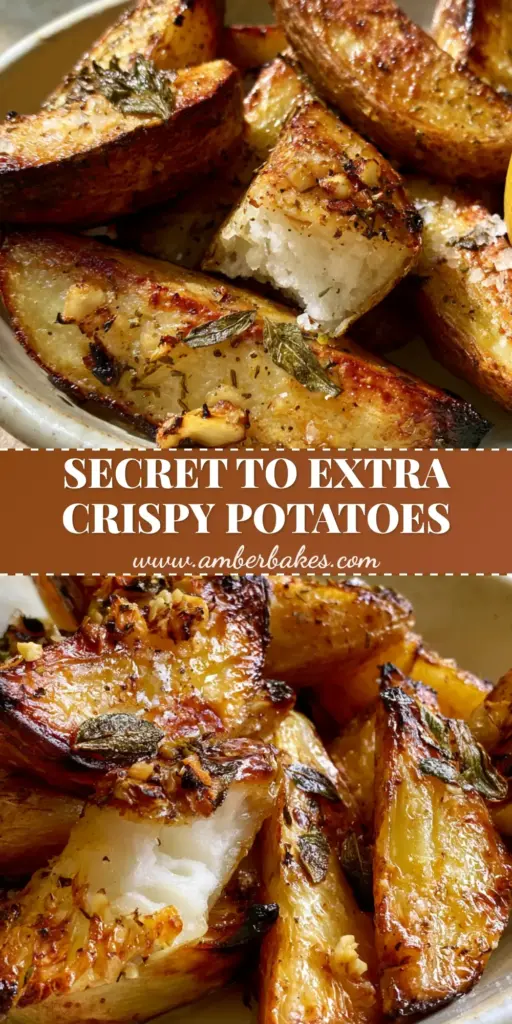
Mastering this Greek potatoes recipe is a rite of passage for any home cook looking to perfect the art of roasting. The contrast between the lemon-infused crust and the fluffy interior is truly addictive.
If you enjoyed this recipe, please leave a comment below and let us know how your “shattered-glass” crust turned out! Don’t forget to share your photos and follow amber_bakes on Pinterest for more culinary inspiration.