There is a specific sensory magic that occurs when tangy Greek yogurt meets high-heat flames. These Greek chicken skewers are the culmination of centuries of Mediterranean tradition, refined by modern culinary science to produce the most succulent, flavor-packed poultry you have ever tasted. If you have been searching for that elusive combination of deep golden-brown char marks and glistening, moisture-rich meat, you have arrived at the definitive guide.
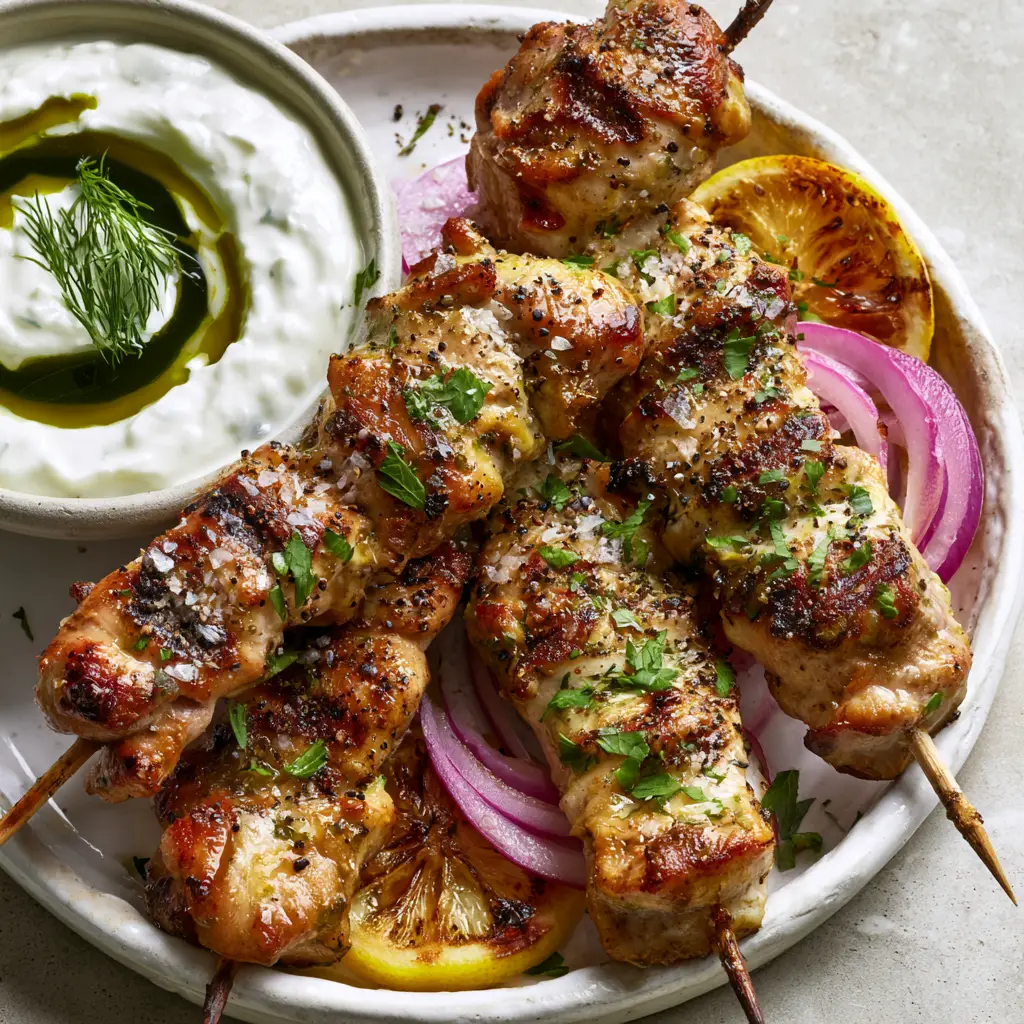
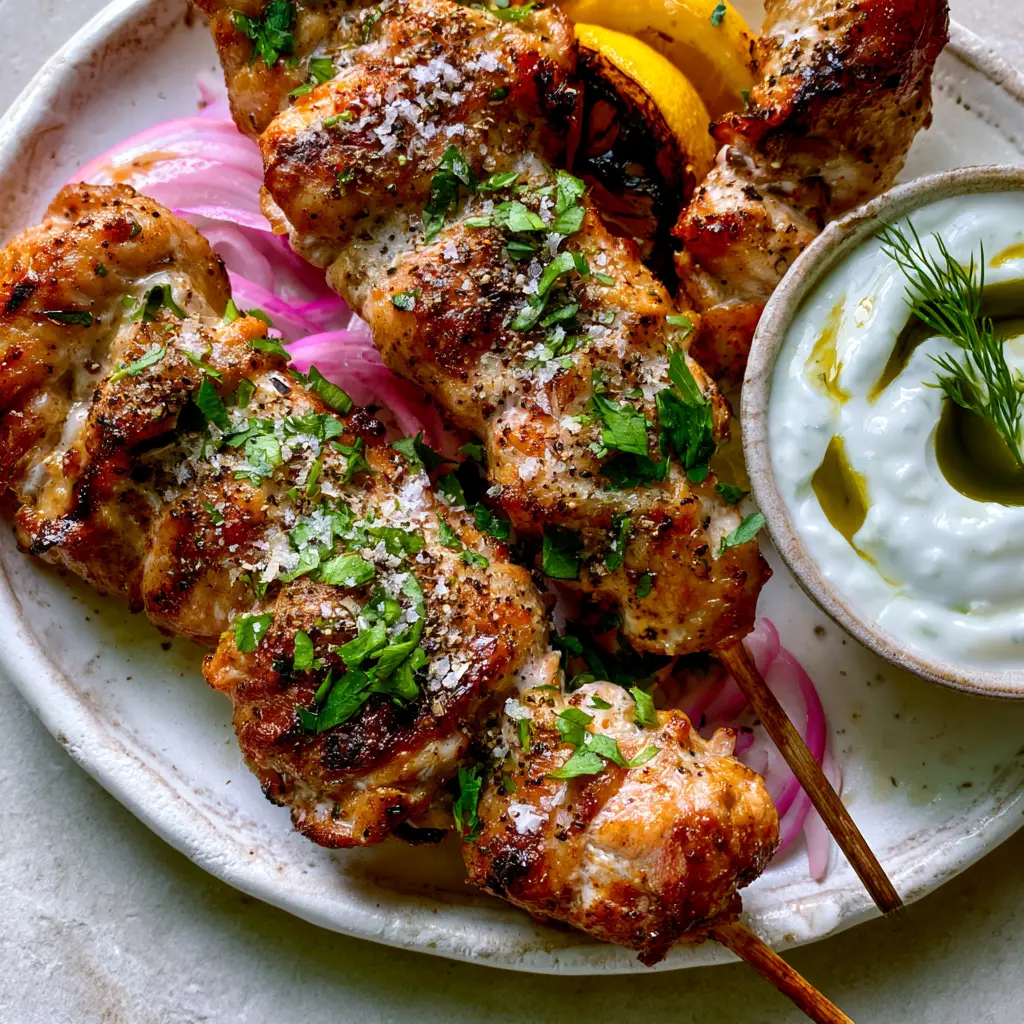
The secret lies in the marinade—a thick, herb-flecked yogurt emulsion that doesn’t just flavor the meat but fundamentally transforms its texture. In this masterclass, we will explore the forensic details of achieving that perfect rustic white platter presentation, complete with thick tzatziki, vibrant red onion rings, and charred citrus. Whether you are a seasoned griller or a kitchen novice, these Greek chicken skewers will become your new gold standard for weeknight dinners and weekend feasts alike.
Drawing inspiration from the vibrant street food of Athens, this recipe balances the earthy punch of dried oregano with the bright acidity of charred lemons. Every bite is designed to be a contrast of temperatures and textures—from the hot, smoky chicken to the cold, creamy swirl of olive oil-topped tzatziki. Let’s dive into the science and soul of authentic authentic Greek flavors.
Why These Greek chicken skewers Outperform Every Other Recipe
- Unrivaled Tenderness: The lactic acid in the yogurt gently breaks down protein fibers, ensuring your chicken thighs remain “glistening” and juicy even under intense heat.
- Visual Masterpiece: We focus on “forensic visual accuracy,” teaching you how to achieve those iconic deep mahogany grill marks that contrast against a rustic white ceramic backdrop.
- Aromatic Depth: A calculated blend of dried oregano, cracked black pepper, and fresh flat-leaf parsley creates a multi-layered flavor profile that evolves on the palate.
- The Complete Experience: This isn’t just meat on a stick; it is a composed dish featuring charred lemon halves and thin, vibrant red onion rings for the ultimate crunch.
The Anatomy of a Perfect Yogurt Marinade
To achieve the result seen in professional food photography, we must select our ingredients with precision. Every element in this list serves a structural or chemical purpose in the final dish.
The Secret to Tender Yogurt-Marinated Chicken
Boneless Skinless Chicken Thighs: 1.5 lbs (680g). We use thighs because their higher fat content ensures the “glistening moisture” described in our visual blueprint, unlike breasts which can dry out easily.
Full-Fat Greek Yogurt: 1/2 cup (120ml). This serves as the tenderizing base; the thick consistency helps the marinade cling to the meat, creating a protective barrier that caramelizes into beautiful char marks.
Extra Virgin Olive Oil: 3 tbsp (45ml). High-quality oil provides the “glistening” finish and carries the fat-soluble flavors of the herbs deep into the meat.
Fresh Lemon Juice and Zest: 1 large lemon (approx. 2 tbsp juice). The acidity brightens the heavy yogurt, while the zest provides essential oils that withstand the heat of the grill.
Garlic: 4 cloves (20g), minced. Garlic is the aromatic backbone of any Greek dish, providing a pungent counterpoint to the creamy tzatziki sauce.
Dried Oregano: 1 tbsp (2g). In Greek cooking, dried oregano is often preferred over fresh for marinades because its flavor intensifies when exposed to the high heat of a grill.
Kosher Salt & Cracked Black Pepper: 1 tsp (6g) salt and 1/2 tsp (1g) pepper. Salt is a “foundational invisible” that dry-brines the chicken, while the cracked pepper provides the visual “heavily garnished” look from our prompt.
Essential Garnishes for Forensic Visual Accuracy
Thin Red Onion Rings: 1/2 small red onion. These provide a vibrant pop of purple and a sharp, crisp texture that cuts through the richness of the chicken.
Fresh Flat-Leaf Parsley: 1/4 cup (10g), finely chopped. This is our primary green garnish, added at the very end to maintain its bright color and herbaceous scent.
Charred Lemon Wedges: 1 lemon, halved. Searing the lemons on the grill caramelizes their sugars, making the juice sweeter and the presentation more professional.
Professional Equipment for the Ultimate Char
To replicate the “macro shot” quality of these Greek chicken skewers, you need the right tools to manage heat and airflow. Achieving deep golden-brown char marks requires a surface that can maintain high thermal mass.
- Stainless Steel or Bamboo Skewers: 10-12 inches (25-30cm). If using bamboo, soak them for 30 minutes to prevent them from burning into ash.
- Cast Iron Grill Pan or Outdoor Grill: This is essential for those defined, dark lines of caramelization.
- Microplane Grater: For zesting the lemon and grating the garlic into a paste, ensuring even distribution in the marinade.
- Rustic White Ceramic Platter: To provide the neutral, high-contrast background that makes the glistening meat “pop.”
Mastering the Art of the Perfect Greek Grill Mark
Phase 1: The Science of the Marinade
In a large glass bowl, whisk together the Greek yogurt, olive oil, lemon juice, lemon zest, minced garlic, dried oregano, and half of the cracked black pepper. The yogurt acts as a “biological tenderizer,” using lactic acid to slowly break down the collagen in the chicken thighs.
Cut your chicken thighs into uniform 1.5-inch (4cm) pieces. Uniformity is the key to even cooking; you want every piece to reach its internal temperature at the exact same moment. Toss the chicken in the marinade until every crevice is coated, then cover and refrigerate for at least 30 minutes (though 4 hours is the “sweet spot” for texture).
Phase 2: Preparing the Thick White Tzatziki
While the chicken marinates, prepare the side accompaniment. Grate half a cucumber and squeeze it firmly in a kitchen towel to remove all excess moisture—this ensures the sauce remains “thick and creamy” rather than watery. Mix with 1 cup (240ml) of Greek yogurt, one grated garlic clove, a pinch of salt, and a squeeze of lemon.
For the final visual touch, place the tzatziki in a small bowl and use the back of a spoon to create a deep well. Pour a “deep green swirl of olive oil” into the center and top with a “fresh dill sprig” as specified in our culinary blueprint. This sauce is the perfect cooling agent for the smoky aromatic grilled meats (coming soon).
Phase 3: Skewering and Searing
Thread the marinated chicken onto your skewers, pressing the pieces closely together. This “crowding” technique helps the meat retain moisture, resulting in the “glistening” interior we are aiming for. Do not wipe off the excess yogurt marinade; this coating will caramelize into the “deep golden-brown char marks.”
Preheat your grill to medium-high heat. Lightly oil the grates. Place the skewers down and do not move them for at least 4-5 minutes. You are waiting for the Maillard reaction to take place. Use your tongs to lift a corner; once you see dark, defined lines, flip the skewers.
Phase 4: The Visual Finish (Charring the Citrus)
During the last 3 minutes of cooking, place your lemon halves cut-side down on the grill. Cook until the flesh is blackened and bubbling. This doesn’t just look beautiful; it transforms the juice into a concentrated, smoky syrup that you will drizzle over the meat just before serving.
Expert Tips for Success
- The “Sizzle” Test: If the chicken doesn’t hiss loudly the moment it hits the pan, your heat is too low. You’ll end up steaming the meat rather than charring it.
- Don’t Over-Marinate: Because yogurt is acidic, marinating chicken for more than 12 hours can actually turn the texture “mushy.” Stick to the 2-6 hour window for the best results.
- The Resting Period: Allow the skewers to rest on the rustic white platter for 5 minutes before serving. This allows the juices to redistribute, ensuring that “glistening moisture” stays inside the meat.
- Cold Onion Prep: Soak your red onion rings in ice water for 10 minutes before serving. This removes the harsh sulfur “bite” and makes them incredibly crisp.
What to Serve With Your Greek chicken skewers
To create a full Mediterranean spread, pair these skewers with a crisp Greek salad featuring salty feta and Kalamata olives. For a heartier meal, a side of lemon herb potatoes roasted in olive oil provides the perfect starchy complement to the lean protein.
If you enjoy the flavor profile of marinated grilled poultry, you might also find interest in the spice-forward notes of Peruvian style grilled chicken, which offers a different but equally compelling take on the “charred and juicy” theme.
Storage, Reheating & Freezing
Storage: Keep leftover chicken (off the skewers) in an airtight container for up to 3 days. The flavors of the oregano and garlic will continue to meld and deepen over time.
Reheating: To maintain the “glistening” texture, avoid the microwave. Instead, reheat in a 350°F (175°C) oven for 8-10 minutes with a splash of water or chicken broth to create steam.
Freezing: You can freeze the raw chicken in its yogurt marinade for up to 2 months. Thaw completely in the refrigerator before grilling to ensure the char marks develop properly.
Frequently Asked Questions
Yes, you can use breasts, but you must be careful not to overcook them. Thighs are recommended because their fat content ensures the ‘glistening moisture’ and prevents the meat from drying out on the grill.
Not at all. The yogurt acts as a tenderizer and flavor carrier. Once grilled, it transforms into a savory, slightly tangy crust that enhances the spices and herbs without tasting like plain yogurt.
Soak bamboo skewers in water for at least 30 minutes. This prevents them from catching fire or splintering under the intense heat required for those deep char marks.
Ensure your grill or pan is preheated to medium-high and don’t move the chicken for the first 4-5 minutes. The ‘foundational’ oil in the marinade and the sugars in the yogurt are what create that caramelization.
This usually happens if the grill wasn’t hot enough or if you overcrowded the pan, which causes the chicken to steam. Use high heat and leave a small gap between skewers to allow for proper airflow.
The Definitive Greek Chicken Skewers Recipe
Greek chicken skewers: The Ultimate Yogurt-Marinated Souvlaki Guide
Ingredients
Equipment
Method
- Whisk yogurt, olive oil, lemon juice, zest, garlic, oregano, and half the pepper. Toss chicken pieces in the mixture and refrigerate for 30 minutes to 4 hours.
- Thread chicken onto skewers tightly. This ensures the meat stays juicy and glistening during the high-heat grilling process.
- Heat grill to medium-high. Grill skewers for 5-6 minutes per side until deep golden-brown char marks appear and internal temp reaches 165°F (74°C).
- Place lemon halves cut-side down on the grill for the last 3 minutes of cooking until blackened and caramelized.
- Arrange on a white platter. Top with red onion rings, chopped parsley, and the remaining cracked black pepper. Serve with tzatziki topped with an oil swirl and dill.
Notes
Use full-fat yogurt for the best tenderizing results and richest flavor.

Closing & Call to Action
These Greek chicken skewers represent the perfect intersection of culinary science and visual artistry. By following this guide, you have mastered the technique of yogurt tenderization and the precision of the perfect char. The result is a dish that is as beautiful as it is delicious—a centerpiece for any rustic white ceramic platter.
Did you achieve those perfect mahogany grill marks? We want to see! Leave a comment below with your results or any substitutions you tried. If you loved this recipe, please share it with your friends and follow us on Pinterest for more visually-driven culinary inspiration.