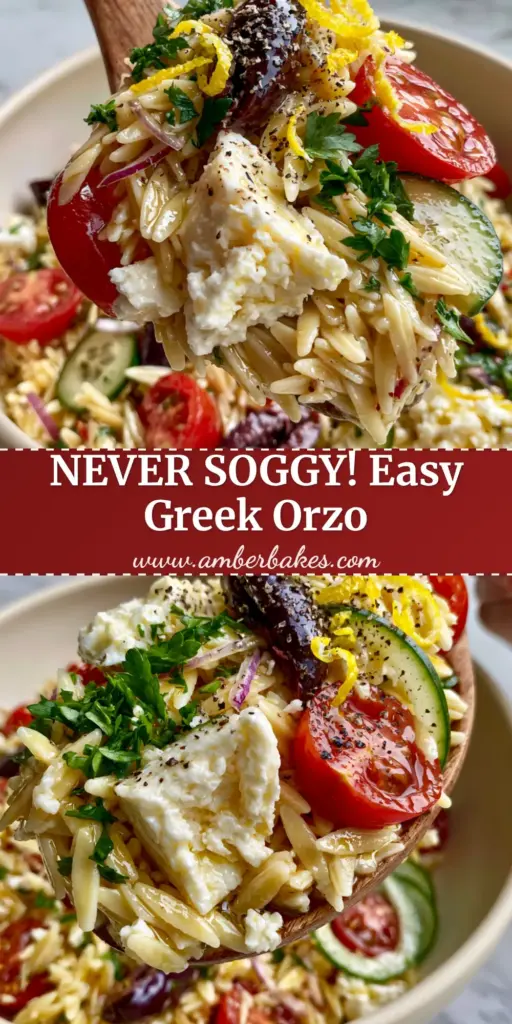
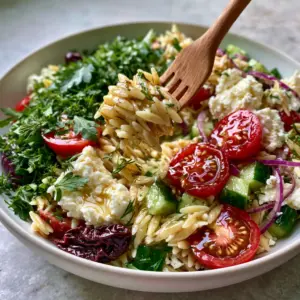
The Greek Orzo Pasta Salad is more than just a side dish; it is a vibrant celebration of Mediterranean textures and bright, sun-drenched flavors. Imagine lifting a heavy wooden spoon from a matte cream ceramic bowl, watching as the glistening, al dente orzo grains tumble back into a sea of creamy feta and crisp vegetables. This recipe captures that exact moment of culinary perfection, balancing the bite of red onions with the sweetness of halved cherry tomatoes.
Whether you are preparing for a backyard gathering or a sophisticated weeknight meal, this Greek Orzo Pasta Salad delivers a professional-grade experience. The visual contrast between the dark purple Kalamata olives and the vibrant green parsley makes it a centerpiece-worthy dish. By following this forensic guide, you will master the art of the perfect emulsified vinaigrette and the structural integrity of the “pasta moon” cucumber cut.
Crafting a world-class salad requires understanding the relationship between acidity and starch. This recipe doesn’t just toss ingredients together; it layers them to ensure every forkful is seasoned to the core. Get ready to elevate your summer dining with a dish that looks like a professional smartphone photo and tastes like a trip to the Aegean coast.
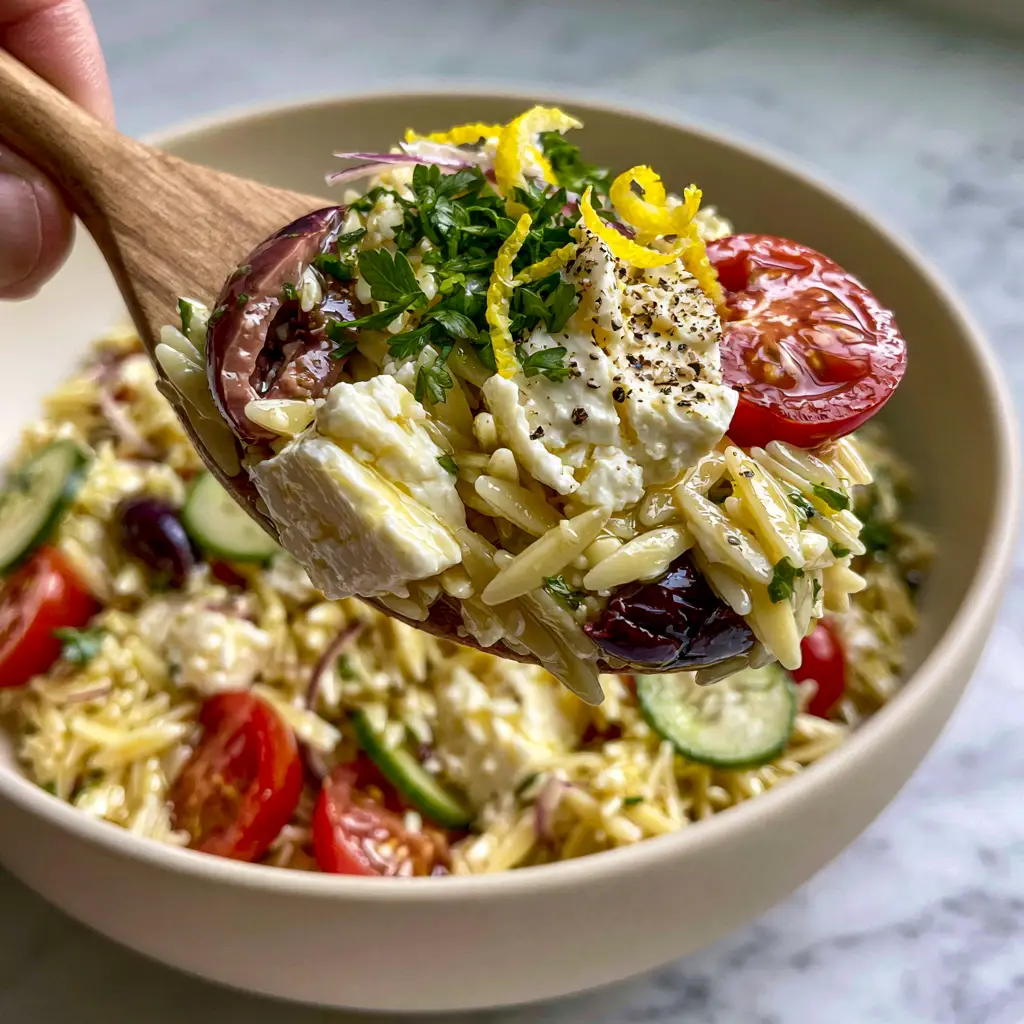
Why This Vibrant Mediterranean Bowl Works
- Textural Contrast: The “al dente” snap of the orzo provides a structural foundation for the crumbly, creamy chunks of high-quality feta cheese.
- Visual Vibrancy: The combination of bright red cherry tomatoes, deep purple Kalamata olives, and emerald parsley creates a high-contrast palette that stimulates the appetite.
- The “Zest” Factor: Using fresh lemon zest curls rather than just juice provides essential oils that hit the olfactory senses before the first bite.
- Perfect Proportions: By slicing Persian cucumbers into “moons” and onions into “slivers,” we ensure every ingredient fits perfectly on a single spoon.
The Anatomy of Our Greek Orzo Pasta Salad Ingredients
To achieve the result seen in professional food photography, we must be precise with our selection. Each component in this Greek Orzo Pasta Salad serves a specific culinary purpose, from moisture control to flavor peaks.
The Starch and the Produce
1 lb (450g) Orzo Pasta: This rice-shaped pasta is the canvas of our dish. It must be cooked in heavily salted water to ensure the starch itself is flavorful.
2 cups (300g) Halved Fresh Cherry Tomatoes: These provide “popping” sweetness and essential acidity. Halving them allows their juices to mingle with the vinaigrette.
3 Small (250g) Persian Cucumbers: Sliced into “moons,” these offer a cooling, crisp crunch that offsets the salty elements. Persian varieties are preferred for their thin skin and lack of bitter seeds.
1/2 cup (60g) Slivered Red Onions: Slicing these into paper-thin slivers ensures a mild piquant bite without overpowering the delicate herbs.
1 cup (150g) Pitted Kalamata Olives: These whole, dark purple gems provide the essential briny “funk” that defines Mediterranean cuisine.
The Dairy and the Garnishes
8 oz (225g) Crumbly White Feta Cheese: Look for sheep’s milk feta in brine for the creamiest texture. Break it into large, irregular chunks to maintain its visual identity.
1/2 cup (15g) Finely Chopped Fresh Parsley: This isn’t just a garnish; it adds a grassy, fresh top note that lightens the entire salad.
2 tsp (4g) Fresh Lemon Zest Curls: Use a channel knife or a fine grater to create curls that release citrus oils directly onto the surface of the pasta.
1 tsp (2g) Cracked Black Pepper: Coarsely cracked pepper provides a woody heat that cuts through the richness of the feta.
The Invisible Foundation (The Vinaigrette)
1/2 cup (120ml) Extra Virgin Olive Oil: This is the fat source that carries all other flavors across the palate. Use a high-quality, cold-pressed oil.
3 tbsp (45ml) Fresh Lemon Juice: This provides the “brightness” that makes the Greek Orzo Pasta Salad refreshing.
1 tbsp (15ml) Red Wine Vinegar: A secondary acid that adds a complex, fermented depth to the dressing.
1 tsp (5g) Dijon Mustard: A culinary “invisible” ingredient that acts as a natural emulsifier, binding the oil and vinegar together.
1 tsp (1g) Dried Oregano: The quintessential Greek herb that provides a floral, earthy background note.
Essential Tools for Culinary Success
A Greek Orzo Pasta Salad is only as good as the precision of its prep. You will need a large pasta pot to ensure the orzo has enough room to circulate without clumping.
A sharp chef’s knife is non-negotiable for achieving the thin slivers of red onion and the clean “moon” cuts of the Persian cucumbers. I also recommend a matte cream ceramic bowl for serving, as it provides a neutral, high-end backdrop for the vibrant colors.
Lastly, a high-quality wooden spoon is the best tool for folding. Unlike metal, wood is gentle on the tender orzo and won’t pulverize the delicate feta chunks as you mix.
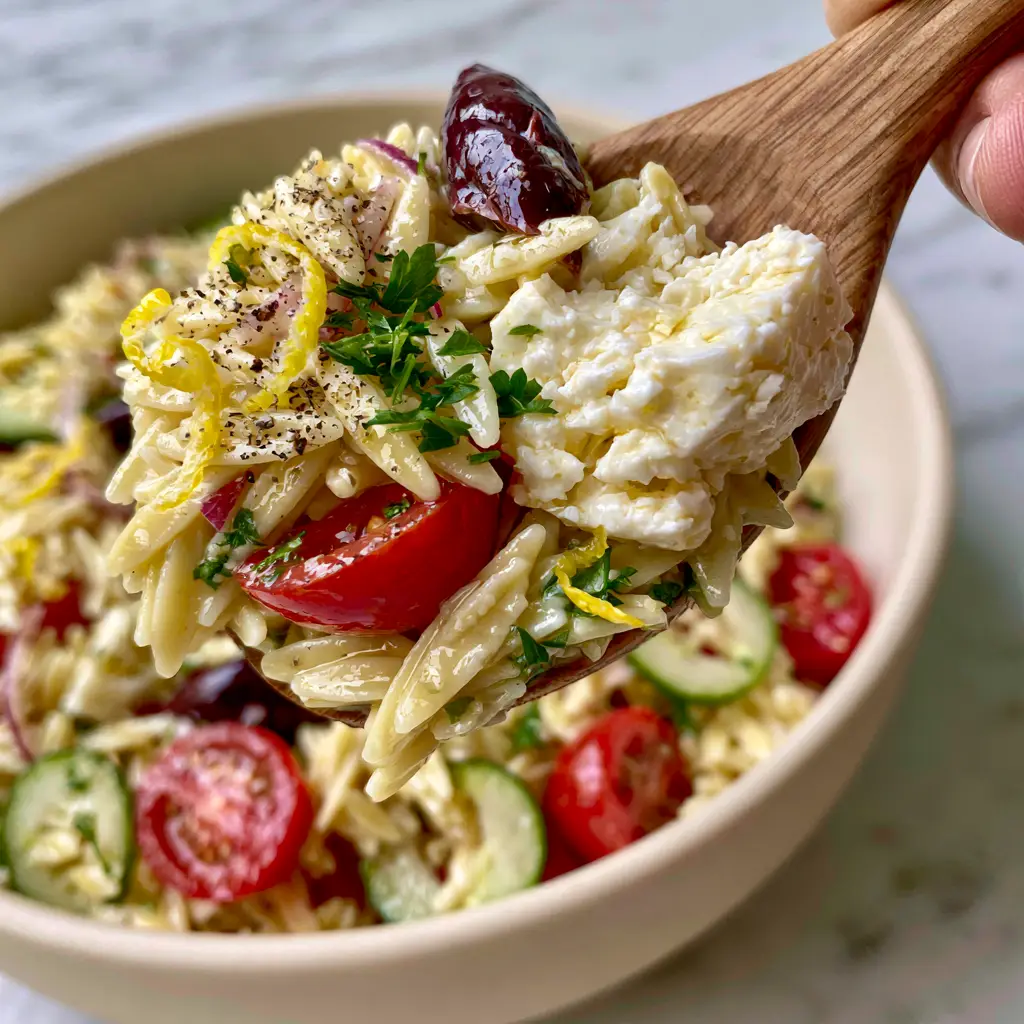
A Forensic Guide to Crafting Your Salad
Step 1: Achieving Al Dente Perfection
Bring 4 quarts (3.8L) of water to a rolling boil and add 2 tablespoons (34g) of kosher salt. The water should taste like the sea; this is your only chance to season the pasta internally.
Add the orzo and stir immediately to prevent sticking to the bottom. Cook for 7-9 minutes, tasting a grain at the 7-minute mark. Look for a tiny white dot in the center—this indicates a perfect al dente texture that will hold up against the vinaigrette.
Step 2: The Shock and Dry Method
Drain the orzo in a fine-mesh sieve and rinse briefly with cold water to stop the cooking process. Spread the grains out on a baking sheet for 5 minutes.
This “drying” phase is crucial. If the pasta is too wet, the vinaigrette will slide off. We want the surface of the orzo to be tacky so it can “grip” the lemon herb dressing.
Step 3: Creating the Emulsified Vinaigrette
In a small glass jar, combine the olive oil, lemon juice, red wine vinegar, Dijon mustard, and dried oregano. Shake vigorously for 30 seconds until the mixture is opaque and thickened.
The Dijon mustard creates a stable emulsion, ensuring that every bite of your Greek Orzo Pasta Salad has a consistent ratio of fat to acid. This prevents a “puddle” of oil at the bottom of your bowl.
Step 4: Precision Vegetable Preparation
While the pasta cools, slice your Persian cucumbers into 1/4 inch (6mm) half-moons. Halve the cherry tomatoes through the equator to expose the seeds and juice.
Slice the red onion against the grain into translucent slivers. If you find raw onion too harsh, soak the slivers in ice water for 5 minutes to remove the “sulfur bite” before adding them to the salad.
Step 5: The “Wooden Spoon” Fold
In your large ceramic bowl, combine the cooled orzo, cucumbers, tomatoes, onions, and whole Kalamata olives. Pour 75% of the vinaigrette over the top.
Using your wooden spoon, use a “lift and fold” motion. This incorporates the dressing without smashing the vegetables. Finally, gently fold in the feta chunks and parsley, leaving some on top for visual appeal.
Step 6: The Final Garnishing Cues
Top the salad with your fresh lemon zest curls and a generous dusting of cracked black pepper. The oils from the zest should be visible, making the salad “glisten” under your kitchen lights.
Allow the salad to sit for at least 15 minutes before serving. This allows the orzo to absorb the vinaigrette, transforming the flavor from “disconnected” to “harmonious.”
Expert Tips for the Ultimate Pasta Salad
- The Feta Rule: Never buy pre-crumbled feta. It is coated in cellulose to prevent clumping, which ruins the “creamy white chunk” look and mouthfeel.
- Internal Balance: If your salad feels dry after chilling, add a splash of olive oil and a squeeze of fresh lemon to “wake up” the flavors.
- Temperature Control: Serve this Greek Orzo Pasta Salad at cool room temperature. If it’s too cold, the olive oil congeals; if it’s too hot, the cucumbers lose their snap.
- Herb Freshness: Only chop the parsley right before adding it. Pre-chopped herbs can oxidize and turn bitter.
Storing and Prepping Ahead
This Greek Orzo Pasta Salad is an elite choice for meal prep. It stays fresh in an airtight container for up to 4 days. In fact, many find the flavors more developed on day two.
Do not freeze this salad. The high water content in the cucumbers and tomatoes will cause them to turn mushy upon thawing, destroying the carefully curated textures we worked to achieve.
What to Serve with This Mediterranean Classic
This versatile dish pairs beautifully with protein-heavy mains. It is a natural companion for zesty grilled summer chicken or a piece of pan-seared sea bass.
For a full Mediterranean spread, serve it alongside a refreshing chickpea bowl or a platter of tangy sumac onions. If you are hosting a summer BBQ, it also provides a lighter alternative to creamy street corn pasta.
If you love this flavor profile but want a different grain, you might also enjoy our lemon herb couscous salad which uses similar aromatics but a smaller pasta base.
Common Questions About Orzo Salad
Yes, ditalini or pearl couscous work well, but orzo is preferred for its rice-like shape that holds the small vegetable cuts of a traditional Greek salad.
No, Persian cucumbers have very thin, tender skins that provide a nice crunch and vibrant green color without being bitter.
It stays fresh and delicious for up to 4 days in an airtight container. The flavors actually meld and improve after 24 hours.
Rinse the cooked orzo briefly with cold water to remove excess starch, then spread it out on a baking sheet to dry and cool before tossing with the dressing.
Pasta naturally absorbs liquid as it sits. If it seems dry, simply toss with an extra tablespoon of olive oil and a squeeze of fresh lemon juice before serving.
The Complete Greek Orzo Pasta Salad Recipe
Greek Orzo Pasta Salad with Lemon Herb Vinaigrette
Ingredients
Equipment
Method
- Cook orzo in a large pot of salted boiling water for 7-9 minutes until al dente.
- Drain and rinse briefly with cold water. Spread on a baking sheet to dry for 5 minutes.
- Whisk olive oil, lemon juice, red wine vinegar, mustard, and oregano in a jar until thickened.
- Toss orzo with vegetables, olives, and dressing in a large bowl.
- Gently fold in feta and parsley. Top with lemon zest curls and cracked black pepper.
Notes
Dry the orzo on a baking sheet to ensure the dressing sticks.
Final Thoughts on the Perfect Summer Side
The Greek Orzo Pasta Salad is a testament to the power of fresh, simple ingredients handled with professional technique. By focusing on the visual cues—the glistening pasta, the vibrant curls of lemon, and the large feta chunks—you create a meal that satisfies both the eyes and the palate.
We invite you to share your results! Did you get that perfect “spoon lift” photo? Let us know in the comments below or share your creations on Pinterest. For more Mediterranean inspiration, don’t forget to sign up for our weekly newsletter.