Experience the soul-warming comfort of authentic Greek home cooking with this masterfully crafted Manestra. This isn’t just a simple pasta dish; it is a Mediterranean staple where plump orzo pasta grains are slowly simmered until they achieve a perfectly tender, silk-like texture.
Inspired by the rustic kitchens of the Aegean, our Manestra captures the essence of “philoxenia”—the Greek spirit of hospitality. Every spoonful delivers a harmonious blend of sweet softened onions, pungent minced garlic, and a tomato sauce so velvety it clings to every single grain of pasta.
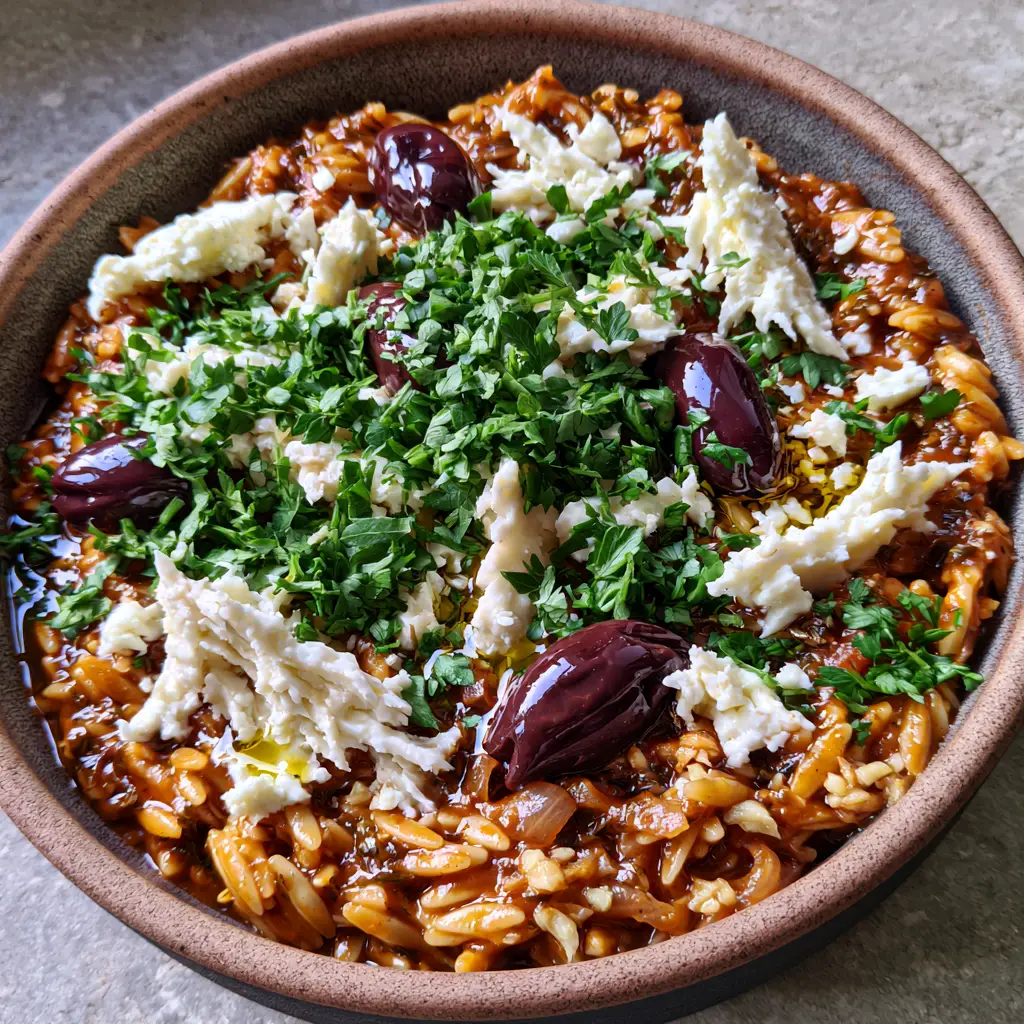
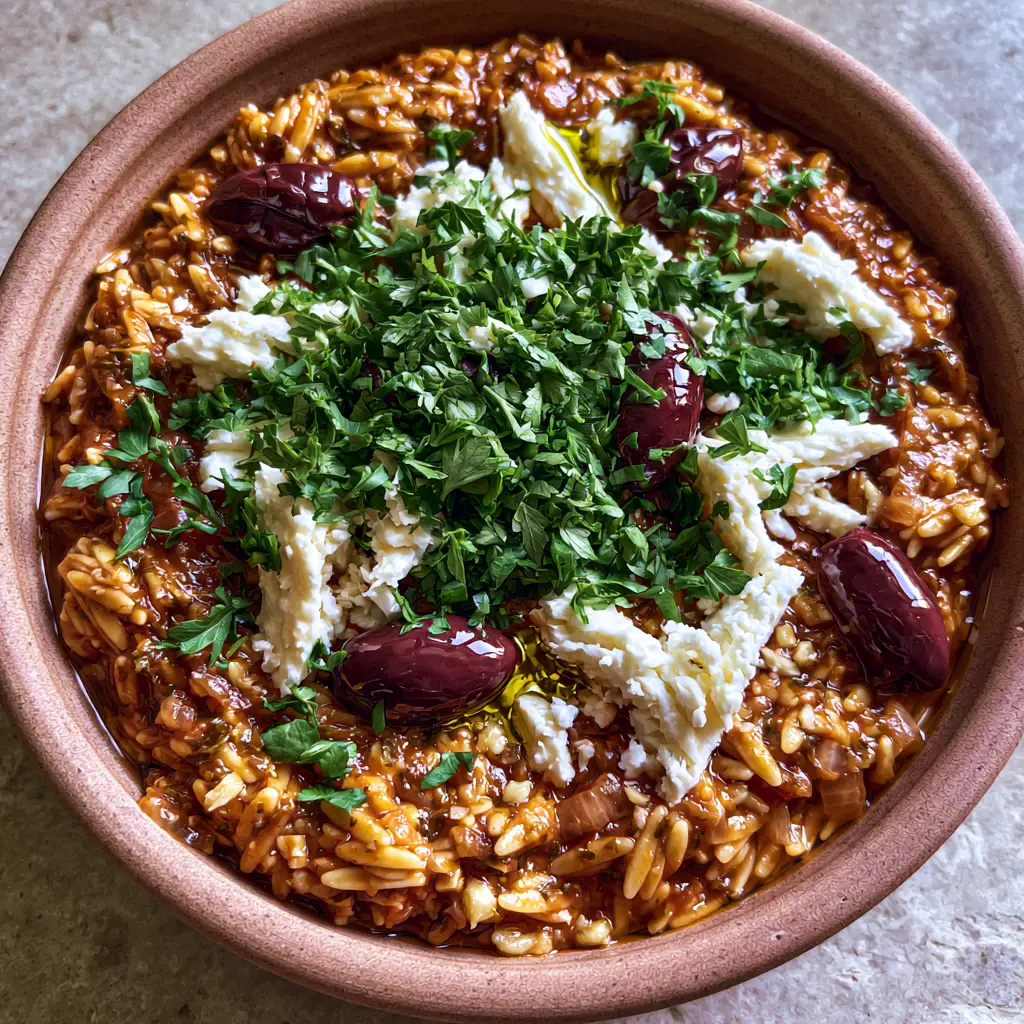
To finish, we crown this vibrant red dish with large, jagged crumbles of creamy white feta cheese and whole glossy kalamata olives. The final result is a high-contrast masterpiece that looks as beautiful as it tastes, especially when kissed by a shimmering drizzle of golden extra virgin olive oil.
Why This Greek Orzo Stew Is a Weeknight Game-Changer
- Unrivaled Texture: By carefully controlling the liquid-to-pasta ratio, the orzo releases just enough starch to create a naturally thick, velvety sauce without needing heavy cream.
- Visual Sophistication: The contrast between the deep red tomato base, the stark white feta, and the vibrant green flat-leaf parsley creates a restaurant-quality presentation in under 40 minutes.
- One-Pot Simplicity: This Manestra requires minimal cleanup, making it the perfect solution for busy home cooks who refuse to sacrifice flavor for convenience.
- Pantry-Friendly Excellence: Utilizing staple ingredients like dried orzo, canned tomatoes, and jarred olives, you can whip this up any night of the week.
The Essential Mediterranean Pantry for Authentic Manestra
Plump Orzo Pasta: You will need 1.5 cups (300g) of high-quality durum wheat orzo. This small, rice-shaped pasta is the backbone of the dish, designed to absorb the savory broth while maintaining its shape.
Extra Virgin Olive Oil: Use 3 tbsp (45ml) for the initial sauté and extra for the final shimmering drizzle. A high-quality oil provides the necessary fat to carry the flavors of the aromatics.
Yellow Onion and Fresh Garlic: One large onion (approx. 200g) and 4 cloves of minced garlic create the aromatic foundation. These must be cooked until softened and translucent to ensure a mellow, sweet undertone.
Velvety Tomato Base: A combination of 2 tbsp (30g) tomato paste and 1 can (400g) of crushed tomatoes provides both depth and color. This duo ensures the sauce is thick enough to coat the orzo without becoming watery.
Vegetable or Chicken Broth: You will need 3.5 cups (840ml) of low-sodium broth. This liquid is what the orzo “drinks” to become plump and tender during the simmering process.
Crumbled White Feta Cheese: Use 1/2 cup (75g) of high-quality sheep’s milk feta. Breaking it into large, jagged crumbles provides a salty, tangy counterpoint to the sweet tomato sauce.
Glossy Kalamata Olives: Include about 10-12 whole olives. Their briney punch and smooth texture are essential for the authentic Mediterranean flavor profile confirmed in our visual blueprint.
Fresh Flat-Leaf Parsley: A generous handful of freshly chopped parsley adds a necessary “pop” of green and a refreshing herbaceous finish.
Professional Tools for the Perfect One-Pot Orzo
To achieve the specific “velvety” texture described in our culinary blueprint, you should use a heavy-bottomed pot or a deep, wide skillet. A Dutch oven is ideal because it distributes heat evenly, preventing the orzo from sticking to the bottom as the sauce thickens.
A sharp chef’s knife is required for finely mincing the garlic and dicing the onions to a uniform size. Consistent vegetable cuts ensure that everything softens at the same rate, preventing unpleasant crunchy bits in your otherwise smooth Manestra.
Step-by-Step: Mastering the Art of Velvety Greek Orzo
Step 1: Building the Aromatic Foundation
Heat 2 tbsp (30ml) of extra virgin olive oil in your pot over medium heat. Add the finely diced onions and sauté for 5-7 minutes until they are completely softened and translucent.
Add the minced garlic and cook for an additional 60 seconds. Listen for a gentle sizzle; you want to release the fragrance of the garlic without allowing it to brown or become bitter.
Step 2: Toasting the Orzo and Developing Color
Stir in the tomato paste and the dry orzo grains. Cook for 2 minutes, stirring constantly, to lightly toast the pasta and “fry” the tomato paste. This professional technique deepens the umami profile of your Manestra.
The orzo grains should begin to look slightly glossy and take on a pale golden hue, while the tomato paste will turn a rich, dark brick-red color.
Step 3: The Slow Simmer for Velvety Results
Pour in the crushed tomatoes and the broth. Season with a pinch of sea salt and freshly cracked black pepper. Bring the mixture to a gentle boil, then immediately reduce the heat to low.
Cover and simmer for 12-15 minutes. Stir every few minutes to ensure the orzo isn’t sticking. You are looking for a visual cue where the liquid has been mostly absorbed, leaving behind a thick, bubbling, velvety sauce.
Step 4: The Finishing Flourish
Once the orzo is tender, remove the pot from the heat. Stir in the whole kalamata olives and half of the chopped parsley. The residual heat will warm the olives perfectly.
Transfer the Manestra to a rustic shallow bowl. Top with the jagged crumbles of feta cheese, the remaining parsley, and that final, essential shimmer of extra virgin olive oil.
Culinary Secrets for Restaurant-Quality Results
- Don’t Rinse the Orzo: Unlike some rice varieties, you want the surface starch on the orzo. This starch is the secret ingredient that emulsifies with the tomato juice to create the “velvety” texture.
- The Resting Period: Let the Manestra sit covered for 5 minutes after cooking. This allows the pasta to finish absorbing the surrounding flavors, ensuring every bite is moist and flavorful.
- Balance the Acidity: If your tomatoes are particularly acidic, add a tiny pinch of sugar. This balances the sauce and highlights the natural sweetness of the sautéed onions.
- Quality of Feta: Always buy block feta in brine rather than pre-crumbled varieties. The texture is significantly creamier, and it allows you to create those beautiful jagged edges seen in the visual prompt.
Make-Ahead Advice and Reheating Tips
Manestra is best enjoyed fresh, as the orzo will continue to absorb liquid as it sits. However, if you have leftovers, they can be stored in an airtight container in the refrigerator for up to 3 days.
When reheating, you will notice the pasta has become quite thick. Add a splash of water or broth (about 2 tbsp per serving) before microwaving or heating on the stovetop. This restores the velvety consistency and prevents the pasta from becoming gummy.
The Perfect Table: What to Serve with Your Manestra
This dish is a hearty vegetarian main, but it also pairs beautifully with other Mediterranean sides. For a light starter, consider a crisp chickpea cucumber feta salad to contrast the warm, soft textures of the orzo.
If you are serving this as part of a summer feast, a refreshing watermelon feta salad provides a sweet and salty palate cleanser. For those who enjoy more pasta varieties, you might also like my roasted vegetable orzo for a different take on this grain-shaped pasta.
To drink, a crisp Greek Assyrtiko wine or one of our vibrant summer cocktails will perfectly cut through the richness of the feta and tomato sauce.
Frequently Asked Questions About Authentic Greek Pasta
Absolutely. You can brown diced chicken or lamb alongside the onions at the beginning. Just ensure the meat is cooked through by the time the orzo has finished simmering.
Yes! Simply omit the feta cheese or replace it with a high-quality vegan feta alternative. The base sauce of tomatoes, onions, and garlic is naturally plant-based.
To keep orzo plump and tender, ensure you don’t overcook it. Follow the suggested simmer time of 12-15 minutes and stir occasionally to release starch without breaking the grains.
Orzo is the name of the rice-shaped pasta itself, while Manestra is the name of the traditional Greek dish (often a stew or thick pasta bake) that features orzo as the primary ingredient.
If the sauce is watery, simmer it uncovered for the last 2-3 minutes. The orzo will absorb more liquid and the evaporation will help thicken the tomato base into a velvety consistency.
Authentic Greek Manestra with Feta and Olives
Manestra Recipe: The Ultimate Greek Orzo with Velvety Tomato Sauce and Feta
Ingredients
Equipment
Method
- Heat olive oil in a pot over medium heat. Sauté diced onions for 5-7 minutes until softened. Add minced garlic and cook for 60 seconds until fragrant.
- Stir in the tomato paste and dry orzo. Cook for 2 minutes, stirring constantly to toast the grains and deepen the paste's flavor.
- Add crushed tomatoes and broth. Season with salt and pepper. Bring to a boil, then reduce heat to low and simmer covered for 12-15 minutes, stirring occasionally, until orzo is plump and velvety.
- Remove from heat. Stir in olives and half the parsley. Serve in shallow bowls topped with jagged feta, remaining parsley, and a shimmering drizzle of olive oil.
Notes
If the sauce gets too thick while sitting, add a splash of warm broth to loosen it back to a velvety consistency.
Closing & Call to Action
This Manestra recipe is more than just a meal; it’s a sensory journey to a sun-drenched Greek island. The combination of plump orzo, velvety sauce, and the sharp tang of feta creates a culinary experience that is both humble and sophisticated.
If you enjoyed this recipe, please leave a comment below and let me know how it turned out! Don’t forget to save this to your Mediterranean boards on Pinterest so you can find it whenever the craving for Greek comfort food strikes.