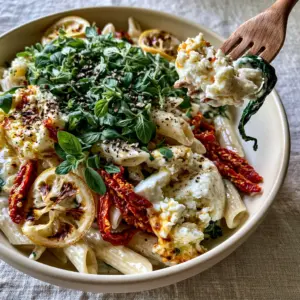
Greek pasta is the ultimate intersection of Mediterranean freshness and comfort food indulgence. Imagine al dente penne tubes coated in a glossy, citrus-infused cream sauce that clings to every ridge. This isn’t just a quick weeknight meal; it is a sensory experience inspired by the bright morning light of a coastal kitchen.
The beauty of this Greek pasta lies in its textural contrasts. You have the soft, melting edges of crumbled feta cheese meeting the chewy bite of julienned sun-dried tomatoes. Every forkful delivers a hit of toasted garlic slivers and the sophisticated bitterness of charred lemon slices.
Whether you are looking for a vibrant centerpiece for a dinner party or a high-protein vegetarian meal, this dish delivers. The addition of wilted baby spinach and briny kalamata olives ensures every bite feels balanced and bright. Let’s dive into how to create this restaurant-quality masterpiece at home.
Why This Creamy Greek Pasta Is a Total Game Changer
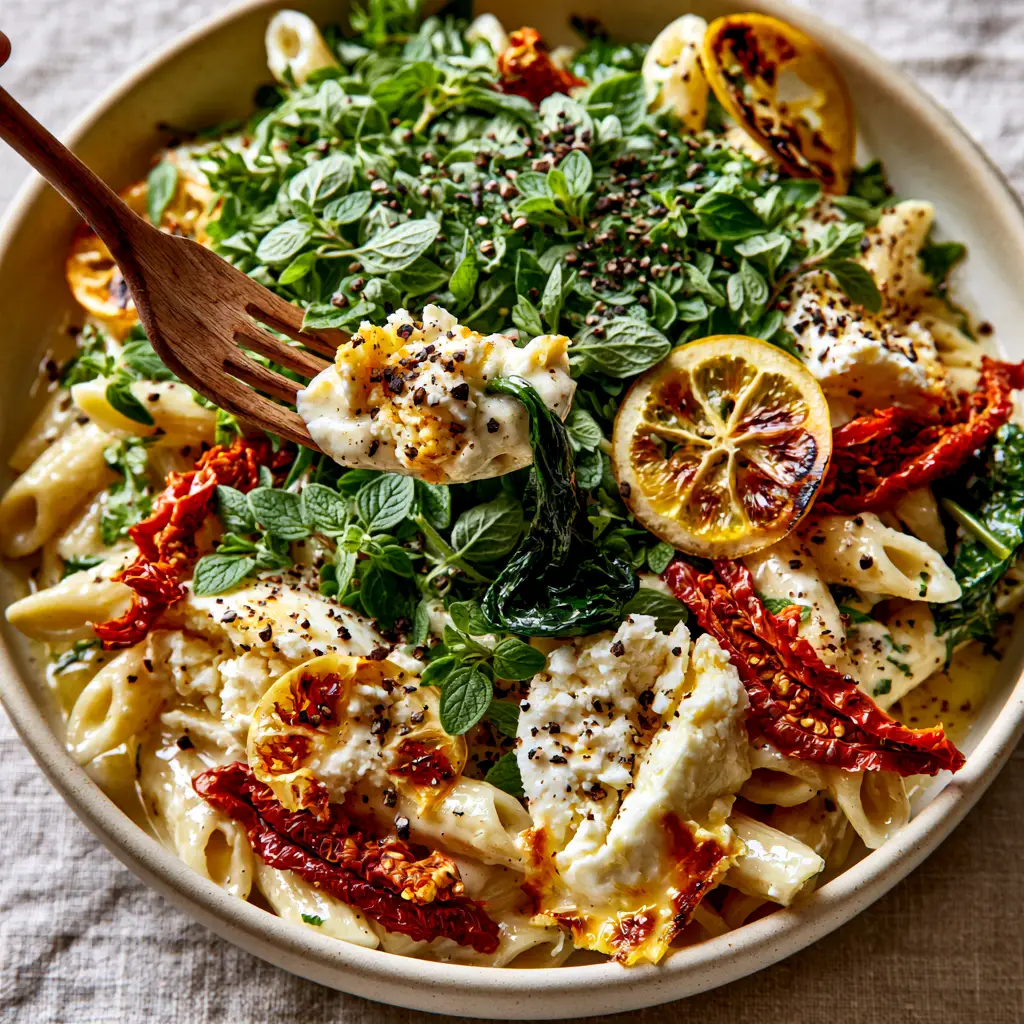
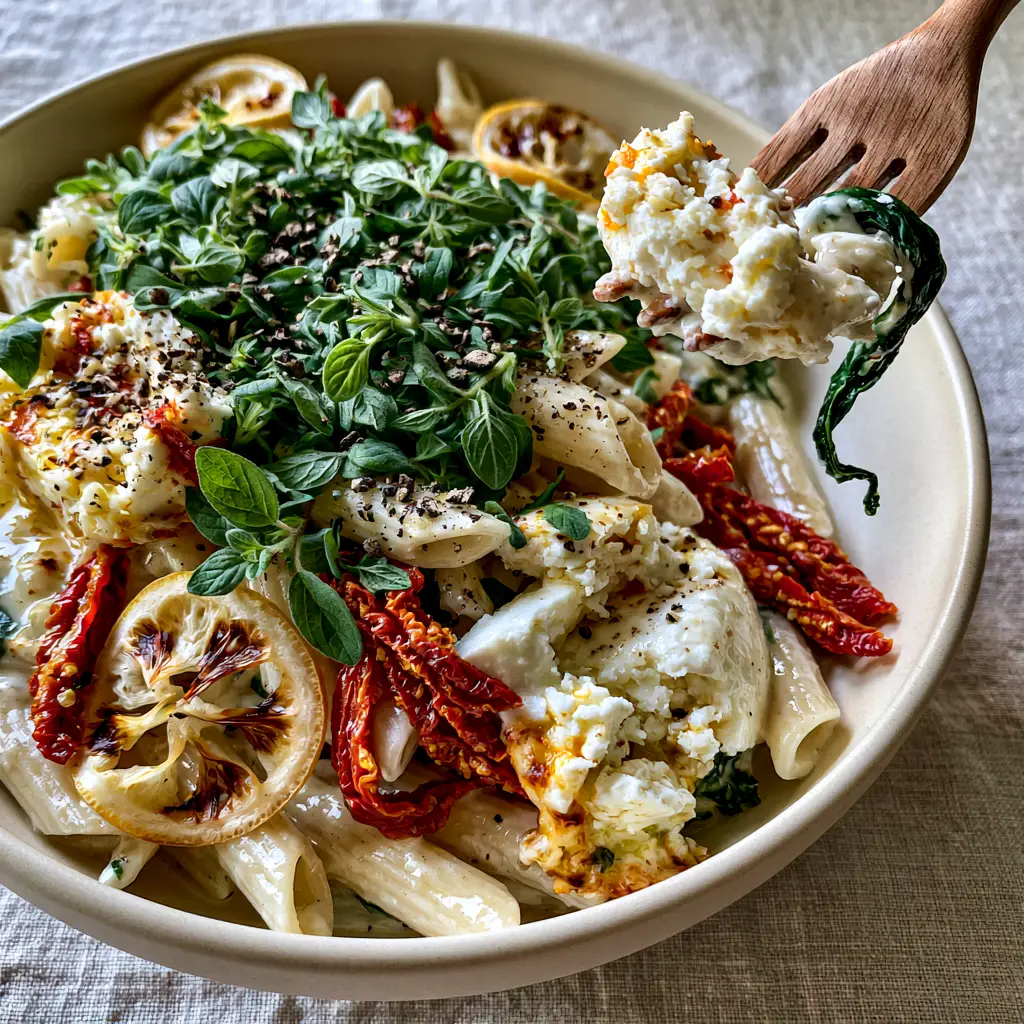
- Visual Masterpiece: The contrast of vibrant green oregano and deep red sun-dried tomatoes against a matte cream bowl creates a stunning presentation.
- Complex Flavor Profile: We move beyond basic salt and pepper by incorporating charred lemon half-moons that provide a smoky, caramelized acidity.
- Glossy Sauce Technique: By emulsifying heavy cream with starchy pasta water and fresh lemon juice, we achieve a professional “glossy” finish.
- Textural Harmony: From the crunch of toasted garlic to the creamy “trailing bits” of wilted spinach, your palate will never be bored.
The Essential Mediterranean Pantry: Ingredients for Greek Pasta
To achieve the specific visual and flavor results of this Greek pasta, ingredient selection is paramount. Using high-quality fats and fresh herbs makes the difference between a flat dish and a vibrant one.
1 lb (454g) Penne Rigate: The ridges are essential for “trapping” the lemon-garlic cream sauce. Always cook until al dente to maintain structural integrity.
1 cup (240ml) Heavy Cream: This provides the lush, opaque base for our sauce. It carries the flavors of the garlic and lemon across the tongue.
6 oz (170g) Block Feta Cheese: Avoid pre-crumbled varieties. Crumbing a high-quality block ensures you get those large, soft chunks that melt slightly at the edges.
1/2 cup (60g) Sun-Dried Tomatoes: Choose oil-packed tomatoes and julienne them into thin strips. They provide a concentrated, sweet-tart “pop” of flavor.
2 Whole Lemons: One will be sliced into thin half-moons for charring, while the other provides the zest and juice for the cream base.
2 cups (60g) Fresh Baby Spinach: This should be added at the very end. The residual heat will wilt it just enough to create those beautiful green ribbons.
1/2 cup (75g) Kalamata Olives: Sliced into rounds, these provide the necessary fermented brine to cut through the richness of the cream.
5-6 Cloves of Garlic: We will thinly sliver these and toast them in olive oil until golden. This creates “garlic chips” that offer a nutty crunch.
Fresh Oregano & Cracked Black Pepper: A dense layer of fresh oregano leaves provides an earthy, floral aroma that dried herbs simply cannot match.
2 tbsp (30ml) Extra Virgin Olive Oil: This is the “invisible” foundation used to sear the lemons and toast the garlic slivers to perfection.
Kitchen Tools for Professional Results
To recreate the exact look of the Greek pasta seen in our visual blueprint, you need a few specific tools. A shallow matte ceramic bowl is ideal for showing off the “handheld” vertical aesthetic.
A heavy-bottomed stainless steel or cast iron skillet is required for charring the lemons. This ensures even heat distribution so the lemons caramelize rather than just steaming.
Finally, a microplane is essential for zesting the lemon. You want the zest to be so fine that it dissolves into the sauce, providing flavor without any gritty texture.
Mastering the Charred Lemon and Garlic Foundation
Step 1: Caramelizing the Citrus
Heat your skillet over medium-high heat with a splash of olive oil. Place the thin lemon half-moons in a single layer, ensuring they don’t overlap.
Sear the lemons for 2-3 minutes per side until a deep, dark brown crust forms on the flesh. These “charred lemons” are the secret to the dish’s sophisticated visual appeal.
Step 2: Toasting the Garlic Slivers
Lower the heat to medium and add your garlic slivers to the remaining oil. Watch them like a hawk; they turn from golden to burnt in seconds.
As soon as they are fragrant and a light straw color, remove them from the pan. These will be used as a finishing garnish to maintain their crispy texture.
Step 3: Creating the Glossy Lemon-Garlic Cream
In the same skillet, whisk together the heavy cream, lemon zest, and a splash of pasta water. Bring to a gentle simmer until it begins to thicken.
The sauce is ready when it coats the back of a spoon. It should look glossy and opaque, ready to embrace the penne.
Building the Perfect Bowl of Greek Pasta
Step 4: The Final Toss
Add the cooked penne, julienned sun-dried tomatoes, and sliced kalamata olives to the sauce. Toss vigorously to ensure every tube is coated.
Fold in the fresh baby spinach. The heat from the pasta will cause it to wilt into the “trailing bits” seen in our visual guide.
Step 5: Garnish and Presentation
Transfer the pasta to a shallow matte ceramic bowl. Top with large, soft chunks of crumbled feta, the charred lemon slices, and the toasted garlic slivers.
Finish with a “dense layer” of fresh oregano leaves and a generous amount of cracked black pepper. The final result should look exactly like a professional food photograph.
Expert Tips for Success
- The Pasta Water Secret: Always reserve a half-cup of pasta water before draining. If the sauce becomes too thick, a splash of this liquid gold will restore the glossiness.
- Feta Temperature: Crumb your feta while cold, but add it to the warm pasta. This allows the edges to melt slightly while the center remains firm.
- Al Dente Precision: Cook the penne 1 minute less than the package directions. It will finish cooking in the cream sauce, soaking up the lemon flavor.
- Freshness First: Do not substitute dried oregano. The “bright green” visual requires fresh leaves for that pop of color and herbal hit.
How to Store and Reheat Your Leftovers
Greek pasta is best enjoyed immediately while the cream sauce is at its glossiest. However, you can store leftovers in an airtight container for up to 3 days.
When reheating, the cream sauce will have been absorbed by the pasta. Add a tablespoon of milk or water before microwaving or heating on the stovetop to bring the sauce back to life.
Do not freeze this dish. The cream and feta texture will break and become grainy once thawed, losing the luxurious mouthfeel we worked so hard to create.
What to Serve with Creamy Greek Pasta
This dish is quite rich, so pairing it with a light, acidic side dish is the best way to balance the meal. A crisp chickpea cucumber feta salad is a fantastic companion.
For those looking for a different texture, a Greek couscous salad offers a smaller grain that complements the larger penne tubes well.
If you are hosting a summer gathering, consider serving this alongside a refreshing watermelon feta salad for a sweet and salty contrast that screams Mediterranean summer.
Frequently Asked Questions
Definitely. Grilled chicken breast or sautéed shrimp both pair exceptionally well with the lemon-garlic profile of this Greek pasta.
Yes! While penne is excellent for trapping the sauce, fusilli or farfalle work beautifully. The key is to use a shape with ridges or folds to catch the glossy cream.
The secret is to cook them separately. Char the lemons on high heat first, then lower the heat specifically for the garlic slivers, which are much more delicate.
Absolutely! This recipe is 100% vegetarian as written. To make it vegan, you would need to substitute the cream and feta with plant-based alternatives.
Sauce separation usually happens if the heat is too high when adding lemon juice. Keep the heat at a gentle simmer and whisk constantly to maintain the emulsion.
The Ultimate Creamy Greek Pasta Recipe
Greek Pasta with Lemon Garlic Cream and Charred Lemons
Ingredients
Equipment
Method
- Cook penne in a large pot of salted water until al dente. Reserve 1/2 cup of pasta water before draining.
- Heat olive oil in a skillet over medium-high heat. Sear lemon half-moons for 2-3 minutes per side until deeply charred and caramelized.
- In the same skillet, sauté garlic slivers over medium heat until golden and crispy. Remove and set aside.
- Pour in heavy cream, lemon zest, and 2 tablespoons of lemon juice. Simmer until the sauce is glossy and thick enough to coat a spoon.
- Toss the pasta, sun-dried tomatoes, and olives into the sauce. Add spinach and toss until wilted. Top with feta, charred lemons, garlic slivers, oregano, and black pepper.
Notes
If the sauce gets too thick, add reserved pasta water 1 tablespoon at a time.
Sharing the Mediterranean Love
This Greek pasta is more than just a meal; it’s a celebration of vibrant ingredients and simple culinary techniques. The combination of charred citrus and creamy feta creates a flavor profile that is both nostalgic and modern.
If you loved this recipe, please leave a comment below and tell me how your charred lemons turned out! Don’t forget to follow me on Pinterest for more visual recipe inspiration.
Tag @amber_bakes in your recreations—I love seeing your glossy pasta shots! Happy cooking!