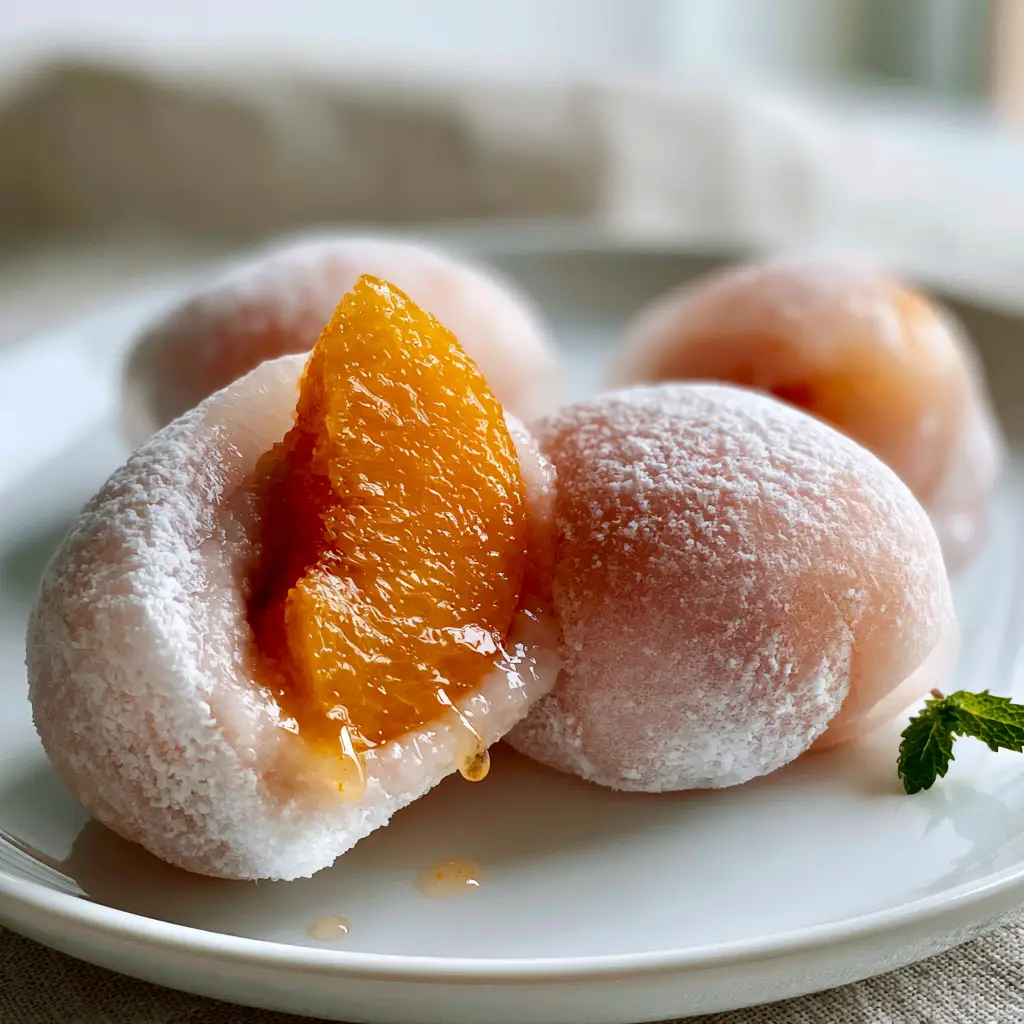
There is nothing quite like the sensory experience of biting into a fresh Peach Mochi. This Japanese-inspired delicacy, known as Daifuku, combines a delicate, translucent pale pink dough with the vibrant, sun-ripened sweetness of a juicy orange peach wedge.
Every bite of this Peach Mochi offers a masterclass in texture. The velvety white cornstarch dusting gives way to an incredibly soft, stretchy, and pillowy skin, followed by a thin, protective layer of sweet white bean paste that perfectly balances the fruit’s natural acidity.
Whether you are a seasoned confectioner or a curious home cook, this recipe brings the elegance of a Japanese tea house into your kitchen. We have designed this guide to ensure your mochi looks exactly like a professional handheld smartphone photo—natural, rustic, and irresistibly fresh.
Why You Will Fall in Love With This Vibrant Peach Daifuku
- Handcrafted Texture: The dough is scientifically balanced to remain stretchy and soft for hours, mirroring the translucent appearance seen in high-end macro food photography.
- Perfect Flavor Barrier: By using a thin sweet white bean paste layer, we prevent the peach juice from making the dough soggy, ensuring a clean cut every time.
- Visual Elegance: The contrast between the soft pink dough, the bright orange peach, and the single sprig of fresh mint makes this a centerpiece dessert.
- Customizable Sweetness: Unlike store-bought versions, you control the sugar levels in both the pink glutinous rice dough and the filling.
The Essential Pantry Items for Perfect Pink Mochi Dough
To achieve the specific visual results of our Peach Mochi blueprint, you need the right structural ingredients. Each component serves a forensic purpose in the final bite.
Shiratamako or Mochiko (1 cup / 120g): This glutinous rice flour is the backbone of the recipe. Shiratamako provides a smoother, more refined texture that achieves that “pillowy” look, while Mochiko is a more accessible alternative that still offers great stretch.
Granulated Sugar (1/4 cup / 50g): Sugar does more than sweeten; it acts as a softener. It interferes with the starch molecules to ensure the Peach Mochi remains tender and doesn’t turn brittle as it cools.
Water (3/4 cup / 180ml): Use filtered water for the cleanest taste. The ratio of water to flour is critical for creating that translucent, pale pink skin described in our visual prompt.
White Bean Paste (Shiroan) (1/2 cup / 150g): This is the secret to structural integrity. It provides a sweet, creamy buffer between the moist peach and the delicate dough.
Fresh Peaches (2 medium): Look for peaches that are fragrant and slightly firm. You want juicy orange peach wedges that hold their shape when sliced, allowing for those beautiful “droplets of juice” to be visible on the cut surface.
Pink Food Coloring or Beet Juice: A single drop of gel coloring or a teaspoon of beet juice creates that “delicate, translucent pale pink” hue without affecting the flavor profile.
Cornstarch or Potato Starch (Katakuriko): This is essential for the “velvety white starch dusting.” It prevents the sticky dough from adhering to your hands and tools during the shaping process.
Fresh Mint Sprigs: Used as a minimalist garnish, the mint provides a pop of green that makes the pink and orange tones of the Peach Mochi truly sing.
Tools for Achieving a Professional Artisanal Finish
Creating the perfect Peach Mochi requires a few specific tools to handle the sticky, stretchy nature of the glutinous rice. A microwave-safe glass bowl or a traditional bamboo steamer is your primary vessel for cooking the dough.
You will also need a silicone spatula, which is naturally non-stick, to fold the dough as it thickens. A large wooden board or a clean countertop heavily dusted with starch will serve as your staging area for the handcrafted mochi balls.
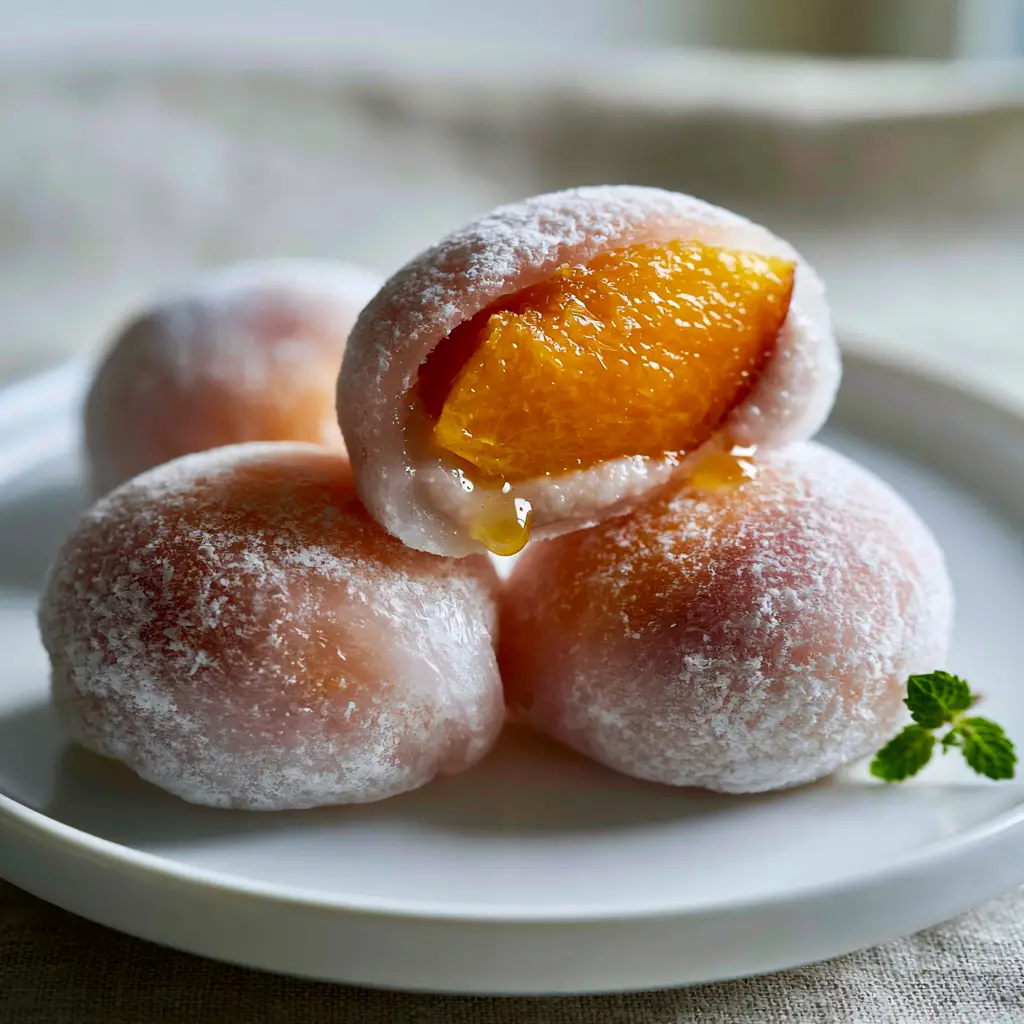
For the precise cuts seen in our macro photography, a sharp, non-serrated knife or even a piece of unflavored dental floss can be used to slice the finished mochi in half without squishing the pillowy layers.
Mastering the Art of Peach Mochi: A Step-by-Step Guide
Step 1: Preparing the Juicy Peach Core
Begin by washing your peaches and slicing them into uniform wedges. Aim for about 6-8 wedges per peach, depending on the size. Pat them dry with a paper towel; removing excess surface moisture is key to keeping the white bean paste layer intact.
Step 2: The White Bean Paste Encasement
Take a small amount of the white bean paste (Shiroan) and flatten it into a thin disc in your palm. Place a peach wedge in the center and gently wrap the paste around it. This layer should be thin—just enough to coat the fruit—preserving the “vibrant, juicy, sun-ripened orange” interior visual.
Step 3: Steaming the Stretchy Pink Rice Dough
Whisk together your glutinous rice flour, sugar, water, and pink coloring in a microwave-safe bowl until smooth. Cover loosely and microwave in 45-second intervals. After each burst, use your silicone spatula to stir vigorously.
Continue this process until the dough transforms from a liquid to a thick, translucent, and incredibly stretchy mass. You will know it is ready when the dough looks matte and holds its shape on the spatula. If you prefer a traditional method, steam the mixture in a bowl for 15-20 minutes.
Step 4: The Forensic Fold and Shaping
Turn the hot dough out onto a surface heavily dusted with cornstarch. Dust the top of the dough as well. While the dough is still warm, divide it into equal portions. Flatten a portion into a circle, place your bean-paste-wrapped peach in the center, and pinch the edges of the dough together to seal.
Roll the ball gently between your palms to create a smooth, spherical shape. The goal is a “fine layer of velvety white cornstarch” on the outside, with the delicate pink color of the dough peeking through.
Pro Secrets for That Velvety Cornstarch Glow
To get that specific “macro close-up” look, avoid over-handling the dough once it is dusted. If the starch begins to look patchy or damp, use a soft pastry brush to apply a fresh, light layer of cornstarch just before serving.
Always work with the dough while it is warm. As it cools, the starches begin to set, making it less pliable. If you find the dough becoming difficult to stretch, you can pop it back in the microwave for 10 seconds to restore its pillowy elasticity.
If you enjoy this fruit-forward technique, you should definitely explore our mango mochi for a tropical twist, or try our chocolate mochi for a richer, more decadent experience.
Storing Your Delicate Mochi for Maximum Freshness
Peach Mochi is best enjoyed within a few hours of assembly, as the fresh fruit will eventually release moisture. If you must store them, place the mochi in an airtight container at room temperature for up to 24 hours.
Avoid refrigerating the mochi if possible, as the cold temperatures cause the glutinous rice starch to undergo retrogradation, making the dough hard and losing that “pillowy” quality. If you do refrigerate them, let them sit at room temperature for 30 minutes to soften before eating.
Refreshing Pairings to Elevate Your Tea Time
The delicate sweetness of Peach Mochi pairs beautifully with light, summer-inspired flavors. Serve these on a minimalist white ceramic plate alongside a selection of summer mocktails or a chilled green tea.
For a full seasonal spread, consider following this dessert after a light dinner of grilled shrimp and avocado bowls or a crisp Greek cucumber salad. The acidity in the salad acts as a wonderful palate cleanser for the sweet bean paste.
Frequently Asked Peach Mochi Questions
While you can freeze mochi, the fresh peach wedge will change texture upon thawing. It is best enjoyed fresh for the optimal juicy experience.
Yes, you can steam the dough in a heat-proof bowl placed in a bamboo or metal steamer for 15-20 minutes until it becomes translucent and sticky.
The thin layer of sweet white bean paste (Shiroan) acts as a moisture barrier. Additionally, patting the peach wedges completely dry before wrapping is essential.
Shiratamako is made from short-grain rice and has a coarser grain that produces a more refined, stretchy texture. Mochiko is a finer flour that is easier to find but slightly less elastic.
Mochi dough is naturally very sticky. Ensure you use plenty of cornstarch on your hands and work surface, and try to shape it while it is still warm.
The Ultimate Handcrafted Peach Mochi Recipe

Peach Mochi: The Ultimate Soft and Pillowy Summer Dessert
Ingredients
Equipment
Method
- Slice fresh peaches into 8 wedges and pat dry with paper towels to remove excess moisture.
- Take a tablespoon of white bean paste, flatten it, and wrap it thinly around each peach wedge.
- In a glass bowl, whisk together glutinous rice flour, sugar, water, and pink coloring until smooth.
- Microwave in 45-second intervals, stirring with a silicone spatula between each, until the dough is translucent, matte, and very stretchy.
- Turn the hot dough onto a cornstarch-dusted surface. Divide into 8 equal pieces.
- Flatten each piece, place the bean-paste-wrapped peach in the center, and pinch the edges to seal. Roll into a smooth ball.
- Place on a white ceramic plate and garnish with a tiny sprig of fresh mint.
Notes
Freshness is key; serve within 4 hours for the best pillowy texture.
Share Your Soft and Stretchy Creations!
We hope this Peach Mochi recipe brings a bit of soft, morning natural light into your kitchen. There is something deeply satisfying about creating a dessert that looks just as beautiful as it tastes. The contrast of the orange peach against the pale pink dough is truly a work of culinary art.
If you made this recipe, please leave a comment below and let us know how your dough turned out! Don’t forget to take a photo of your handcrafted mochi on a linen background and tag us. For more sweet inspiration, be sure to follow amber_bakes on Pinterest and save this recipe to your summer dessert boards.