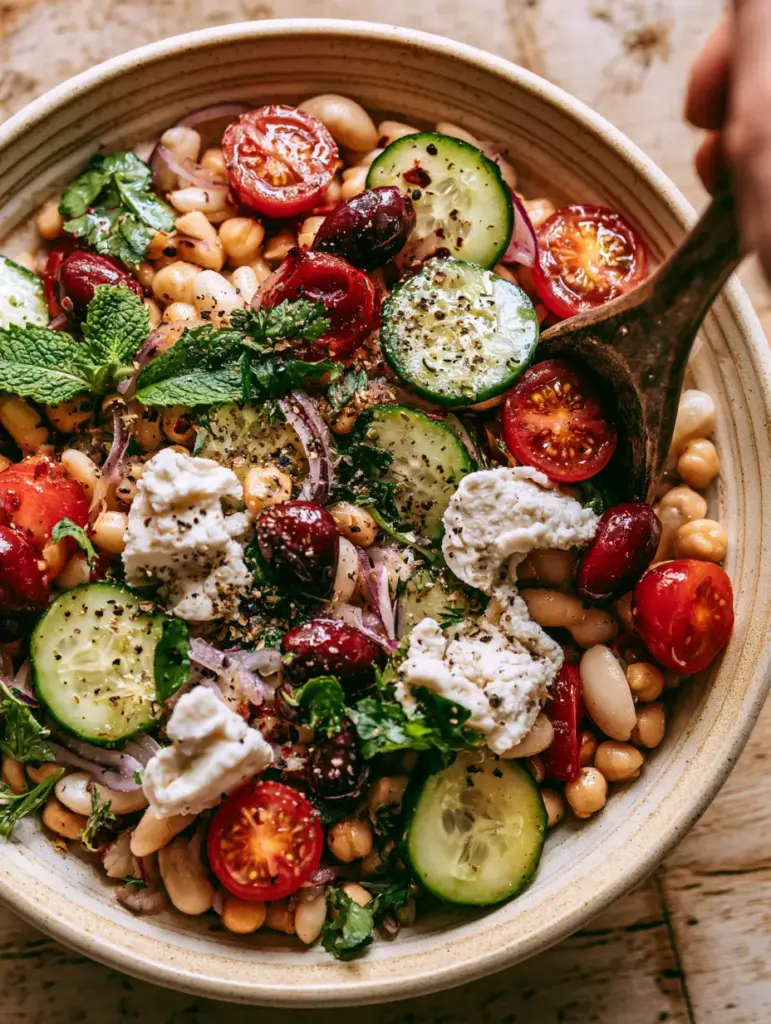
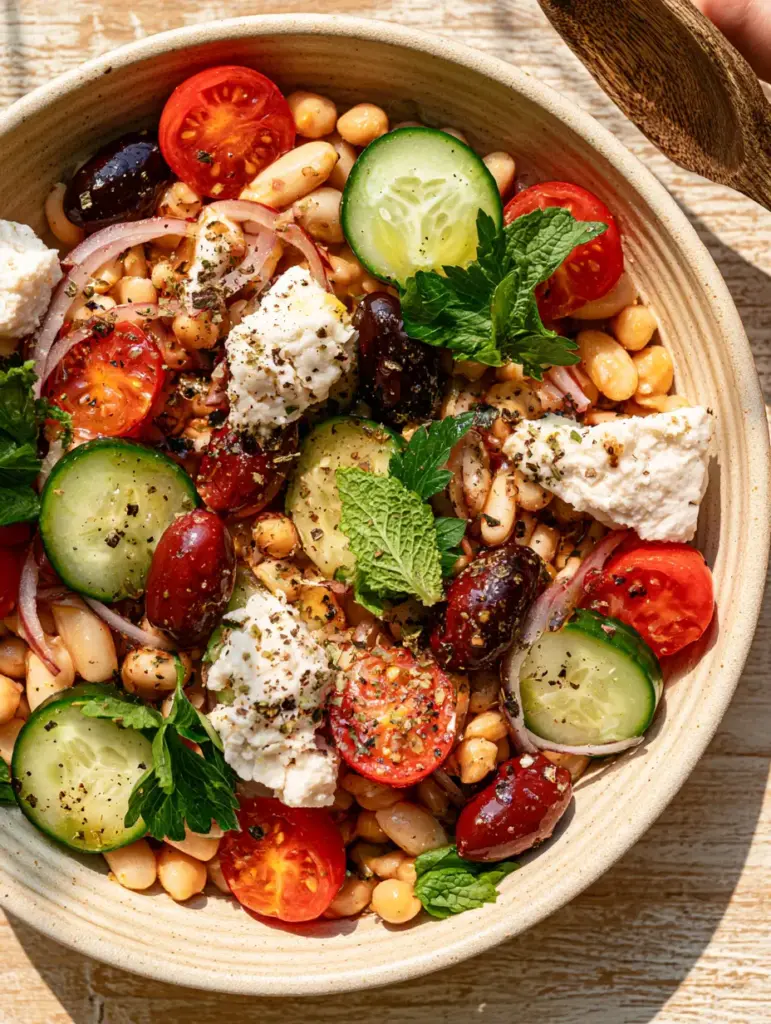
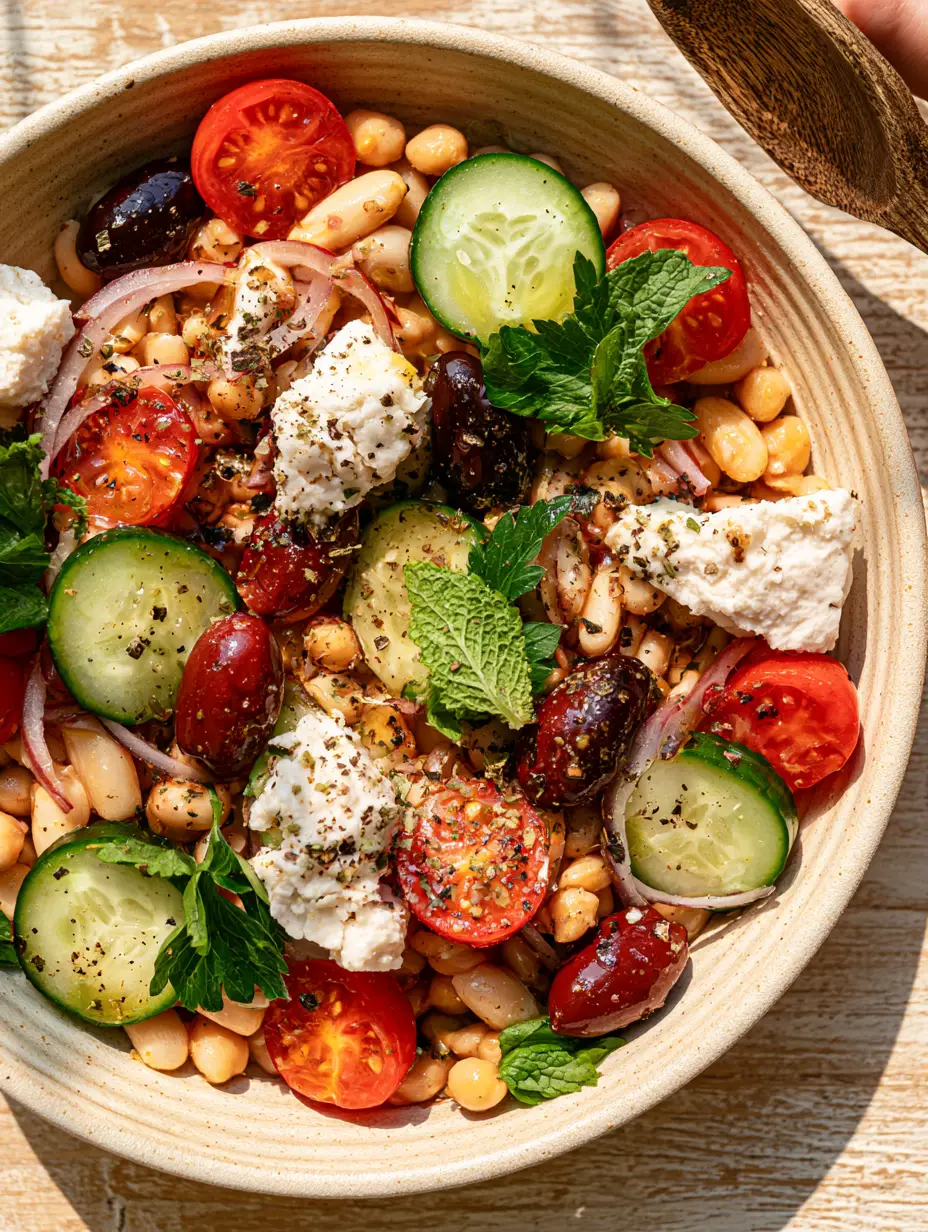
The Greek bean salad is a masterclass in texture, color, and plant-based nutrition. Imagine a large, textured cream-colored stoneware bowl sitting on a rustic wooden table, catching the soft glow of natural afternoon light. Inside, a kaleidoscope of colors beckons: creamy white beans, emerald green cucumbers, and ruby-red tomatoes, all glistening under a zesty lemon-herb drizzle. This isn’t just a side dish; it is a centerpiece that brings the bright flavors of the Mediterranean directly to your kitchen.
Every bite of this Greek bean salad offers a symphony of sensations. You get the buttery softness of cannellini beans paired with the slight bite of chickpeas. Then comes the cooling crunch of thick-cut English cucumbers and the salty, umami punch of wrinkled kalamata olives. When topped with large crumbles of vegan feta and fresh mint, the dish transcends the typical salad category, offering a satiating meal that looks as good as it tastes.
Why This Protein-Packed Mediterranean Bowl Works
- Dual-Bean Foundation: Using both plump cannellini beans and hearty chickpeas creates a complex texture profile that is far more satisfying than a single-bean salad.
- Visual Vibrancy: The contrast between translucent red onion slivers and bright, halved cherry tomatoes creates a professional, restaurant-quality presentation.
- Aromatic Herb Overload: We don’t just garnish; we layer torn flat-leaf parsley and whole mint leaves to ensure every forkful is fragrant and fresh.
- The Perfect Drizzle: A thick lemon-herb vinaigrette clings to the crevices of the beans and olives, ensuring the seasoning doesn’t just puddle at the bottom of the bowl.
The Essential Components for a Realistic Greek Bean Salad
To achieve the specific visual and flavor profile described in our blueprint, every ingredient serves a dual purpose: aesthetic appeal and structural integrity. We aren’t just tossing things in a bowl; we are building layers of flavor.
Cannellini Beans: 1.5 cups (255g) or one 15oz can. These beans provide the creamy, buttery “weight” to the salad foundation and absorb the vinaigrette beautifully.
Chickpeas (Garbanzo Beans): 1.5 cups (255g) or one 15oz can. Chickpeas add a nutty flavor and a firm, rounded shape that contrasts with the softer white beans.
English Cucumber: 1 large (approx. 300g). We use English cucumbers specifically because the skin is thin and edible, providing that “thick-cut half-moon” visual without the bitterness of standard cucumbers.
Cherry Tomatoes: 1 cup (150g). Halving these reveals the seeds and moisture, which adds a natural juiciness to the overall mouthfeel of the dish.
Red Onion: 1/4 small onion (approx. 30g). We slice these into paper-thin, translucent slivers to provide a sharp bite without overpowering the delicate mint and parsley.
Kalamata Olives: 1/2 cup (75g). Look for glossy, wrinkled olives; their briny saltiness is the perfect foil for the creamy vegan feta.
Vegan Feta Crumbles: 1/2 cup (60g). Large, irregular crumbles provide the “white pops” seen in the stoneware bowl, offering a tangy, dairy-free creaminess.
Fresh Herbs: 1/2 cup (15g) torn parsley and 1/4 cup (5g) whole mint leaves. These aren’t just for show; they provide the “green” aromatics that define Mediterranean cooking.
The “Invisible” Foundation (Vinaigrette): 1/4 cup (60ml) extra virgin olive oil, 2 tbsp (30ml) fresh lemon juice, 1 tsp (5g) dried oregano, and 1/2 tsp (3g) coarse cracked black pepper. These ingredients emulsify to create the glisten seen in the visual prompt.
Must-Have Tools for the Professional Home Cook
Creating a visually stunning Greek bean salad requires more than just a bowl. To get those “translucent slivers” and “thick-cut half-moons,” you need the right gear.
A sharp Chef’s Knife is non-negotiable for slicing the red onion thin enough to be see-through. A large, textured stoneware bowl (cream-colored if you want to match the prompt exactly) provides the necessary surface area to display the ingredients without them becoming a mushy pile. Finally, a small glass jar is the best tool for shaking your lemon-herb vinaigrette into a thick, emulsified drizzle.
Step-by-Step: Constructing the Perfect Bean Base
Preparing the Legumes for Maximum Texture
Start by draining and rinsing your cannellini beans and chickpeas thoroughly under cold water. This removes the starchy canning liquid, ensuring your Greek bean salad stays clean and vibrant rather than cloudy.
Pat the beans dry with a clean kitchen towel. This is a “culinary secret” step; dry beans allow the lemon-herb vinaigrette to cling to their surfaces rather than sliding off due to excess water. Place the dried beans in the bottom of your large stoneware bowl.
Mastering the Vegetable Precision Cuts
Slice the English cucumber lengthwise, then cut into thick half-moons about 1/4 inch (6mm) thick. Leave the skin on for that deep green contrast against the white beans. Halve the cherry tomatoes, ensuring the juicy interior is exposed to catch the dried oregano and pepper.
For the red onion, use a mandoline or a very sharp knife to create slivers so thin they are translucent. If the onion is too pungent, soak the slivers in ice water for 5 minutes, then pat dry. This keeps the crunch but removes the lingering “onion breath” effect.
The Art of the Herb and Cheese Layering
Layer the cucumber, tomatoes, and onion slivers over the beans. Scatter the glossy kalamata olives and large vegan feta crumbles across the top. Do not toss the salad yet; we want the visual layers to remain distinct for the final presentation.
Tear the flat-leaf parsley by hand and scatter it generously. Add the whole mint leaves. The varying sizes of the herbs add a rustic, “hand-picked” feel to the dish. Arabic salad often uses similar herb-heavy bases, but here, the mint takes center stage.
Whisking the Zesty Lemon-Herb Vinaigrette
In a small bowl or jar, combine the extra virgin olive oil, fresh lemon juice, dried oregano, and coarse cracked black pepper. Whisk vigorously until the oil and lemon juice become a singular, opaque, and slightly thickened dressing.
Drizzle the dressing slowly over the salad, ensuring it falls into the crevices between the beans and olives. You should see a beautiful glisten on every surface. The coarse pepper should be visible as dark specks against the white feta and beans, just like in our visual blueprint.
Expert Tips for a Picture-Perfect Result
- The “Glisten” Factor: If your salad looks dry, add a final tiny drizzle of olive oil just before serving to catch the light.
- Temperature Matters: Serve the salad at room temperature. Cold beans can taste “chalky,” while room-temperature beans are buttery and flavorful.
- The Herb Rule: Always tear your parsley and mint rather than chopping them with a dull knife. Tearing preserves the essential oils and prevents the edges from turning brown.
- Feta Placement: Add the vegan feta last. If you toss it too much, it will coat everything in a white film, obscuring the vibrant colors of the vegetables.
Pairing Your Greek Bean Salad for a Full Feast
This salad is incredibly versatile. It works as a stand-alone lunch, but it also shines when paired with other Mediterranean staples. For a high-protein dinner, serve it alongside shish tawook or a warm piece of pita bread.
If you are hosting a summer gathering, this salad complements a traditional Greek salad or even a refreshing caprese salad. The acidity of the lemon-herb dressing also cuts through the richness of a tzatziki potato salad, making it a great addition to a potluck spread.
Storage and Meal Prep Advice
The Greek bean salad is a meal prep champion. Unlike leafy salads, this bean-based version actually tastes better after the flavors have had a few hours to meld. Store it in an airtight container in the refrigerator for up to 4 days.
Note that the cucumbers will release some moisture over time. If you are making this more than 24 hours in advance, store the dressing separately and add the fresh mint leaves just before you plan to eat to prevent them from wilting.
Common Questions About Mediterranean Bean Salads
Absolutely. While the beans provide ample protein, this salad pairs beautifully with grilled chicken, shrimp, or even falafel.
Yes! You will need about 1.5 cups of cooked beans to replace one 15oz can. Ensure they are cooked until tender but still firm to maintain the salad’s texture.
It stays fresh and flavorful for up to 4 days in an airtight container. In fact, the flavors often peak after 24 hours of marinating.
If you don’t need the dish to be vegan, traditional sheep’s milk feta works perfectly. For a different vegan option, try brined tofu cubes.
Patting your rinsed beans completely dry and using English cucumbers (which have less water content) are the best ways to keep the salad crisp for longer.
The Authentic Greek Bean Salad Recipe
Greek Bean Salad: The Ultimate Vibrant Mediterranean Protein Bowl
Ingredients
Equipment
Method
- Rinse the cannellini beans and chickpeas thoroughly. Pat them completely dry with a towel to ensure the dressing sticks.
- Slice the English cucumber into thick half-moons. Halve the cherry tomatoes and slice the red onion into translucent slivers.
- Place the beans in a stoneware bowl. Layer the cucumber, tomatoes, onion, olives, and vegan feta crumbles on top.
- Whisk olive oil, lemon juice, oregano, and pepper in a jar until emulsified and thick.
- Drizzle the dressing over the salad. Garnish heavily with torn parsley and whole mint leaves.
Notes
For a milder onion flavor, soak slivers in ice water for 5 minutes before adding to the salad.
Bringing the Mediterranean to Your Table
This Greek bean salad is more than just a collection of ingredients; it is a celebration of fresh produce and simple, effective seasoning. Whether you are looking for a healthy lunch or a stunning side dish for your next dinner party, this recipe delivers on both flavor and visual appeal. The combination of creamy cannellini beans, crisp cucumbers, and salty vegan feta creates a balance that is hard to beat.
We would love to see your creations! If you make this recipe, please leave a comment below and tell us how it turned out. Don’t forget to follow us on Pinterest for more vibrant, plant-based inspiration. Happy cooking!