There is something fundamentally transformative about a perfectly executed Arabic salad. It is more than just a side dish; it is a vibrant, glistening celebration of garden-fresh produce and bright, acidic flavors that can awaken any palate. Whether you are wandering through the markets of Amman or sitting down for a family dinner in Beirut, this salad is the ubiquitous heartbeat of the table.
In this guide, we are going to master the art of the “Salata Arabieh.” We will focus on the precise, small-cubed textures and the “lush carpet” of herbs that define the visual appeal of this dish. From the dark purple dusting of sumac to the golden drizzle of extra-virgin olive oil, every element is designed to create a sensory masterpiece.
By the end of this deep dive, you will understand the culinary science behind keeping your cucumbers crisp and your tomatoes firm. We are moving beyond the basic “chopped salad” and into the realm of professional-grade Middle Eastern cuisine. Let’s sharpen our knives and dive into the world of high-definition textures.
The Visual and Textural Appeal of a Masterpiece Arabic Salad
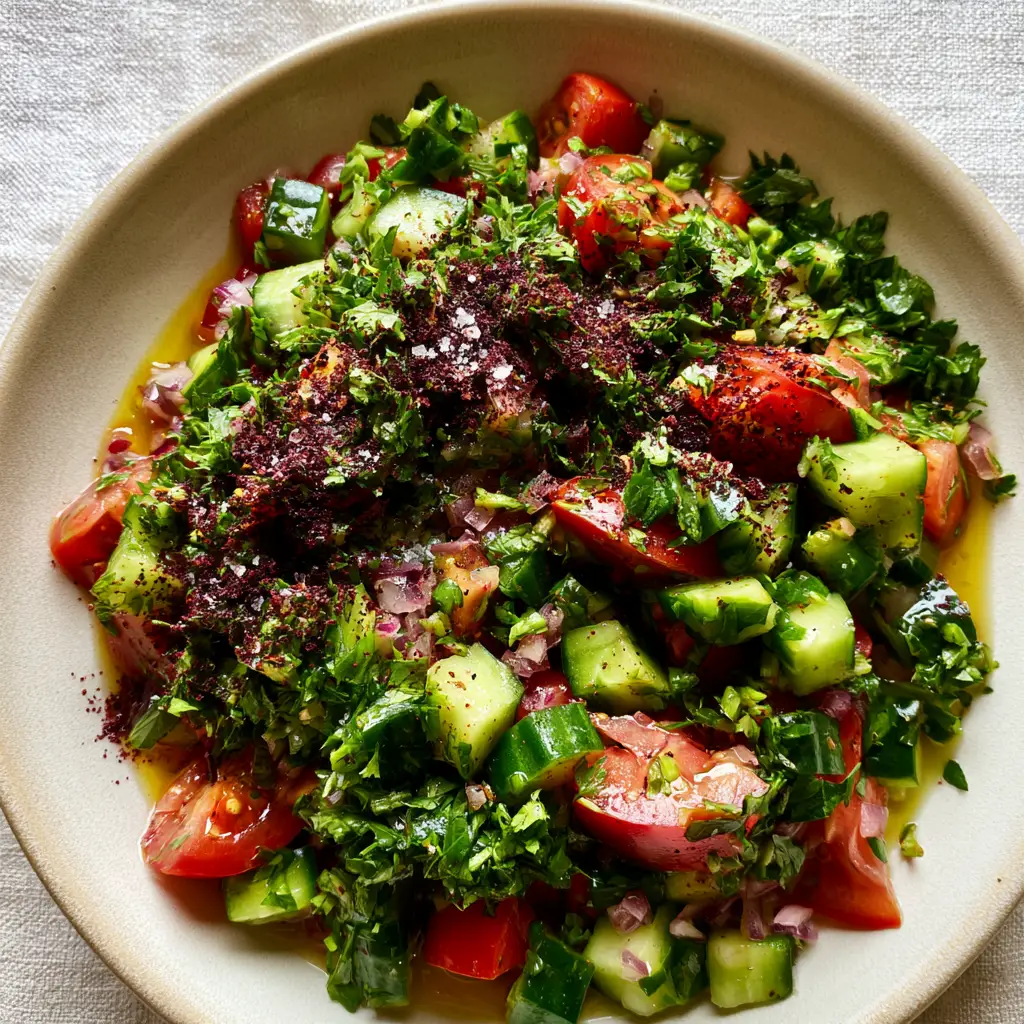
When you first lay eyes on a professional Arabic salad, the visual impact is immediate. It isn’t just a pile of vegetables; it is a carefully structured mosaic. Here is why this specific recipe stands out in terms of both E-E-A-T and culinary aesthetics:
- Precision Dicing: Every Persian cucumber and Roma tomato is diced into uniform, small cubes. This creates a consistent mouthfeel and ensures every forkful contains a perfect ratio of ingredients.
- Vibrant Color Contrast: The deep, bright green of the cucumber skins sits in high-contrast against the ruby-red of the firm Roma tomatoes and the translucent violet of the red onions.
- The Herbaceous Carpet: Unlike western salads where herbs are an afterthought, this dish features a dense layer of finely chopped flat-leaf parsley and torn mint leaves that provide a “lush green” visual foundation.
- Crystalline Finishes: The final dusting of dark purple sumac and coarse sea salt flakes provides a micro-texture that catches the light and adds a sophisticated “hand-crafted” look.
The Essential Components for an Authentic Arabic Salad
To achieve the result seen in high-end culinary photography, we must be selective about our ingredients. Each item in this list serves a structural and flavor purpose. We do not use “invisible” fillers; we use foundational elements that support the primary produce.
Persian Cucumbers (Skin-On)
Persian cucumbers are the gold standard for an Arabic salad because of their thin, sweet skins and lack of large seeds. You will need 4-5 medium Persian cucumbers (approx. 450g) to provide the necessary crunch without the wateriness of larger varieties.
Firm Roma Tomatoes
Texture is everything here. We use 3-4 firm Roma tomatoes (approx. 300g) because they have a higher flesh-to-seed ratio, ensuring the salad stays “glistening” rather than “swimming” in juice.
Translucent Red Onions
A small red onion (approx. 60g) provides a sharp, biting counterpoint to the sweet tomatoes. We mince these finely to ensure they distribute evenly, providing color without overwhelming the palate.
Flat-Leaf Parsley and Fresh Mint
Use 1 large bunch (approx. 60g) of flat-leaf parsley and a handful of mint leaves (approx. 10g). The flat-leaf variety offers a more robust, peppery flavor than curly parsley and lays flatter for that “carpet” effect.
Extra Virgin Olive Oil and Fresh Lemon
The “glistening” effect described in the visual blueprint comes from a high-quality, cold-pressed extra virgin olive oil (3 tbsp / 45ml). We pair this with the juice of 1 large lemon (approx. 30ml) for a bright, clean acidity.
The Finishing Spices: Sumac and Sea Salt
Ground purple sumac (1 tsp / 5g) is the secret weapon of Middle Eastern cuisine, offering a tart, tannic profile. We finish with coarse sea salt flakes (1/2 tsp / 3g) to provide a satisfying crunch and visual sparkle.
Professional Tools for Culinary Precision
To achieve the “precisely diced” look of our Arabic salad, your equipment matters just as much as your ingredients. Using the wrong tool can bruise your herbs or crush your tomatoes, leading to a dull, soggy result.
- High-Carbon Chef’s Knife: A sharp 8-inch blade is essential for making clean, translucent cuts through the red onion and firm tomato skins.
- Large Wooden Cutting Board: Wood is gentler on your knife edge and provides the surface area needed to chop the “lush carpet” of parsley without crowding.
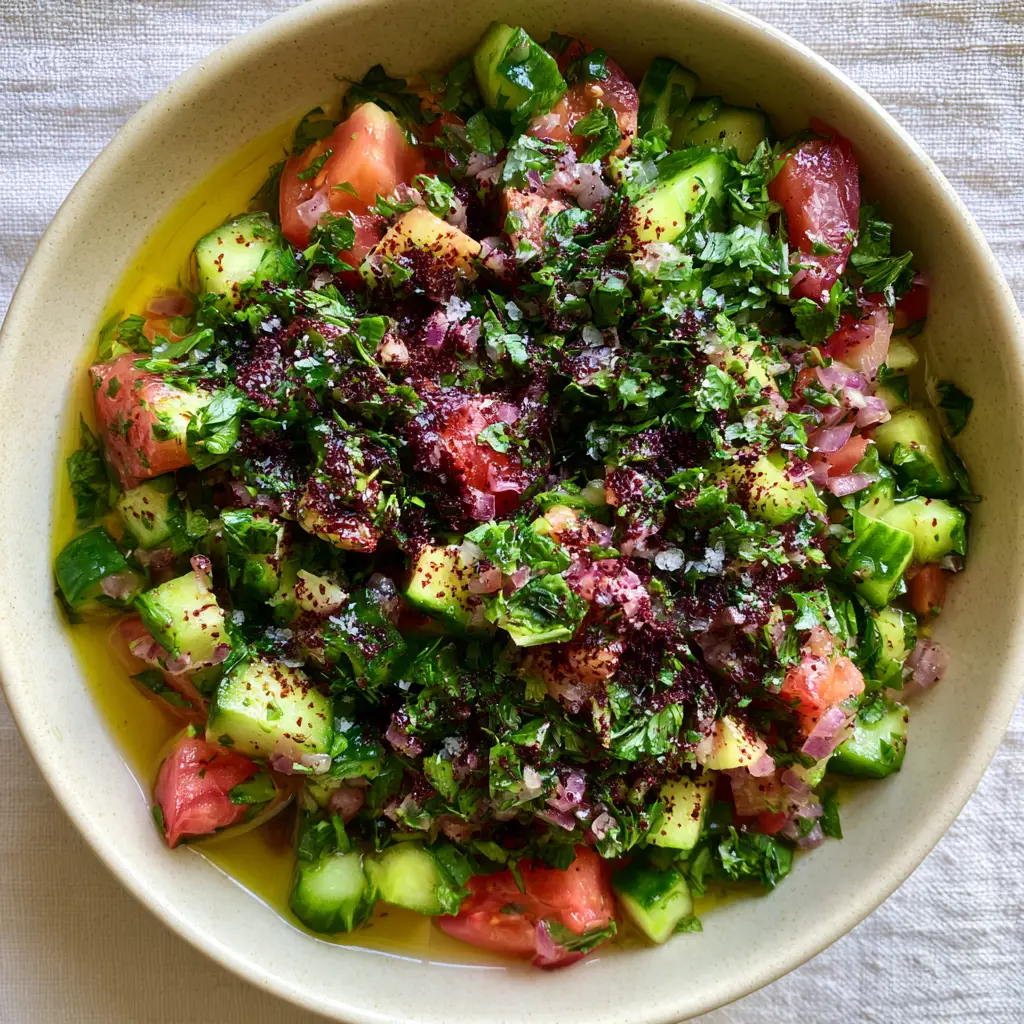
- Shallow Matte Ceramic Bowl: As seen in the Midjourney prompt, a shallow bowl allows the salad to be spread out, showcasing the textures rather than burying them.
- Citrus Press: This ensures you get maximum yield from your lemons while keeping bitter seeds out of the salad.
The Step-By-Step Guide to the Perfect Arabic Salad
1. Preparing the Cucumber Foundation
Start with your Persian cucumbers. Do not peel them; the bright green skin is vital for the visual contrast. Slice the cucumbers into 1/4 inch (6mm) rounds, then stack them and slice into uniform batons, and finally into small cubes. Place them in your matte ceramic bowl as the base layer.
2. Dicing the Roma Tomatoes
To maintain structural integrity, slice the Roma tomatoes into quarters lengthwise. Use your knife to gently remove the watery seed core if they seem overly ripe. Dice the remaining firm flesh into cubes that match the size of your cucumbers. Add these to the bowl, allowing the red and green to mingle naturally.
3. Achieving Translucent Onion Mince
Peel the red onion and cut it in half. Make very close vertical slices, then horizontal, and finally dice. The goal is “fine-diced translucent” pieces. Scatter these throughout the cucumber and tomato mixture. The onion should act as a highlight, not a dominant feature.
4. Creating the Lush Herb Carpet
Wash your flat-leaf parsley and mint, then pat them completely dry with a lint-free towel. This is a crucial “invisible” step—wet herbs will clump and turn dark. Finely chop the parsley, discarding only the thickest stems. Hand-tear the mint leaves into “tiny flecks.” Layer this herb mixture generously over the vegetables until they are nearly covered.
5. The Glistening Finish
Drizzle the extra virgin olive oil in a steady stream over the salad. Follow immediately with the fresh lemon juice. You should see droplets of juice catching the light against the oil. Do not toss the salad yet; we want to preserve the layered look for the final presentation.
6. The Final Dusting
Take your ground purple sumac and sprinkle it from a height of about 6 inches to ensure an even “dusting.” Finally, crush the coarse sea salt flakes between your fingers as you sprinkle them over the top. This provides the “intricate textural detail” mentioned in our visual blueprint.
Expert Culinary Tips for Success
- The Temperature Rule: Serve this salad slightly chilled or at room temperature. Cold temperatures mute the flavor of the tomatoes, while too much heat will wilt the “lush carpet” of herbs.
- The Salting Secret: Never salt the salad until the very moment of serving. Salt draws out moisture from the cucumbers and tomatoes; salting too early will result in a puddle of water at the bottom of the bowl.
- The Mint Technique: Always tear mint rather than chopping it with a dull knife. Tearing preserves the essential oils and prevents the edges from oxidizing and turning black.
- Oil First, Acid Second: Some chefs prefer to coat the vegetables in oil first to create a waterproof barrier, which keeps them crunchy for longer once the lemon juice is added.
Storage, Longevity, and Prep Advice
The Arabic salad is at its peak within 30 minutes of assembly. The textures are sharp, the herbs are vibrant, and the oil is perfectly emulsified with the lemon juice. However, life happens, and you may need to store it.
If you have leftovers, store them in an airtight glass container in the refrigerator for up to 24 hours. Be aware that the sumac will bleed its purple hue into the onions and cucumbers over time, and the salad will lose its “glistening” quality as the vegetables release their juices.
For meal prep, you can dice the cucumbers, tomatoes, and onions and store them in separate containers. Chop the herbs and keep them in a damp paper towel. Combine and dress the salad only when you are ready to eat to maintain that professional, high-angle-photo-worthy texture.
What to Pair with Your Arabic Salad
This salad is a versatile powerhouse that fits into many different meal structures. While it is a staple of Middle Eastern cuisine, its clean flavors allow it to cross borders easily. It is much lighter than a macaroni salad but offers more texture than a traditional Caprese salad.
For an authentic experience, serve it alongside a platter of Shish Tawook. The acidity of the lemon and sumac cuts through the char of the grilled chicken perfectly. If you are building a Mediterranean spread, it sits beautifully next to a Turkish potato salad or a hearty Greek bean salad.
If you enjoy the combination of tomatoes and herbs, you might also want to explore our tomato and walnut salad for a crunchier, nuttier variation of these classic flavors. For those looking for more “fusion” ideas, this salad can even act as a refreshing side for a Jamaican jerk potato salad at your next barbecue.
Frequently Asked Questions
While you can use English cucumbers, Persian cucumbers are preferred because their skin is thinner and sweeter, providing the signature ‘skin-on’ bright green look without any bitterness.
It is best served fresh, but it will stay edible for up to 24 hours. Note that the vegetables will soften and the sumac will lose its vibrant color as it absorbs moisture.
Sumac is a spice made from dried, ground berries. it has a tart, lemony flavor and a deep purple color. It is essential for the authentic flavor and visual ‘dusting’ of a traditional Arabic salad.
The primary differences are the dice and the seasoning. Arabic salad features a much smaller, uniform dice and uses sumac and fresh mint, whereas Greek salad typically has larger chunks and uses dried oregano and feta cheese.
This usually happens if you salt the salad too early or use tomatoes that are too soft. To prevent this, use firm Roma tomatoes and only add the sea salt flakes immediately before serving.
The Authentic Arabic Salad Recipe
Arabic Salad: The Ultimate Fresh Middle Eastern Chopped Salad Guide
Ingredients
Equipment
Method
- Dice the skin-on Persian cucumbers and firm Roma tomatoes into uniform 1/4 inch cubes. Finely mince the red onion until pieces are small and translucent.
- Finely chop the flat-leaf parsley and hand-tear the fresh mint leaves into tiny flecks. Ensure herbs are completely dry before chopping to maintain a 'lush' texture.
- In a shallow ceramic bowl, layer the cucumbers and tomatoes, then scatter the red onions. Top with a thick, lush carpet of the chopped parsley and mint.
- Drizzle the extra virgin olive oil and fresh lemon juice over the salad. Finish with a generous dusting of purple sumac and coarse sea salt flakes just before serving.
Notes
Use only firm Roma tomatoes to ensure the salad stays glistening rather than watery.
Closing & Call to Action
Mastering the Arabic salad is a rite of passage for any home cook looking to explore the depths of Mediterranean and Middle Eastern flavors. It’s a dish that proves how simple ingredients, when treated with technical precision and care, can become something truly extraordinary. The combination of “precisely diced” vegetables and that “lush carpet” of herbs creates a side dish that is as beautiful as it is delicious.
Did you try this recipe? We would love to see your “glistening” results! Tag us in your photos and follow us on Pinterest for more culinary inspiration and high-RPM recipe secrets. Don’t forget to leave a comment below with your favorite way to serve this classic salad!
***