Greek Salad, known in its homeland as Horiatiki, is a masterclass in culinary simplicity. It represents the soul of the Mediterranean, relying on the vibrant quality of sun-ripened produce rather than complex dressings or heavy seasonings. This recipe focuses on the rustic, chunky textures and high-gloss finish that define a true village salad.
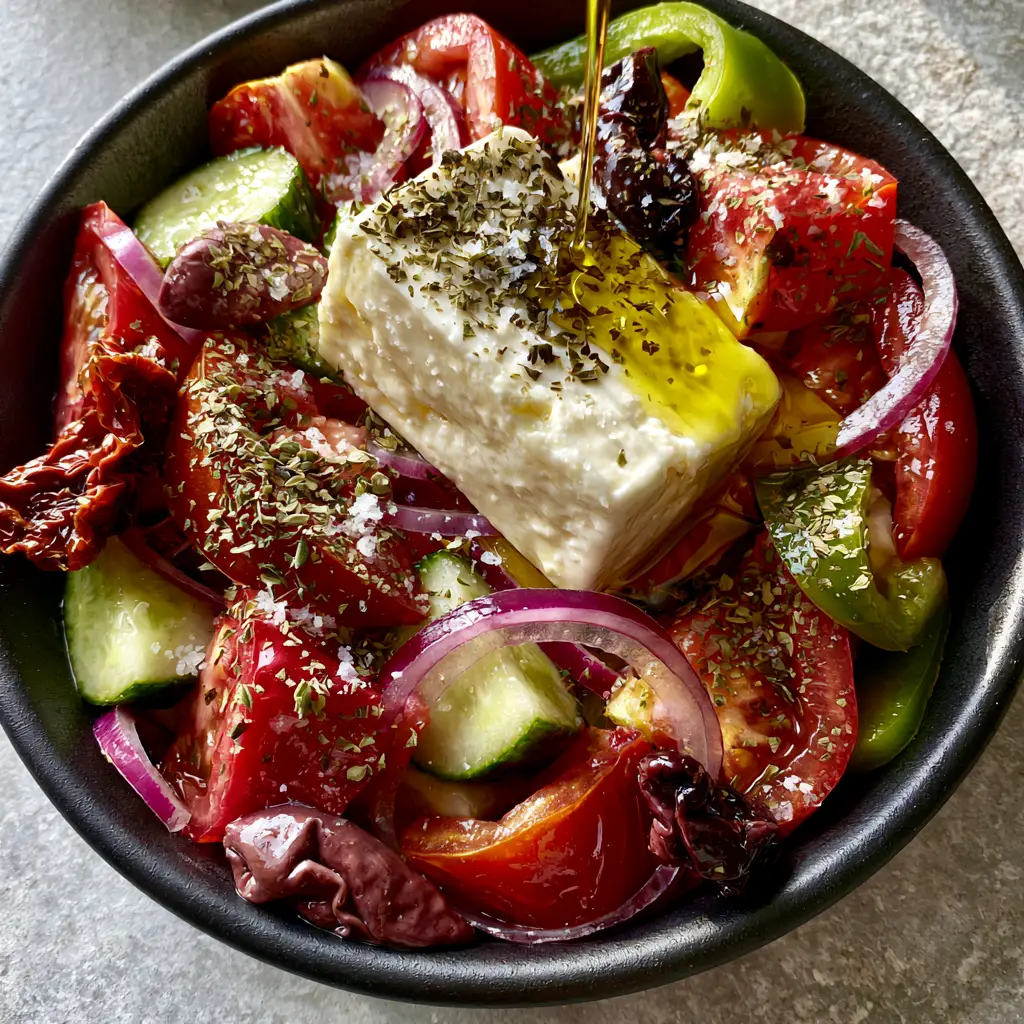
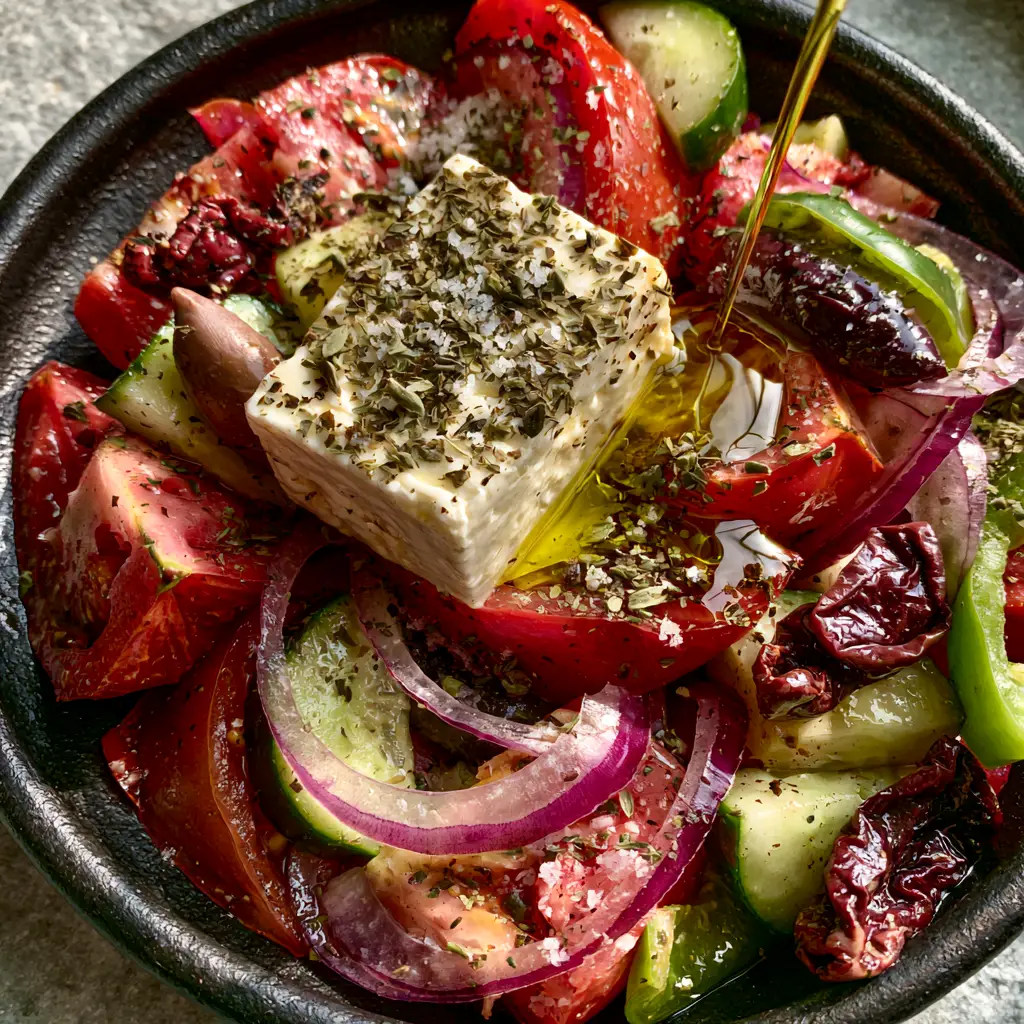
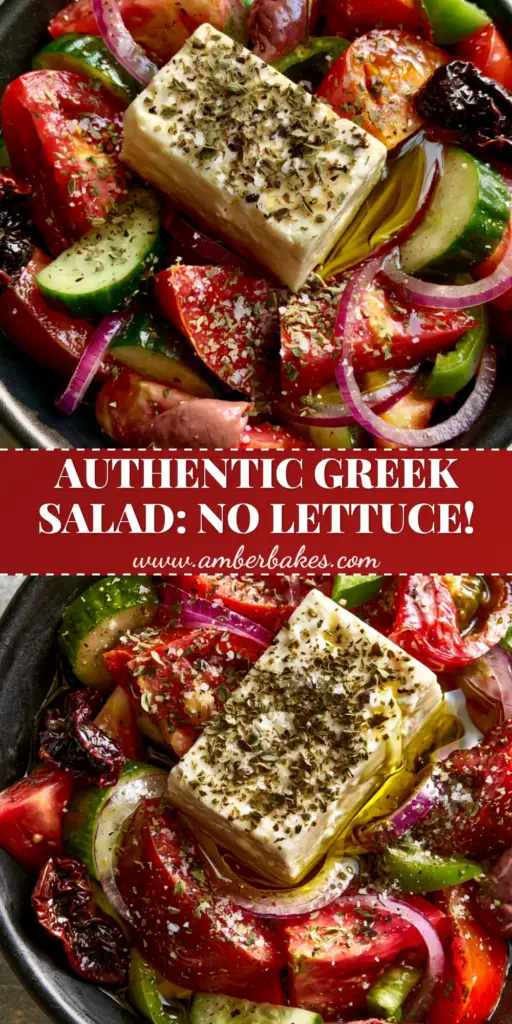
Imagine a matte-black ceramic bowl overflowing with deep red heirloom tomato wedges and translucent purple onion rings. Every bite offers a crunch from deseeded cucumber half-moons and the salty tang of wrinkled Kalamata olives. The crowning glory is a singular, solid block of creamy sheep-milk feta, heavily dusted with wild dried oregano and coarse sea salt.
Whether you are hosting a summer garden party or seeking a refreshing lunch, this Greek Salad provides an explosion of color and flavor. It is a dish where every ingredient is visible, celebrated, and coated in a generous pour of golden extra virgin olive oil. This is not just a side dish; it is a sensory journey to the Aegean coast.
Essential Ingredients for a Traditional Greek Salad
- Heirloom Tomatoes: Use 3-4 large (600g) tomatoes. These provide the deep red color and meaty texture essential for thick wedges.
- Persian Cucumbers: 2-3 medium (300g) cucumbers. These are preferred for their thin skin and concentrated flavor; they must be deseeded and cut into chunky half-moons.
- Red Onion: 1 small (100g) onion. Slicing these into thin, translucent rings ensures the sharp bite doesn’t overwhelm the palate.
- Green Bell Pepper: 1 medium (150g). These provide a crisp, slightly bitter counterpoint to the sweet heirloom tomatoes.
- Kalamata Olives: 1/2 cup (75g). Look for wrinkled, dark purple olives that are salt-cured for the most authentic savory depth.
- Sheep-Milk Feta Cheese: 1 whole block (200g). A true Horiatiki never uses crumbled feta; the block allows the diner to break off pieces as they eat.
- Extra Virgin Olive Oil: 1/3 cup (80ml). Choose a high-quality, golden-hued oil for that high-gloss finish and peppery finish.
- Dried Oregano: 1 tbsp (3g). Use wild-grown dried oregano flakes for an earthy, aromatic punch that scents the entire dish.
- Coarse Sea Salt: 1 tsp (6g). The large grains provide a satisfying crunch and highlight the moisture of the tomatoes.
- Cracked Black Pepper: 1/2 tsp (1g). Freshly cracked pepper adds a subtle heat that lingers behind the acidity of the vegetables.
Pro Tools for a Rustic Presentation
To achieve the macro-level detail seen in authentic Mediterranean photography, you need the right tools. A sharp chef’s knife is non-negotiable for creating those clean, translucent red onion rings without bruising the vegetable. Dull blades will crush the cells, leading to a watery salad rather than a crisp one.
A shallow, matte-black ceramic bowl is the ideal vessel for this Greek Salad. The dark, non-reflective surface makes the deep reds of the heirloom tomatoes and the creamy white of the feta pop visually. Finally, a small spoon or melon baller is useful for quickly removing seeds from the Persian cucumbers, ensuring a chunky texture without excess liquid.
Mastering the Art of the Horiatiki Cut
Preparing the Base Vegetables
Start by washing your heirloom tomatoes and cutting them into thick, substantial wedges. Unlike a standard garden salad, the Greek Salad thrives on large, rustic pieces that retain their shape. Place these at the bottom of your matte-black bowl to act as the base for the other ingredients.
Next, take your Persian cucumbers and slice them lengthwise. Use a small spoon to scrape out the watery seeds, then cut the remaining flesh into 1/2-inch (1.25cm) chunky half-moons. This technique prevents the salad from becoming soggy and ensures a professional, high-gloss appearance once the oil is added.
Layering the Rings and Olives
Slice the red onion into paper-thin rings; you should almost be able to see through them. Scatter these over the tomatoes and cucumbers alongside thin slices of green bell pepper. The contrast between the purple rings and green pepper slices creates the classic visual aesthetic of a village salad.
Add the Kalamata olives, ensuring they are evenly distributed. These should be whole and wrinkled, signaling that they have been traditionally cured. Avoid using pre-sliced canned olives, as they lack the textural integrity required for an elite Greek Salad experience.
Finishing Touches: The Golden Pour and Seasoning
The defining moment of this recipe is the addition of the feta and the oil. Place the entire solid rectangular block of feta prominently on top of the vegetable mound. Do not be tempted to crumble it; the block is the hallmark of authenticity and creates a stunning focal point in the center of the bowl.
Now, perform the “Golden Pour.” Take your extra virgin olive oil and drizzle it in a steady, visible stream over the cheese and vegetables. The oil should coat everything, pooling slightly around the base of the feta to create a high-gloss, shimmering finish under natural daylight.
Generously dust the entire dish with dried wild oregano flakes and coarse sea salt. The salt grains should be visible on the skin of the tomatoes, and the oregano should cling to the oil-coated feta. Add a final sprinkle of cracked black pepper for a complete flavor profile.
Expert Tips for Success
- Temperature Matters: Serve the vegetables at room temperature to allow the tomato volatiles to be at their most fragrant. The feta, however, should be slightly chilled to maintain its firm rectangular shape.
- Choose the Right Oil: Since there is no vinegar in this specific blueprint, the quality of your extra virgin olive oil is paramount. Look for “First Cold Pressed” labels for the best flavor.
- Deseeding is Key: Removing the seeds from the cucumbers and even the bell peppers is what separates a soggy home salad from a professional-grade Greek Salad.
- Salt Timing: Only add the coarse sea salt immediately before serving. Adding it too early will draw out the moisture from the tomatoes and wilt the onions.
Storage and Freshness
The Greek Salad is best enjoyed immediately after the olive oil and salt are applied. Because the salt draws out vegetable juices, the salad will lose its crisp texture if left to sit for more than an hour. If you must prepare it in advance, chop the vegetables but wait to add the oil, salt, and feta until the moment of service.
Leftovers can be stored in an airtight container in the refrigerator for up to 24 hours. While the vegetables will soften, the flavors will marinate beautifully. This “day-after” juice at the bottom of the bowl, known in Greece as ‘papara,’ is perfect for dipping crusty bread.
Perfect Pairings for your Mediterranean Feast
This salad is incredibly versatile and pairs well with a variety of proteins and sides. For a light summer lunch, serve it alongside a refreshing mango lassi or some homemade frozen yogurt pops. The creamy textures of these treats complement the acidity of the tomatoes.
If you are serving this for dinner, it acts as the perfect vibrant side for pan-seared rainbow trout or a hearty spicy honey lime chicken. The saltiness of the feta and the earthiness of the oregano cut through the richness of grilled meats and fish beautifully. If you prefer a different type of greenery, you might also enjoy a traditional Greek lettuce salad as a secondary option.
Frequently Asked Questions
Yes, English cucumbers are a good substitute. However, regardless of the variety, you should always deseed them to ensure the salad remains crisp and doesn’t become watery.
While some variations use red wine vinegar, a traditional village salad often relies solely on the natural acidity of sun-ripened heirloom tomatoes and the richness of high-quality extra virgin olive oil.
Yes, it is packed with heart-healthy fats from extra virgin olive oil and a wide range of vitamins and antioxidants from the fresh heirloom tomatoes, peppers, and onions.
Kalamata olives are the gold standard. Look for salt-cured, wrinkled varieties with their pits still in for the most authentic flavor and texture.
In a traditional Horiatiki (Village Salad), the feta is kept whole to preserve its creamy texture and prevent it from dissolving into the vegetable juices. This allows diners to break off as much as they want for each bite.
Authentic Horiatiki Greek Salad Recipe Card
Greek Salad: The Ultimate Authentic Horiatiki Recipe
Ingredients
Equipment
Method
- Cut the heirloom tomatoes into thick, rustic wedges and place them in a shallow matte-black bowl.
- Slice Persian cucumbers lengthwise, scrape out the seeds with a spoon, and cut into chunky half-moons. Add to the bowl.
- Layer thin, translucent red onion rings and green bell pepper slices over the tomatoes and cucumbers.
- Scatter the wrinkled Kalamata olives throughout the bowl. Place the whole block of sheep-milk feta prominently on top.
- Drizzle a generous, visible stream of extra virgin olive oil over the dish. Dust heavily with dried oregano, coarse sea salt, and cracked black pepper until the vegetables have a high-gloss finish.
Notes
Deseeding the cucumbers is vital to prevent the salad from becoming watery.
Bring the Taste of Greece to Your Kitchen
This Greek Salad is a testament to the power of high-quality, raw ingredients. By following these specific cutting techniques and ensuring a generous pour of extra virgin olive oil, you can recreate an authentic Mediterranean experience in your own home. The combination of heirloom tomatoes and sheep-milk feta is timeless, rustic, and utterly delicious.
We would love to see your culinary creations! If you enjoyed this recipe, please leave a comment below and share your photos with us. Don’t forget to follow amber_bakes on Pinterest for more visually stunning recipe inspiration. Happy cooking!