There is a specific, primal satisfaction that comes from the sound of a cold fish fillet hitting a screaming-hot cast iron skillet. The instant sizzle signals the beginning of a transformation, turning a simple piece of fresh water fish into a culinary masterpiece. This pan seared rainbow trout is not just a meal; it is a masterclass in texture, featuring skin so crispy it crackles like parchment and flesh that remains tender and succulent.
Achieving that elusive, restaurant-quality blistered golden skin at home often feels like a gamble, but it is actually a matter of pure culinary science. By mastering the relationship between surface moisture, thermal mass, and fat, you can produce a result that rivals the finest bistros. Every element in this dish, from the toasted minced garlic to the shimmering pool of lemon-infused butter, is designed to elevate the natural sweetness of the trout.
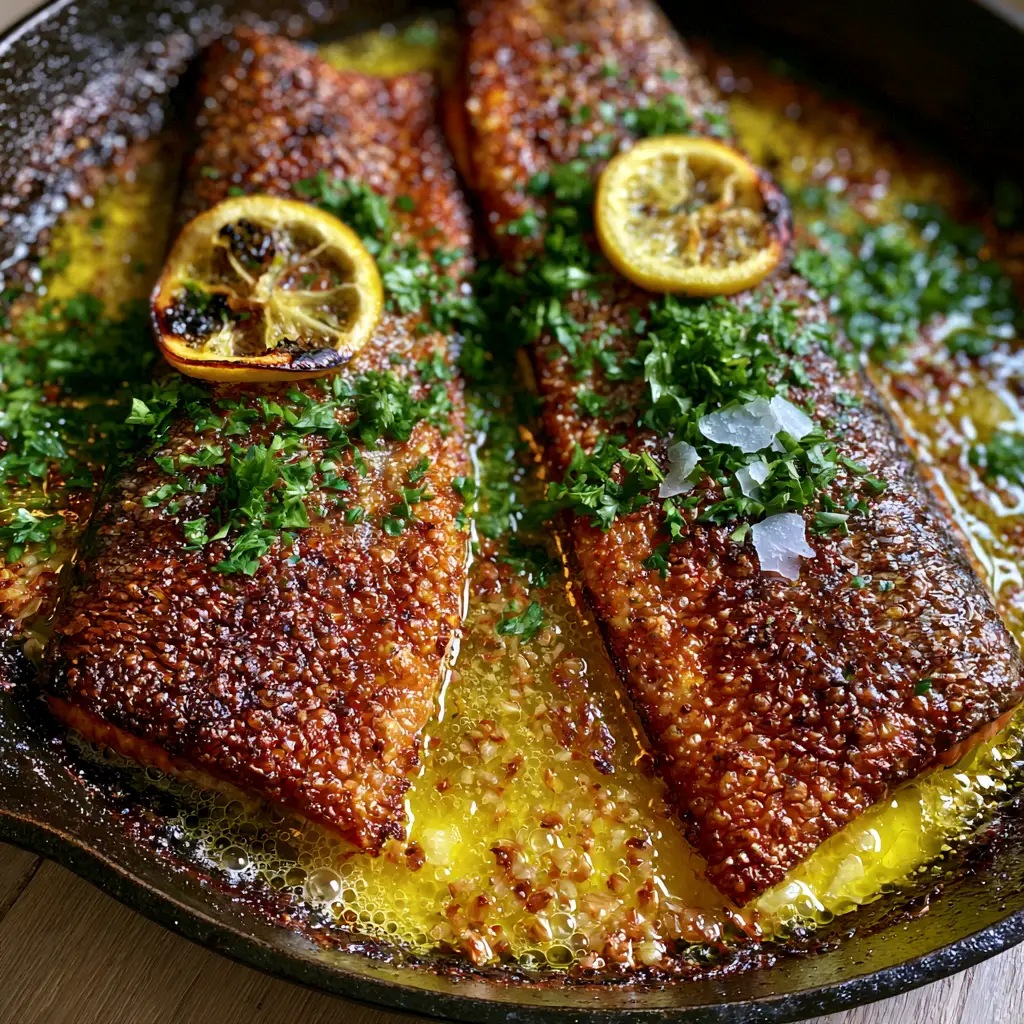
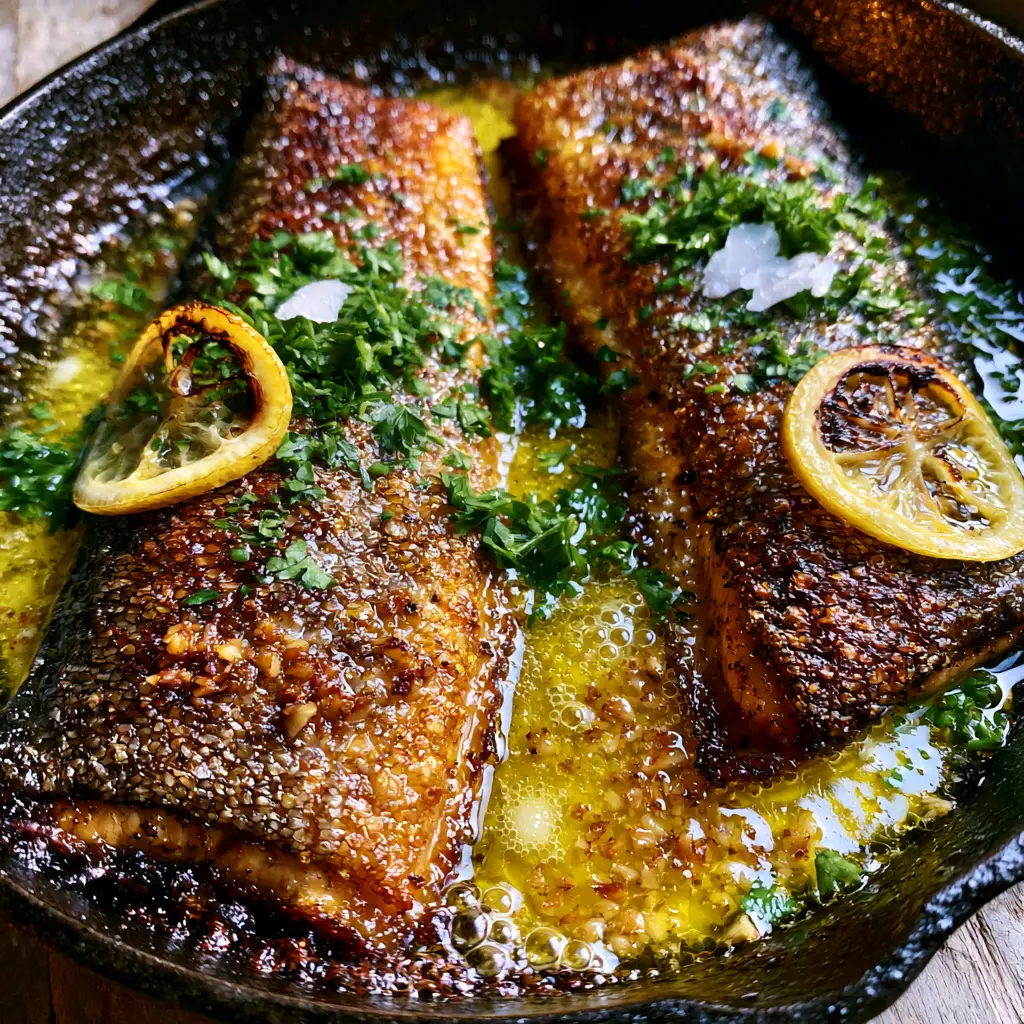
When you look at the final plate, you will see deep golden-brown highlights and visible crackling textures that promise a crunch in every bite. The bright green flecks of parsley and the translucent crystals of flaky sea salt aren’t just garnishes; they are the final flavor notes that balance the richness of the butter. Whether you are a seasoned pro or a weekend enthusiast, this method will change the way you approach seafood forever.
Why You Will Love This Crispy Skinned Masterpiece
- Unrivaled Texture: We utilize a specific searing technique to ensure the skin is exceptionally crispy, blistered, and deep golden-brown without overcooking the delicate meat.
- Aromatic Depth: The sauce isn’t just melted butter; it’s a glossy, shimmering emulsion of toasted minced garlic and tiny bubbles of fresh lemon juice.
- Cast Iron Magic: Using a seasoned black cast iron skillet provides the even heat distribution necessary for that perfect, uniform sear across the entire fillet.
- Five-Star Presentation: Between the charred lemon wheels and the generous scatter of fresh parsley, this dish looks as professional as it tastes.
Essential Components for Restaurant-Style Trout
To achieve the visual and textural results described, we need a combination of high-quality proteins and foundational fats. Each ingredient serves a specific structural or flavor-building purpose in the skillet.
Fresh Rainbow Trout Fillets: You will need two large rainbow trout fillets, approximately 6-8 ounces (170-225g) each, ideally with the skin on. The skin is where the flavor and texture live, providing a protective barrier that keeps the flesh moist during the high-heat sear.
Neutral High-Smoke Point Oil: Use 2 tablespoons (30ml) of grapeseed or avocado oil to start the sear. Unlike butter, these oils can handle the intense heat required to blister the skin without burning or smoking out your kitchen.
Unsalted European-Style Butter: 3 tablespoons (45g) of high-fat butter creates the glossy, shimmering pool seen in the final dish. We use unsalted butter to maintain total control over the seasoning profile, especially since we finish with flaky salt.
Fresh Aromatics: 4 cloves of minced garlic and a handful of fresh parsley provide the “toasted” and “bright” elements. The garlic should be minced finely so it toasts quickly in the residual heat of the butter.
Acid and Seasoning: One large lemon, halved (half for slices, half for juice), and a generous pinch of flaky sea salt. The charred lemon wheels add a smoky acidity that cuts through the rich garlic butter sauce.
The Tools Required for a Perfect Sear
You cannot achieve professional blistering without the right conductive surfaces. The most critical tool is a 12-inch (30cm) seasoned black cast iron skillet, which holds heat better than stainless steel or non-stick pans.
You will also need a flexible metal fish spatula. This allows you to get underneath the delicate skin without tearing the blistered crust we are working so hard to create. Finally, have a set of paper towels ready; moisture is the enemy of a crispy sear, and the fillets must be bone-dry before they touch the oil.
Step-by-Step Guide to the Ultimate Pan Seared Rainbow Trout
Preparing the Fish for Maximum Crunch
Remove your trout fillets from the refrigerator about 15 minutes before cooking to take the chill off. Use a sharp knife to gently scrape the skin side, removing any excess moisture or scales, then pat both sides extremely dry with paper towels.
Season the flesh side only with kosher salt and black pepper at this stage. We save the flaky sea salt for the very end to maintain its crystalline structure and provide a burst of saltiness upon impact.
The High-Heat Searing Phase
Place your cast iron skillet over medium-high heat and add the neutral oil. Wait until the oil is shimmering and just starting to send up a wispy tendril of smoke; this is the cue that the thermal energy is high enough to instantly seize the proteins in the skin.
Lay the fillets into the pan, skin-side down, laying them away from you to avoid oil splatters. Immediately press down firmly with your fish spatula for 10-15 seconds. This prevents the natural curling of the fish and ensures the entire surface of the skin makes contact with the hot iron.
Developing the Blistered Golden Crust
Let the fish cook undisturbed for 4-5 minutes. You are looking for a specific visual cue: the edges of the skin should look dark golden-brown and opaque white cooked flesh should creep about halfway up the side of the fillet. If you try to flip too early, the skin will stick; wait for the Maillard reaction to naturally release the fish from the pan.
Once the skin is crackling and blistered, gently flip the fillets. Lower the heat to medium. This side only needs about 1-2 minutes to finish cooking through while remaining flakey and tender.
Basting with Garlic and Lemon Butter
Push the trout to one side of the skillet and add the butter, minced garlic, and two thin lemon wheels. As the butter melts and begins to foam, it will pick up the toasted notes from the garlic. Use a large spoon to continuously bath the fillets in this shimmering yellow liquid.
Continue basting until the garlic is golden-brown and the lemon wheels have a visible char on their edges. Squeeze the remaining half of the lemon into the pan, creating those tiny bubbles of citrus-infused fat that characterize the perfect sauce.
Expert Tips for Culinary Success
- The Dryness Factor: If the skin is even slightly damp, it will steam rather than fry. Double-dry the skin right before it goes into the pan for the best results.
- Don’t Overcrowd: If you are doubling this recipe, use two pans. Overcrowding drops the temperature of the cast iron, leading to soggy skin instead of a deep golden-brown crust.
- Temperature Control: If the butter starts to smell nuttier than intended (turning into brown butter), immediately pull the pan off the heat. The residual heat of the cast iron will continue to cook the garlic.
- Resting: Unlike a steak, trout doesn’t need a long rest. Serve it immediately while the skin is at its peak “crackling” state.
Maintaining Freshness: Storage and Reheating
Pan seared rainbow trout is best enjoyed immediately to experience the contrast between the hot, crispy skin and the cool, flaky interior. However, if you have leftovers, store them in an airtight container in the refrigerator for up to 2 days.
To reheat, avoid the microwave at all costs, as it will turn the skin rubbery. Instead, place the fillets in a cold non-stick skillet, skin-side down, and turn the heat to medium. Cover the pan for 2-3 minutes to warm the flesh, then remove the lid for the final minute to re-crisp the skin.
What to Serve with Your Trout Dinner
The richness of the garlic butter sauce pairs beautifully with bright, acidic side dishes. A traditional maroulosalata (Greek lettuce salad) provides a refreshing crunch that cleanses the palate between bites of buttery fish. For a heartier meal, a side of southern potato salad offers a creamy counterpoint to the crispy texture of the trout.
If you enjoy this preparation method but prefer a more hands-off approach next time, you might also like my recipe for baked rainbow trout. To finish the meal on a sweet note, a serving of watermelon ice cream or a refreshing mango lassi provides the perfect cooling effect after a savory, garlic-forward dinner.
Frequently Asked Questions
Yes, but you must thaw it completely in the refrigerator and pat it dry even more thoroughly than fresh fish, as frozen fillets tend to release more moisture.
The two keys are ensuring the skin is bone-dry and the oil is shimmering hot before adding the fish. Once in the pan, don’t try to move the fillets for at least 4 minutes; the skin will naturally release once a crust has formed.
Use a neutral oil with a high smoke point like grapeseed, avocado, or canola oil. Avoid extra virgin olive oil for the initial sear as it will smoke and become bitter at these temperatures.
Cast iron has high thermal mass, meaning it stays hot when the cold fish is added. Non-stick pans often can’t reach or maintain the temperatures needed for true skin blistering.
The Ultimate Pan Seared Rainbow Trout Recipe
Pan Seared Rainbow Trout with Crispy Blistered Skin and Garlic Butter
Ingredients
Equipment
Method
- Pat the trout fillets extremely dry on both sides using paper towels. Season the flesh side with salt and pepper.
- Heat oil in a 12-inch cast iron skillet over medium-high heat until shimmering and just starting to smoke.
- Place fillets skin-side down. Press with a spatula for 15 seconds to ensure contact. Cook for 4-5 minutes until skin is crispy and blistered.
- Flip the fish. Add butter, garlic, and lemon slices to the pan. Baste the fish with the melting garlic butter for 1-2 minutes.
- Remove from heat when garlic is toasted. Squeeze fresh lemon juice over the top and garnish with parsley and flaky sea salt.
Notes
Use a heavy cast iron pan to ensure the temperature doesn't drop when the fish is added.
Bring the Bistro to Your Kitchen
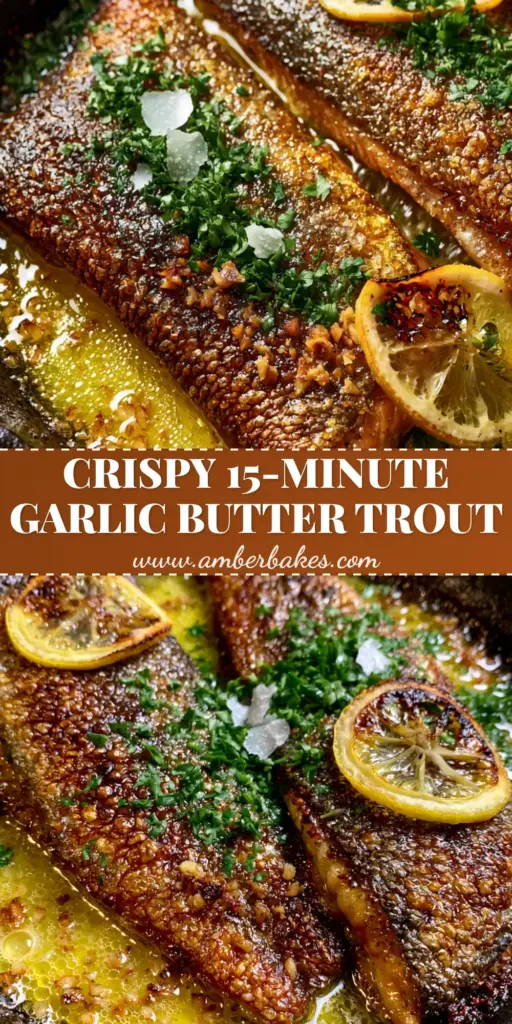
Mastering the pan seared rainbow trout is a gateway to becoming a more confident home cook. The combination of the heavy cast iron skillet, the high-heat sear, and the final butter baste creates a sensory experience that is hard to beat. The visual of the shimmering butter and the sound of the crackling skin make the process as enjoyable as the meal itself.
I would love to see how your crispy skin turns out! Leave a comment below with your results, or if you have a favorite secret ingredient for your butter sauce, share it with the community. Don’t forget to save this recipe to your boards on Pinterest so you can find it the next time you have fresh trout on hand!