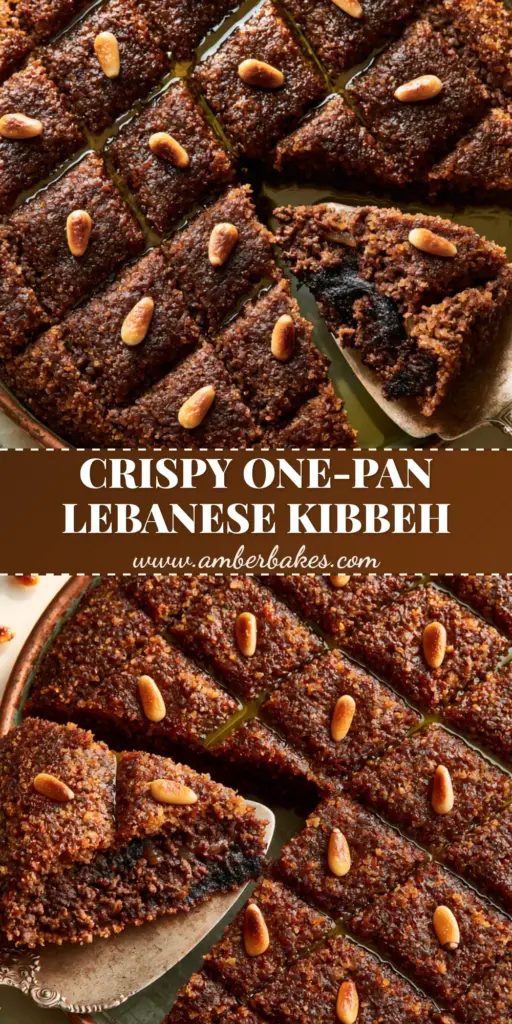
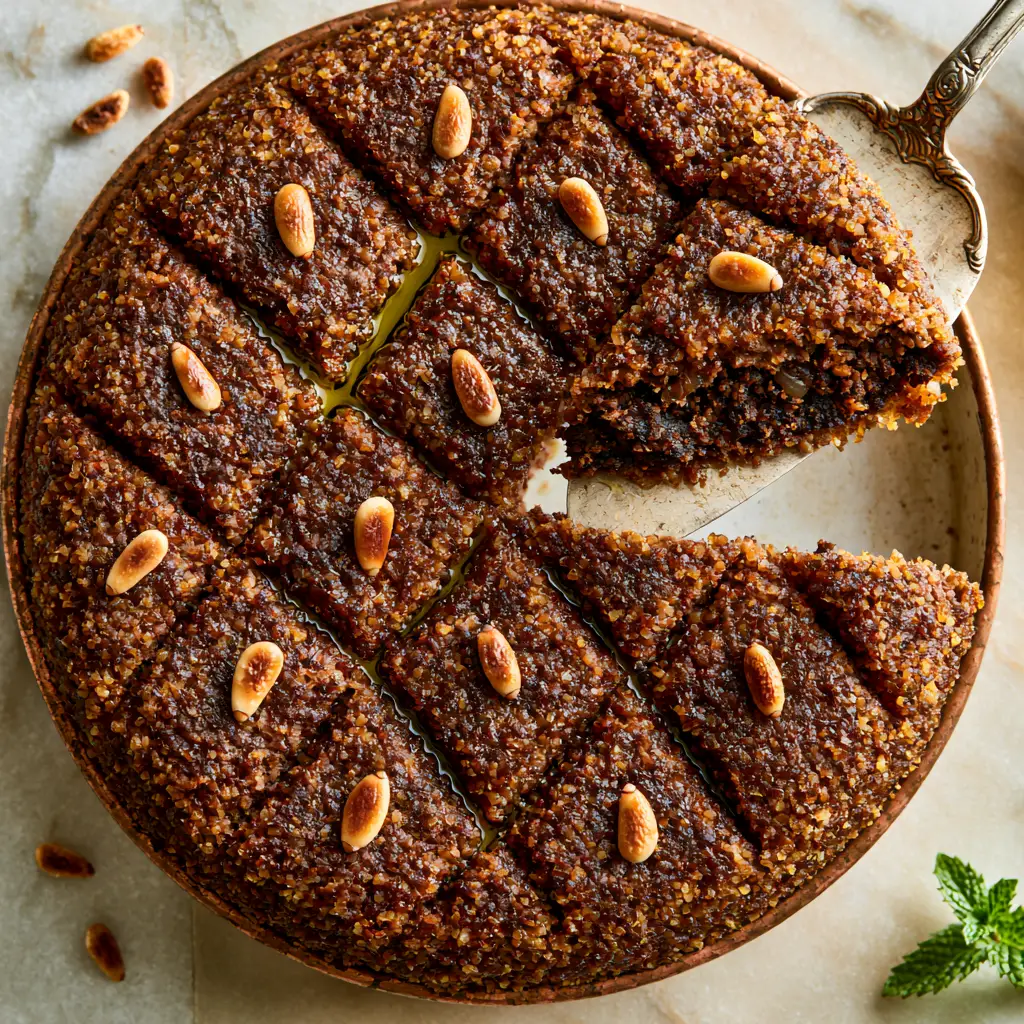
There is a specific, soul-warming aroma that fills a Levantine kitchen when a fresh tray of Lebanese Kibbeh is pulled from the oven. It is the scent of toasted allspice, caramelizing onions, and the nutty fragrance of golden bulgur wheat crisping under a layer of premium olive oil. As you lift a vintage silver server, a single slice of this geometric masterpiece releases a gentle plume of steam, revealing a moist, dark interior of perfectly seasoned ground beef and buttery pine nuts.
This recipe for Lebanese Kibbeh Saniyeh (kibbeh in a tray) is designed for the home cook who appreciates the intersection of culinary art and rustic tradition. We are moving beyond simple meatloaf; we are crafting a textural marvel featuring a crunchy exterior and a tender, aromatic core. Whether you are serving this as the centerpiece of a festive dinner or a high-protein lunch, the visual impact of the diamond-scored crust and the deep, savory flavors will leave a lasting impression on your guests.
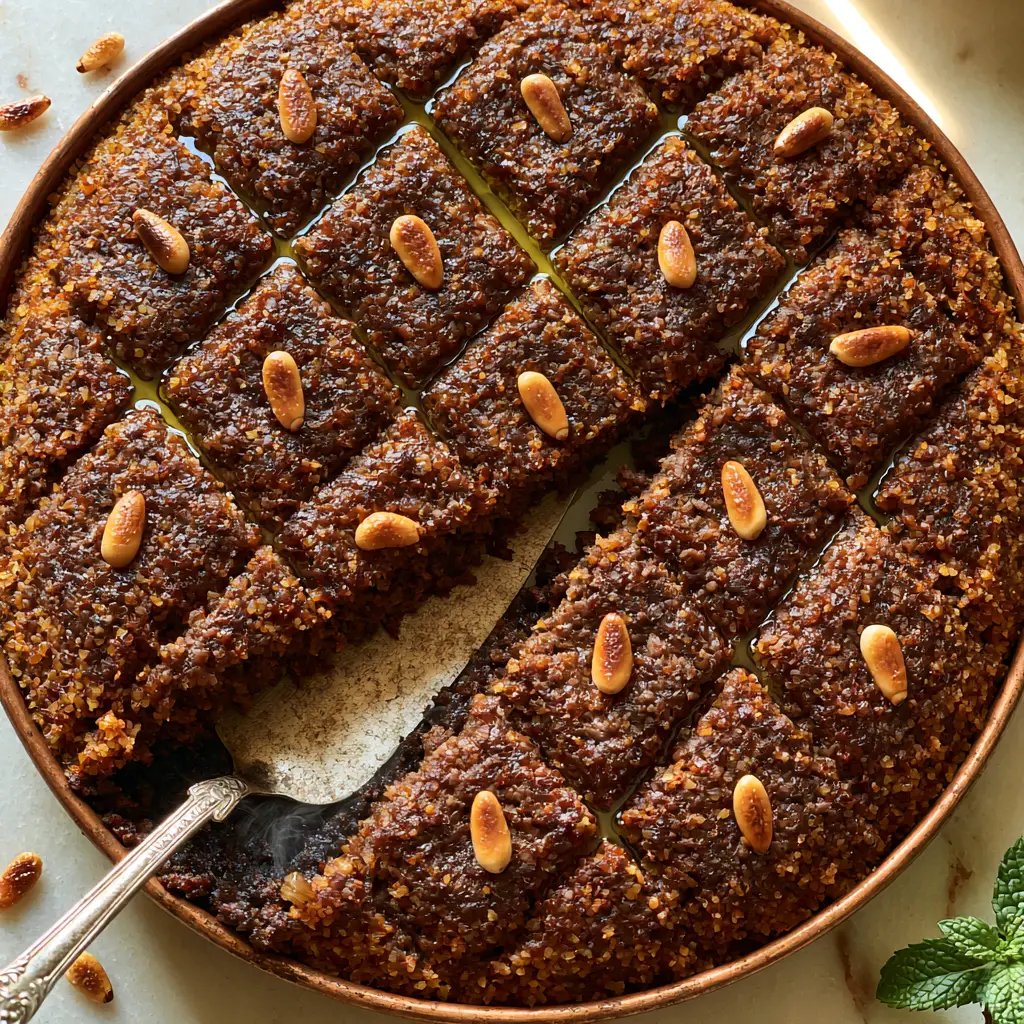
To achieve the specific visual result seen in professional Middle Eastern kitchens—that deep golden-brown crust and precise geometric pattern—we must focus on the science of the meat-to-bulgur ratio. By following this guide, you will master the “Forensic Visual Accuracy” of the dish, ensuring every single toasted pine nut sits perfectly in its diamond-shaped cradle, just as the tradition dictates.
Why This Crispy Lebanese Kibbeh Is a Culinary Masterpiece
- Unrivaled Textural Contrast: The dual-layer construction provides a “crunch factor” from the fine bulgur crust that perfectly offsets the juicy, spiced hashweh filling.
- Aromatic Depth: Using a traditional Lebanese 7-spice blend (Baharat) creates a complex flavor profile that is warm, savory, and slightly sweet without being spicy.
- Visual Sophistication: The geometric diamond scoring isn’t just for looks; it creates channels for the glistening olive oil to penetrate the crust, ensuring an even, golden bake.
- Make-Ahead Friendly: This dish holds its structure beautifully, making it an ideal candidate for meal prep or large family gatherings.
The Essential Components for an Authentic Lebanese Kibbeh
Creating a professional-grade Lebanese Kibbeh requires high-quality ingredients, each serving a specific structural or flavor-based purpose in the final bake. We divide the components into the “Kibbeh Dough” (the crust) and the “Hashweh” (the filling).
The Foundational Elements of the Kibbeh Crust
1 lb (450g) Extra-Lean Ground Beef or Lamb: For the crust, you need the leanest meat possible (90/10 or higher) to prevent the dough from shrinking or becoming greasy. This meat acts as the binding agent that holds the bulgur together into a sliceable “dough.”
1 1/2 cups (240g) Fine Grade #1 Bulgur Wheat: It is critical to use “Fine” bulgur (Grade #1); coarser varieties will not hydrate properly and will result in a gritty, unpleasant texture. The bulgur provides the signature crunch and absorbs the juices from the meat.
1 large (150g) Yellow Onion, grated: Grating the onion directly into the meat dough provides essential moisture and a sharp flavor that cuts through the richness of the beef. Ensure you include the juices from the grating process for maximum hydration.
1/2 cup (120ml) Ice-Cold Water: This “invisible ingredient” is the secret to a smooth, pliable meat paste. The cold temperature keeps the fat in the meat from melting during processing, resulting in a cleaner texture.
The Savory Hashweh Filling and Garnish
1 lb (450g) Ground Beef (80/20 ratio): Unlike the crust, the filling benefits from a slightly higher fat content to ensure the interior of the Lebanese Kibbeh remains moist and steaming when sliced. You can learn more about this technique in our guide to Middle Eastern hashweh filling.
2 medium (300g) Yellow Onions, finely diced: These are sautéed until translucent and sweet, providing the structural bulk of the interior filling. The onions should be chopped uniformly to ensure every bite is consistent.
1/4 cup (35g) Raw Pine Nuts (Snobar): These are the “jewels” of the dish. We will toast half of them within the filling and reserve the rest to be placed atop the geometric scoring for that iconic visual finish.
1/2 cup (120ml) Extra Virgin Olive Oil: Use a high-quality, cold-pressed oil. You will use this to grease the copper pan and to drizzle into the scored grooves, creating that glistening, deep-brown finish.
The Spice Trinity: You will need 2 tsp (10g) Fine Sea Salt, 1 1/2 tsp (7g) Lebanese 7-Spice, and 1/2 tsp (2g) Cinnamon. These spices provide the “Experience” of authentic Lebanese cuisine, offering a scent that is instantly recognizable.
Must-Have Equipment for a Professional Result
To achieve the rustic, high-resolution look of the Lebanese Kibbeh seen in our visual blueprint, you will need a few specific tools. While modern tools help, the goal is a traditional finish.
- 12-inch (30cm) Round Copper or Dark Metal Baking Pan: A dark or copper pan conducts heat more efficiently than glass, which is essential for achieving the crispy bottom and side crust.
- Food Processor: This is necessary to emulsify the meat and bulgur into a smooth “Kamouneh” paste. Without it, the crust will be crumbly rather than cohesive.
- Sharp Paring Knife: Used for the precise geometric diamond scoring that defines the dish’s aesthetic.
- Vintage Silver Server: For that perfect “hero lift” when serving, ensuring the slice stays intact while revealing the steaming interior.
The Art of Crafting the Perfect Lebanese Kibbeh Saniyeh
Hydrating and Preparing the Bulgur Crust
Begin by rinsing your fine bulgur wheat in a fine-mesh sieve under cold running water. Do not soak it for an extended period; simply rinse and drain well. The bulgur will continue to hydrate as it sits with the meat and onion juices.
In a food processor, combine the lean ground beef, grated onion, salt, and 1 teaspoon of the 7-spice blend. Pulse until the meat becomes a smooth paste. Add the drained bulgur and half of the ice water. Process again until the mixture forms a cohesive ball of “dough.” If it feels too dry or stiff, add the remaining ice water one tablespoon at a time. The texture should be similar to soft modeling clay.
Searing the Spiced Hashweh Filling
In a large skillet, heat 1 tablespoon (15ml) of olive oil over medium-high heat. Add the diced onions and sauté until they are soft and beginning to turn golden-brown. This visual cue indicates the natural sugars have caramelized.
Add the ground beef to the skillet, breaking it up with a wooden spoon. Season with the remaining 7-spice and cinnamon. Cook until the beef is fully browned and the juices have mostly evaporated. Stir in half of the pine nuts and cook for another 2 minutes until they are buttery-tan. Set the mixture aside to cool slightly; adding a hot filling to the raw meat crust can cause the layers to separate.
Assembling the Layers and Geometric Scoring
Preheat your oven to 400°F (200°C). Generously grease your round copper pan with 2 tablespoons (30ml) of olive oil. Divide your kibbeh crust dough into two equal portions. To make the process easier, keep a small bowl of cold water nearby to dampen your hands; this prevents the meat from sticking.
Press the first portion of the dough into the bottom of the pan in an even, 1/4-inch (6mm) layer. Ensure it reaches all the way to the edges. Spread the cooled hashweh filling evenly over this base layer. Now, take small pieces of the remaining crust dough, flatten them between your palms, and place them over the filling like a puzzle. Use your damp fingers to smooth the seams until you have a perfectly flat, uniform top surface.
Using a sharp paring knife, score the top layer of the Lebanese Kibbeh. Start by cutting straight lines across the pan, spaced about 1.5 inches (4cm) apart. Then, cut diagonal lines at a 45-degree angle to create the diamond pattern. Press one raw pine nut firmly into the center of each diamond. Finally, pour the remaining olive oil over the top, ensuring it pools slightly in the scored grooves.
Baking for the Ultimate Golden-Brown Crunch
Place the pan on the center rack of the oven. Bake for 35-45 minutes. Watch for the visual cues: the edges should be pulling away from the sides of the pan, and the top should be a deep, rich golden-brown. The bulgur wheat will look incredibly crispy, and the olive oil will be bubbling in the grooves.
Once removed from the oven, let the Kibbeh rest for 10 minutes. This allows the juices to redistribute, ensuring that the “steam rising from the interior” is captured perfectly when you lift the first slice. Garnish with a small sprig of fresh green mint and a few stray toasted pine nuts for a professional presentation.
Expert Tips for Success with Lebanese Kibbeh
- Cold Hands are Key: Always keep your hands damp with ice water when working the meat dough. This creates a smooth, professional finish on the top layer without the meat tearing.
- Don’t Scrimp on Oil: The olive oil is what fries the bulgur in the oven. Without enough oil, the crust will be tough and dry rather than crispy and golden.
- The “Rest” Period: Never cut into the kibbeh immediately. A 10-minute rest ensures the layers bond together, so you get those clean, sharp diamond edges in every slice.
- Spice Freshness: For the best E-E-A-T (Experience), toast your whole spices and grind them fresh. The aroma of freshly ground allspice and cinnamon is what distinguishes a good kibbeh from a great one.
Perfect Pairings: What to Serve with Your Kibbeh
To balance the rich, savory notes of the beef and the crunch of the bulgur, you need bright, acidic side dishes. A traditional Malfouf salad with lemon and dried mint is the perfect companion. The acidity of the lemon cuts right through the olive oil of the kibbeh.
For a full Levantine spread, consider adding these to your table:
- A side of creamy hummus or ful medames for a hearty meal.
- For a lighter touch, a bowl of cool yogurt with cucumber and garlic.
- If you are serving this as part of a larger gathering, it pairs beautifully with savory cheese fatayer or other traditional Arabic breakfast spread items.
Practical Storage and Reheating Advice
Storage: Leftover Lebanese Kibbeh can be stored in an airtight container in the refrigerator for up to 4 days. The flavors actually deepen over time as the spices meld.
Reheating: To maintain the crispy crust, reheat slices in a 350°F (175°C) oven or a toaster oven for 10 minutes. Avoid the microwave if possible, as it will make the bulgur crust soft and rubbery.
Freezing: You can freeze the kibbeh either raw (after assembly and scoring) or fully baked. Wrap tightly in plastic wrap and foil. It will last for up to 3 months. Bake from frozen, adding an extra 15-20 minutes to the cooking time.
Frequently Asked Questions
Absolutely. Traditional Lebanese Kibbeh often uses lean lamb for the crust and ground lamb for the filling. The process and measurements remain exactly the same.
No, just a quick rinse and drain is sufficient. The bulgur will absorb the necessary moisture from the meat and grated onions during the processing and baking stages.
The key is to use a sharp paring knife and keep the blade damp. Wetting the blade prevents the meat dough from sticking and tearing, allowing for clean, geometric lines.
You must use Fine Grade #1 bulgur wheat. Coarser grades (#2, #3, or #4) will not hydrate properly within the meat dough and will result in a hard, gritty texture.
This usually happens if the meat dough is too dry or if the kibbeh wasn’t pressed firmly enough into the pan. Ensure you use ice water when making the dough and let the dish rest for 10 minutes before slicing.
Authentic Lebanese Kibbeh Saniyeh Recipe
Lebanese Kibbeh Saniyeh: The Ultimate Guide to the Crispy Diamond-Scored Beef and Bulgur Tray
Ingredients
Equipment
Method
- Pulse lean beef, grated onion, and salt in a food processor until it forms a smooth paste.
- Add rinsed bulgur and half of the ice water; process until a cohesive dough ball forms, adding more water if needed for a clay-like consistency.
- Cook diced onions in olive oil until golden-brown and sweet.
- Add ground beef and spices, browning until fully cooked and juices evaporate. Stir in half the pine nuts.
- Press half the dough into a greased copper pan. Spread filling on top. Cover with remaining dough using damp hands to smooth.
- Score into a diamond pattern with a paring knife. Place one pine nut in the center of each diamond and pour olive oil into the grooves.
- Bake at 400°F (200°C) for 35-45 minutes until deep golden-brown and crispy.
Notes
Keep hands damp with cold water to achieve a perfectly smooth top surface before scoring.
Share Your Culinary Creation!
The beauty of the Lebanese Kibbeh lies in the care taken to score the crust and the quality of the ingredients used. We hope this guide helps you achieve that perfect, steaming slice of Mediterranean comfort. If you enjoyed this recipe, please leave a comment below and share your results! Don’t forget to follow amber_bakes on Pinterest for more visual recipe blueprints and culinary inspiration.