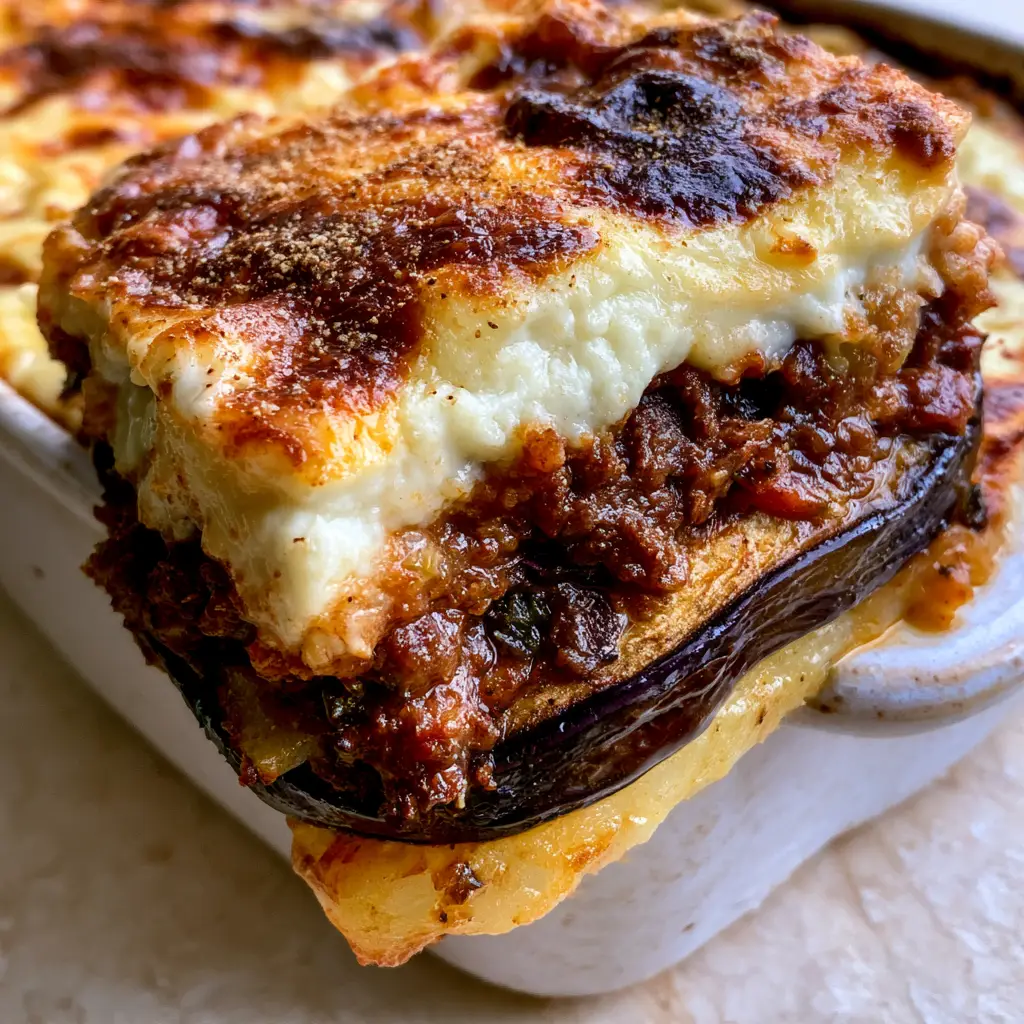
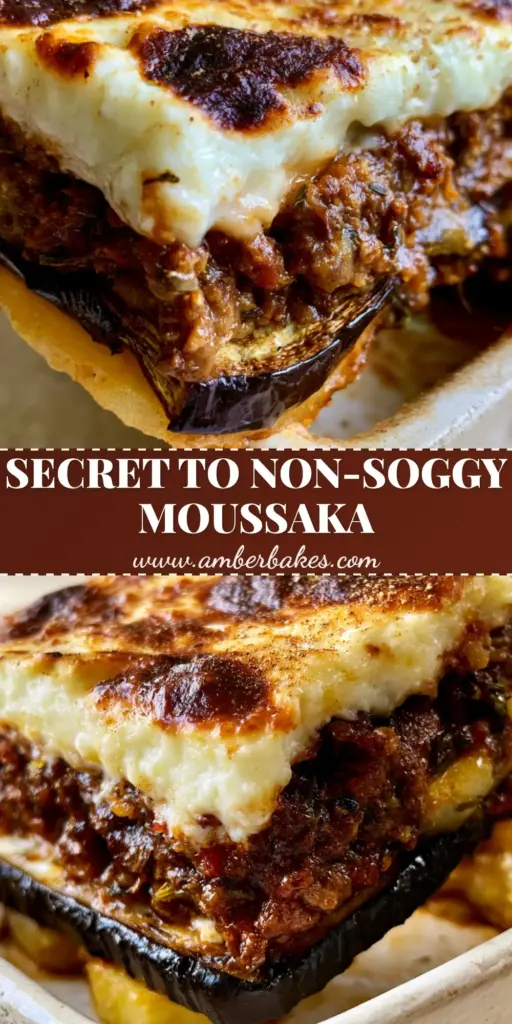
There is nothing quite like the sight of a fresh Eggplant Moussaka being lifted from a rustic white ceramic baking dish, its soft natural steam rising to greet you in the bright morning light. This isn’t just a casserole; it is a structural masterpiece of Mediterranean engineering. Imagine a thick, two-inch velvety white béchamel sauce, perfectly bubbly with deep golden-brown toasted spots and a micro-dusting of ground nutmeg, sitting atop a rich, dark mahogany meat sauce.
The secret to a truly elite Eggplant Moussaka lies in the contrast of textures. You want to experience the creamy, cloud-like top layer against the firm, dry-roasted eggplant slices with their signature charred edges. By ditching the traditional frying method for the vegetables, we achieve a clean, non-greasy finish that allows the savory minced meat and aromatic herbs to shine through every bite.
Why This Authentic Greek Casserole Is a Showstopper
- Perfectly Non-Greasy Base: We use a dry-roasting technique for the eggplant and potatoes, ensuring the dish remains firm and never soggy.
- Towering Béchamel Layer: A luxurious, stable two-inch custard-style topping that holds its shape even when served piping hot.
- Deep Mahogany Meat Sauce: A slow-simmered reduction of ground meat, red wine, and tomato bits for maximum umami.
- Visually Stunning Presentation: The contrast of the toasted cheese spots and the micro-dusting of nutmeg makes this a centerpiece-worthy meal.
- Balanced Aromatic Profile: Warm notes of cinnamon and nutmeg pair beautifully with fresh parsley and dried oregano.
The Essential Components for a Perfect Eggplant Moussaka
To achieve the specific visual and textural results of this Eggplant Moussaka, every ingredient must serve a purpose. We aren’t just looking for flavor; we are building structural integrity.
2 lbs (900g) Large Globe Eggplants: These provide the meaty, substantial heart of the dish; look for firm skins and heavy weight. We will slice these into 1/2-inch (1.25cm) rounds and dry-roast them until the edges are beautifully charred.
1 lb (450g) Yukon Gold Potatoes: Potatoes form the foundation of our slice, acting as a structural floor that absorbs the juices from the meat sauce. We use Yukon Golds for their naturally creamy texture and golden hue when roasted.
1.5 lbs (680g) Ground Lamb or Lean Beef: This is the source of our “dark mahogany” sauce. Whether you prefer the gaminess of lamb or the clean finish of beef, the high-heat sear is what creates the deep color.
1/2 cup (120ml) Dry Red Wine: Essential for deglazing the pan and providing the acidic backbone to the rich meat sauce. It helps deepen the color to that dark, savory mahogany described in our visual blueprint.
3 tbsp (45g) Tomato Paste: This concentrated ingredient provides both the “tomato bits” visual and the intense savory depth required for an authentic finish.
4 cups (950ml) Whole Milk: The base of our two-inch thick béchamel. Use full-fat milk to ensure the sauce is velvety and rich enough to support the nutmeg dusting.
1/2 cup (115g) Unsalted Butter & 1/2 cup (65g) All-Purpose Flour: These two form the roux, the thickening agent that ensures your béchamel doesn’t run all over the plate when the Moussaka is sliced.
3 Large Egg Yolks: A professional secret for Greek béchamel; the yolks turn the sauce into a stable, sliceable custard that browns beautifully in the oven.
1 tsp (2g) Freshly Ground Nutmeg: This is the crowning glory. A micro-dusting over the bubbly cheese creates that iconic, aromatic finish seen in the best food photography.
1 cup (100g) Grated Kefalotyri or Pecorino Romano: These hard, salty cheeses create the toasted golden-brown spots on the surface of the sauce.
Must-Have Kitchen Tools for Layering Success
To replicate the handheld smartphone photo aesthetic of a perfect slice, you need the right vessels. A rustic white ceramic baking dish (approximately 9×13 inches or 23x33cm) is essential for even heat distribution and a classic look.
You will also need a large rimmed baking sheet lined with parchment paper for the dry-roasting process. A heavy-bottomed Dutch oven or skillet is required to sear the meat sauce to its dark mahogany potential, while a balloon whisk is mandatory for a lump-free, velvety béchamel.
Prepping the Vegetables: The Secret to a Non-Greasy Base
The biggest complaint with Eggplant Moussaka is often the excess oil. To avoid this, we skip the frying. Start by preheating your oven to 400°F (200°C).
Slice your potatoes into 1/4-inch (0.6cm) rounds. Toss them lightly in olive oil and a pinch of salt, then lay them in a single layer on your baking sheet. Roast for 15-20 minutes until they are tender and golden but not crisp.
While the potatoes roast, slice the eggplants into 1/2-inch (1.25cm) rounds. Sprinkle them with salt and let them sit for 20 minutes to draw out moisture. Pat them completely dry—this is the “forensic” step to ensuring a “firm, dry texture” in the final dish.
Arrange the eggplant slices on the baking sheet. Brush very lightly with oil. Roast for 25-30 minutes, turning halfway through, until you see those distinct charred edges. The eggplant should be tender but hold its shape, providing the vertical stack stability we see in the visual prompt.
Developing Deep Flavor in the Mahogany Meat Sauce
While the vegetables roast, it is time to build the heart of the Eggplant Moussaka. In a large skillet over medium-high heat, brown your minced meat. Do not crowd the pan; we want a sear, not a steam. You are looking for a deep brown crust to form on the meat.
Add finely diced onions and minced garlic. Stir in the tomato paste and cook for 2 minutes until the paste turns a shade darker. Pour in the red wine, scraping the bottom of the pan to release all the flavor. Add canned crushed tomatoes (the “small tomato bits”), dried oregano, a cinnamon stick, and fresh parsley.
Simmer the sauce for at least 30 minutes. You want the liquid to reduce significantly until the sauce is dense and dark mahogany. A watery meat sauce will ruin the structural integrity of your layers.
Whisking the Perfect Two-Inch Béchamel Layer
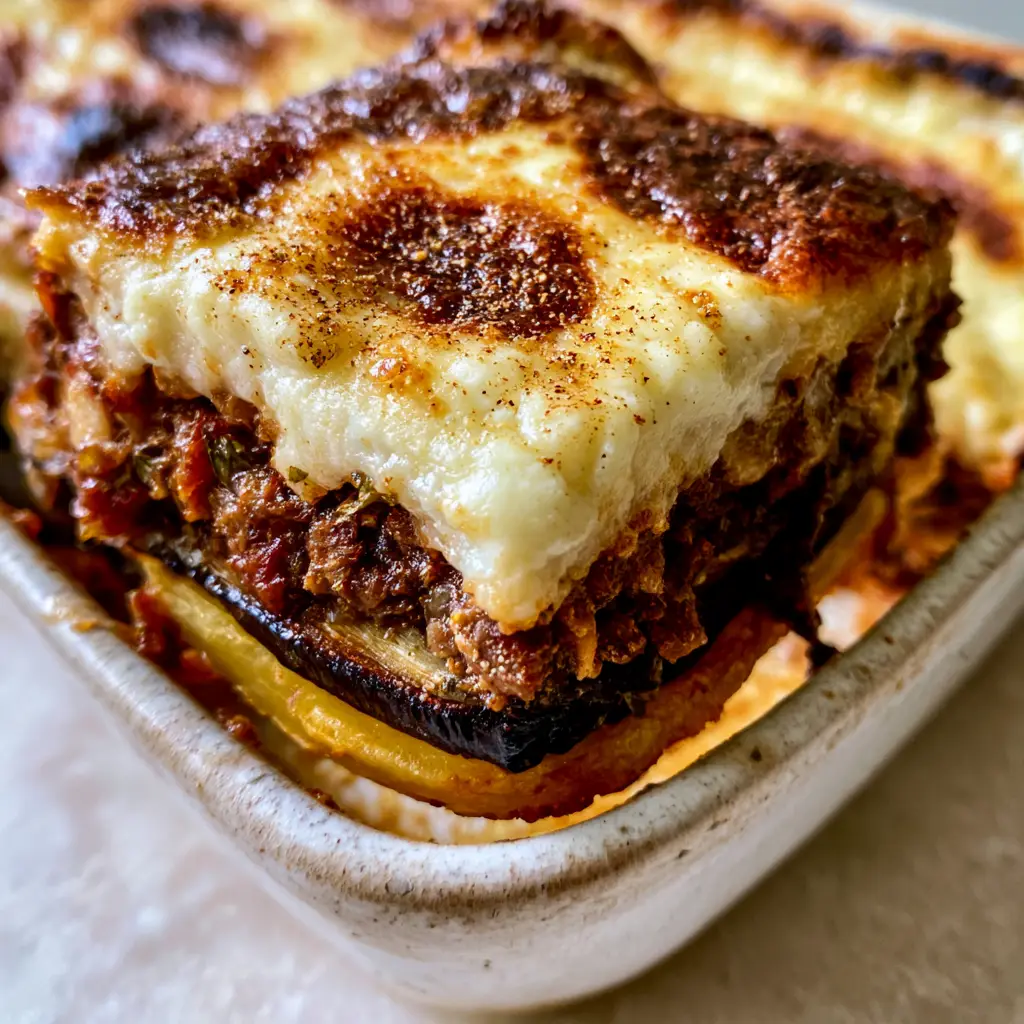
This is the most critical layer for our visual blueprint. In a medium saucepan, melt the butter over medium heat. Whisk in the flour and cook for 2 minutes to remove the raw flour taste—it should smell slightly nutty.
Slowly stream in the milk, whisking constantly. This prevents lumps and ensures the velvety texture. Continue to cook, stirring, until the sauce thickens enough to coat the back of a spoon thickly. Remove from heat.
In a small bowl, temper the egg yolks by adding a spoonful of the hot sauce to them, then whisk the yolk mixture back into the main pot. Stir in half of the grated cheese and a pinch of salt. The result should be a thick, pale cream sauce ready for the oven.
Assembling the Layers for a Structural Masterpiece
Now, let’s build the Eggplant Moussaka in your rustic ceramic dish. Start with a foundation of the golden potato rounds, overlapping them slightly to cover the bottom completely. This layer acts as a sponge for the delicious meat juices.
Next, layer half of the dry-roasted eggplant slices. Spread the mahogany meat sauce evenly over the eggplant. Top with the remaining eggplant slices, creating a clear vertical stack. Finally, pour the béchamel over the top.
Use a spatula to smooth the béchamel to the edges. It should be approximately two inches thick. Sprinkle the remaining cheese over the top and finish with that all-important micro-dusting of ground nutmeg.
Bake at 350°F (180°C) for 45-50 minutes. You are waiting for the sensory cue of a “bubbly” surface and those specific “deep golden-brown toasted spots” to appear. Let the dish rest for at least 30 minutes before slicing—this is the hardest part, but it is essential for the clean, handheld slice look.
Professional Secrets for That Golden-Brown Bubbly Topping
- The Resting Period: Never slice a Moussaka immediately. The béchamel needs time to set into its custard-like state, and the layers need to compress.
- Nutmeg Timing: Dust the nutmeg before baking so the aroma permeates the top layer of the cream.
- Cheese Choice: Use a hard cheese with a high melting point to get those distinct spots rather than a greasy pool of oil.
- Dry the Eggplant: If your eggplant feels spongy after roasting, press it between paper towels one last time before layering.
Preserving Your Masterpiece: Storage and Reheating Tips
Eggplant Moussaka actually tastes better the next day as the spices meld. Store leftovers in an airtight container in the refrigerator for up to 4 days. When reheating, use the oven rather than the microwave to maintain the texture of the béchamel.
You can also freeze individual slices. Wrap them tightly in foil and plastic wrap. Thaw overnight in the fridge before reheating at 350°F (180°C) until the center is hot and the top is sizzling again.
Complete the Feast: What to Serve with Eggplant Moussaka
This dish is incredibly rich, so it pairs best with bright, acidic sides. A simple Greek salad with kalamata olives and feta is traditional. If you are looking to expand your Mediterranean repertoire, consider serving this alongside some savory cheese fatayer or exploring other traditional breakfast options for the next morning.
For a full dinner spread, you might include Lebanese kofta or a side of spiced rice hashweh. If you enjoy the technique of stuffing and baking vegetables, you must try my Sheikh el Mahshi recipe which features similar flavor profiles with a different presentation.
Common Moussaka Questions Answered
Yes, lean ground beef is a common substitute. To achieve the dark mahogany color, ensure you sear the beef thoroughly and use tomato paste and red wine as specified.
While some variations omit it, a foundation of tender golden potatoes provides structural integrity to the slice and absorbs flavorful juices from the meat sauce.
The secret is adding egg yolks to the sauce after it thickens. This turns the béchamel into a stable custard that holds its shape and browns beautifully in the oven.
Traditional Greek Kefalotyri is best, but Pecorino Romano or a very aged Parmesan provide the necessary saltiness and high melting point for those distinct toasted spots.
Greasy Moussaka is usually caused by frying the eggplant, which acts like a sponge for oil. By dry-roasting the eggplant slices until they have charred edges, you remove moisture without adding excess fat.
The Definitive Eggplant Moussaka Recipe Card
Eggplant Moussaka: The Ultimate Traditional Greek Comfort Food
Ingredients
Equipment
Method
- Preheat oven to 400°F (200°C). Toss potato rounds with oil and salt, roast for 20 minutes until golden.
- Salt eggplant rounds for 20 minutes, pat dry. Roast for 30 minutes until edges are charred and centers are tender.
- Brown meat in a skillet until a dark crust forms. Add onions and garlic, sauté until soft.
- Stir in tomato paste and red wine. Add tomatoes and herbs. Simmer until reduced to a thick, dark mahogany sauce.
- Melt butter, whisk in flour for 2 minutes. Gradually whisk in milk until thick and velvety.
- Temper egg yolks with a little hot sauce, then whisk back into the pot with half the cheese.
- Layer potatoes, then half eggplant, then meat sauce, then remaining eggplant. Top with two-inch layer of béchamel, remaining cheese, and nutmeg. Bake at 350°F (180°C) for 45-50 minutes until bubbly and golden.
Notes
Dry-roasting the eggplant is essential to prevent the dish from becoming greasy.
Closing & Call to Action
Mastering the Eggplant Moussaka is a rite of passage for any serious home cook. The combination of the charred eggplant, the savory mahogany meat, and that towering two-inch béchamel creates a dining experience that is both rustic and refined. The effort put into dry-roasting the vegetables pays off in every clean, non-greasy bite.
If you enjoyed this deep dive into Greek comfort food, please leave a comment below and let me know how your béchamel turned out! Don’t forget to follow me on Pinterest for more visual recipe blueprints. Happy cooking!