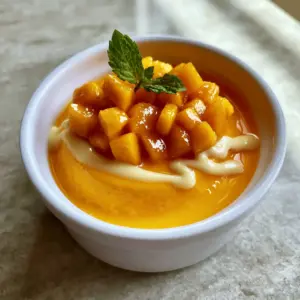
When the sun hangs low and casts a warm golden glow across your kitchen, there is no dessert more visually arresting or palate-pleasing than a traditional mango bango. This beloved Philippine treat, often served at celebrations, is a masterclass in textural contrast and vibrant tropical flavor. Our version focuses on the forensic details that make a dessert truly elite: the bounce of perfectly translucent sago, the velvety richness of mango-infused coconut cream, and the bright pop of sun-ripened Ataulfo mangoes.
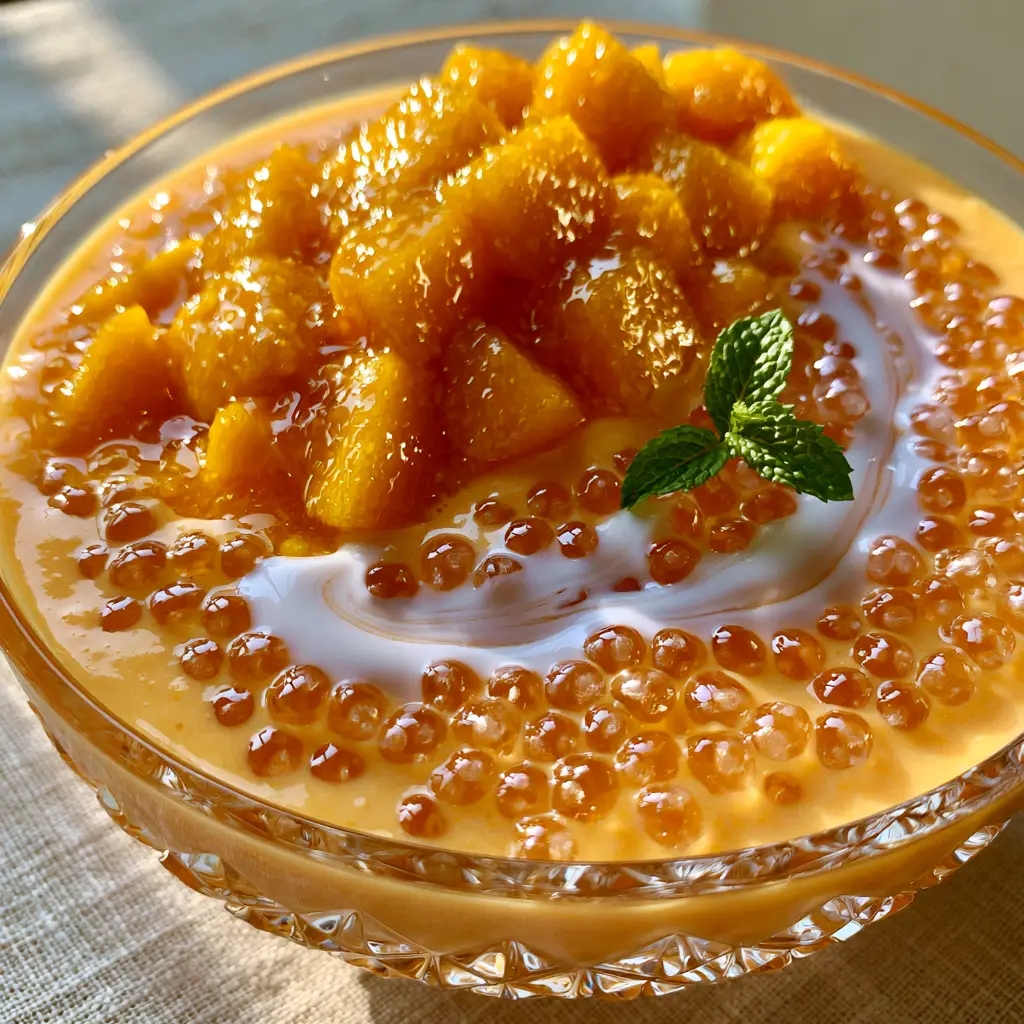
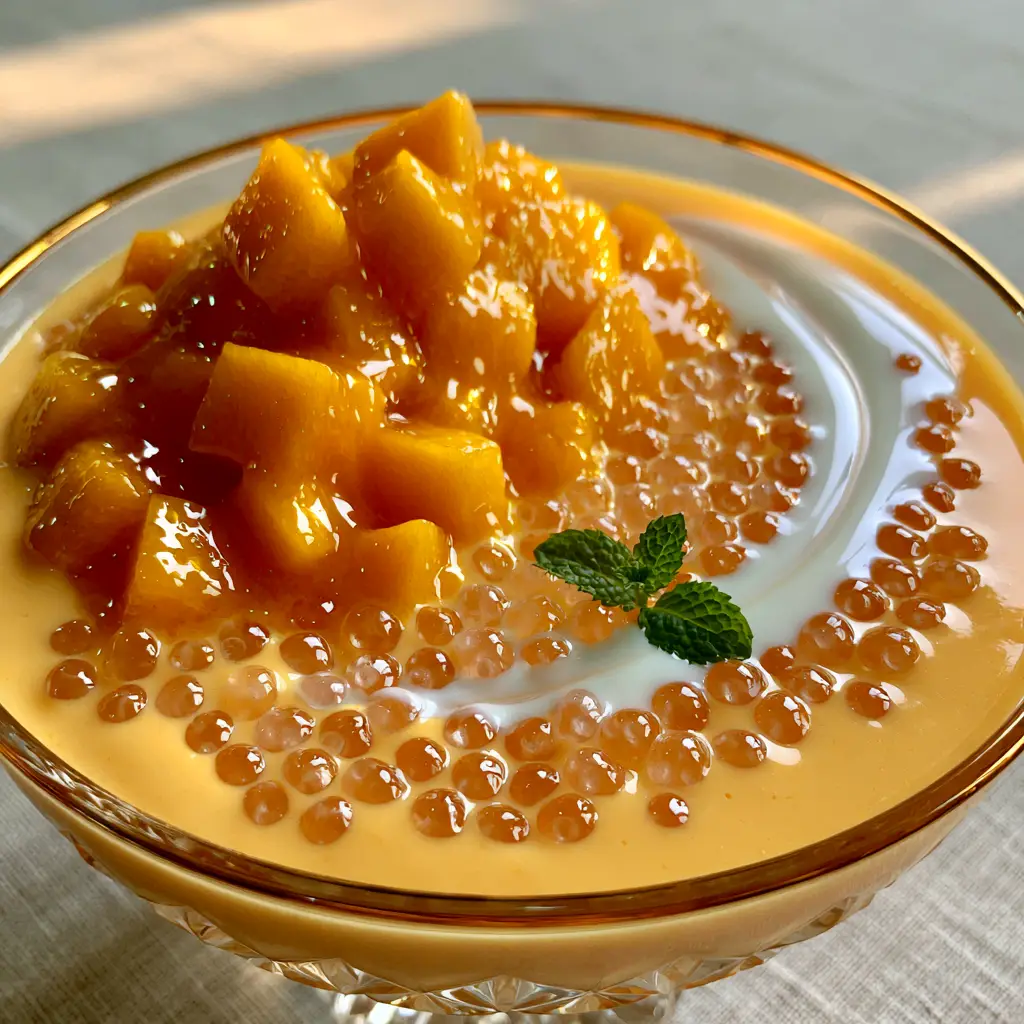
The secret to a world-class mango bango lies in the harmony between the thick, pale-orange cream base and the hundreds of glossy pearls that catch the light like edible crystals. In this guide, we will walk you through the scientific process of achieving that iconic marbled look with evaporated milk and ensuring your sago pearls remain distinct and tender. Whether you are a fan of a classic mango pudding recipe or looking for a refreshing summer staple, this dish is the gold standard of fruit-based desserts.
Imagine dipping your spoon into a clear crystal glass bowl where the condensation beads on the outside, promising a refreshing escape from the heat. The first bite offers a rush of tropical coconut, followed by the juicy sweetness of freshly diced mango. It is not just a dessert; it is a sensory experience that rivals the most elegant mango mousse cups found in high-end patisseries.
Why You Will Fall in Love With This Creamy Mango Delight
- Unrivaled Textural Complexity: The combination of soft, ripe fruit, chewy sago pearls, and a silky liquid base creates a multi-dimensional mouthfeel that keeps you coming back for more.
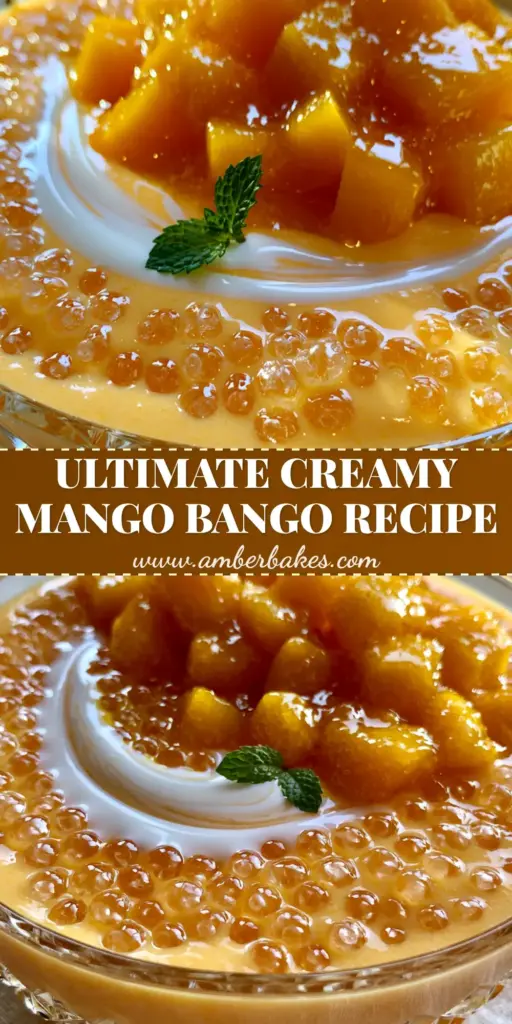
- Vibrant Aesthetic Appeal: From the sun-ripened golden mango cubes to the artistic swirl of pure white evaporated milk, this dish is a visual masterpiece perfect for social media sharing.
- Natural Tropical Sweetness: By utilizing Ataulfo mangoes, we achieve a deep, honey-like sweetness that requires very little added sugar, making it a fresher alternative to a heavy mango ice box cake.
- Simple Yet Sophisticated: While it looks like a professional culinary creation, the steps are approachable for any home cook looking to master the art of chilled desserts.
The Anatomy of a Perfect Mango Bango: Essential Ingredients
Fresh Ataulfo Mangoes: You will need 4 large (approx. 800g) ripe mangoes. These are preferred for their lack of fiber and buttery texture, ensuring the base is perfectly smooth and the cubes hold their shape.
Small Sago Pearls: 1/2 cup (100g) of dry sago pearls provides the “glossy, perfectly spherical” elements mentioned in our visual blueprint. When boiled correctly, they become translucent windows of texture within the cream.
Full-Fat Coconut Cream: 1 cup (240ml) of thick coconut cream acts as the luxurious fat source. This provides the “velvety pale-orange” hue when blended with the fresh mango puree.
Sweetened Condensed Milk: 1/2 cup (120ml) offers the necessary body and sweetness. It binds the coconut and mango flavors together into a cohesive, pourable custard.
Evaporated Milk: 1/4 cup (60ml) is reserved for the final artistic swirl. Its thinner consistency allows it to marble beautifully into the thicker mango cream rather than just mixing in.
Water for Boiling: 6 cups (1.4L) of water are essential for the sago. A high water-to-pearl ratio prevents the pearls from becoming a gummy mass during the starch gelatinization process.
Fresh Mint Sprigs: 2-3 tiny leaves for garnish. The bright green provides the critical color contrast against the warm orange tones of the mango.
Pinch of Sea Salt: A tiny 1/8 tsp (0.75g) of salt is the “invisible” ingredient that brightens the tropical notes and balances the richness of the coconut.
Professional Tools for Culinary Precision
To achieve the high-shine highlights on the pearls and the sharp focus on textures described in our visual prompt, you need the right kit. A high-speed blender is non-negotiable for creating a base that is free of lumps and fibers. You will also need a fine-mesh strainer to rinse the sago pearls immediately after cooking, which stops the cooking process and prevents clumping.
For the final presentation, clear glassware or crystal bowls are essential. These allow the light to penetrate the dessert, highlighting the “hundreds of translucent sago pearls” nestled within the cream. A sharp chef’s knife is also required to produce those clean, “generous heaps of vibrant golden mango cubes” that sit majestically on top.
The Science of Boiling Perfect Sago Pearls
Mastering Starch Gelatinization
Bring 6 cups (1.4L) of water to a rolling boil in a large pot. Do not add the sago until the water is bubbling vigorously, as adding starch to cold water will cause the pearls to dissolve into a slurry.
Slowly pour in 1/2 cup (100g) of sago pearls, stirring immediately to keep them submerged and separate. Lower the heat to a medium simmer and cook for 10-12 minutes. You are looking for the pearls to become mostly translucent with just a tiny white dot in the center.
The Soak and Rinse Method
Turn off the heat, cover the pot, and let the pearls sit in the hot water for another 10 minutes. This residual heat gently cooks the core of the pearl without eroding the delicate exterior, resulting in that “glossy” finish.
Drain the pearls through a fine-mesh sieve and immediately plunge them into a bowl of ice-cold water. This shock stops the cooking and rinses away excess surface starch, ensuring every pearl remains a distinct sphere in your mango bango.
Creating the Velvety Mango-Infused Coconut Base
Pureeing for Color and Texture
Slice two of the Ataulfo mangoes, discarding the pit and skin. Place the golden flesh into your blender along with 1 cup (240ml) of coconut cream and 1/2 cup (120ml) of sweetened condensed milk.
Blend on high until the mixture is completely homogenous and a pale-orange color. The aeration from blending will give the cream a slight “velvety” lift, making it feel lighter on the tongue than a standard 3-ingredient mango dessert.
Incorporating the Pearls
Transfer the mango cream to a large mixing bowl. Gently fold in the chilled, drained sago pearls using a silicone spatula. The pearls should catch the light and appear suspended in the thick, vibrant cream.
Add a pinch of salt at this stage and stir gently. Chill the entire mixture in the refrigerator for at least 2 hours. This chilling time allows the flavors to meld and the consistency to thicken to its final, indulgent state.
Final Assembly: The Visual Masterpiece
Dicing the Garnish
While the base chills, dice the remaining two mangoes into uniform 1/2-inch (1.25cm) cubes. These should be “vibrant and sun-ripened,” glistening with their own natural juices. Keep these at room temperature to maintain their fragrance and soft texture.
The Artistic Swirl and Garnish
Ladle the chilled mango bango into clear crystal glasses. Leave about an inch of space at the top. Top each serving with a generous heap of the fresh mango cubes, piled high in the center.
Carefully pour 1 tablespoon (15ml) of evaporated milk over the mango cubes, allowing it to run down the sides and “marble into the surface” of the cream. Finish with a single, bright green mint sprig for that final professional touch. The contrast of the white milk against the orange cream is the hallmark of a high-quality handheld smartphone photo aesthetic.
Expert Tips for Mango Bango Success
- Choose the Right Mango: If Ataulfo mangoes aren’t available, use Kent or Keitt. Avoid Tommy Atkins mangoes as they are too fibrous for this delicate dessert.
- Don’t Overcook the Sago: Overcooked sago becomes mushy and loses its spherical shape. Always aim for that tiny white “eye” in the center before the final soak.
- Control the Sweetness: Taste your mango puree before adding all the condensed milk. If your mangoes are exceptionally ripe, you may only need 1/3 cup (80ml).
- Temperature Matters: Serve this dessert ice-cold. For an extra refreshing touch, chill your crystal bowls in the freezer for 15 minutes before serving to encourage that beautiful “condensation on clear glassware.”
Storage and Make-Ahead Instructions
Mango bango is best enjoyed within 24 hours of assembly. The sago pearls have a tendency to continue absorbing liquid over time, which can make the dessert thicker and the pearls softer. If you need to make it further in advance, store the mango cream and the cooked sago separately in airtight containers.
When you are ready to serve, simply fold the pearls into the cream and add the fresh toppings. Do not freeze this dessert, as the coconut cream and mango cubes will lose their structural integrity and become grainy upon thawing. If you love long-lasting mango treats, consider trying a mini mango cheesecake cups recipe instead.
Pairing Suggestions for a Tropical Feast
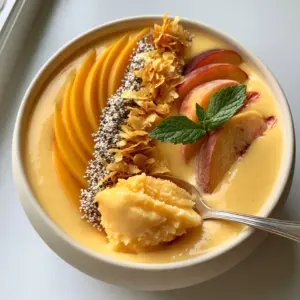
This creamy dessert is the perfect palate cleanser after a rich, savory meal. It pairs beautifully with light, spicy dishes or other tropical favorites. If you are hosting a brunch, try serving it alongside a peach and mango smoothie bowl for a fruit-forward spread.
For a more diverse menu, the creamy coconut notes of the mango bango complement the savory flavors of Middle Eastern cuisine, such as arabic breakfast recipes or even a light cheese fatayer. The sweetness of the mango provides a refreshing counterpoint to the earthy spices found in ful medames.
Frequently Asked Questions
While not strictly necessary, Ataulfo mangoes are highly recommended because they are non-fibrous and have a very high sugar content, which results in a smoother, tastier cream base.
Yes, small tapioca pearls are an excellent substitute for sago. They have a similar texture and appearance once cooked, though they may require slightly different boiling times.
The key is to rinse them immediately in cold water after cooking to remove excess starch and to keep them submerged in liquid or the mango cream base until serving.
For the best texture, consume within 24 hours. After that, the sago pearls will start to soften and the cream will thicken significantly as the starch absorbs the liquid.
Mango Bango is typically richer and creamier than standard mango sago. It often incorporates a higher ratio of coconut cream and condensed milk, along with a signature swirl of evaporated milk for a marbled look.
The Ultimate Mango Bango Recipe Card
Mango Bango: The Ultimate Creamy Philippine Mango Sago Dessert
Ingredients
Equipment
Method
- Bring 6 cups of water to a rolling boil. Add sago pearls and simmer for 10-12 minutes until mostly translucent.
- Turn off heat, cover, and let sit for 10 minutes. Drain and rinse under cold water until pearls are glossy and separate.
- Blend half the mangoes with coconut cream and condensed milk until velvety and pale-orange.
- Fold the rinsed sago pearls and salt into the mango cream. Chill for 2 hours.
- Ladle into glasses, top with remaining diced mango, swirl with evaporated milk, and garnish with mint.
Notes
Use Ataulfo mangoes for the best fiber-free texture.
Conclusion: Bring the Tropics to Your Table
Mastering the mango bango is a rite of passage for any lover of tropical flavors. By focusing on the visual cues—the translucent pearls, the marbled evaporated milk, and the vibrant Ataulfo cubes—you create a dessert that is as beautiful as it is delicious. This recipe offers a sophisticated upgrade to traditional mango sago, ensuring every spoonful is a velvety, refreshing delight.
We would love to see your culinary creations! Share your photos of this stunning dessert and tag us, or pin this recipe to your favorite boards on Pinterest. Don’t forget to subscribe to our newsletter for more elite recipe developments and culinary secrets.