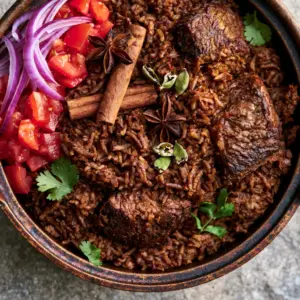
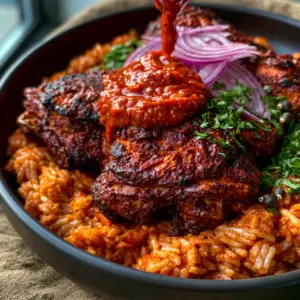
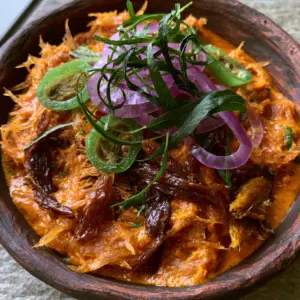
Native Jollof Rice, often affectionately called “Concoction Rice,” is the rustic, deeply aromatic cousin to the world-famous party version. While the classic red rice relies on vegetable oil and tomato paste, this authentic version celebrates the bold, earthy flavors of glossy red palm oil, fermented locust beans (iru), and charred smoked fish flakes. If you are looking for a meal that transports you straight to a traditional Nigerian kitchen, this Native Jollof Rice is the recipe you have been searching for.
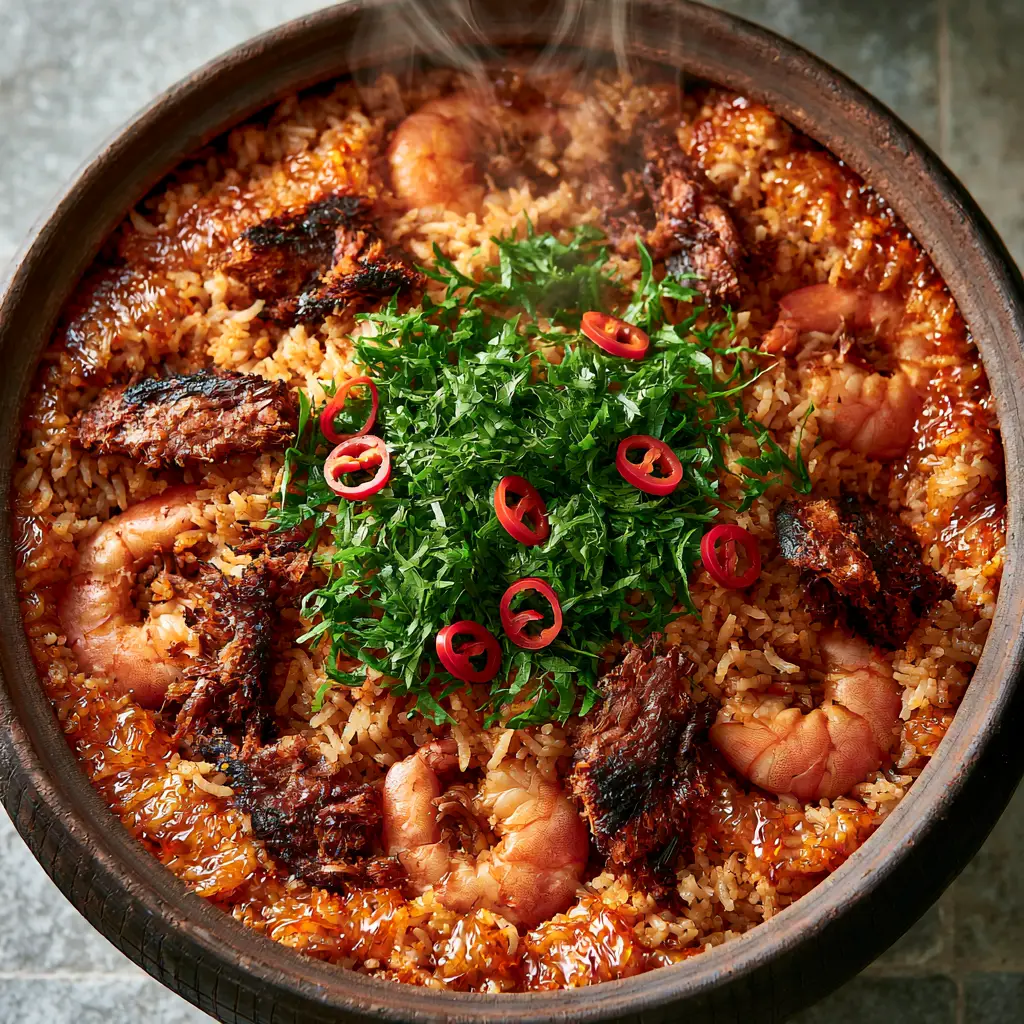
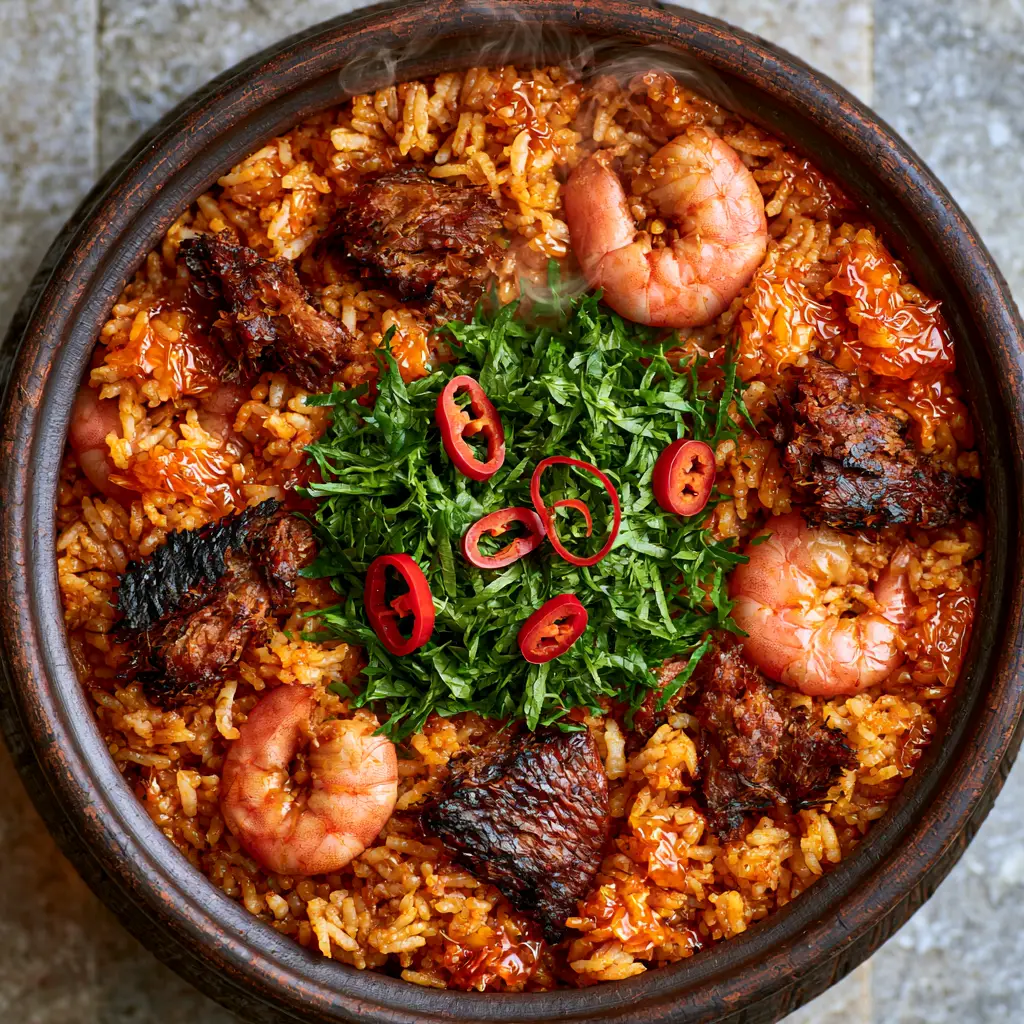
This dish is all about texture and layers of umami. Imagine fluffy long-grain rice grains, each perfectly separated and coated in a translucent orange-red palm oil. Every bite is studded with succulent steamed prawns and the smoky depth of deboned fish, finished with the pungent, herbal lift of fresh green scent leaves. It is a sensory masterpiece that looks just as good as it tastes, especially when served in a traditional rustic clay pot.
Why You Will Love This Rustic Native Jollof Rice
- Visual Masterpiece: The contrast between the rich red oil, pink prawns, and vibrant green scent leaves makes it a Pinterest-perfect meal.
- Fluffy Texture: Unlike mushy rice dishes, this method ensures every grain of long-grain rice remains distinct and tender.
- Deep Umami Flavor: The combination of ground crayfish seasoning and charred smoked fish creates a savory profile that beats any standard variety of Jollof rice recipes.
- One-Pot Ease: Despite the complex flavor, this is a straightforward one-pot meal that builds depth through layering.
The Essential Ingredients for Authentic Native Jollof
To achieve the specific look and taste of this Native Jollof Rice, the quality of your ingredients matters. Unlike a standard shrimp rice bowl, the aromatics here are uniquely West African.
Long-Grain Parboiled Rice: 3 cups (600g). This is essential for achieving that fluffy long-grain rice texture that doesn’t clump together.
Red Palm Oil: 1/2 cup (120ml). This provides the glossy red palm oil base and the signature earthy flavor profile.
Smoked Fish: 1 large (approx. 200g) deboned and broken into charred smoked fish flakes. This provides the “native” smoky aroma.
Fresh Prawns: 1 lb (450g), cleaned. These succulent steamed prawns add a touch of luxury and sweetness to the heat.
Scent Leaves (Effirin/Nchanwu): 1 cup (30g), finely shredded. These finely shredded fresh green scent leaves are non-negotiable for the authentic herbal finish.
Scotch Bonnet Peppers (Ata Rodo): 3-4, sliced into thin rings of fresh red scotch bonnet peppers for both heat and color.
Ground Crayfish: 3 tablespoons. The “secret weapon” that provides a massive boost of traditional umami seasoning.
Red Onions: 1 large, diced red onions. These provide a sweet, aromatic foundation when sautéed in the palm oil.
Step-by-Step: Mastering the Native Jollof Rice Technique
1. Preparing the Aromatic Base
Start by heating the glossy red palm oil in a large pot over medium heat. Do not bleach the oil; you want it to retain its vibrant orange-red hue. Add the diced red onions and sauté until translucent and fragrant. This step infuses the fat with the primary aromatics, creating the foundation for your Native Jollof Rice.
Next, add your ground crayfish seasoning and fermented locust beans (if using). Stir constantly for 2 minutes. You will notice the kitchen filling with a rich, savory scent that is hallmarks of traditional Nigerian cooking. Unlike Nigerian Jollof Rice, we are not using tomato paste here, so the color comes entirely from the oil and peppers.
2. The “Native” Flavor Infusion
Toss in the charred smoked fish flakes and the sliced red scotch bonnet peppers. Stir gently to ensure the fish is coated in the oil but doesn’t break down into mush. You want those chunky flakes of deeply charred fish to be visible in the final dish. Pour in 3 cups (720ml) of water or beef stock and bring to a rolling boil.
3. Steaming the Perfect Grains
Add the washed fluffy long-grain rice to the pot. Stir once to distribute the ingredients, then cover tightly. Reduce the heat to low. The key to Native Jollof Rice is the steam. Let it cook for 20-25 minutes until the liquid is almost absorbed. At this point, gently fold in the succulent steamed prawns on top of the rice.
4. The Herbal Finish
Once the rice is tender and the prawns are pink and opaque, scatter the finely shredded fresh green scent leaves over the surface. Cover the pot for another 2 minutes to let the residual heat wilt the leaves, releasing their essential oils. This creates the vibrant green garnish seen in the traditional presentation.
Expert Tips for the Fluffiest Native Jollof
- Wash Your Rice: Rinse the rice in warm water until the water runs clear. Removing excess starch is the only way to get those individual, perfectly fluffy grains.
- Don’t Over-Stir: Once the rice is in the pot, avoid stirring frequently. Over-stirring breaks the grains and releases starch, leading to a soggy texture.
- The Clay Pot Effect: If you have a rustic clay pot, use it! It retains heat evenly and adds a subtle earthy quality that complements the Native Jollof Rice.
- Control the Heat: Use a tight-fitting lid or foil to trap steam. This allows the rice to cook in the flavored oils without needing excess water.
Storage, Reheating & Freezing
Storage: Keep leftovers in an airtight container in the fridge for up to 3 days. The flavors of the charred smoked fish actually deepen overnight!
Reheating: To maintain the glossy red palm oil sheen, reheat in a pan on the stove with a splash of water, or microwave covered with a damp paper towel.
Freezing: You can freeze this dish for up to 1 month, though the succulent steamed prawns may change texture slightly upon thawing.
What to Serve With Native Jollof Rice
This dish is a complete meal on its own, but it pairs beautifully with fried sweet plantains (dodo) for a sugary contrast to the heat of the scotch bonnet peppers. For a larger feast, consider serving it alongside East African Pilau Rice for a cross-continental rice tasting experience.
Frequently Asked Questions
Palm oil provides the essential color and earthy flavor that defines this dish. While you can use vegetable oil, it will taste more like basic fried rice and lose its ‘native’ character.
Ensure you use parboiled long-grain rice, wash it thoroughly to remove starch, and use a 1:1 or 1:1.2 rice-to-water ratio, allowing the steam to do most of the cooking.
If you cannot find African scent leaves (Effirin), the best substitutes are Thai basil or a mix of Italian basil and fresh mint.
Native Jollof uses red palm oil, smoked fish, and scent leaves for an earthy, rustic flavor, whereas Party Jollof uses vegetable oil and a tomato-based sauce for a brighter, tangy profile.
The Authentic Native Jollof Rice Recipe
Native Jollof Rice: The Ultimate Authentic Nigerian Recipe
Ingredients
Equipment
Method
- Heat the red palm oil in a pot. Add diced onions and ground crayfish, sautéing until fragrant but not browned.
- Add charred smoked fish flakes and scotch bonnet rings. Pour in water or stock and bring to a boil.
- Stir in the washed rice, cover tightly, and simmer on low heat for 20 minutes.
- Place prawns on top of the rice, cover and steam for 5 minutes. Fold in shredded scent leaves just before serving.
Notes
Substitute scent leaves with basil or mint if unavailable, though the flavor will vary.
Save This Recipe to Pinterest!
Did you love the smoky, herbal notes of this Native Jollof Rice? Make sure to save this recipe to your Pinterest boards so you can find it later! Follow amber_bakes for more authentic West African inspirations. If you made this dish, please leave a 5-star rating in the recipe card above and upload a photo of your rustic clay pot creation in the comments—I love seeing your results!