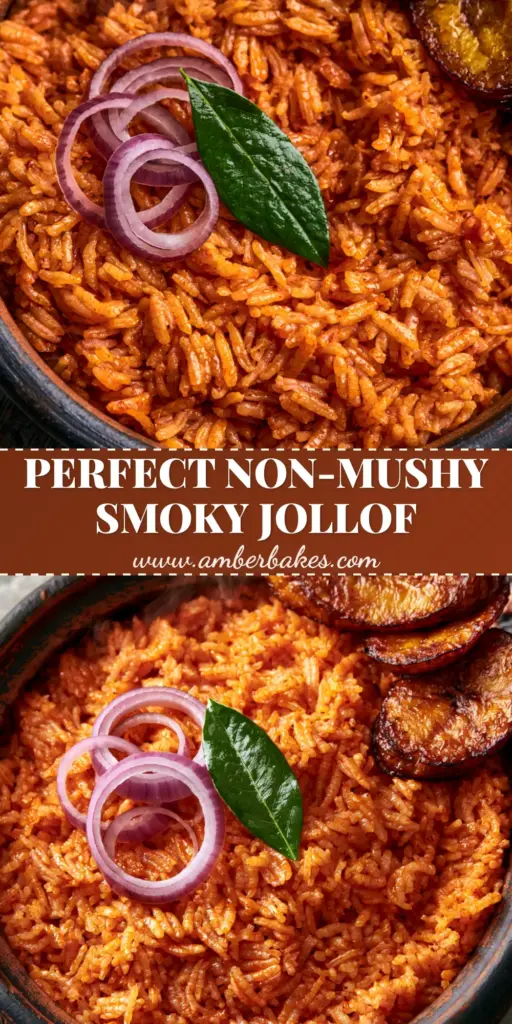
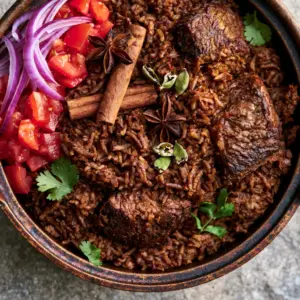
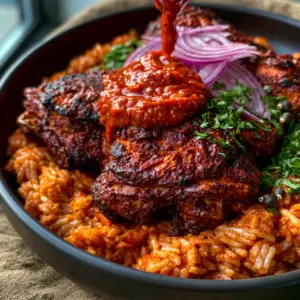
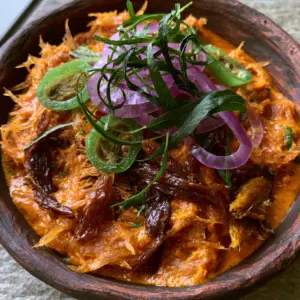
Nigerian Jollof Rice is the undisputed king of West African cuisine. If you are looking for that vibrant, reddish-orange rice with perfectly separated grains and a deep, smoky aroma, you have come to the right place. This recipe delivers the authentic “party” flavor that has made Nigerian party jollof rice famous globally. Whether you are serving it in a traditional rustic earthenware pot or a modern dinner plate, the visual appeal of this dish is as legendary as its taste.
In this guide, we will break down the culinary science behind the perfect Nigerian Jollof Rice. We are focusing on achieving that iconic glisten, the aromatic steam, and the specific texture where every single grain of long-grain parboiled rice is distinct and showing no mushiness. Let’s dive into the vibrant red pepper base and the secrets to char-grilled chicken drumsticks that complete this masterpiece.
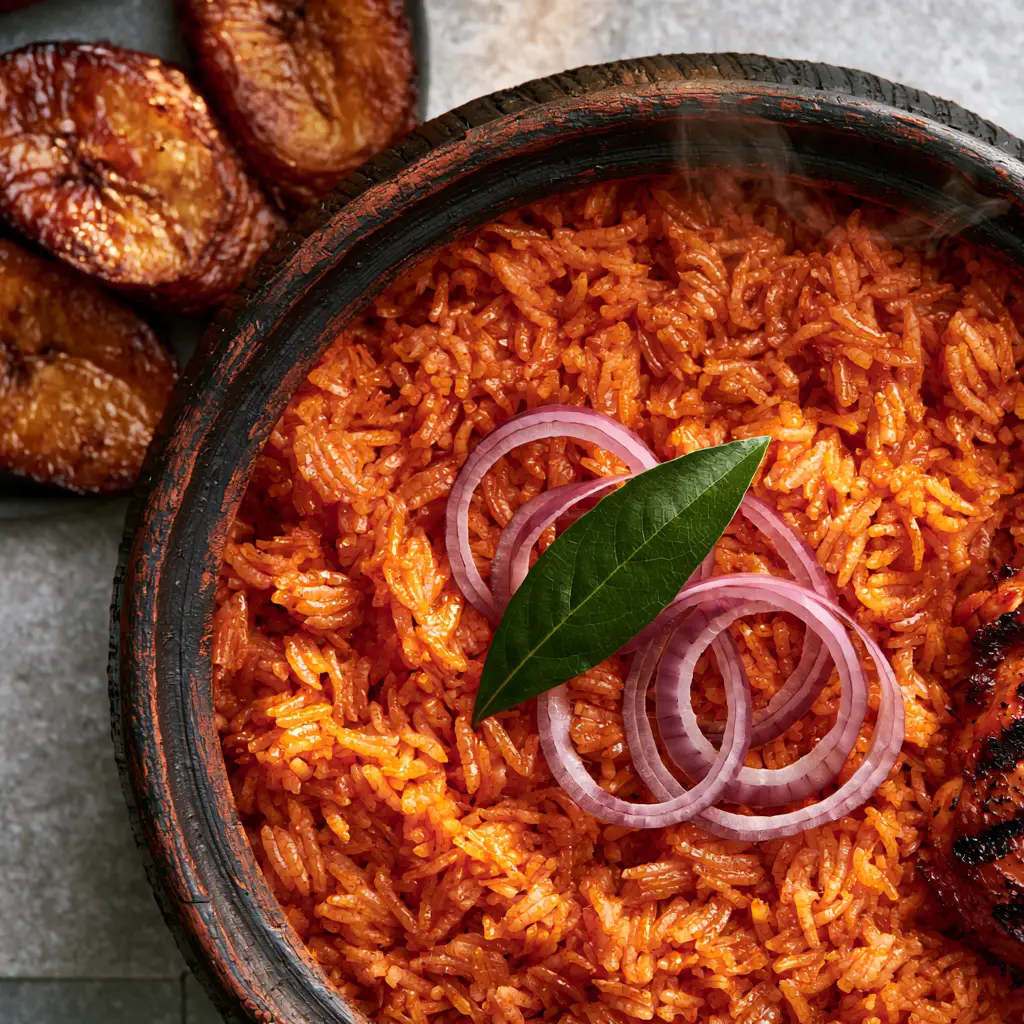
Why This Is The Best Nigerian Jollof Rice Recipe
- Perfect Texture: We use a specific steaming technique to ensure the rice is tender but never mushy.
- Vibrant Visuals: The deep reddish-orange hue comes from a concentrated blend of red bell peppers and tomato paste.
- Authentic Smokiness: Learn how to achieve the “party” flavor without needing an open firewood flame.
- Complete Meal Logic: We include steps for the golden-brown fried sweet plantains and char-grilled chicken drumsticks shown in the visual blueprint.
The Anatomy of an Authentic Pepper Base
The soul of Nigerian Jollof Rice lies in its base sauce. You cannot rush this step if you want that professional finish. A proper base requires a blend of red bell peppers (Tatashe), scotch bonnet peppers (Atarodo) for heat, and juicy tomatoes.
To achieve the “blistered” flavor mentioned in professional culinary standards, we recommend roasting the peppers and tomatoes slightly before blending. This removes excess water and concentrates the natural sugars, resulting in a vibrant red pepper and tomato base sauce that coats every grain of rice perfectly. This foundation distinguishes this recipe from other variations like Ghana jollof rice or Cameroonian jollof rice.
Essential Ingredients for Success
Long-Grain Parboiled Rice: 3 cups (720ml). This is non-negotiable for the Nigerian style. Parboiled rice has a lower starch content, which is the secret to those perfectly separated, glistening grains.
Vegetable Oil: 1/2 cup (120ml). This provides the aromatic oils that give the rice its signature shine and prevents sticking.
Tomato Paste: 1/2 cup (120ml). This adds depth of color and a slight tang that balances the heat of the peppers.
Chicken Stock: 3 cups (720ml). Use a high-quality, seasoned stock. The rice absorbs this liquid, so the better the stock, the better the final jollof rice.
Red Onions: 2 large onions. One is blended into the sauce, and the other is sliced into thin rings of fresh red onion for the final garnish.
Fresh Bay Leaves: 3-4 leaves. These provide a subtle herbal undertone and serve as a bright green bay leaf garnish at the end.
Chicken Drumsticks: 4-6 pieces. These are seasoned and char-grilled until they reach a golden-brown finish with visible grill marks and crispy skin.
Sweet Plantains: 2 ripe plantains. Sliced and fried until caramelized and golden-brown.
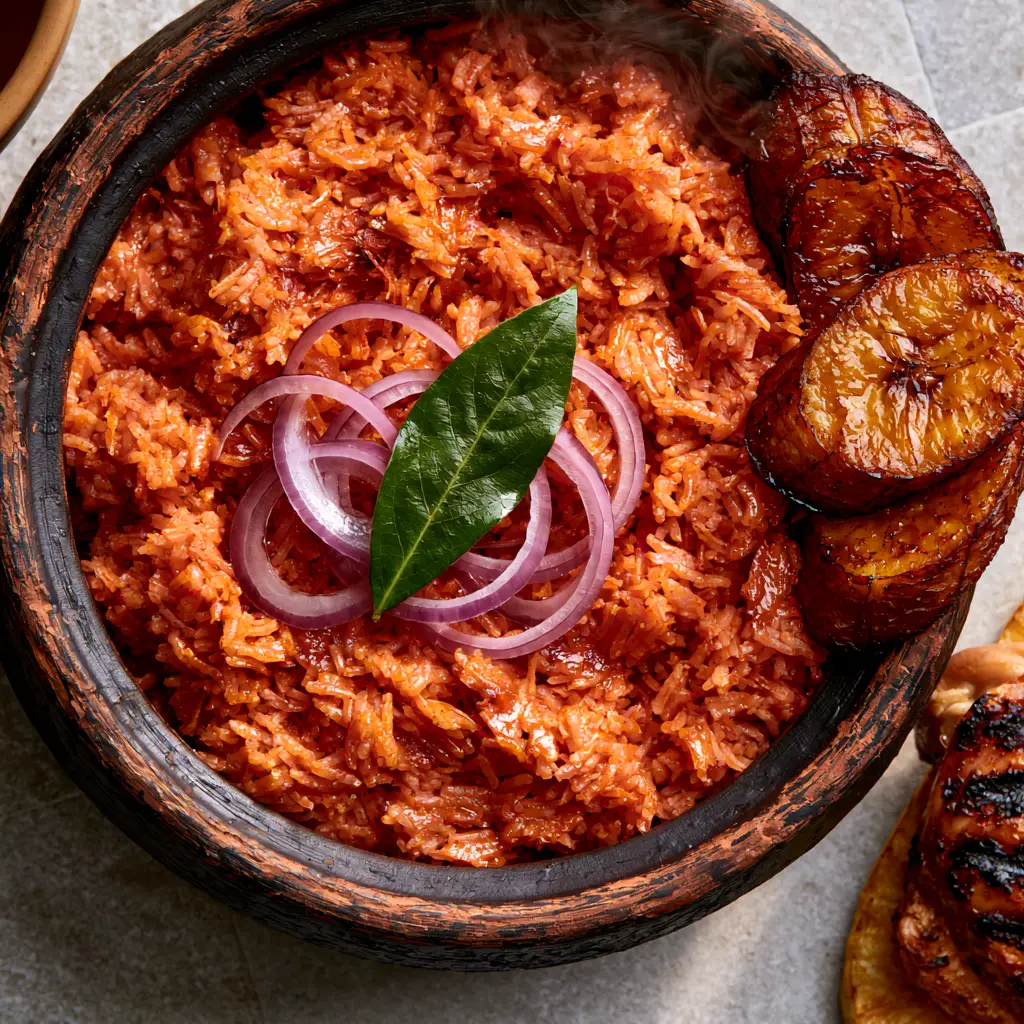
Step-by-Step Instructions for the Perfect Pot
1. Preparing the Vibrant Pepper Base
Start by blending 3 large red bell peppers, 2 medium tomatoes, 1 red onion, and 2 scotch bonnets. Pour this mixture into a pot and boil it down until it forms a thick paste. This concentration is vital for the vibrant reddish-orange color we are aiming for.
2. Frying the Aromatics
In a large pot (an earthenware pot adds a rustic touch), heat the vegetable oil. Sauté sliced onions until translucent, then add the tomato paste. Fry the tomato paste for 5-7 minutes to remove the raw metallic taste. This step is a cornerstone of Nigerian recipes.
3. Incorporating the Rice
Wash your long-grain parboiled rice repeatedly until the water runs clear. This removes surface starch. Add the washed rice to the fried sauce and stir for 2-3 minutes. This toasts the grains and ensures they are coated in the aromatic oils.
4. The Steaming Process
Add the chicken stock and seasonings (salt, bouillon, curry powder, and thyme). The liquid should just barely cover the rice. Cover the pot tightly with foil, then the lid. The goal is to cook the rice with steam, not boiling water. This ensures the grains stay perfectly separated.
5. The Char-Grilled Sides
While the rice simmers on low heat, season your chicken drumsticks with salt, pepper, and paprika. Grill them until the skin is crispy and char-grilled. Simultaneously, fry the plantain slices in hot oil until they are golden-brown and caramelized.
Expert Tips for Success
- Don’t Over-Water: If you add too much stock, the rice will become mushy. It is better to start with less and add a splash more if the rice is still hard.
- The Foil Trick: Using aluminum foil under the lid traps every bit of steam, which is essential for that smoky Nigerian Jollof Rice finish.
- Wait for the Burn: Toward the end, let the bottom of the rice burn slightly. This “burnt bottom” provides the authentic smoky flavor found at Nigerian parties.
- Garnish Late: Only add the thin rings of fresh red onion and the bright green bay leaf right before serving to keep them looking fresh.
Storage and Reheating
Nigerian Jollof Rice stores beautifully. Keep it in an airtight container in the fridge for up to 4 days. When reheating, use a microwave or a steamer. To maintain the glistening grains, add a tiny drop of water before heating to recreate the steam rising faintly from the original pot.
What to Serve With This Dish
While this recipe includes char-grilled chicken and fried sweet plantains, you can also pair it with a crisp coleslaw or a side of steamed vegetables. If you are looking for a seafood twist, try our shrimp rice bowl technique for a different flavor profile.
Frequently Asked Questions
While possible, Basmati is softer and requires significantly less water. For the authentic Nigerian texture, long-grain parboiled rice is highly recommended.
Yes! Washing the rice repeatedly until the water runs clear removes excess starch, which is the key to achieving perfectly separated grains.
To get the ‘party’ flavor, allow the rice to burn slightly at the bottom of the pot (the ‘burnt bottom’) and keep the pot tightly sealed with foil to trap the smoke.
The deep red color comes from a concentrated base of red bell peppers (Tatashe) and tomato paste that has been properly fried in oil before adding the rice.
Mushy rice usually happens due to excess water or using the wrong rice type. Use long-grain parboiled rice and rely on steam rather than boiling to cook the grains.
The Final Nigerian Jollof Rice Recipe Card
Nigerian Jollof Rice: The Ultimate Smoky Party-Style Recipe
Ingredients
Equipment
Method
- Blend the bell peppers, tomatoes, scotch bonnets, and one onion until smooth. Boil the mixture down in a pot until it thickens into a paste.
- Heat oil in a large pot. Sauté the tomato paste for 5-7 minutes until the tartness is gone and it darkens slightly.
- Add the parboiled rice to the oil and tomato mixture. Stir to coat the grains in the aromatic oils.
- Pour in the chicken stock and add seasonings. Cover with foil and a lid. Simmer on low heat for 30 minutes until grains are tender and separated.
- Season and char-grill chicken drumsticks until skin is crispy. Slice and fry plantains until caramelized.
- Top the steaming rice with thin rings of fresh red onion and bay leaves before serving.
Notes
Always use parboiled rice to prevent the dish from becoming mushy.
Save This Recipe to Pinterest!
Did you enjoy this Nigerian Jollof Rice? If so, please save it to your favorite Pinterest boards! Follow amber_bakes for more authentic West African culinary inspiration. We love seeing your creations—tag us in a photo of your dish or leave a 5-star rating in the comments below!