Ghana Jollof Rice is more than just a meal; it is a cultural icon, a centerpiece of celebration, and a source of intense culinary pride. This vibrant, one-pot dish is celebrated across West Africa, but the Ghanaian version stands out for its specific use of long-grain parboiled rice and a deeply concentrated tomato-pepper base that creates an unmatched depth of flavor. Whether you are a seasoned fan of jollof rice or a curious newcomer, this recipe will guide you through every nuance of creating the perfect pot.
In this guide, we will explore the precise techniques required to achieve that signature deep orange-red hue and the elusive “kanzo”—the delicious, slightly charred bottom grains that every Jollof lover hunts for. We will also cover the essential garnishes, including caramelized plantains and the pungent, umami-rich shito sauce that completes the experience. If you’ve explored other Ghana recipes, you know that patience is the secret ingredient here.
What Makes Ghana Jollof Rice Truly Special?
While the debate between nations is legendary, the specific profile of Ghana Jollof Rice is defined by its texture and aromatics. Unlike the Nigerian Jollof Rice which often uses long-grain parboiled long-grain rice, the Ghanaian method focuses on ensuring every single grain is separate, coated in oil, and infused with the “oblogo” (the rich tomato stew base).
- Perfect Grain Separation: The use of long-grain parboiled rice ensures the grains stay firm and individual, never mushy.
- Concentrated Umami: A long, slow reduction of tomatoes and red bell peppers creates a flavor foundation that is sweet, savory, and spicy.
- The “Kanzo” Effect: Authentic Jollof is cooked until the bottom layer slightly burns, infusing the entire pot with a subtle, smoky aroma.
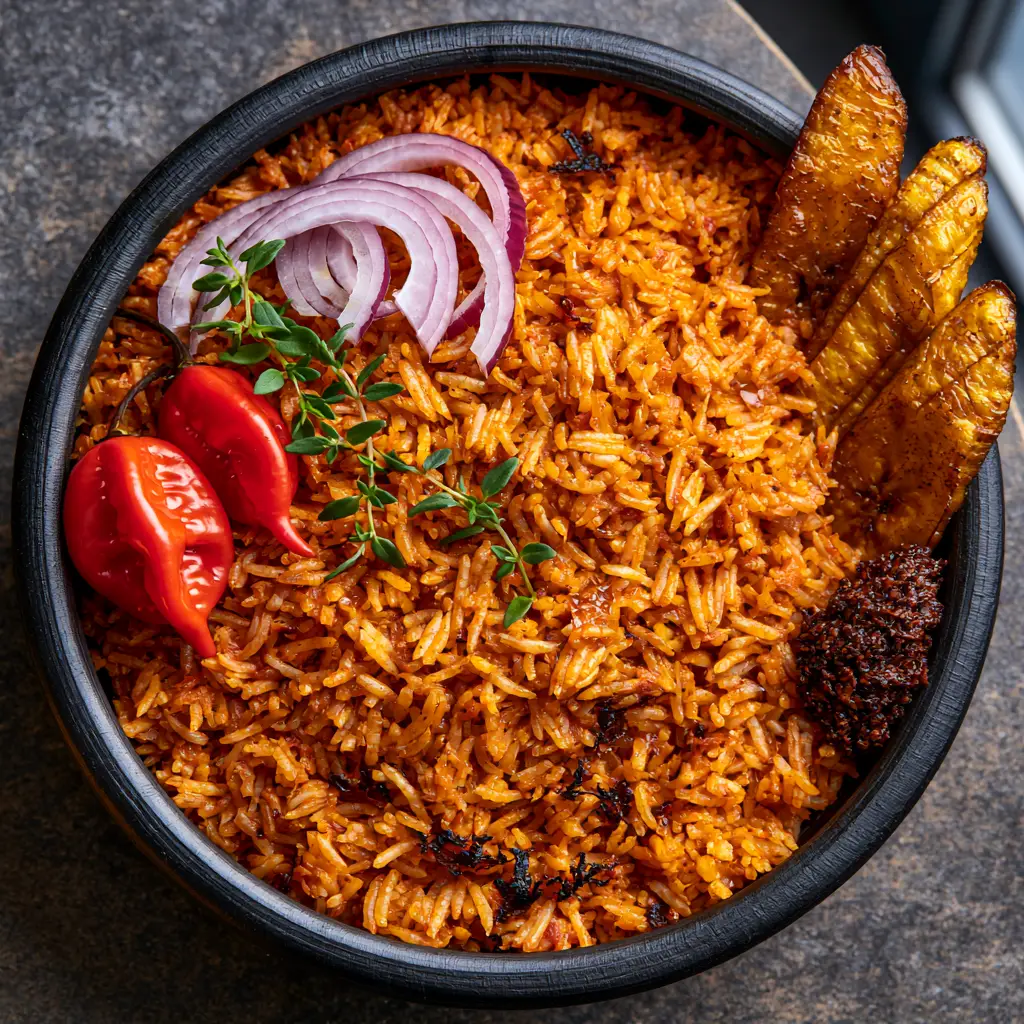
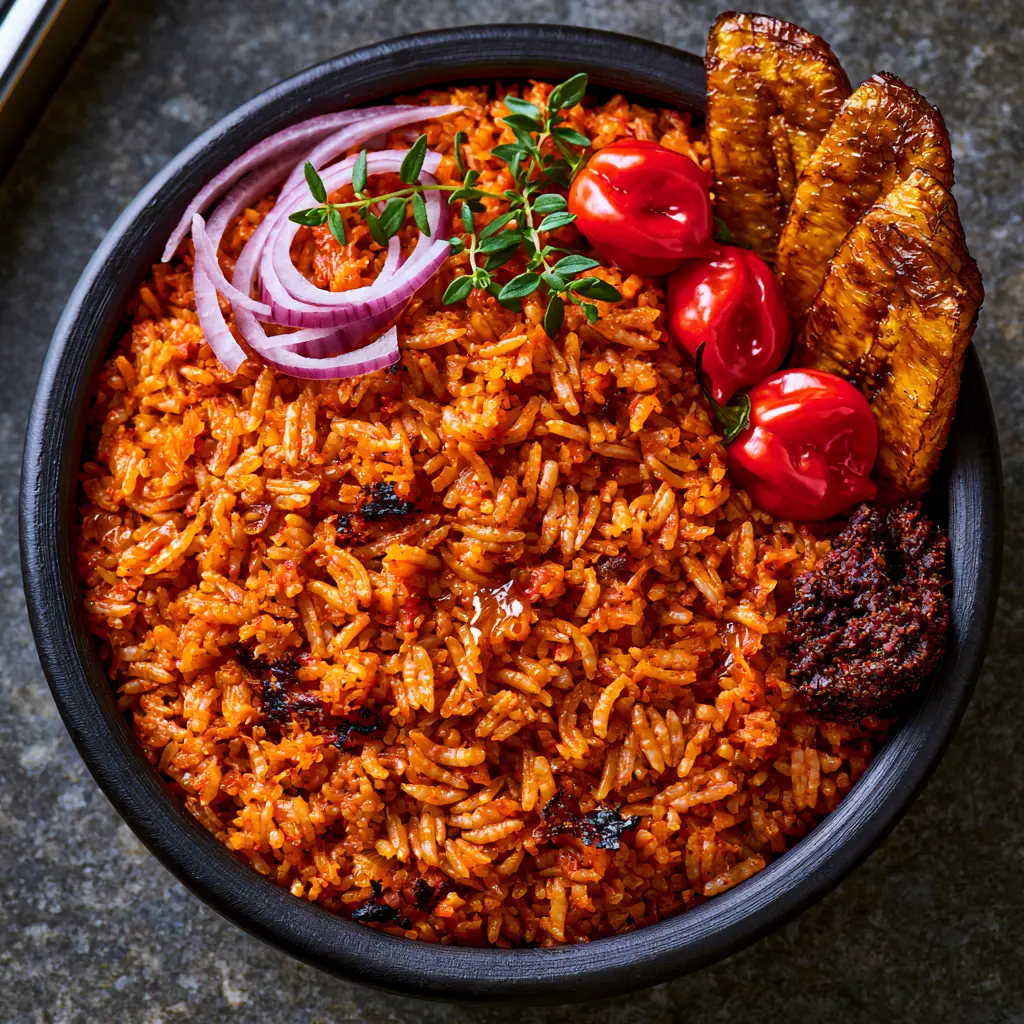
- Visual Garnish: The contrast of vibrant rice against raw red onion rings, fresh green thyme, and bright whole habaneros is a visual feast.
The Essential Ingredients for Deep Umami Flavor
To recreate the visual and flavor profile of our Ghanaian Jollof Rice blueprint, you need high-quality ingredients. Each component serves a scientific and culinary purpose to ensure the final dish matches the professional standards of West African cuisine.
- Long-Grain Parboiled Rice: 3 cups (600g). This rice has been partially boiled in the husk, which helps the grains maintain their structure and prevents them from clumping together during the long steaming process.
- Vegetable Oil: 1/2 cup (120ml). Essential for searing the aromatics and providing that “glisten” seen in high-end food photography.
- Red Onions: 2 large onions. Half will be blended into the base, and half will be sliced into raw rings for the final garnish to provide a sharp, fresh crunch.
- Tomato Paste: 6 oz (170g). This provides the deep, concentrated red color and a thick body for the sauce.
- Fresh Tomato and Pepper Reduction: 2 cups (480ml) of blended Roma tomatoes and red bell peppers, reduced by half to intensify the natural sugars.
- Scotch Bonnet Peppers: 2 peppers, minced. These provide the characteristic fruitiness and heat that defines West African heat profiles.
- Whole Habanero Peppers: 2 bright red peppers. These are kept whole and tucked into the rice during the final steam for aesthetic appeal and a gentle aromatic infusion without overwhelming heat.
- Spices: A blend of dried thyme, curry powder, garlic powder, and a hint of nutmeg for warmth.
- Fresh Thyme Sprigs: Used as a final garnish to add a pop of green and a floral aroma.
- Fried Plantains: 2 ripe plantains, sliced diagonally and fried until caramelized and golden brown.
- Shito Sauce: 2 tablespoons of dark, umami-rich black pepper sauce served on the side.
Mastering the Rich Tomato and Pepper Reduction
The secret to world-class Ghana Jollof Rice lies in the “stew.” You cannot rush this process. The goal is to fry the tomato paste and the pepper puree until the oil separates from the solids, indicating that the water has evaporated and the flavors are concentrated.
Step 1: The Aromatic Base. Start by heating your oil in a heavy-bottomed pot. Sauté your diced onions until they are translucent and just beginning to caramelize around the edges. Add your minced ginger, garlic, and scotch bonnets, allowing the heat to release their volatile oils.
Step 2: Frying the Paste. Add the tomato paste. This is a crucial step. You must fry the paste for at least 5-8 minutes, stirring constantly. You will notice the color shift from a bright red to a deep, dark brick red. This removes the “tinny” taste and develops sweetness.
Step 3: The Reduction. Pour in your blended tomato and bell pepper mix. Lower the heat and let it simmer. You are looking for the “oil float”—when the oil rises to the top, your base is ready. This concentrated sauce will coat each grain of native jollof rice perfectly.
Step-by-Step: How to Achieve the Perfect Grain Separation
1. Wash the Rice: Rinse your 3 cups (600g) of parboiled rice under cold water until the water runs clear. This removes excess surface starch, which is the primary cause of sticky rice.
2. Incorporating the Grains: Add the washed rice to the boiling stew. Stir well to ensure every grain is coated in the vibrant orange-red sauce. This “toasting” phase helps seal the grains.
3. The Steaming Technique: Add 2.5 cups (600ml) of high-quality chicken or vegetable stock. The liquid should just barely cover the rice. Cover the pot tightly with foil, then place the lid on top. This traps the steam, which cooks the rice gently and evenly.
4. The Final Infusion: About 10 minutes before the rice is done, gently tuck two whole red habanero peppers into the surface of the rice. Do not break them! Cover again and finish steaming.
The Art of the “Kanzo” (The Golden Charred Bottom)
In Ghana, the charred bottom of the Jollof pot is highly coveted. To achieve this, turn the heat to medium-high for the last 3-5 minutes of cooking. You should hear a faint crackling sound. This creates those tiny charred bits that add a wonderful smoky dimension to the Ghana Jollof Rice.
Expert Tips for Professional-Grade Jollof
- Use a Heavy Pot: A cast-iron Dutch oven or a traditional earthenware bowl helps distribute heat evenly, preventing localized burning while encouraging the “kanzo.”
- Don’t Over-Water: It is better to start with less liquid and add a splash more if needed. Too much water will turn your masterpiece into a porridge.
- Rest the Rice: Once the heat is off, let the pot sit undisturbed for 10 minutes. This allows the moisture to redistribute, resulting in fluffier grains.
- Fresh vs. Dried: While dried thyme is used in the cooking, fresh thyme leaves added at the very end provide a brightness that cuts through the rich, oily sauce.
Serving Suggestions: The Essential Accompaniments
Presentation is key for Pinterest-worthy results. Serve your Ghana Jollof Rice in a shallow black earthenware bowl to make the colors pop. Arrange three diagonal slices of caramelized golden-brown fried plantains on the side. These provide a sweet contrast to the spicy rice.
Add a small dollop of dark, textured shito sauce. This “black pepper sauce” is packed with ginger, dried fish, and crustaceans, providing a massive umami hit. Finally, garnish the top with raw red onion rings and the steamed whole habaneros for a professional finish. If you enjoy this flavor profile, you might also like a shrimp rice bowl for a quicker weeknight alternative.
Storage, Reheating & Freezing
Storage: Place leftover Jollof in an airtight container. It will stay fresh in the refrigerator for up to 4 days. In fact, many believe the flavors improve the next day!
Reheating: To maintain the texture, reheat in a microwave with a damp paper towel over the bowl, or steam it on the stovetop with a tablespoon of water.
Freezing: You can freeze Jollof rice for up to 3 months. Thaw overnight in the fridge before reheating to ensure the grains don’t break.
Frequently Asked Questions
The deep red color comes from properly frying your tomato paste until it turns brick red and using a high ratio of red bell peppers (tatashe) in your blended base.
It can be! Ghanaian Jollof typically uses scotch bonnets and is often served with Shito (black pepper sauce), which adds an extra layer of heat and umami not always found in the Nigerian version.
Kanzo is the slightly burnt or charred rice at the bottom of the pot. To get it, turn the heat up to medium-high for the last 3-5 minutes of cooking until you hear a crackling sound, then let it rest.
Long-grain parboiled rice is the traditional and best choice for Ghana Jollof. It holds its shape during the long steaming process, ensuring the grains remain separate and fluffy rather than mushy.
Foil creates a tight seal that prevents steam from escaping. This allows the rice to cook in its own moisture, resulting in even cooking and preventing the top layer from remaining hard.
The Ultimate Authentic Ghana Jollof Rice Recipe
Ghana Jollof Rice: The Ultimate Guide to Authentic Smokey Flavor
Ingredients
Equipment
Method
- Heat oil in a heavy pot and sauté diced onions, ginger, and garlic until softened.
- Add tomato paste and fry for 8 minutes until the color deepens to brick red.
- Add blended tomatoes and peppers; simmer until the oil separates and floats to the top.
- Add washed parboiled rice to the stew and stir to coat every grain.
- Add stock, cover with foil and a lid, and simmer on low for 25-30 minutes.
- Tuck whole habaneros in, turn heat to medium-high for 3 minutes to char the bottom, then rest for 10 minutes.
Notes
Don't skip the foil seal; it's essential for even steaming.
Save This Recipe for Later!
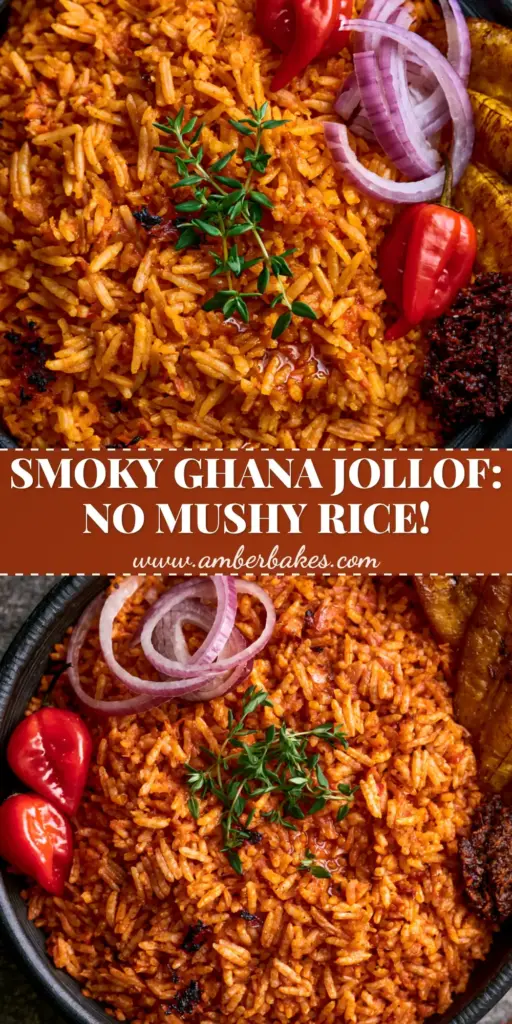
Did you love this Ghana Jollof Rice? If so, please pin this recipe to your favorite Pinterest board so you can find it whenever the craving hits! Following amber_bakes on Pinterest helps us bring you more authentic recipes from around the world.
We want to see your creations! Snap a photo of your Jollof (especially that kanzo!) and share it in the comments below. Don’t forget to leave a 5-star rating if you enjoyed this guide. Happy cooking!