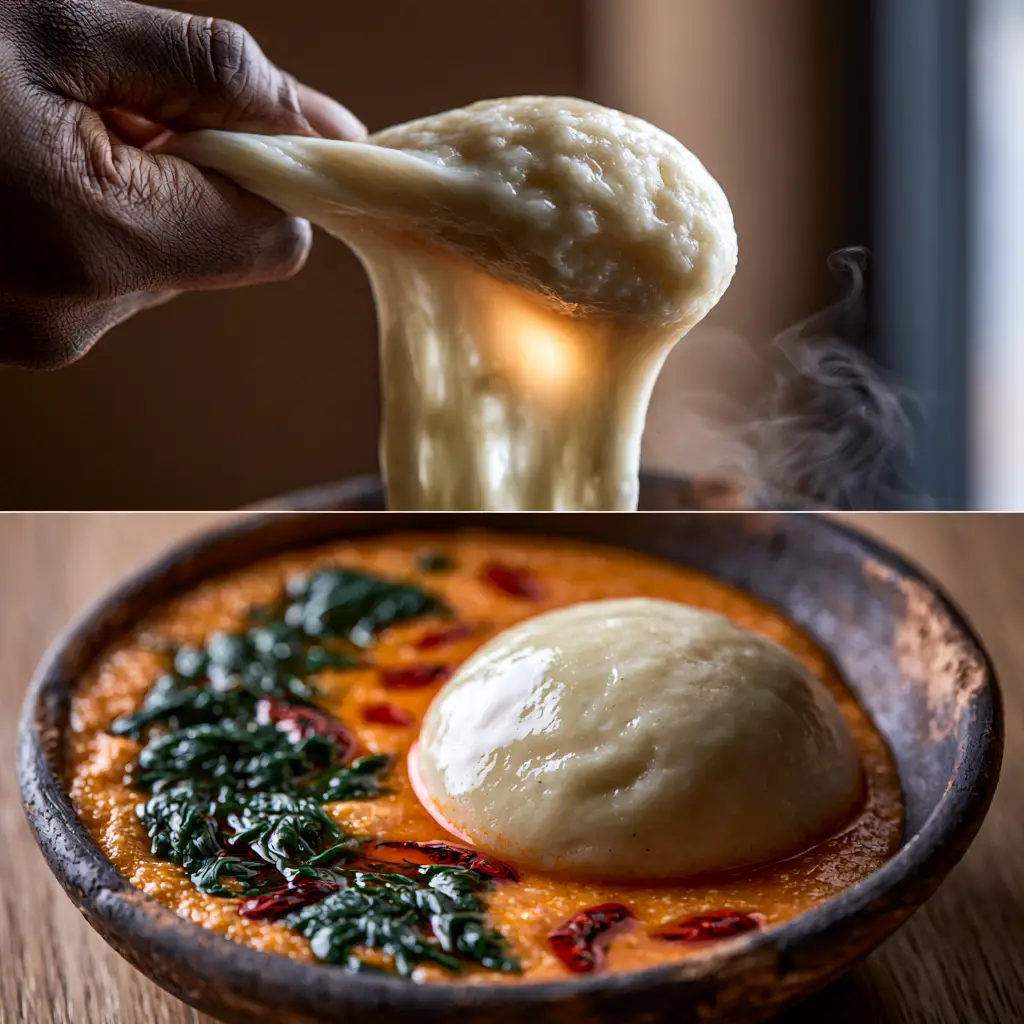
Fufu is more than just a staple; it is a culinary experience that anchors the vibrant flavors of West African cuisine. When you see that snow-white, incredibly silky, stretchy cassava fufu being pulled apart by hand, you know you are in for a comforting, soul-satisfying meal. This recipe focuses on achieving that perfectly shaped, glossy sphere of dough that pairs exquisitely with a rich orange Egusi soup.
Whether you are looking for new side dishes to broaden your horizon or you are craving the deep, earthy comfort of traditional African cooking, mastering Fufu is a rite of passage for any home cook. The magic lies in the texture—a balance of elastic fufu texture and smooth, lump-free consistency that acts as the perfect vessel for savory stews.
Why You Will Love This Authentic Fufu Recipe
- Unbeatable Texture: We use specific techniques to ensure a smooth steamed cassava dough that is never grainy or sticky.
- Highly Elastic: Learn the secret to that signature elastic fufu texture that allows you to scoop up every drop of soup.
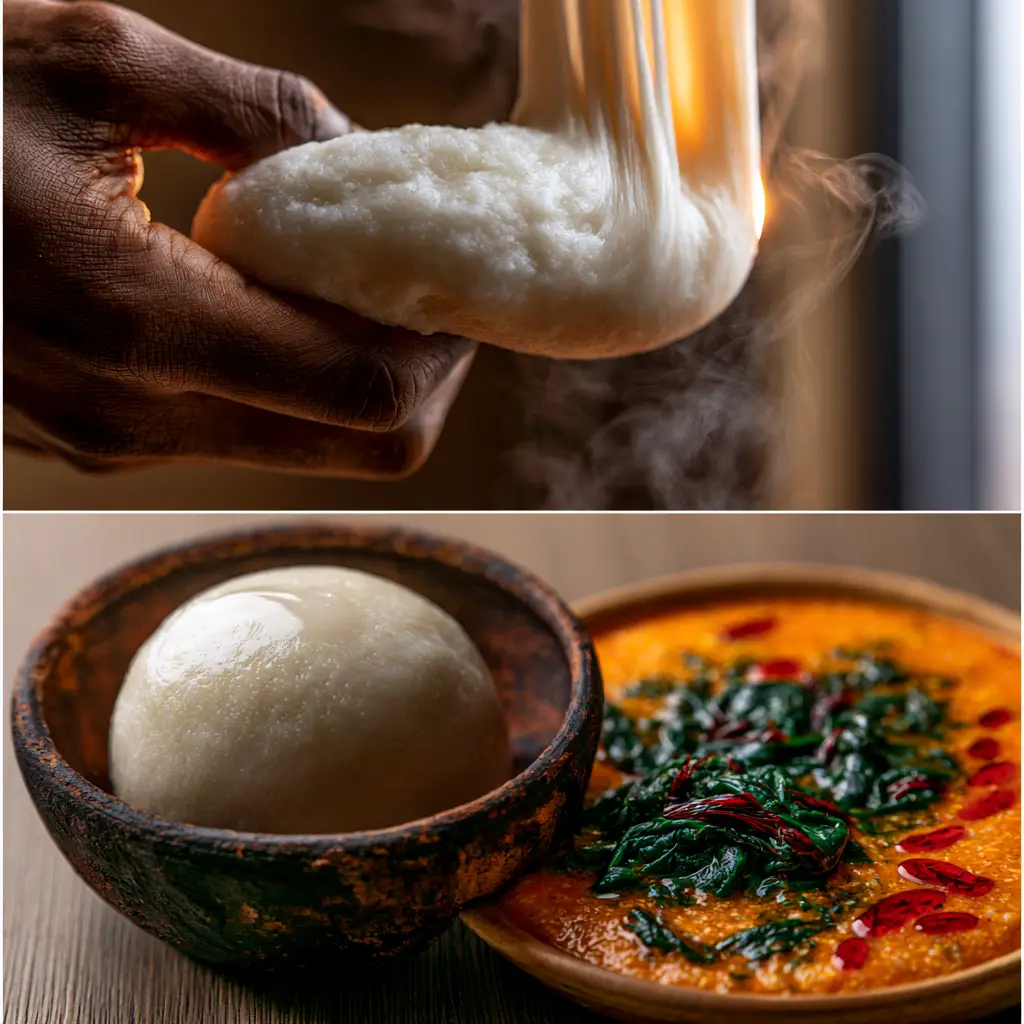
- Visually Stunning: The contrast between the snow-white fufu and the rich orange egusi soup garnished with deep green spinach is a feast for the eyes.
- Naturally Gluten-Free: Made from 100% cassava, this is a fantastic alternative to grain-based sides like couscous.
Essential Ingredients for Silk-Smooth Fufu
To achieve the forensic visual accuracy of a professional kitchen, you need the right raw materials. Each ingredient serves a specific purpose in creating that glossy sphere of fufu.
Fresh Cassava (Yuca) Root: 2 lbs (900g). This is the heart of the dish. Cassava provides the high starch content necessary for that elastic fufu texture. Look for firm roots without soft spots.
Water: 2 cups (480ml). Used for blending the cassava into a smooth puree and providing the steam necessary for gelatinizing the starch.
Sea Salt: 1 tsp (5g). A foundational invisible ingredient that enhances the subtle, nutty flavor of the cassava dough.
Vegetable Oil or Red Palm Oil: 1 tbsp (15ml). A small amount of oil is used on your hands to shape the smooth steamed cassava dough into a perfectly shaped, glossy sphere.
Rich Orange Egusi Soup (For Serving): To match our visual blueprint, you will need a soup base of ground melon seeds, red palm oil drizzle, and chopped wilted spinach.
The Science of the Perfect Stretch
Creating Fufu is an exercise in starch gelatinization. Unlike making pasta, where gluten provides the structure, Fufu relies on the swelling of amylopectin molecules in the cassava. When heat is applied to the blended cassava paste, the starch granules absorb water and burst, creating a thick, translucent, and elastic fufu texture.
If you have ever enjoyed French comfort food, you know that texture is everything. The same applies here. Constant stirring is the only way to ensure that the heat is distributed evenly, preventing lumps from forming in your snow-white, incredibly silky dough.
How to Make Smooth Steamed Cassava Fufu
Step 1: Preparing the Cassava Root
Start by peeling 2 lbs (900g) of fresh cassava. Use a sharp knife to cut through the thick brown bark-like skin and the pinkish inner layer until you reach the snow-white flesh.
Cut the cassava into small chunks and remove the woody core that runs through the center. This step is vital for ensuring your Fufu remains smooth and free of fibrous bits.
Step 2: Blending to a Fine Puree
Place the cassava chunks into a high-speed blender. Add 2 cups (480ml) of water and 1 tsp (5g) of salt. If you have a high-quality smoothie maker, use the highest setting to process the mixture.
Blend until the mixture is a completely liquid, smooth white paste. There should be no visible grains. This liquid state is the starting point for a truly silky, stretchy cassava fufu.
Step 3: The Cooking Process (Stirring for Elasticity)
Pour the puree into a heavy-bottomed non-stick pot over medium-low heat. Immediately begin stirring with a sturdy wooden spoon or a specialized fufu stick.
As the mixture heats, it will begin to thicken and form translucent clumps. Do not panic; this is the starch activating! Continue to stir and mash the dough against the sides of the pot. Use a “folding” motion to incorporate air, which aids in the elastic fufu texture.
Step 4: Steaming for Final Transformation
Once the dough has formed a solid mass, add a splash of water (about 1/4 cup or 60ml) around the edges of the pot. Cover with a tight-fitting lid and reduce the heat to the lowest setting.
Allow the Fufu to steam for 5-8 minutes. This ensures the cassava is fully cooked and changes the color from a stark white to a slightly translucent, glossy finish. You will see realistic steam rising when you lift the lid.
Step 5: Pounding and Shaping
Turn the dough out onto a clean surface or into a rustic ceramic bowl. Wet your hands or use a small amount of oil to prevent sticking. “Pound” or knead the hot dough for 2-3 minutes until it becomes incredibly silky and stretchy.
Shape the dough into a perfectly shaped, glossy sphere. The surface should be smooth and reflect the soft natural sunlight, just like in our visual blueprint.
Expert Tips for Success
- Keep it Hot: Fufu is easiest to shape and most elastic when it is very hot. If it cools down too much, it loses its smooth pliability.
- Wet Your Tools: Keep a bowl of water nearby. Dipping your wooden spoon or hands in water prevents the elastic fufu texture from sticking to everything.
- Avoid Over-Blending: While you want a smooth puree, adding too much water during blending will make the cooking time significantly longer and may result in a mushy rather than stretchy dough.
- Pairing Matters: The rich orange egusi soup is the traditional companion. The savory, nutty flavor of the egusi complements the mildness of the smooth steamed cassava dough perfectly.
Storage, Reheating & Freezing
Storage: Wrap individual glossy spheres of fufu tightly in plastic wrap to prevent a skin from forming. Store in the refrigerator for up to 3 days.
Reheating: To restore that elastic fufu texture, place the wrapped dough in a microwave-safe dish with a tablespoon of water. Microwave for 1-2 minutes until steaming hot, then re-knead briefly.
Freezing: Fufu freezes surprisingly well. Wrap tightly and freeze for up to 3 months. Thaw completely in the fridge before reheating using the method above.
What to Serve With This
To recreate the Forensic Visual Accuracy of our guide, serve your Fufu in a rustic dark clay bowl alongside:
- Rich Orange Egusi Soup: Made with ground melon seeds and red palm oil droplets.
- Chopped Wilted Spinach: Stirred into the soup for a vibrant deep green contrast.
- Proteins: Goat meat, smoked fish, or even meatballs for a fusion twist.
- Fresh Garnishes: A final red palm oil drizzle over the soup to make the colors pop.
Frequently Asked Questions
Yes, you can use cassava flour to make fufu by mixing it with boiling water, but the texture and flavor are most authentic when using fresh, blended cassava roots.
Fufu is eaten with the fingers of the right hand. Pull off a small piece, roll it into a ball, make a small indentation with your thumb to scoop up soup, and swallow without chewing.
No. While both are starchy, fufu is much more elastic and dough-like. It is intended to be swallowed in small morsels rather than chewed extensively like potatoes.
Fufu has a very mild, slightly nutty, and neutral flavor. Its primary purpose is to act as a textural contrast and a vessel for the bold, spicy, and savory flavors of West African soups and stews.
Lumps usually form if the cassava wasn’t blended into a fine enough puree or if the heat was too high during the initial stirring phase. Constant, vigorous stirring is key to a smooth result.
The Ultimate Fufu Recipe Card
Fufu: The Ultimate Guide to Smooth, Elastic Cassava Dough
Ingredients
Equipment
Method
- Peel the cassava roots thoroughly, removing the brown bark and pink inner layer. Cut into small chunks and discard the woody central core.
- Combine cassava chunks, 2 cups of water, and salt in a blender. Process until a perfectly smooth, white liquid forms.
- Pour the mixture into a pot over medium-low heat. Stir constantly with a wooden spoon as it thickens into a stretchy dough.
- Add a splash of water, cover, and steam for 5-8 minutes until the dough becomes translucent and glossy.
- Transfer to a bowl and knead until silky. Shape into smooth spheres for serving.
Notes
Always serve with a hot soup like Egusi to enjoy the best texture.
Join the Community!
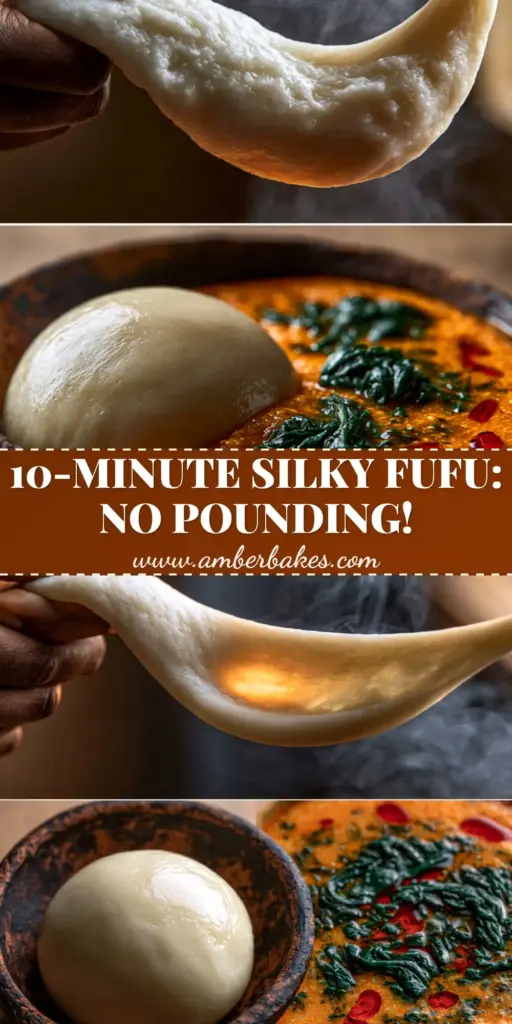
Did you manage to achieve that incredibly silky, stretchy cassava fufu texture? We want to see! Save this recipe to your favorite Pinterest board so you never lose it. Follow amber_bakes for more global comfort food inspiration.
If you made this, please leave a 5-star rating in the recipe card above and share a photo of your perfectly shaped, glossy sphere of fufu in the comments below. Your feedback helps other home cooks master this beautiful traditional dish!