Japanese Yakisoba is the quintessential soul food of Japan, often found steaming on hot griddles at summer festivals and street corners. This dish isn’t just a simple stir-fry; it is a masterclass in texture, balancing seared wheat noodles with a complex, glossy brown yakisoba sauce. Whether you are craving a quick weekday meal or a vibrant, visual feast for your next gathering, this recipe delivers restaurant-quality results right in your home kitchen.
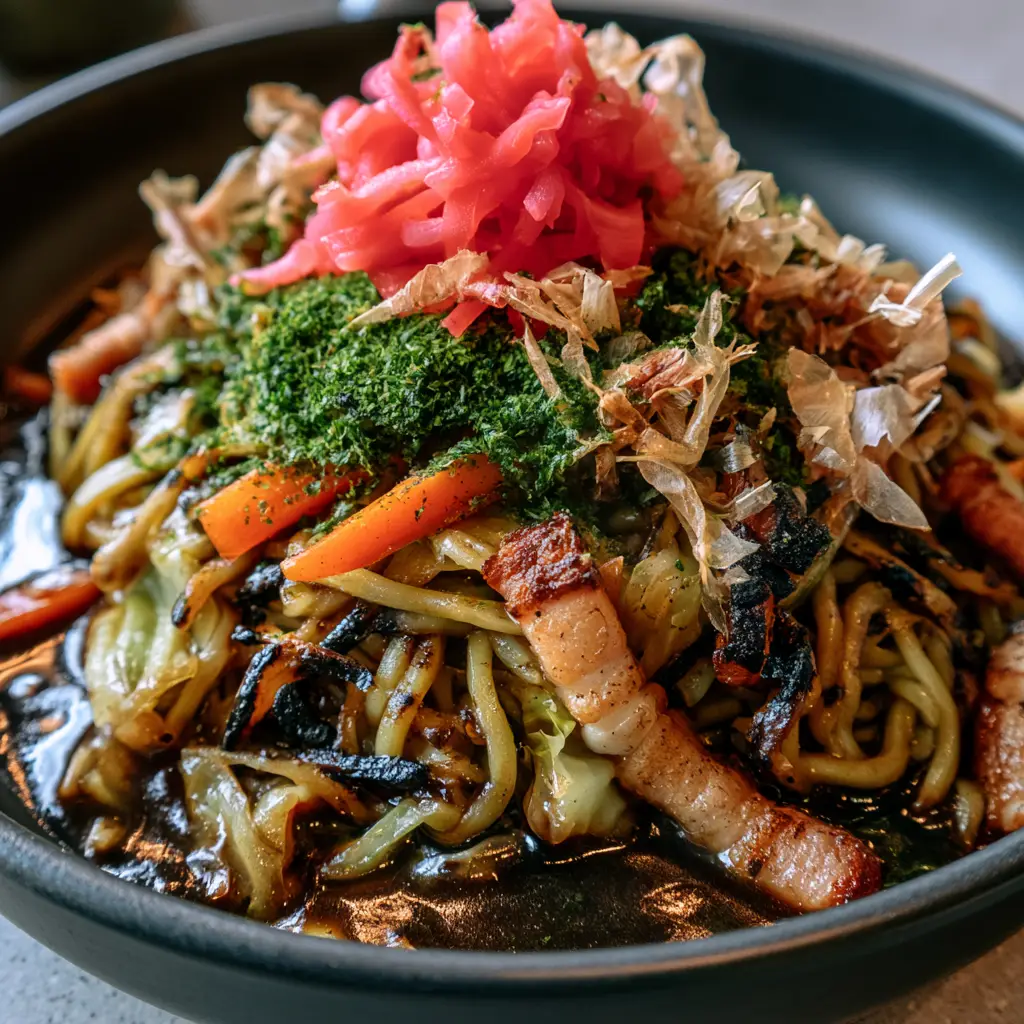
If you have ever stood before a yatai (food stall) in Tokyo, you know the aroma: the scent of rendered pork belly strips hitting a hot flat top, the sizzle of sautéed green cabbage, and that sharp, vinegary note of bright pink pickled ginger. We are recreating that exact sensory experience today, ensuring every strand of noodle carries that signature smoky char.
Why You Will Crave This Authentic Stir-Fry
- The Perfect Sear: We use a specific technique to get visible dark char marks on the wheat noodles, creating a smoky depth you can’t get from boiling alone.
- Umami-Rich Glaze: The homemade glossy brown yakisoba sauce perfectly coats every ingredient without becoming soggy or oily.
- Textural Harmony: From the crunch of thin carrot matchsticks to the “dancing” motion of wispy bonito flakes, every bite is a new experience.
- Speed and Simplicity: Much like our favorite easy African dinner recipes, this dish comes together in under 30 minutes once your prep is done.
The Anatomy of an Authentic Yakisoba
To achieve the visual and flavorful results of our blueprint, you need the right components. While it may look like a simple noodle dish, each ingredient serves a scientific and culinary purpose.
Mushi-chukamen (Steamed Ramen-style Noodles): These are pre-steamed wheat noodles. They have a distinct yellow hue and a firm bite that holds up to high-heat searing. Unlike regular pasta, these won’t turn to mush when tossed in the savory sauce.
Pork Belly Strips: 8 oz (225g) of thinly sliced pork belly provides the essential fat for the dish. As the edges get crispy and seared, the rendered fat flavors the cabbage and carrots.
The “Green” Foundation: 1/4 head (approx. 200g) of green cabbage and 1 small carrot (matchsticked). The cabbage should be sautéed until the edges are translucent slivers, providing a natural sweetness to balance the salty sauce.
The Signature Sauce: A blend of Worcestershire sauce, oyster sauce, soy sauce, and a touch of sugar. It must be thick enough to be viscous and dark-brown, clinging to the noodles rather than pooling at the bottom of the bowl.
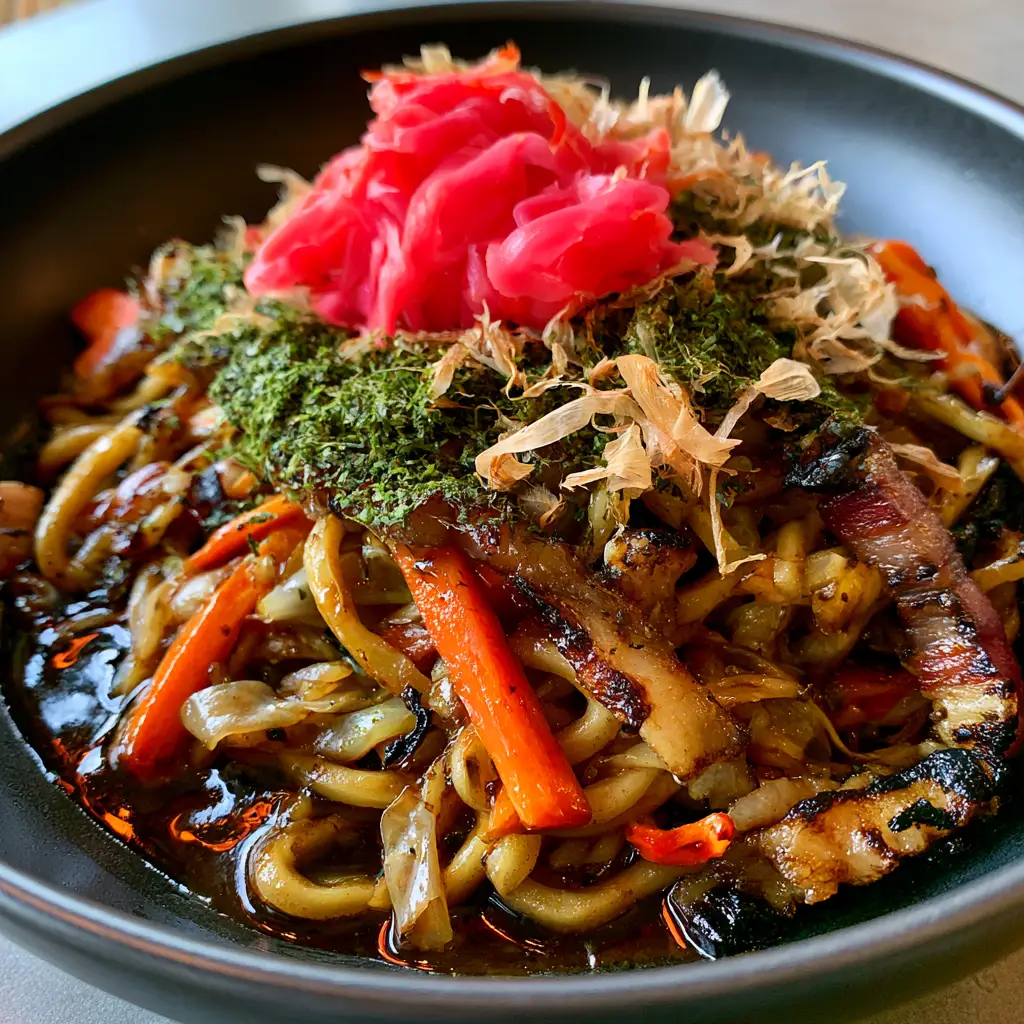
Visual Garnishes: You cannot skip the bright pink pickled ginger (beni shoga), the fine green aonori seaweed powder, and the bonito flakes. The heat from the noodles makes the bonito flakes “dance,” a classic visual hallmark of this dish.
Mastering the Sear: Step-by-Step Instructions
Phase 1: Prepping the Aromatics and Proteins
Begin by slicing your 8 oz (225g) of pork belly into bite-sized, thin strips. If your pork belly is too soft to slice thinly, pop it in the freezer for 15 minutes to firm up. Slice 1/2 of a medium yellow onion into thin wedges and matchstick your carrots.
For the cabbage, remove the core and chop it into 1-inch (2.5cm) squares. This size ensures the cabbage cooks at the same rate as the thin carrot matchsticks, resulting in that perfect sautéed green cabbage texture.
Phase 2: Preparing the Noodle Base
If using refrigerated mushi-chukamen, rinse them briefly under hot water to loosen the strands. Drain them thoroughly. Pro Tip: Pat them dry with a paper towel. Any excess moisture will prevent the noodles from developing those essential dark char marks.
Heat 1 tablespoon (15ml) of neutral oil in a large wok or flat griddle over medium-high heat. Add the noodles and spread them out. Do not move them for 2-3 minutes. You want the bottom layer to sear and develop a golden-brown crust, much like the crispy base of Nigerian Fried Rice. Flip and repeat, then remove the noodles and set aside.
Phase 3: Building the Stir-Fry
In the same pan, add the pork belly strips. Sear until the fat renders and the edges turn crispy and brown. Add the onions, carrots, and cabbage. Sauté for 3-4 minutes until the cabbage slivers are translucent but still retain a slight snap.
Return the seared noodles to the pan. Pour over your 1/2 cup (120ml) of glossy yakisoba sauce. Using tongs, toss everything vigorously over high heat. The sauce should reduce slightly, becoming a viscous dark-brown glaze that lacquers the noodles.
Phase 4: The Final Visual Flourish
Transfer the steaming noodles to a minimalist matte black ceramic bowl. The dark background makes the colors pop. Immediately top with a generous pile of bright pink pickled ginger in one corner. Sprinkle a heavy dusting of fine green aonori over the center.
Finally, add a handful of translucent bonito flakes. Watch as they begin curling and “dancing” from the residual heat. Finish with a scatter of sliced green onions for a final hit of freshness.
Expert Tips for Success
- High Heat is Non-Negotiable: Yakisoba is a “fast” dish. High heat ensures the vegetables sear rather than steam, keeping the Japanese Yakisoba from becoming watery.
- Sauce Ratio: If you prefer a “wetter” noodle, increase the oyster sauce slightly. For a tangier version, add an extra splash of Worcestershire sauce.
- Noodle Quality: While you can use dried ramen in a pinch, the texture will not be the same. Seek out “Mushi-chukamen” in the refrigerated section of your local Asian grocer.
- Don’t Crowd the Pan: If you are making a double batch, cook the noodles in two separate lots to ensure you get those visible dark char marks.
Storage, Reheating, and Freezing
Storage: Leftover Japanese Yakisoba can be stored in an airtight container in the refrigerator for up to 3 days. The flavors often deepen overnight, making it a fantastic next-day lunch.
Reheating: For the best texture, reheat in a skillet over medium heat with a tiny splash of water to loosen the sauce. Avoid the microwave if possible, as it can make the seared pork belly rubbery.
Freezing: While you can freeze Yakisoba, the cabbage may lose its crunch upon thawing. If you must freeze, do so in individual portions for up to 1 month. Thaw in the fridge before reheating in a pan.
What to Serve With This Dish
This is a complete meal on its own, but if you are looking to create a larger spread, it pairs beautifully with light appetizers. Try serving it alongside a simple cucumber salad or a bowl of miso soup. If you are exploring international fusion, the savory notes of this stir-fry surprisingly complement many African food recipes that utilize similar aromatic bases.
For a seafood-themed night, consider serving a smaller portion of these noodles alongside Hawaiian garlic shrimp for a true Pacific-rim feast.
Frequently Asked Questions
Yes! Substitute the pork belly with firm tofu or shiitake mushrooms, and ensure your Worcestershire and oyster sauces are the vegetarian/vegan versions.
In a pinch, yes. Boil them until just under al dente, drain, and pat very dry before searing. However, the texture will be less chewy than traditional steamed noodles.
That is ‘Aonori,’ a dried green seaweed powder. It provides a unique briny aroma and is a traditional finishing touch for both Yakisoba and Okonomiyaki.
Authentic Yakisoba uses ‘Mushi-chukamen,’ which are pre-steamed wheat noodles. Despite the name, they do not contain buckwheat (soba) but are similar to ramen noodles.
Mushy noodles usually result from overcrowding the pan or not searing the noodles first. Ensure you pat the noodles dry and use high heat to get those signature char marks.
The Authentic Japanese Yakisoba Recipe
Japanese Yakisoba: The Ultimate Savory Stir-Fried Noodle Recipe
Ingredients
Equipment
Method
- Slice pork belly, onions, carrots, and cabbage according to the visual blueprint instructions.
- Rinse noodles under hot water to loosen, then pat completely dry to ensure a good sear.
- Heat oil in a wok. Sear noodles without moving them until visible dark char marks appear. Remove and set aside.
- Sear pork belly until crispy. Add onions, carrots, and cabbage, sautéing until cabbage slivers are translucent.
- Return noodles to the pan. Add yakisoba sauce and toss over high heat until glossy and viscous.
- Serve in a matte black bowl. Top with bright pink ginger, aonori, dancing bonito flakes, and green onions.
Notes
Tip 2: Pat noodles dry before searing to get those iconic dark char marks.
Save, Share, and Rate!
Did you manage to get those perfect char marks on your noodles? We want to see! If you enjoyed this Japanese Yakisoba, please save it to your Pinterest boards so you never lose the recipe. Following amber_bakes on Pinterest helps us bring more authentic global flavors to your kitchen.
Leave a 5-star rating in the comments below and upload a photo of your finished bowl. Seeing those dancing bonito flakes in your kitchen makes our day! What global dish should we tackle next? Let us know below!