There is a specific kind of culinary magic that happens when bright citrus meets the salty, tangy depth of melted feta cheese. This Lemon Feta Orzo Shrimp is the physical embodiment of that magic, captured in a single, rustic ceramic pan. If you have been searching for a dish that feels like a high-end coastal bistro meal but comes together in your own kitchen, you have arrived at your destination.
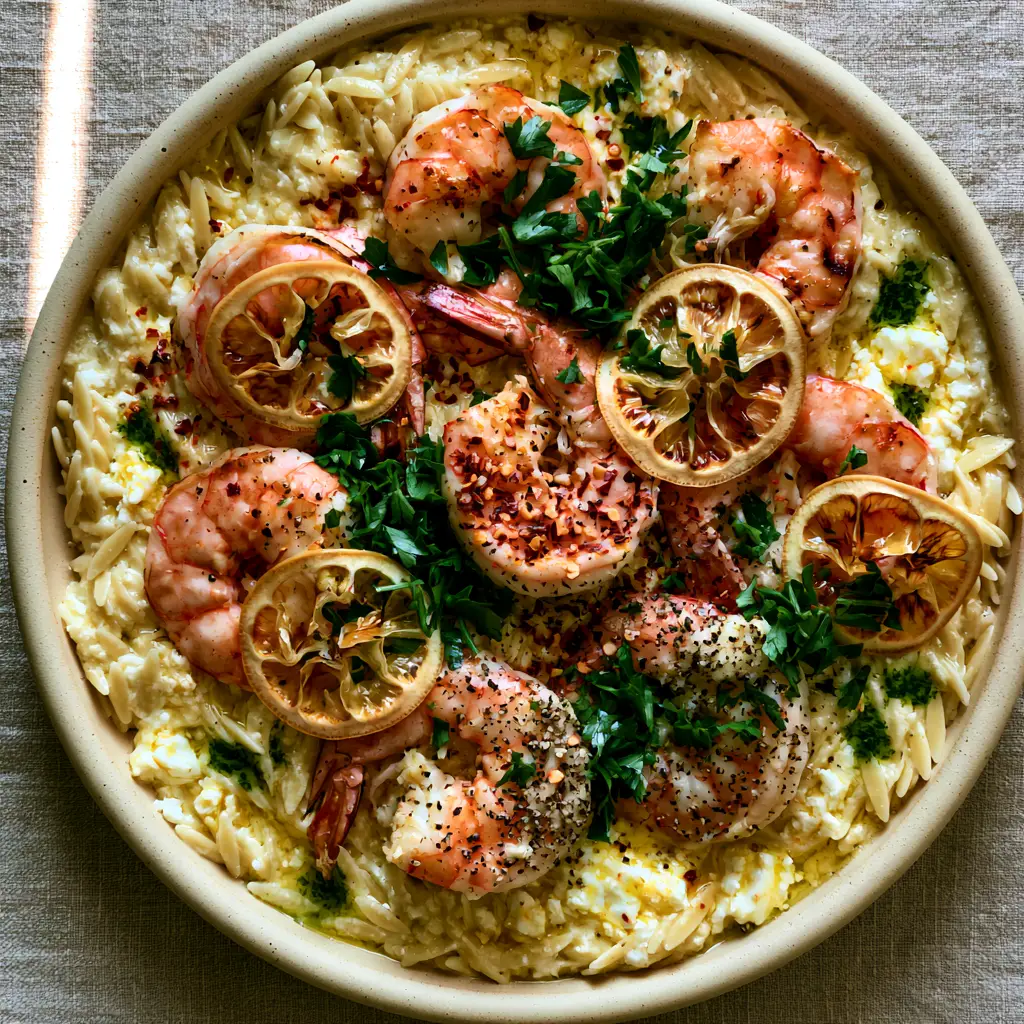
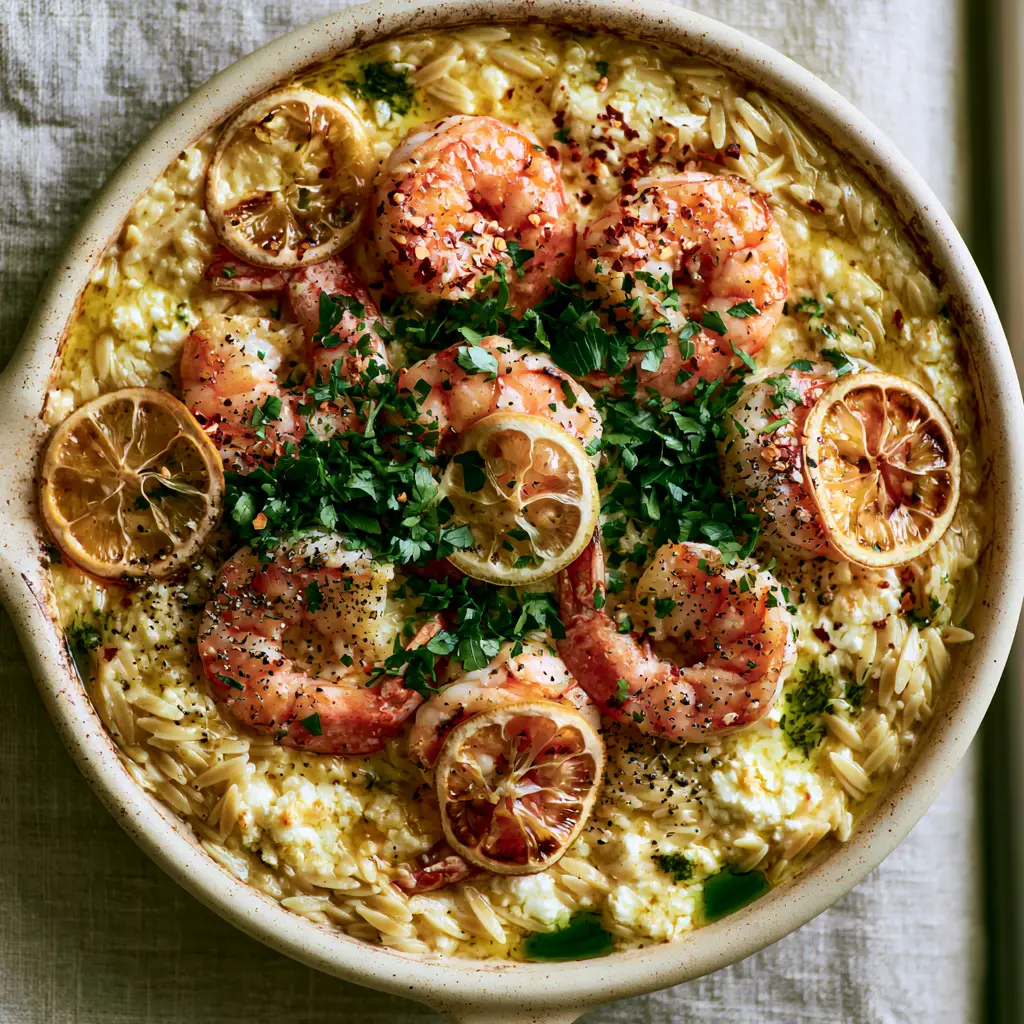
Imagine succulent jumbo shrimp, their edges perfectly charred to a pink-orange hue, nestled into a bed of al dente orzo. The pasta is not just cooked; it is enveloped in a luxurious, golden lemon-garlic sauce that clings to every grain. Pockets of melted white feta provide creamy surprises, while caramelized lemon half-moons add a concentrated hit of sweet-tart intensity that cuts through the richness beautifully.
Visually, this dish is a showstopper. The vibrant greens of fresh chopped parsley and glistening emerald herb oil pop against the matte cream of the pan. A delicate dusting of crushed red pepper flakes and cracked black pepper adds both visual texture and a gentle heat that lingers on the palate. Whether you are hosting a dinner party or elevating a weeknight meal, this recipe delivers on every sensory promise.
Why This One-Pan Mediterranean Wonder Works
- Textural Harmony: The contrast between the firm, al dente bite of the orzo and the snap of the perfectly seared jumbo shrimp creates a professional-grade mouthfeel.
- Layered Acidity: We use lemon in three ways—zest for aroma, juice for the sauce, and caramelized wheels for a deep, jammy finish.
- Foundational Flavor: By searing the shrimp first and deglazing the pan, we ensure every grain of pasta is infused with the savory essence of the seafood.
- Visual Sophistication: The inclusion of emerald herb oil and charred lemon wheels elevates this from a simple pasta dish to a centerpiece-worthy creation.
The Anatomy of a Perfect Lemon Feta Orzo Shrimp
Achieving the specific “food blogger aesthetic” described in our visual blueprint requires high-quality ingredients and a few scientific essentials. While the shrimp and orzo are the stars, the “invisible” ingredients like high-smoke-point oils and proper seasoning are what ensure the dish is structurally sound and delicious.
Jumbo Shrimp (16/20 Count): We specifically use seven large jumbo shrimp to achieve the focal point seen in our rustic pan. Their size allows for a hard sear without overcooking the delicate interior.
Orzo Pasta: This rice-shaped pasta is the ideal vessel for the creamy sauce. Its high surface-area-to-volume ratio ensures maximum sauce distribution in every spoonful.
Feta Cheese: Opt for a high-quality block of feta in brine. The crumbles will partially melt into the sauce, creating those visible white pockets of creaminess mentioned in our visual guide.
Lemons: You will need two large lemons. One will be sliced into thin half-moons for caramelizing, while the other provides the fresh zest and juice needed to brighten the golden sauce.
Heavy Cream & Chicken Stock: This combination creates the “golden lemon-garlic sauce.” The cream adds body, while the stock provides a savory base that prevents the sauce from becoming too heavy.
Emerald Herb Oil: A blend of fresh parsley and extra virgin olive oil, strained to perfection. This is the secret to those glistening green pockets that catch the light in the final presentation.
Aromatic Base: Fresh garlic and shallots are non-negotiable. They provide the aromatic foundation that elevates the Lemon Feta Orzo Shrimp from simple to sublime.
Foundational Seasonings: Kosher salt, cracked black pepper, and crushed red chili flakes. These are applied at multiple stages to build layers of flavor and visual texture.
Essential Tools for the Professional Home Cook
To replicate the high-angle, rustic aesthetic of this dish, the equipment is just as important as the ingredients. You will need a shallow, wide ceramic pan—ideally in a matte cream finish—which allows the ingredients to spread out and be seen clearly.
A high-quality stainless steel or cast iron skillet is also useful for the initial shrimp sear if your ceramic pan isn’t rated for high-heat browning. You will also need a microplane for zesting the lemons and a sharp chef’s knife for achieving that “generous scatter” of vibrant parsley.
For the emerald herb oil, a small high-speed blender or food processor is necessary to emulsify the herbs and oil into a smooth, vibrant liquid. Finally, a pair of kitchen tongs is essential for precise placement of the shrimp and lemon wheels to match our visual blueprint.
Step-by-Step Evolution of the Dish
Mastering the Golden Sear on Jumbo Shrimp
Pat your jumbo shrimp completely dry with paper towels. This is the most critical step for achieving the “light charred edges” and “pink-orange hues” described in our visual prompt. Moisture is the enemy of the sear; if the shrimp are wet, they will steam rather than brown.
Heat 1 tablespoon (15ml) of olive oil in your pan over medium-high heat. Season the shrimp with salt and a pinch of black pepper. Place them in the pan, ensuring they do not touch. Sear for 2 minutes per side until a crust forms, then remove them immediately. They will finish cooking in the residual heat of the pasta later.
Caramelizing the Lemon Half-Moons
In the same pan, add a tiny drizzle of oil if needed. Place the thin lemon half-moons flat against the surface. Cook for 1-2 minutes until the edges are dark brown and the flesh has turned a translucent amber. Remove and set aside for the final garnish.
Building the Creamy Lemon-Garlic Base
Lower the heat to medium and add the finely minced shallots and garlic. Sauté until translucent and fragrant, being careful not to burn the garlic. Add the dry orzo to the pan and toast it for 60 seconds. This toasting adds a nutty depth and helps the orzo maintain its al dente texture.
Deglaze the pan with a splash of dry white wine or a bit of stock, scraping up the browned bits (fond) from the shrimp. Gradually add the remaining chicken stock and a touch of heavy cream. Simmer, stirring frequently, until the orzo is tender but still has a firm bite.
The Feta Fold and Final Assembly
Once the orzo is cooked and the sauce has thickened to a golden, coating consistency, stir in the lemon juice and zest. Add half of the feta crumbles and stir gently. You want some of the feta to melt into the sauce, while leaving visible white chunks for visual contrast.
Nestle the seared shrimp back into the bed of orzo. Arrange the caramelized lemon wheels across the top. The warmth of the pasta will bring the shrimp back to the perfect serving temperature without making them rubbery.
Expert Tips for Visual and Culinary Success
- Don’t Overcook the Orzo: Much like a risotto, orzo continues to absorb liquid as it sits. Remove it from the heat when it is just shy of your desired tenderness.
- The “Glisten” Factor: The emerald herb oil should be added at the very last second. Use a small spoon to drop it into the “pockets” of the sauce to ensure it stays vibrant and doesn’t fully emulsify.
- Temperature Control: If the sauce becomes too thick, add a tablespoon of warm stock or water to loosen it. A “creamy” sauce should flow slightly, not stand still.
- Shrimp Placement: For the best aesthetic, place the shrimp in a circular pattern, leaving space in the center for the lemon wheels and parsley garnish.
Creative Pairings and Serving Suggestions
This Lemon Feta Orzo Shrimp is a complete meal on its own, but it pairs beautifully with light, crisp sides. If you want to lean into the seafood theme, consider serving this alongside some perfectly charred shrimp skewers for a larger crowd.
For a refreshing contrast to the creamy sauce, a classic caprese salad or a festive tomato and mozzarella platter provides a bright, acidic counterpoint. If you prefer a starch-heavy spread, a side of creamy tzatziki potato salad complements the Mediterranean flavors perfectly.
Finally, for a sweet finish that echoes the fruit notes in the dish, consider a light dessert like strawberry pretzel salad or a fresh mango delight.
Frequently Asked Questions
Yes, but ensure they are completely thawed and patted dry with paper towels before searing. Excess moisture will prevent the shrimp from developing the charred edges essential for this dish.
Fold half of the feta into the hot orzo just before serving, and sprinkle the remaining half on top. This ensures you have both a creamy sauce and visible white crumbles for texture.
Orzo is highly absorbent. Simply stir in a tablespoon of warm chicken stock or pasta water at a time until you reach a silky, golden consistency that flows easily.
Use a dry, hot pan or a very light coating of oil. Place thin lemon half-moons flat and don’t move them for 90 seconds until the natural sugars brown and concentrate the citrus flavor.
The Definitive Lemon Feta Orzo Shrimp Recipe
Lemon Feta Orzo Shrimp: A Creamy Mediterranean Masterpiece
Ingredients
Equipment
Method
- Heat 1 tbsp olive oil in a pan. Pat shrimp dry, season with salt/pepper, and sear for 2 mins per side until pink-orange with charred edges. Remove.
- Sear lemon half-moons in the residual oil for 1-2 minutes until dark golden brown. Set aside.
- Sauté shallots and garlic until fragrant. Add orzo and toast for 1 minute.
- Add chicken stock and cream. Simmer, stirring occasionally, for 8-10 minutes until orzo is al dente and sauce is golden.
- Fold in feta, lemon juice, and zest. Return shrimp to the pan.
- Top with caramelized lemons, parsley, red chili flakes, cracked pepper, and glistening drops of emerald herb oil.
Notes
For a brighter herb oil, blanch the parsley for 10 seconds before blending with oil.
Storage and Reheating Protocols
This dish is best enjoyed immediately to preserve the delicate texture of the shrimp and the creaminess of the sauce. However, leftovers can be stored in an airtight container in the refrigerator for up to 2 days. The orzo will absorb the sauce as it sits, so the texture will become denser over time.
To reheat, add a splash of chicken stock or water to the pan or bowl before warming. Heat gently on the stovetop over low heat, stirring constantly to redistribute the moisture. Avoid microwaving the shrimp at high power, as they will quickly become tough and rubbery.
Join the Amber Bakes Community
If you enjoyed making this Lemon Feta Orzo Shrimp, I would love to hear from you! Did you achieve that perfect golden sear? Did the emerald herb oil make your plate pop? Leave a comment below and share your culinary journey.
Don’t forget to follow me on Pinterest for more visually stunning recipe inspiration. Saving this recipe to your “Mediterranean Dinners” board helps other home cooks find this creamy, citrusy treasure!