Mango sago is the quintessential summer treat, a harmonious blend of velvety textures and vibrant tropical flavors that dance across the palate. This dish isn’t just a dessert; it’s a sensory experience that captures the essence of sun-drenched afternoons in a single, clear glass bowl. If you have been searching for a show-stopping finale to a summer dinner party, this is the recipe that will leave your guests speechless.
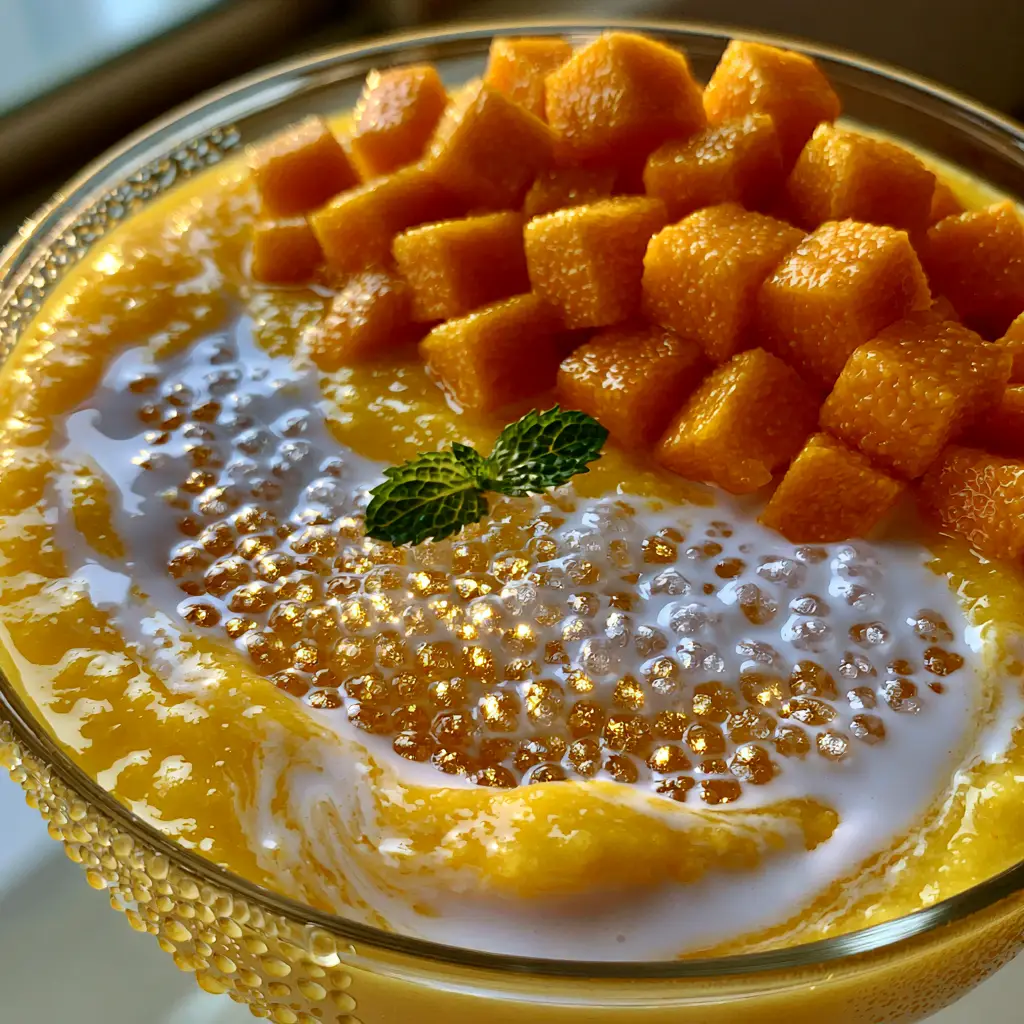
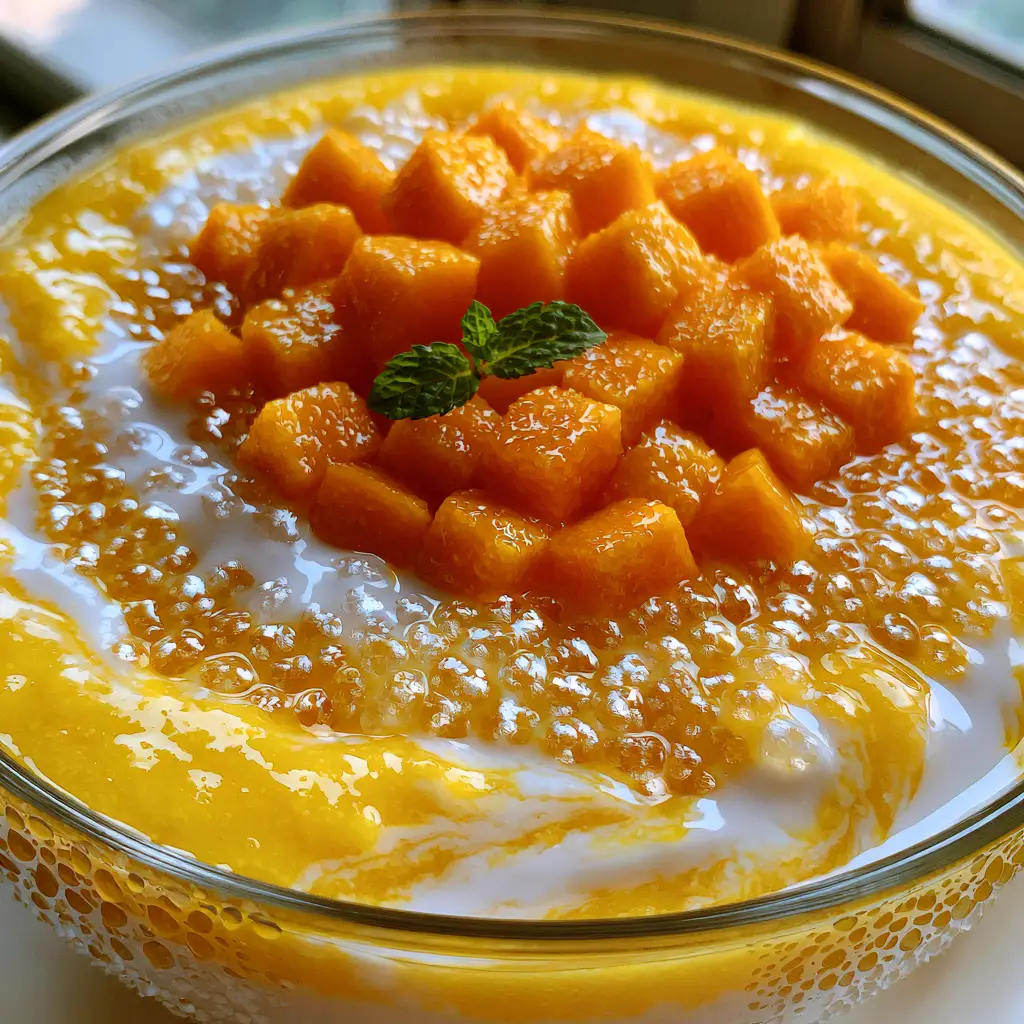
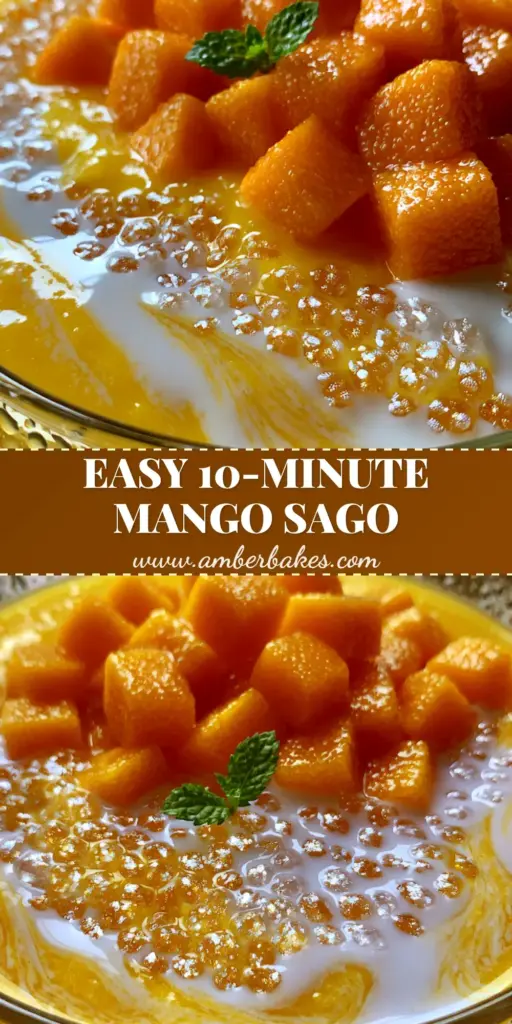
Imagine a base of thick, vibrant yellow mango nectar, so rich it looks like liquid gold, artfully swirled with streaks of snow-white coconut milk. Within this luscious pool lie hundreds of small, translucent, shimmering sago pearls that catch the light like tiny diamonds. Topped with a generous pile of perfectly uniform, sun-ripened orange mango cubes and a single bright green mint sprig, the visual appeal is as stunning as the taste.
When you serve this Mango sago, the condensation on the outside of the glass hints at the refreshing chill within. It is a masterpiece of culinary science and aesthetic beauty, perfectly balancing the starch of the sago with the natural acidity and sweetness of the fruit. Let’s dive into the professional techniques required to achieve this masterpiece in your own kitchen.
The Irresistible Appeal of This Tropical Masterpiece
- Textural Contrast: The soft, chewy “pop” of translucent sago pearls provides a delightful counterpoint to the silky, thick mango nectar base.
- Vibrant Visuals: Using sun-ripened mangoes ensures a saturated orange hue that contrasts beautifully with the stark white coconut milk swirls.
- Balanced Sweetness: By controlling the ripeness of the fruit and the quality of the coconut milk, we achieve a natural sweetness that never feels cloying.
- Refreshing Temperature: Served ice-cold, this dessert is the perfect antidote to high-heat humidity, much like a chilled creamy mango lassi.
Essential Elements for the Perfect Tropical Bowl
Small Sago Pearls: You need 1/2 cup (90g) of small sago or tapioca pearls. These provide the signature “submerged” shimmering texture that defines the visual blueprint of a professional Mango sago.
Fresh Sun-Ripened Mangoes: Use 3 large (approx. 900g) Ataulfo or Honey mangoes. These varieties are less fibrous and provide the vibrant yellow nectar base and perfectly uniform orange cubes seen in the prompt.
Full-Fat Coconut Milk: You will need 1 cup (240ml) of high-quality, canned coconut milk. The fat content is crucial for creating those distinct, velvety snow-white streaks that won’t immediately disappear into the puree.
Mango Nectar or Puree: 1/2 cup (120ml) of concentrated mango nectar helps thin the fresh puree just enough to allow the sago pearls to catch the light while remaining thick enough for the coconut swirl.
Evaporated Milk or Heavy Cream: 1/4 cup (60ml) adds a foundational richness that bridges the gap between the fruit and the coconut. This is the “invisible” ingredient that ensures structural soundness in the mouthfeel.
Granulated Sugar or Honey: 2 tbsp (30g) as needed. Depending on the sweetness of your hand-picked fresh mango, you may need a touch of sweetener to enhance the nectar’s vibrancy.
Water for Boiling: 6 cups (1.4L) of filtered water. Sago requires a large volume of water to ensure the pearls remain individual and translucent rather than clumping into a gelatinous mass.
Fresh Mint Sprig: A single, tiny, bright green sprig for garnish. This provides the essential off-center color pop described in our visual recipe blueprint.
Professional Tools for Culinary Precision
To achieve the high-angle, smartphone-photo-worthy result, you need a high-speed blender to ensure the mango base is completely smooth and free of fibers. A fine-mesh sieve is indispensable for rinsing the sago pearls under cold water, which removes excess starch and achieves that shimmering, translucent look.
A sharp chef’s knife is required to create the “perfectly uniform” cubes of mango that sit atop the liquid. Finally, clear glass bowls are a must; without them, you lose the beautiful side-view of the submerged pearls and the condensation droplets that signal freshness.
Step-by-Step Architecture of the Mango Sago
Mastering the Translucent Sago Pearls
Bring 6 cups (1.4L) of water to a rolling boil in a large pot. Gradually rain in the 1/2 cup (90g) of sago pearls while stirring constantly to prevent them from sticking to the bottom. Reduce the heat to medium and simmer for 10-12 minutes.
You are looking for a specific sensory cue: the pearls should be mostly clear with a tiny white dot in the center. Turn off the heat, cover the pot, and let them sit for another 5-10 minutes until they become completely translucent and catch the light like shimmering glass beads.
Immediately drain the pearls through a fine-mesh sieve and rinse them under vigorous cold running water. This “shocks” the starch and stops the cooking process, ensuring each pearl remains a distinct, submerged entity in your final Mango sago.
Crafting the Vibrant Mango Nectar Base
Peel two of the mangoes and remove the flesh from the pit. Place the flesh into a blender along with the 1/2 cup (120ml) of mango nectar and your chosen sweetener. Blend on high speed until the mixture is a thick, vibrant yellow puree with zero visible fibers.
If your mangoes are particularly fibrous, pass this puree through a sieve for a professional, velvety texture. Chill this base in the refrigerator for at least one hour. Cold temperatures are vital for achieving the condensation effect on the glass during assembly.
Precision Dicing for Visual Impact
Take the final mango and slice the cheeks off the pit. Use a sharp knife to score the flesh into 1/2-inch (1.25cm) squares, being careful not to cut through the skin. Invert the skin to pop the cubes out, then carefully slice them off.
These cubes must be uniform and saturated orange to match the visual blueprint. Set them aside in the refrigerator. If you are looking for more ways to use this fruit, check out these creative recipes for ripe mangoes to minimize waste.
The Art of the Coconut Swirl Assembly
In a small bowl, whisk the 1 cup (240ml) of coconut milk with the 1/4 cup (60ml) of evaporated milk until smooth. To assemble, divide the chilled sago pearls among four clear glass bowls. Pour the thick mango nectar over the pearls, filling the bowl about three-quarters full.
Using a spoon, gently pour the white coconut mixture over the top. Use the tip of the spoon to create intentional streaks and swirls. The snow-white milk should sit partially on top and partially submerge, creating the “velvety streaks” described in the Midjourney prompt.
Top the center with a generous pile of your orange mango cubes. Place the single mint sprig off-center. Allow the bowls to sit for two minutes at room temperature until the droplets of condensation begin to form on the outside of the glass, then serve immediately.
Expert Tips for Culinary Success
- Sago Timing: Never add sago to cold water; it will dissolve. Always wait for a rolling boil to preserve the pearl structure.
- Consistency Control: If your mango nectar is too thick, thin it with a tablespoon of water at a time. It should be viscous enough to support the mango cubes on top.
- Color Preservation: If preparing in advance, toss the mango cubes in a tiny bit of lime juice to keep the orange color saturated and bright.
- Texture Tip: Always rinse the sago until the water runs clear. Residual starch will turn your dessert into a thick paste rather than a shimmering liquid.
Storage and Refreshment Guidelines
Mango sago is best enjoyed within 2-4 hours of assembly to maintain the distinct textures of the sago and the coconut swirl. However, you can store the components separately in the refrigerator for up to 2 days. The sago pearls may firm up when cold; simply rinse them in warm water for 30 seconds and then cold water to restore their chewiness.
Do not freeze this dessert. The coconut milk will undergo fat separation and the mango cubes will lose their structural integrity upon thawing, ruining the “handheld smartphone photo” aesthetic we are aiming for.
Perfect Pairings for Your Tropical Feast
This dessert pairs beautifully with other vibrant, fruit-forward dishes. Consider serving it after a main course of zesty grilled fish tacos or alongside a crisp Asian chicken salad.
If you are hosting a brunch, this Mango sago acts as a wonderful palate cleanser after heavier items like fluffy mango pancakes. The contrast between the warm pancakes and the ice-cold sago is a delight for guests.
Commonly Asked Questions
Large pearls change the texture significantly. Small sago pearls are traditional for this recipe as they stay submerged and create a more delicate mouthfeel.
Use full-fat canned coconut milk and ensure the mango base is chilled and thick. The density difference allows the coconut milk to sit in distinct streaks.
Ataulfo (Honey) or Alphonso mangoes are best because they are sweet, vibrant in color, and have a very smooth, non-fibrous texture perfect for pureeing.
If they have a white center, they are undercooked. Let them sit in the hot water, covered, for an extra 5-10 minutes after boiling until they are completely translucent.
The Ultimate Mango sago Recipe Card
Mango sago: The Ultimate Creamy and Refreshing Tropical Dessert Guide
Ingredients
Equipment
Method
- Bring 6 cups of water to a boil. Add sago and simmer for 10-12 minutes until mostly translucent.
- Drain in a sieve and rinse under cold water until pearls are shimmering and individual. Set aside.
- Puree two mangoes with nectar and sugar until completely smooth. Chill for 1 hour.
- Dice the remaining mango into uniform cubes. Keep chilled.
- Layer sago and mango puree in glass bowls. Swirl in the coconut milk mixture.
- Top with mango cubes and a mint sprig. Wait for condensation to form before serving.
Notes
Use Ataulfo mangoes for the best fiber-free texture.
Final Thoughts on This Tropical Delight
Mastering the Mango sago is a rite of passage for any home cook who loves tropical flavors. By focusing on the translucency of the pearls and the vibrant contrast of the mango nectar against the coconut milk, you create a dish that is as visually stunning as it is delicious. The cool, refreshing nature of this dessert makes it a perennial favorite.
If you enjoyed this recipe, please leave a comment below and share your results! Don’t forget to pin this to your favorite dessert boards on Pinterest so you can find it every time mango season rolls around.