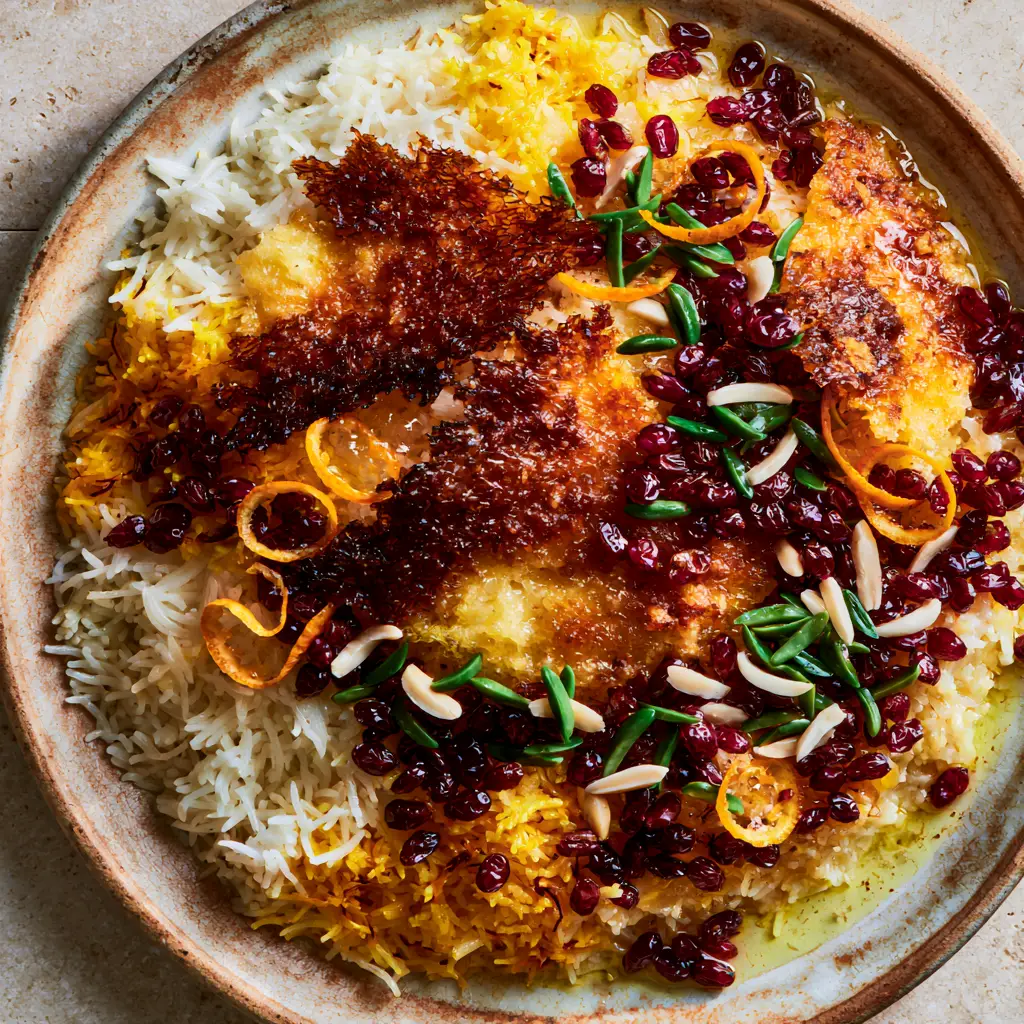
Persian Jeweled Rice, known traditionally as Javaher Polo, is often considered the “king of rice dishes” in Persian cuisine. This vibrant, aromatic masterpiece is a staple at weddings and celebrations, designed to look like a treasure chest overflowing with gems.
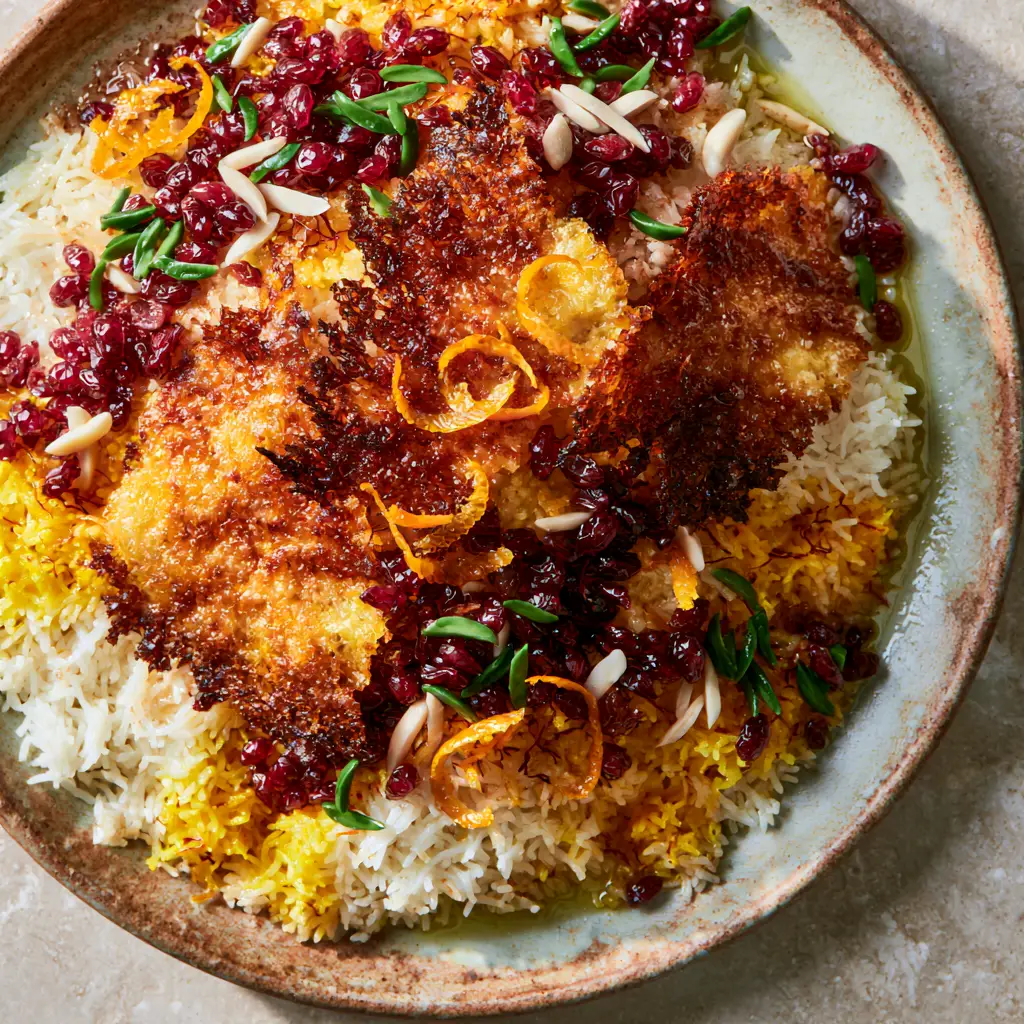
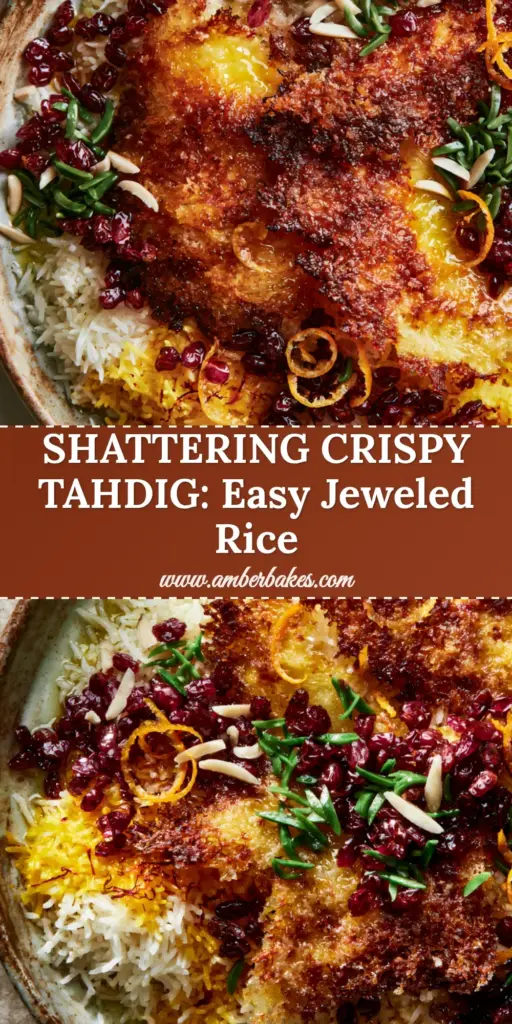
When you first set a platter of Persian Jeweled Rice on the table, the visual impact is immediate. You see a stunning contrast between snowy white grains and vibrant saffron-yellow sections, all crowned with jagged, buttery shards of golden-brown Tahdig.
The “jewels” of this dish—glistening ruby-red barberries, bright emerald-green pistachios, and blanched white almonds—provide a sensory experience that is both sophisticated and comforting. In this guide, we will master the technical precision required to achieve the perfect fluffiness and that iconic crispy crust.
Why You Will Fall in Love With This Javaher Polo
- The Ultimate Textural Contrast: You get the softness of perfectly steamed long-grain basmati rice paired with the intense, shatter-crisp crunch of saffron-infused Tahdig.
- A Complex Flavor Profile: This recipe balances the tartness of sautéed barberries with the aromatic sweetness of candied orange peel and the richness of melted butter.
- Visual Magnificence: With its bright green pistachios and deep red barberries, it is a centerpiece that requires no additional garnishing to impress.
- Authentic Techniques: We utilize the traditional “par-boil and steam” method, ensuring each grain of rice remains separate and elongated.
The Anatomy of Ingredients for Persian Jeweled Rice
To achieve the result seen in high-end Persian photography, each ingredient must be prepared with intention. We are not just tossing things together; we are building layers of flavor and color.
Extra-Long Grain Basmati Rice: 3 cups (540g). The foundation of the dish must be high-quality basmati to ensure the grains stay distinct and do not turn mushy during the long steaming process.
Saffron Threads: 1/2 tsp (1g). High-grade Persian saffron provides the unmistakable aroma and the vibrant yellow hue that defines the “saffron-infused” sections of the rice.
Dried Barberries (Zereshk): 1/2 cup (60g). These provide the “ruby” element; they are naturally tart and become glistening jewels when sautéed with a touch of sugar and butter.
Slivered Pistachios and Almonds: 1/3 cup (45g) each. Raw green pistachios and blanched white almonds offer a nutty crunch and essential color contrast against the yellow rice.
Orange Peel Strips: 1/4 cup (30g). Fresh orange zest, sliced into thin curls and candied, provides a floral citrus note that cuts through the richness of the butter.
Unsalted Butter: 1/2 cup (115g). Melted butter glaze is essential for the moisture and “glisten” described in the visual blueprint, as well as for frying the golden Tahdig.
Kosher Salt: 2 tbsp (30g) for the boiling water. Salt is the invisible hero that seasons the core of the rice grain during the par-boiling stage.
Essential Equipment for a Perfect Rice Crust
Achieving a professional-grade Persian Jeweled Rice requires more than just a standard pot. The choice of vessel directly impacts the quality of your Tahdig.
A non-stick Dutch oven or a heavy-bottomed pot with a tight-fitting lid is non-negotiable. The heavy base ensures even heat distribution, which is the secret to a jagged, deep golden-brown crust that doesn’t burn.
You will also need a “Dam-kesh” or a clean kitchen towel to wrap the lid. This absorbs excess steam, preventing the moisture from dripping back onto the rice, which keeps the grains “snowy white” and fluffy.
Step-by-Step Instructions to Master Persian Jeweled Rice
1. Preparing the Saffron and Rice
Begin by rinsing the 3 cups (540g) of basmati rice in cold water. You must rinse it at least 3-5 times until the water runs completely clear; this removes excess starch, ensuring the grains remain separate.
Soak the rice in salted water for at least 30 minutes. While the rice soaks, grind your saffron threads into a fine powder and bloom them in 3 tbsp (45ml) of hot (but not boiling) water to extract the deepest crimson color.
2. The Art of Candying Orange Peel
To remove the bitterness from the thin strips of orange zest, place them in a small saucepan with water and bring to a boil. Drain and repeat this process twice.
In the final round, simmer the zest with 2 tbsp (30g) of sugar and a splash of water for 5 minutes until they become translucent and “candied.” These thin, curled strips are vital for the authentic Javaher Polo look.
3. Sautéing the Jewel Garnish
In a small skillet over low heat, melt 1 tbsp (14g) of butter. Add the barberries and a teaspoon of sugar. Sauté for only 1-2 minutes until they plump up and look like glistening rubies.
Remove the barberries and briefly toss the slivered almonds and pistachios in the remaining warm butter. You want them to be slightly moist with a faint glisten, just like the visual prompt suggests, without losing their bright green and white colors.
4. Par-Boiling and the Saffron Base
Bring a large pot of water to a rolling boil with plenty of salt. Add the soaked rice and boil for 6-8 minutes. The rice is ready when the outside is soft but the center still has a “bite” (al dente).
Drain the rice and rinse with a splash of lukewarm water. In your heavy-bottomed pot, mix 3 tbsp (45ml) of oil, 2 tbsp (30g) of melted butter, and half of your saffron water. This creates the vibrant yellow base for the Tahdig.
5. The Steaming (Dam-kesh) Process
Gently layer the rice into the pot, forming a cone shape. Use the handle of a wooden spoon to poke 5-6 holes through the rice to the bottom; this allows steam to circulate.
Wrap the lid in a kitchen towel and seal the pot tightly. Cook on medium-high for 5 minutes to set the crust, then reduce to low and steam for 45-50 minutes. You will know it is done when you see a faint wisp of steam and the rice feels tender.
Expert Tips for a Shatter-Crisp Tahdig
- The Sound Cue: Listen closely during the first 5 minutes. You should hear a distinct sizzling sound. This indicates the butter and saffron are frying the bottom layer into that jagged, golden-brown crust.
- The Cold Shock: Once the rice is finished, place the bottom of the pot in a sink filled with an inch of cold water for 30 seconds. This “shocks” the Tahdig, making it release easily from the pan.
- Butter Glaze: Always drizzle a final 2 tbsp (30g) of melted butter over the rice before serving. This provides the “high-end smartphone photography” glisten.
- Color Separation: Take a cup of the cooked white rice and mix it with the remaining saffron water separately before plating. This ensures the “distinct sections of snowy white and vibrant saffron-yellow grains.”
Storage, Reheating, and Freezing
Persian Jeweled Rice is best served fresh to maintain the crunch of the Tahdig. However, if you have leftovers, store them in an airtight container in the refrigerator for up to 3 days.
To reheat, add a tablespoon of water and a small pat of butter, then microwave covered or reheat in a skillet over low heat. Note that the Tahdig will lose its “shatter” crunch once refrigerated, but the flavors remain incredible.
I do not recommend freezing this dish, as the delicate basmati grains and the texture of the barberries can become mushy upon thawing.
What to Serve With This Persian Masterpiece
This rice is a regal side dish that demands a worthy protein. For a traditional pairing, serve it with aromatic saffron chicken or succulent grilled chicken kabobs.
If you prefer a meatier accompaniment, the tartness of the barberries cuts perfectly through the richness of savory lamb dishes or even a plate of crispy Persian meat and potato patties.
While this rice is a star on its own, adding a side of creamy yogurt or a fresh Shirazi salad completes the authentic Persian dining experience.
Frequently Asked Questions
You can prepare the ‘jewels’ (barberries, nuts, zest) a day ahead. However, the rice and Tahdig are best made fresh to ensure the crust remains crispy.
Yes, if you cannot find dried barberries (Zereshk), chopped dried cranberries are a suitable substitute, though you should reduce the added sugar as cranberries are sweeter.
Use a heavy-bottomed non-stick pot and enough fat (butter and oil). Shocking the bottom of the hot pot in cold water for 30 seconds after cooking helps it release as a solid piece.
Extra-long grain Basmati rice is the gold standard. It provides the necessary length and remains separate and fluffy after the long steaming process.
Ensure you grind your saffron threads into a fine powder and bloom them in hot water. Avoid using boiling water, which can dull the color and aroma.
The Final Persian Jeweled Rice Recipe Card
Persian Jeweled Rice: The Ultimate Festive Javaher Polo Recipe
Ingredients
Equipment
Method
- Rinse the basmati rice multiple times until water is clear. Soak in salted water for 30 minutes.
- Grind saffron threads and mix with 3 tbsp of hot water; let sit to extract color.
- Boil rice in salted water for 6-8 minutes until al dente, then drain.
- In a heavy pot, combine oil, 2 tbsp butter, and half the saffron water. Spread a layer of rice over the bottom.
- Mound remaining rice, poke steam holes, and cover with a towel-wrapped lid. Steam on low for 45-50 minutes.
Notes
The orange peel must be boiled twice to remove bitterness before candying.
Closing & Call to Action
Making Persian Jeweled Rice is an act of culinary love. From the careful rinsing of the grains to the patient steaming of the Tahdig, each step brings you closer to a dish that is as beautiful as it is delicious. The combination of sweet, tart, and savory notes makes this a recipe your family will request for every special occasion.
If you enjoyed this journey into Persian flavors, please leave a comment below and share your Tahdig success stories! Don’t forget to follow me on Pinterest for more visually stunning recipes. Pin the image below to save this for your next dinner party!